

Nykaa E retail limited
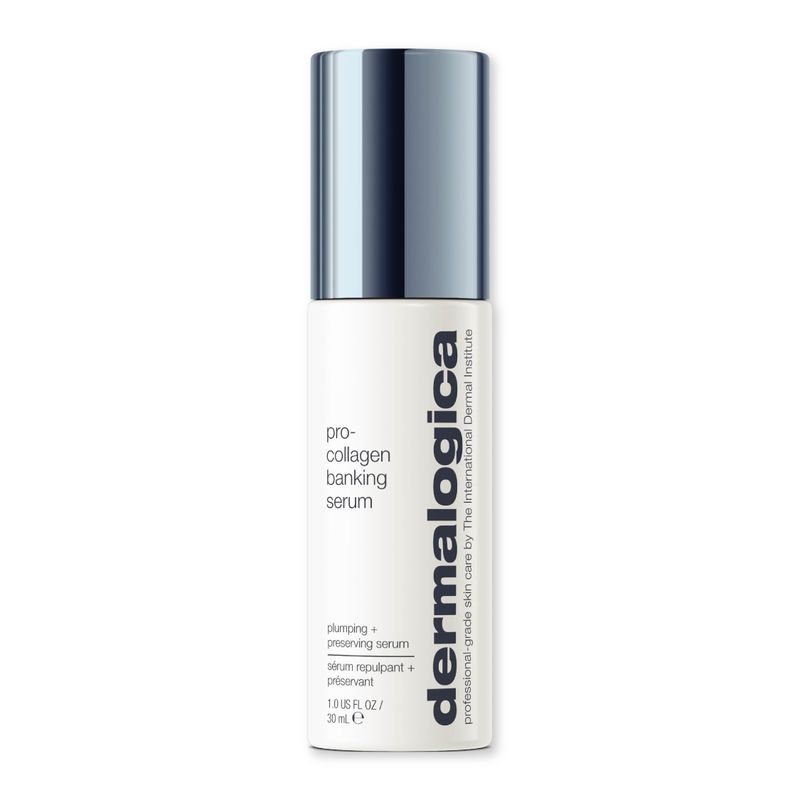
Dermalogica Pro-Collagen Banking Serum Daily Skin Health

Dermalogica Pro-Collagen Banking Serum Daily Skin Health
Nykaa E retail limited
dermalogica-pro-collagen-banking-serum-daily-skin-health
Serum
10085005361445
Morning or Evening?
How often will you use this product?
Notes


Highlights
WHAT IS IT?
Serum with a complex of collagen amino acids and antioxidants, contains 50+ ingredients
FEATURES
Helps preserve collagen, plumps and hydrates for firmer appearance, minimizes look of fine lines and wrinkles
BEST FOR
normal
CHECKS
No parabens, no sulfates, no phthalates, no mineral oil, no synthetic dyes
Who Is It For?
Adults From Age 30 And Older All GendersWhat Does It Help With?
Collagen Preservation Skin Hydration Reducing Fine Lines And Wrinkles Firmer Skin AppearanceBudget
Premium ($76-$150)How To Use
Which routine should it be used in?
Instructions:
Key Information


What Nykaa E retail limited Says
Product Description:
Powerful serum helps protect and preserve skin’s collagen today, supporting visibly plumper, more luminous skin and hydrating to help reduce the look of fine lines into the future. Features a gel-to-serum consistency with Pro-Collagen Preservation Complex delivering Collagen Amino Acids, Carnosine Dipeptide, and antioxidants. Nourishes skin’s moisture barrier with Jojoba Ester and Polyglutamic Acid for a firmer appearance.
About the Brand:
Ingredients Overview
Ingredients List
Water/Aqua/Eau,Pentylene-Glycol,Coco-Caprylate/Caprate,Glycerin,Propanediol,Simmondsia-Chinensis-(Jojoba)-Seed-Oil,Trehalose,Oryza-Sativa-(Rice)-Bran-Water,Butylene-Glycol,Ethoxydiglycol,Triheptanoin,Arginine-Pca,Diglycerin,Dipotassium-Glycyrrhizate,Sodium-Hyaluronate,Collagen-Amino-Acids,Glycine-Soja-(Soybean)-Oil,Helianthus-Annuus-(Sunflower)-Seed-Oil,Citrus-Aurantium-Dulcis-(Orange)-Peel-Oil,Citrus-Aurantium-Bergamia-(Bergamot)-Fruit-Oil,Citrus-Paradisi-(Grapefruit)-Peel-Oil,Rosmarinus-Officinalis-(Rosemary)-Leaf-Extract,Cupressus-Sempervirens-Leaf/Nut/Stem-Oil,Santalum-Album-(Sandalwood)-Oil,Citrus-Limon-(Lemon)-Peel-Oil,Rosa-Damascena-Flower-Oil,Jasminum-Sambac-(Jasmine)-Flower-Extract,Hydrolyzed-Jojoba-Esters,Oryza-Sativa-(Rice)-Bran-Extract,Aloe-Barbadensis-Leaf-Extract,Tephrosia-Purpurea-Seed-Extract,Helianthus-Annuus-(Sunflower)-Extract,Juniperus-Virginiana-Oil,Tagetes-Minuta-Flower-Oil,Rosmarinus-Officinalis-(Rosemary)-Leaf-Oil,Cistus-Ladaniferus-Leaf/Stem-Extract,Hydrolyzed-Rice-Protein,Tocopheryl-Acetate,Tocopherol,Phospholipids,Carnosine,Glyceryl-Stearate-Citrate,Caprylyl-Glycol,Polyglutamic-Acid,Glycolipids,Glycine-Soja-(Soybean)-Sterols,Acrylates/C10-30-Alkyl-Acrylate-Crosspolymer,Glyceryl-Caprylate,Sclerotium-Gum,Polyquaternium-80,Didecyldimonium-Chloride,Dianthus-Caryophyllus-Flower-Extract,Xanthan-Gum,Methylpropanediol,Cetearyl-Alcohol,Peg-40-Hydrogenated-Castor-Oil,Ammonium-Acryloyldimethyltaurate/Beheneth-25-Methacrylate-Crosspolymer,Phytic-Acid,Polysorbate-20,Tetrasodium-Glutamate-Diacetate,Citric-Acid,Sodium-Hydroxide,Sodium-Polyacryloyldimethyl-Taurate,Sodium-Benzoate,Potassium-Sorbate,Limonene,Linalool
Key Ingredients
Collagen Amino Acids,Carnosine Dipeptide,Jojoba Ester,Polyglutamic Acid,Antioxidants
Ingredients Details
Carnosine
Common Name(s): Beta-alanyl-l-histidine,n-beta-alanyl-l-histidine dipeptide
CAS Number: 305-84-0
DESCRIPTION
What It Does: Provides anti-glycation and anti-carbonylation activity protecting collagen from glycation-induced crosslinking.
Why It's Used: Natural anti-age dipeptide targeting glycation — complementary to antioxidant-only anti-aging strategies with documented collagen protection.
How It Works: Histidine imidazole chelates cu²⁺ for antioxidant metal chelation. beta-alanine traps reactive carbonyl species (glycating aldehydes). quenches 4-hydroxynonenal (hne) protein carbonylation. anti-glycation via competing with lysine residues.
Typically Found In: Anti-aging serums,anti-glycation products,longevity skincare
TECHNICAL DETAILS
Primary Category: Active ingredient – antioxidant
Secondary Functions: Free radical scavenging,anti-aging
Application Areas:

Facial Skincare
Body Care

Hair Care
Beard Care
Color Cosmetics (Makeup)
Dietary/Oral Supplements
Typical Concentration Range: 0.5%–5%
SOURCING & ETHICS
Vegan Status: Yes – synthetic
Halal Status: Yes
Source Notes: Plant-derived extract or synthetic.
SKIN COMPATIBILITY
Irritancy Rating: 1/5 – very low
Comedogenicity Rating: 0/5 – non-comedogenic
Sensitivity Concerns: Non-irritating; well-tolerated.
Safe for Sensitive Skin: Yes
SAFETY & COMPATIBILITY
Safety Profile: Excellent safety profile. ewg score: 1.
Works Well With: Vitamin c,vitamin e,ferulic acid,spf,other antioxidants
Avoid Combining With: No significant incompatibilities
SCIENTIFIC NOTE
Carnosine's anti-glycation mechanism is sacrificial carbonyl trapping: reactive carbonyl species (methylglyoxal, glyoxal) that would normally glycate collagen lysines are instead captured by carnosine's free amino groups — carnosine acts as a sacrificial protector for collagen, being consumed in the process of preventing more damaging collagen glycation.
Last Verified: Cosing database,guiotto et al. carnosine anti-glycation review
Primary Sources: 2026-03-12
Coco-caprylate/caprate
Common Name(s): Coco-caprylate/caprate
DESCRIPTION
What It Does: Smooths and softens skin by filling intercorneocyte spaces, reducing friction, and providing a pleasant aesthetic skin feel in formulations.
Why It's Used: Synthetic esters provide tailored aesthetic properties — spreadability, skin feel, volatility, refractive index — that natural oils alone cannot consistently deliver.
How It Works: The ester molecule fills microscopic surface irregularities between corneocytes, reducing coefficient of friction, reflecting light uniformly, and providing a lubrication layer that protects the skin surface.
Typically Found In: Moisturizers,sunscreens,color cosmetics,body lotions,lip products
TECHNICAL DETAILS
Primary Category: Synthetic emollients
Secondary Functions: Emollient
Application Areas:
Facial Skincare
Body Care
Hair Care
Beard Care
Color Cosmetics (Makeup)
Dietary/Oral Supplements
Typical Concentration Range: 1–20%
SOURCING & ETHICS
Vegan Status: Yes
Halal Status: Yes
Source Notes: Synthetically produced ester emollient; no animal components.
SKIN COMPATIBILITY
Irritancy Rating: 1
Comedogenicity Rating: 1
Sensitivity Concerns: Low sensitization potential at recommended use concentrations.
Safe for Sensitive Skin: Yes
SAFETY & COMPATIBILITY
Safety Profile: Well-characterized cosmetic ingredient with established safety profile. generally non-irritating at typical use concentrations. suitable for leave-on and rinse-off cosmetics.
Works Well With: Silicones,uv filters,other emollients
Avoid Combining With: Strongly alkaline conditions (risk of saponification of ester-type emollients)
SCIENTIFIC NOTE
The spreading coefficient of an emollient is governed by its surface tension, viscosity, and polarity. esters with branched alkyl chains (e.g., isopropyl, isostearyl) spread rapidly and leave a non-tacky film; linear long-chain esters provide more substantive moisturization. hlb value determines the preferred formulation system (w/o vs o/w emulsions).
Last Verified: Cosing eu database; pcpc cosmetic ingredient safety reviews; ingredient-specific safety and efficacy literature
Primary Sources: 2025-01-15
Diglycerin
Common Name(s): Diglycerin,cosmetic active,functional ingredient
CAS Number: N/a
DESCRIPTION
What It Does: Delivers characteristic cosmetic function — skin conditioning, protection, preservation, or active biological benefit — at recommended use concentration.
Why It's Used: Selected for its functional contribution and formulation compatibility — supported by cosmetic science literature and regulatory safety assessment.
How It Works: Works through the mechanism of its molecular class — physicochemical interaction with the formulation or biological interaction with skin proteins, lipids, or receptors as documented in peer-reviewed literature.
Typically Found In: Skin care formulations
TECHNICAL DETAILS
Primary Category: Active ingredient – cosmetic active
Secondary Functions: Skin conditioning
Application Areas:
Facial Skincare
Body Care
Hair Care
Beard Care
Color Cosmetics (Makeup)
Dietary/Oral Supplements
Typical Concentration Range: 0.1%–10%
SOURCING & ETHICS
Vegan Status: Conditional
Halal Status: Yes
Source Notes: Commercially produced for cosmetic use. verify vegan/halal status with supplier.
SKIN COMPATIBILITY
Irritancy Rating: 1/5 – very low
Comedogenicity Rating: 0/5 – non-comedogenic
Sensitivity Concerns: Well-tolerated by most skin types.
Safe for Sensitive Skin: Yes
SAFETY & COMPATIBILITY
Safety Profile: Good safety profile at recommended concentrations. ewg score: 1–2.
Works Well With: Standard skincare actives
Avoid Combining With: No known significant incompatibilities
SCIENTIFIC NOTE
Diglycerin delivers documented functional benefit with an established safety profile within the cosmetic regulatory framework (cosing eu, cir usa).
Last Verified: Cosing database,diglycerin technical literature
Primary Sources: 2026-03-12
Ethoxydiglycol
Common Name(s): Ethoxydiglycol,glycol co-solvent,humectant formulation aid
CAS Number: N/a
DESCRIPTION
What It Does: Provides co-solvent and penetration enhancer in cosmetic formulations, improving active ingredient dissolution and product texture while delivering mild skin conditioning.
Why It's Used: Glycol solvents are essential for dissolving actives with limited water or oil solubility — the intermediate polarity of glycol ethers provides access to the wider solubility parameter space between pure water and oil phases.
How It Works: Hydroxyl and ether groups provide h-bonding for water miscibility; the organic chain provides compatibility with lipophilic actives. medium-chain glycols (c3–c6) provide the optimal balance of water compatibility, lipophilic active dissolution, and skin-compatible humectancy.
Typically Found In: Skin care formulations,co-solvent systems
TECHNICAL DETAILS
Primary Category: Functional ingredient – humectant
Secondary Functions: Tewl reduction,skin plumping
Application Areas:
Facial Skincare
Body Care
Hair Care
Beard Care
Color Cosmetics (Makeup)
Dietary/Oral Supplements
Typical Concentration Range: 1%–30%
SOURCING & ETHICS
Vegan Status: Yes
Halal Status: Yes
Source Notes: Synthetic or naturally derived. excellent aqueous solubility.
SKIN COMPATIBILITY
Irritancy Rating: 1/5 – very low
Comedogenicity Rating: 0/5 – non-comedogenic
Sensitivity Concerns: Non-irritating; suitable for all skin types.
Safe for Sensitive Skin: Yes
SAFETY & COMPATIBILITY
Safety Profile: Excellent safety profile. ewg score: 1.
Works Well With: Ceramides,emollients,occlusives,glycerin,hyaluronic acid
Avoid Combining With: No significant incompatibilities
SCIENTIFIC NOTE
Glycol ether co-solvents enhance sc penetration of co-applied actives by increasing their thermodynamic activity in the sc lipid phase — high thermodynamic activity (near saturation) drives diffusion by concentration gradient even when absolute concentration is low.
Last Verified: Cosing database,ethoxydiglycol glycol solvent review
Primary Sources: 2026-03-12
