

RéVive
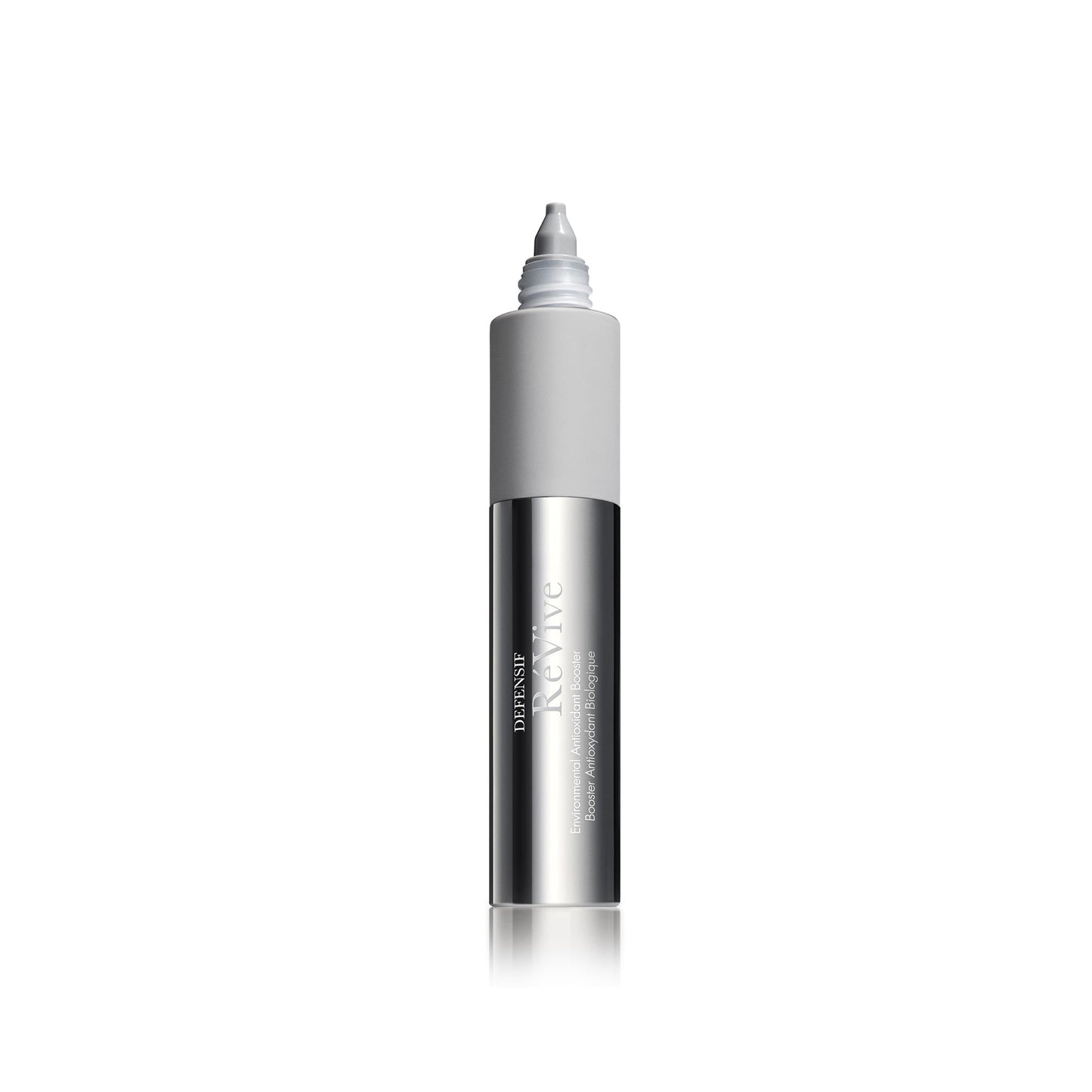
Defensif / Environmental Antioxidant Booster

Defensif / Environmental Antioxidant Booster
RéVive
defensif-environmental-antioxidant-booster
Serum
9643609129253
Morning or Evening?
How often will you use this product?
Notes


Highlights
WHAT IS IT?
An antioxidant booster serum with multiple ingredients
FEATURES
Protects against environmental aggressors, contains anti-oxidants and enzymes
BEST FOR
Not specifically mentioned, likely suitable for all skin types
CHECKS
Does not contain information provided
Who Is It For?
Adults (default Above 18) Both Women And MenWhat Does It Help With?
Protects Skin From Environmental Stressors And DamageBudget
PremiumHow To Use
Which routine should it be used in?
Instructions:
Key Information

What RéVive Says
Product Description:
A unique time-saving skincare supplement to boost skin's defenses against environmental stressors. Powerful anti-oxidants, enzymes, and our Anti-Pollution Complex protect against environmental aggressors like pollution, infrared, smoke, and blue light wavelengths that can damage the skin.
About the Brand:
Ingredients Overview
Ingredients List
Aqua (Water, Eau), Propanediol, Glycerin, Yeast Extract, Salvia Officinalis (Sage) Leaf Extract, Glechoma Hederacea Extract, Aesculus Hippocastanum (Horse Chestnut) Bark Extract, Phospholipids, Saccharomyces/Copper Ferment, Saccharomyces/Selenium Ferment, Saccharomyces/Platinum Ferment, Saccharomyces/Zinc Ferment, Leontopodium Alpinum Extract, Ectoin. Superoxide Dismutase, Lecithin, Oligopeptide-24, Hydroxyectoin, Curcuma Longa (Turmeric) Root Extract, Hydrolyzed Pea Protein, Sodium Hyaluronate, Mel (Honey, Miel), Tocopheryl Acetate, Retinyl Palmitate, Glyceryl Caprylate, Dimethylmethoxy Chromanol, Ascorbyl Palmitate, Prunus Amygdalus Dulcis (Sweet Almond) Oil, Hydrogenated Vegetable Oil, Glucose, Biphenyl Azepanyl Methanone, Tocopherol, Camellia Sinensis Leaf Powder, Sodium Succinate, Sodium Oleate, Glycine Soja (Soybean) Oil, Ethylhexylglycerin, Diisopropyl Adipate, Hydrogenated Lecithin, Phenoxyethanol, Ammonium Acryloyl Dimethyltaurate/Carboxyethyl Acrylate Crosspolymer, Acrylic Acid/Acrylamidomethyl Propane Sulfonic Acid Copolymer, Leuconostoc/Radish Root Ferment Filtrate, Xanthan Gum, Sodium Benzoate, Potassium Sorbate, Citric Acid, Sodium Chloride, Disodium EDTA
Key Ingredients
Bio-Renewal Peptide, SOD (Superoxide Dismutase), Fermented Pea Extract, Antioxidant Blend (Turmeric, Green Tea, Vitamins A, C and E)
Ingredients Details
Glechoma Hederacea Extract
Common Name(s): Glechoma hederacea extract
DESCRIPTION
What It Does: Provides antioxidant protection, soothing anti-inflammatory effects, and skin-conditioning benefits through plant-derived polyphenols and phytochemicals.
Why It's Used: Plant extracts concentrate bioactive phytochemicals evolved for environmental protection — uv, microbial, and oxidative stressors — that translate to skin benefits.
How It Works: Polyphenols (flavonoids, phenolic acids) inhibit nf-κb-mediated inflammatory signaling, scavenge reactive oxygen species through electron donation, and chelate pro-oxidant metal ions to reduce oxidative skin damage.
Typically Found In: Serums,toners,moisturizers,masks,essences
TECHNICAL DETAILS
Primary Category: Botanical extracts
Secondary Functions: Antioxidant,anti-inflammatory
Application Areas:

Facial Skincare

Body Care
Hair Care
Beard Care
Color Cosmetics (Makeup)
Dietary/Oral Supplements
Typical Concentration Range: 0.1–10%
SOURCING & ETHICS
Vegan Status: Yes
Halal Status: Yes
Source Notes: Plant-derived extract; no animal components.
SKIN COMPATIBILITY
Irritancy Rating: 1
Comedogenicity Rating: 0
Sensitivity Concerns: Low sensitization potential at recommended use concentrations.
Safe for Sensitive Skin: Yes
SAFETY & COMPATIBILITY
Safety Profile: Well-characterized cosmetic ingredient with established safety profile. generally non-irritating at typical use concentrations. suitable for leave-on and rinse-off cosmetics.
Works Well With: Niacinamide,hyaluronic acid,vitamin c,ceramides
Avoid Combining With: Strong oxidizing agents
SCIENTIFIC NOTE
Plant secondary metabolites (flavonoids, terpenes, phenolic acids) are biosynthesized as defense compounds against uv, herbivores, and pathogens. their anti-inflammatory activity typically derives from competitive inhibition of cox-2 and 5-lox enzymes (ic50 1–50 µm), while antioxidant activity involves single electron transfer (set) and hydrogen atom transfer (hat) mechanisms with structure-dependent rate constants.
Last Verified: 2025-01-15
Primary Sources: Cosing eu database; pcpc cosmetic ingredient safety reviews; phytochemical and ethnobotanical literature
Glycerin
Common Name(s): Glycerol,glycerine,1,2,3-propanetriol
CAS Number: 56-81-5
DESCRIPTION
What It Does: Glycerin pulls water from the environment and deeper skin layers into the outer skin layer (epidermis), boosting moisture levels and keeping skin soft, smooth, and plump.
Why It's Used: It is used in virtually every moisturizer, serum, and cleanser because it is highly effective at hydrating skin, is well-tolerated by all skin types, and enhances the texture and spreadability of formulations.
How It Works: As a humectant, glycerin forms hydrogen bonds with water molecules, trapping them in the skin. it also reinforces the skin barrier by integrating into lipid structures between skin cells.
Typically Found In: Moisturizers,serums,cleansers,toners,sheet masks,sunscreens,body lotions,shampoos,conditioners
TECHNICAL DETAILS
Primary Category: Humectant
Secondary Functions: Skin barrier support,emollient,solvent
Application Areas:
Facial Skincare
Body Care
Hair Care
Beard Care
Color Cosmetics (Makeup)
Dietary/Oral Supplements
Typical Concentration Range: 1%–30% (typical: 3–10%)
SOURCING & ETHICS
Vegan Status: Conditional - feedstock declaration required
Halal Status: Unverified - feedstock declaration required (plant, animal and petrochemical routes all exist)
Source Notes: Derived from plant oils via hydrolysis or saponification; synthetic versions also available. palm-derived glycerin carries sustainability concerns. [audit 2026-07-29 rev2: origin-dependent: the same inci exists in plant, animal and petrochemical versions and the name does not discriminate. determination requires shariah-panel sign-off.]
SKIN COMPATIBILITY
Irritancy Rating: 1/5 – very low; non-irritating at all standard concentrations
Comedogenicity Rating: 0/5 – non-comedogenic
Sensitivity Concerns: Extremely rare allergic reactions; generally safe for all skin types including sensitive and baby skin
Safe for Sensitive Skin: Yes
SAFETY & COMPATIBILITY
Safety Profile: Widely recognized as safe. ewg hazard score: 1. no significant concerns for irritation, sensitization, or toxicity at typical concentrations (up to 50%).
Works Well With: Hyaluronic acid,ceramides,niacinamide,panthenol,urea,peptides,retinol,ahas/bhas
Avoid Combining With: No known incompatibilities at standard concentrations
SCIENTIFIC NOTE
Glycerin is an endogenous skin component found naturally in the stratum corneum. aquaporin-3 channels in keratinocytes facilitate glycerin transport, making it integral to natural skin hydration pathways.
Last Verified: 2026-03-12
Primary Sources: Cosing database,cir safety assessment,ewg skin deep,inci decoder
Phospholipids
Common Name(s): Lecithin/phospholipid,cell membrane lipid,emulsifier barrier repair
CAS Number: N/a
DESCRIPTION
What It Does: Stabilises o/w and w/o emulsions through biomimetic phospholipid bilayer formation, supplements sc barrier lipids for barrier repair, and forms liposomes and lamellar delivery vehicles for encapsulated active delivery.
Why It's Used: Phospholipids are uniquely bifunctional: they provide conventional emulsification and form genuine liposomal bilayer vesicles for encapsulated active delivery — a dual function unavailable from synthetic emulsifiers.
How It Works: The phosphocholine head group provides strong h-bonding hydrophilicity while the dual fatty acid tails provide lipophilic anchoring — this wedge-shaped geometry spontaneously forms closed bilayer vesicles (liposomes) that encapsulate actives for sustained release and enhanced sc penetration.
Typically Found In: Emulsions,liposomal delivery,barrier repair
TECHNICAL DETAILS
Primary Category: Functional ingredient – emollient
Secondary Functions: Barrier sealing,softening
Application Areas:
Facial Skincare
Body Care
Hair Care
Beard Care
Color Cosmetics (Makeup)
Dietary/Oral Supplements
Typical Concentration Range: 1%–15%
SOURCING & ETHICS
Vegan Status: Conditional - supplier confirmation required
Halal Status: Unverified - supplier confirmation required
Source Notes: Plant-derived, synthetic or animal-derived. verify source. [audit 2026-07-29 rev2: the record's own source_notes does not assert a non-animal origin, or instructs the reader to verify with the supplier; "yes" asserts knowledge the record does not hold. determination requires shariah-panel sign-off.]
SKIN COMPATIBILITY
Irritancy Rating: 1/5 – very low
Comedogenicity Rating: 1/5 – low; formulation-dependent
Sensitivity Concerns: Non-irritating.
Safe for Sensitive Skin: Yes
SAFETY & COMPATIBILITY
Safety Profile: Excellent safety profile. ewg score: 1.
Works Well With: Humectants,ceramides,actives as carrier
Avoid Combining With: No significant incompatibilities
SCIENTIFIC NOTE
Phospholipid's wedge-shaped geometry (large head relative to two acyl tails) preferentially forms spherical bilayer vesicles (liposomes) rather than flat lamellar phases — this curvature preference enables self-assembly of drug delivery liposomes simply by hydration of the phospholipid film.
Last Verified: 2026-03-12
Primary Sources: Cosing database,lecithin phospholipid liposomal delivery review
Propanediol
Common Name(s): 1,3-propanediol,zemea,bio-propanediol
CAS Number: 504-63-2
DESCRIPTION
What It Does: Provides humectant and solvent functionality from sustainable corn-based fermentation.
Why It's Used: Bio-based propylene glycol alternative from renewable corn — propanediol provides equivalent functionality to propylene glycol with sustainable renewable feedstock and superior skin feel.
How It Works: Two oh groups provide humectant water binding. excellent solvent for fragrances, actives, and preservatives. mild antimicrobial from diol structure for preservative system boosting. renew corn fermentation origin (dupont zemea process). better skin feel than propylene glycol — less sticky.
Typically Found In: Virtually all cosmetic categories as pg alternative
TECHNICAL DETAILS
Primary Category: Functional ingredient – humectant
Secondary Functions: Tewl reduction,skin plumping
Application Areas:
Facial Skincare
Body Care
Hair Care
Beard Care
Color Cosmetics (Makeup)
Dietary/Oral Supplements
Typical Concentration Range: 1%–20%
SOURCING & ETHICS
Vegan Status: Yes – from corn sugar fermentation
Halal Status: Yes
Source Notes: Synthetic or naturally derived. excellent aqueous solubility.
SKIN COMPATIBILITY
Irritancy Rating: 1/5 – very low
Comedogenicity Rating: 0/5 – non-comedogenic
Sensitivity Concerns: Non-irritating; suitable for all skin types.
Safe for Sensitive Skin: Yes
SAFETY & COMPATIBILITY
Safety Profile: Excellent safety profile. ewg score: 1.
Works Well With: Ceramides,emollients,occlusives,glycerin,hyaluronic acid
Avoid Combining With: No significant incompatibilities
SCIENTIFIC NOTE
Propanediol's dupont tate & lyle bio products 'zemea' process ferments corn sugar to 1,3-propanediol using engineered e. coli — one of the first commercially viable bio-fermentation routes to a cosmetic diol previously made only from petroleum. the renewable route produces chemically identical 1,3-propanediol while reducing carbon footprint by approximately 40% vs petrochemical synthesis.
Last Verified: 2026-03-12
Primary Sources: Cosing database,dupont tate & lyle zemea technical data,cir safety assessment