

Kapco International
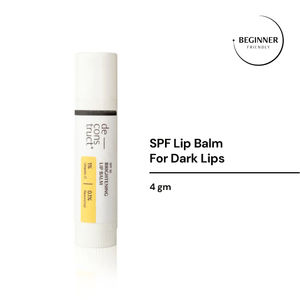
Deconstruct Brightening Lip Balm with 1% Vitamin C|SPF 30 |Hydrates & Brightens Dry & Pigmented Lips (4 gm)

Deconstruct Brightening Lip Balm with 1% Vitamin C|SPF 30 |Hydrates & Brightens Dry & Pigmented Lips (4 gm)
Kapco International
deconstruct-brightening-lip-balm-with-1-vitamin-c-spf-30-hydrates-brightens-dry-pigmented-lips-4-gm
Lip care
10084953751845
Morning or Evening?
How often will you use this product?
Notes


Highlights
WHAT IS IT?
Lip balm with 2 active ingredients
FEATURES
Nourishes, targets and brightens pigmented lips, shields from sun damage, intensely moisturizes dry and chapped lips, contains SPF 30, 1% Vitamin C to repair lip discoloration, 0.1% Resorcinol fights pigmentation caused by sun
BEST FOR
dry
CHECKS
Doesn't explicitly mention allergens or preservatives exclusion
Who Is It For?
Men And Women No Specific Age Range MentionedWhat Does It Help With?
Lip Pigmentation Dryness Chapped Lips Sun Damage Protection Lip BrighteningBudget
Affordable (under $30)How To Use
Which routine should it be used in?
Instructions:
Key Information


What Kapco International Says
Product Description:
Deconstruct Brightening Lip balm with SPF 30 is formulated to nourish, target and brighten pigmented lips and shield them from sun damage, further providing intense moisturise to dry & chapped lips. The 1% Vitamin C helps repair lip discolouration and the 0.1% Resorcinol fights against pigmentation caused by sun. The SPF 30 protects lips against harmful UV rays and brightens the lips and can be used by both men and women.
About the Brand:
Ingredients Overview
Ingredients List
Ricinus Communis Seed Oil, Caprylic/Capric Triglyceride, Isopropyl Myristate, Microcristallina Cera, Copernicia Cerifera (Carnauba) Wax, Helianthus Annuus Seed Oil, Butyl Methoxydibenzoylmethane, Candelilla Cera, Ozokerite, Theobroma Cacao Seed Butter, Ethylhexyl Salicylate, Homosalate, Octocrylene, Mangifera Indica Seed Butter, Hydrogenated Castor Oil, Garcinia Indica Seed Butter, Astrocaryum Murumuru Seed Butter, Theobroma Grandiflorum Seed Butter, Prunus Amygdalus Dulcis Oil, Titanium Dioxide, Silica, Jojoba esters, Polyhydroxy Stearic Acid, Zinc Oxide, C12-15 Alkyl Benzoate, Isostearic Acid, Ascorbyl Tetraisopalmitate, Tocopherol, Vanilla Planifolia Fruit Oil, Soybean Glycerides, Butyrospermum Parkii Butter Unsaponifiables, Phenylethyl Resorcinol, Phytosteryl/Octyldodecyl Lauroyl Glutamate, Linoleic Acid, Linolenic Acid
Key Ingredients
Vitamin C, Resorcinol
Ingredients Details
Ascorbyl Tetraisopalmitate
Common Name(s): Atip,vc-ip,vitamin c tetraisopalmitate
CAS Number: 183476-82-6
DESCRIPTION
What It Does: Delivers potent, stable vitamin c deep into skin for antioxidant protection, brightening, and collagen stimulation.
Why It's Used: Premium anti-aging where deep vitamin c penetration and exceptional stability are both required.
How It Works: Four isopalmitate chains facilitate passive diffusion through stratum corneum lipid bilayers. esterases progressively cleave chains releasing ascorbic acid in deeper skin layers.
Typically Found In: Premium serums,oil-based vitamin c,anti-aging oils
TECHNICAL DETAILS
Primary Category: Active ingredient – vitamin c derivative
Secondary Functions: Superior penetration,stable vitamin c
Application Areas:

Facial Skincare

Body Care
Hair Care
Beard Care
Color Cosmetics (Makeup)
Dietary/Oral Supplements
Typical Concentration Range: 0.5%–3%
SOURCING & ETHICS
Vegan Status: Yes – synthetic
Halal Status: Yes
Source Notes: Fully synthetic. produced by esterification of ascorbic acid with isopalmitic acid derivatives.
SKIN COMPATIBILITY
Irritancy Rating: 1/5 – very low
Comedogenicity Rating: 0/5 – non-comedogenic
Sensitivity Concerns: Non-irritating; suitable for all skin types.
Safe for Sensitive Skin: Yes
SAFETY & COMPATIBILITY
Safety Profile: Excellent safety profile. ewg score: 1.
Works Well With: Tocopherol,ferulic acid,niacinamide,spf
Avoid Combining With: No significant incompatibilities
SCIENTIFIC NOTE
Ex vivo penetration studies confirm significantly higher skin penetration depth vs l-ascorbic acid. the four isopalmitate chains facilitate partitioning into the lipid-continuous stratum corneum phase.
Last Verified: Cosing database,pinnell vitamin c derivatives review
Primary Sources: 2026-03-12
Astrocaryum Murumuru Seed Butter
Common Name(s): Astrocaryum murumuru seed butter,botanical oil/butter,phytochemical active
CAS Number: N/a
DESCRIPTION
What It Does: Provides emollient conditioning, essential fatty acid supplementation, and barrier lipid support from the natural triglyceride/wax ester composition.
Why It's Used: Natural carrier oils provide sc-compatible lipid composition for genuine barrier integration rather than surface-only occlusion.
How It Works: Fatty acid triglycerides integrate into sc lipid bilayers delivering oleic, linoleic, and linolenic acid for emolliency and barrier repair; essential fatty acids serve as ceramide biosynthesis precursors.
Typically Found In: Botanical skin care,natural products
TECHNICAL DETAILS
Primary Category: Active ingredient – antioxidant
Secondary Functions: Free radical scavenging,anti-aging
Application Areas:
Facial Skincare
Body Care
Hair Care
Beard Care
Color Cosmetics (Makeup)
Dietary/Oral Supplements
Typical Concentration Range: 0.1%–30%
SOURCING & ETHICS
Vegan Status: Conditional
Halal Status: Conditional
Source Notes: Plant-derived extract or synthetic.
SKIN COMPATIBILITY
Irritancy Rating: 1/5 – very low
Comedogenicity Rating: 0/5 – non-comedogenic
Sensitivity Concerns: Non-irritating; well-tolerated.
Safe for Sensitive Skin: Yes
SAFETY & COMPATIBILITY
Safety Profile: Excellent safety profile. ewg score: 1.
Works Well With: Vitamin c,vitamin e,ferulic acid,spf,other antioxidants
Avoid Combining With: No significant incompatibilities
SCIENTIFIC NOTE
Plant secondary metabolites evolved for uv photoprotection and pathogen defence — mechanisms directly applicable to cosmetic antioxidant and anti-inflammatory activity in human skin.
Last Verified: Cosing database,astrocaryum murumuru seed butter botanical review
Primary Sources: 2026-03-12
Butyl Methoxydibenzoylmethane
Common Name(s): Butyl methoxydibenzoylmethane,organic uv filter,photostabilising sunscreen active
CAS Number: N/a
DESCRIPTION
What It Does: Absorbs uv radiation at specific wavelengths (uva 320–400 nm, uvb 290–320 nm) and dissipates photon energy as heat rather than skin-damaging photochemical reactions.
Why It's Used: Organic uv filters are chosen for their high molar extinction coefficient, specific spectral coverage, and formulation compatibility — individual filters are combined to provide broad-spectrum coverage across uva+uvb.
How It Works: Uv photon absorption by the aromatic chromophore π-system excites the molecule from s₀ ground state to s₁ excited state. rapid internal conversion or photoisomerisation dissipates energy as vibrational heat before it can initiate skin photodamage.
Typically Found In: Sunscreens,photoprotective products
TECHNICAL DETAILS
Primary Category: Active ingredient – cosmetic active
Secondary Functions: Skin conditioning
Application Areas:
Facial Skincare
Body Care
Hair Care
Beard Care
Color Cosmetics (Makeup)
Dietary/Oral Supplements
Typical Concentration Range: Check local sunscreen regulations
SOURCING & ETHICS
Vegan Status: Yes
Halal Status: Yes
Source Notes: Commercially produced for cosmetic use. verify vegan/halal status with supplier.
SKIN COMPATIBILITY
Irritancy Rating: 1/5 – very low
Comedogenicity Rating: 0/5 – non-comedogenic
Sensitivity Concerns: Well-tolerated by most skin types.
Safe for Sensitive Skin: Yes
SAFETY & COMPATIBILITY
Safety Profile: Good safety profile at recommended concentrations. ewg score: 1–2.
Works Well With: Standard skincare actives
Avoid Combining With: No known significant incompatibilities
SCIENTIFIC NOTE
Organic uv filters require photostabilisation (by avobenzone-octocrylene pairing, or triazine stabilisers) as some absorbers degrade on uv exposure — formulator must verify photostability of the chosen filter combination.
Last Verified: Cosing database,butyl methoxydibenzoylmethane organic uv filter review
Primary Sources: 2026-03-12
Butyrospermum Parkii Butter Unsaponifiables
Common Name(s): Butyrospermum parkii butter unsaponifiables
DESCRIPTION
What It Does: Delivers targeted skin-conditioning or bioactive benefits through a specific mechanism of action suited to the formulation's intended purpose.
Why It's Used: Specialty actives address specific skin concerns through targeted molecular mechanisms, providing efficacy beyond what base formulation ingredients alone can achieve.
How It Works: The bioactive compound interacts with specific molecular targets in skin cells or the extracellular matrix — enzymes, receptors, structural proteins, or signaling molecules — triggering beneficial biological responses.
Typically Found In: Serums,treatments,moisturizers,specialty products
TECHNICAL DETAILS
Primary Category: Specialty actives
Secondary Functions: Skin-conditioning,anti-aging
Application Areas:
Facial Skincare
Body Care
Hair Care
Beard Care
Color Cosmetics (Makeup)
Dietary/Oral Supplements
Typical Concentration Range: 0.01–5%
SOURCING & ETHICS
Vegan Status: Yes
Halal Status: Yes
Source Notes: Specialty active ingredient; check individual sourcing for vegan status.
SKIN COMPATIBILITY
Irritancy Rating: 1
Comedogenicity Rating: 0
Sensitivity Concerns: Low sensitization potential at recommended use concentrations.
Safe for Sensitive Skin: Yes
SAFETY & COMPATIBILITY
Safety Profile: Well-characterized cosmetic ingredient with established safety profile. generally non-irritating at typical use concentrations. suitable for leave-on and rinse-off cosmetics.
Works Well With: Niacinamide,hyaluronic acid,vitamin c,peptides
Avoid Combining With: Incompatible with oxidizing agents; check ph stability
SCIENTIFIC NOTE
Specialty actives typically work through enzyme inhibition (e.g., tyrosinase inhibition for brightening, mmp inhibition for anti-aging), receptor activation (e.g., retinoid receptors, ppar-γ for barrier genes), or transcription factor modulation (e.g., nrf2 for antioxidant gene upregulation). structure-activity relationships determine potency and selectivity.
Last Verified: Cosing eu database; pcpc cosmetic ingredient safety reviews; ingredient-specific safety and efficacy literature
Primary Sources: 2025-01-15
