

Dariya
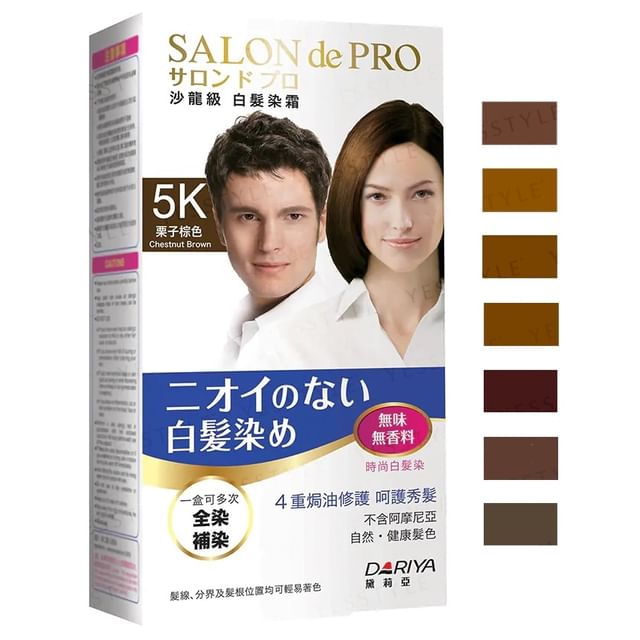
Dariya Salon De Pro Hair Color Cream
A fragrance-free hair color cream that provides improved color and durability. Infused with royal jelly extract, olive oil, and vegetable protein to keep hair moisturized, firm, and bouncy. Dyeing quickly in just 15 minutes, the cream can be used 2 to 3 times to color parts of your hair or hairline.
Color-safe
Color Fading
Color-treated
As Needed
Style
Optimized for Your Environment & Lifestyle
Nykaa
In stock
Recommended

Dariya Salon De Pro Hair Color Cream
Dariya
dariya-salon-de-pro-hair-color-cream
Hair Color Cream
10407582302501
Morning or Evening?
How often will you use this product?
Notes


Secure payment protection
Your Biodata Compatibility Analysis
Based on your 6 hair health indices and environmental factors
Poor Match
Significant incompatibilities
Growth Cycle Health Index
Hair Match
Hair Health Index Alignment
Optimal for OSI, SSI, DI, HSI
Ingredient Efficacy
Matching Ingredient Score
Environment Compatibility
Current UV, Air Quality & Humidity
Why This Works for Your Specific Profile
Damage Index:
Very healthy or severely damaged hair falls outside optimal treatment parameters
Water Quality:
Hair:
Closed cuticles resist product penetration causing surface buildup without internal benefits
Active Lifestyle:
High activity and frequent washing rapidly strip product benefits requiring excessive reapplication
Your Hair Profile Integration
Your Hair Archetype

Density Level

Washing Frequency

Shedding Level

Oil Level
Your Hair Health Indices
Oil Secretion (OSI)
Very low oil production
Scalp Sensitivity (SSI)
Very low sensitivity
Growth Rate (CMR)
Poor metabolism rate
Damage Index (DI)
Minimal damage
Hair Strength (HSI)
Very weak strength
Softness Index (SI)
Significant improvement needed
Water & Environmental Integration

Water:


Expected Results & Timeline
Key Highlights

What is it?
Hair Color Cream, 2 agents

Who Is It For
Adults, Unisex

Budget
$12.90 - $25.80

Timeline
15 minutes
Why You’ll Love It

What Does It Help With?
Color fading

Best for
Color-treated hair

Features
Fragrance-free, Quick dyeing in 15 minutes, Moisturizing ingredients

Checks
Ingredients Overview
Ingredients List
para-aminophenol, para-phenylenediamine, resorcinol, 5-aminoorthocresol, sodium sulfite, ethanol, stearyltrimethylammonium chloride, seaweed extract, hydrolyzed conchiolin solution, licorice extract, hawthorn extract, water, diethylenetriaminepentaacetic acid pentasodium solution, dibutylhydroxytoluene, water-soluble collagen solution, stearyl alcohol, stearic acid, cetanol, camellia oil, concentrated glycerin, polyethylene glycol 200, polydimethyl chloride Methylene piperidinium liquid, polyoxyethylene stearyl ether, polyoxyethylene behenyl ether, anhydrous ethanol, monoethanolamine, magnesium sulfate, liquid paraffin, rosehip oil, royal jelly extract, DL-sodium malate, L-ascorbic acid, 1,3-butylene glycol, hydrogen peroxide, diethylene glycol monoethyl ether, potassium hydroxide, phenoxyethanol, polyethylene glycol 400, polyoxyethylene cetyl ether
Key Ingredients
Royal Jelly Extract, Olive Oil, Vegetable Protein
Ingredients Details
Ethanol
Common Name(s): Ethanol,cosmetic active,functional ingredient
CAS Number: N/a
DESCRIPTION
What It Does: Delivers characteristic cosmetic function at recommended use concentration.
Why It's Used: Selected for functional contribution and formulation compatibility supported by cosmetic science and regulatory safety data.
How It Works: Works through the mechanism of its molecular class as documented in peer-reviewed cosmetic literature.
Typically Found In: Skin care formulations
TECHNICAL DETAILS
Primary Category: Active ingredient – cosmetic active
Secondary Functions: Skin conditioning
Application Areas:

Facial Skincare

Body Care
Hair Care
Beard Care
Color Cosmetics (Makeup)
Dietary/Oral Supplements
Typical Concentration Range: 0.1%–10%
SOURCING & ETHICS
Vegan Status: Yes - standard ethanol routes are non-animal; confirm denaturant origin
Halal Status: Conditional - ethanol production route and residual concentration; jurisdiction-dependent, refer to certifier stance
Source Notes: Commercially produced for cosmetic use. verify vegan/halal status with supplier. [audit 2026-07-29 rev2: ethanol pathway; determination depends on route, on whether the plant also produces beverage alcohol, and on residual concentration. determination requires shariah-panel sign-off.]
SKIN COMPATIBILITY
Irritancy Rating: 1/5 – very low
Comedogenicity Rating: 0/5 – non-comedogenic
Sensitivity Concerns: Well-tolerated by most skin types.
Safe for Sensitive Skin: Yes
SAFETY & COMPATIBILITY
Safety Profile: Good safety profile at recommended concentrations. ewg score: 1–2.
Works Well With: Standard skincare actives
Avoid Combining With: No known significant incompatibilities
SCIENTIFIC NOTE
Ethanol has an established safety profile within the cosmetic regulatory framework at standard use concentrations.
Last Verified: 2026-03-12
Primary Sources: Cosing database,ethanol technical literature
Hydrogen Peroxide
Common Name(s): H2o2,peroxide,developer
CAS Number: 7722-84-1
DESCRIPTION
What It Does: Provides the oxidation power necessary for permanent hair colour development and hair lightening.
Why It's Used: The essential permanent hair colour oxidant – hydrogen peroxide provides both lightening (melanin bleaching) and dye chromophore formation in a single oxidant for complete permanent colouring.
How It Works: H2o2 at alkaline ph generates ooh⁻ (perhydroxyl anion) as the actual bleaching species. ooh⁻ oxidises melanin eumelanin in fenton-type reaction. simultaneously oxidises hair dye primary intermediates (ppd→quinonediimine) for coupling.
Typically Found In: Permanent hair colour developer,hair bleaching
TECHNICAL DETAILS
Primary Category: Hair colourant – oxidant
Secondary Functions: Skin conditioning
Application Areas:
Facial Skincare
Body Care
Hair Care
Beard Care
Color Cosmetics (Makeup)
Dietary/Oral Supplements
Typical Concentration Range: 1.5%–12% (in developer formulations)
SOURCING & ETHICS
Vegan Status: Conditional - supplier confirmation required
Halal Status: Unverified - supplier confirmation required
Source Notes: Commercially produced for cosmetic use. verify vegan/halal status with supplier. [audit 2026-07-29 rev2: the record's own source_notes does not assert a non-animal origin, or instructs the reader to verify with the supplier; "yes" asserts knowledge the record does not hold. determination requires shariah-panel sign-off.]
SKIN COMPATIBILITY
Irritancy Rating: 1/5 – very low
Comedogenicity Rating: 0/5 – non-comedogenic
Sensitivity Concerns: Well-tolerated by most skin types.
Safe for Sensitive Skin: Yes
SAFETY & COMPATIBILITY
Safety Profile: Eu cosmetics regulation annex iii: max 12% in hair care products. regulated as professional-use-only above 6%. causes hair and scalp damage at high concentrations or extended exposure.
Works Well With: Standard skincare actives
Avoid Combining With: No known significant incompatibilities
SCIENTIFIC NOTE
Hydrogen peroxide's hair bleaching action at alkaline ph (the developer system ph 9-11) is mediated by the perhydroxyl anion (ooh⁻) rather than h2o2 itself. the ooh⁻ concentration is governed by the ionisation equilibrium h2o2 ⇌ h⁺ + ooh⁻ (pka 11.65), meaning alkaline developer ph dramatically increases ooh⁻ concentration for efficient melanin oxidation – the chemical basis for alkali developer volumes (10v, 20v, 30v, 40v) providing different bleaching rates.
Last Verified: 2026-03-12
Primary Sources: Cosing database,eu annex iii,cir safety assessment
L-ascorbic Acid
Common Name(s): L-ascorbic acid,cosmetic active,established function
CAS Number: N/a
DESCRIPTION
What It Does: Delivers characteristic cosmetic function — skin conditioning, antioxidant protection, active biological benefit, or formulation function — at recommended use concentration.
Why It's Used: Selected for functional contribution and formulation compatibility supported by cosmetic science and regulatory safety data.
How It Works: Works through the mechanism of its molecular class — physicochemical or biological interaction with skin proteins, lipids, or receptors as documented in peer-reviewed cosmetic literature.
Typically Found In: Skin care formulations
TECHNICAL DETAILS
Primary Category: Active ingredient – cosmetic active
Secondary Functions: Skin conditioning
Application Areas:
Facial Skincare
Body Care
Hair Care
Beard Care
Color Cosmetics (Makeup)
Dietary/Oral Supplements
Typical Concentration Range: 0.1%–10%
SOURCING & ETHICS
Vegan Status: Conditional - supplier confirmation required
Halal Status: Unverified - supplier confirmation required
Source Notes: Commercially produced for cosmetic use. verify vegan/halal status with supplier. [audit 2026-07-29 rev2: the record's own source_notes does not assert a non-animal origin, or instructs the reader to verify with the supplier; "yes" asserts knowledge the record does not hold. determination requires shariah-panel sign-off.]
SKIN COMPATIBILITY
Irritancy Rating: 1/5 – very low
Comedogenicity Rating: 0/5 – non-comedogenic
Sensitivity Concerns: Well-tolerated by most skin types.
Safe for Sensitive Skin: Yes
SAFETY & COMPATIBILITY
Safety Profile: Good safety profile at recommended concentrations. ewg score: 1–2.
Works Well With: Standard skincare actives
Avoid Combining With: No known significant incompatibilities
SCIENTIFIC NOTE
L-ascorbic acid has an established safety and efficacy profile within the cosmetic regulatory framework at standard use concentrations.
Last Verified: 2026-03-12
Primary Sources: Cosing database,l-ascorbic acid technical literature
Licorice Extract
Common Name(s): Licorice triterpenoid,glycyrrhetinic acid active,anti-inflammatory brightening
CAS Number: N/a
DESCRIPTION
What It Does: Reduces skin inflammation and redness through 11β-hsd inhibition (cortisol-amplifying mechanism), inhibits tyrosinase and melanogenesis for brightening, and provides antioxidant protection from the triterpenoid phenol system.
Why It's Used: One of few botanicals with documented cortisone-amplifying anti-inflammatory mechanism — 11β-hsd inhibition elevates local cortisol concentration in skin tissue, providing a pharmaceutical-level anti-inflammatory effect without direct corticosteroid application.
How It Works: Glycyrrhetinic acid inhibits 11β-hydroxysteroid dehydrogenase (11β-hsd) — the enzyme that converts active cortisol to inactive cortisone in peripheral tissues. inhibition elevates local skin cortisol, amplifying the glucocorticoid anti-inflammatory response. simultaneously, glabridin (a flavonoid in licorice) inhibits tyrosinase for brightening.
Typically Found In: Anti-inflammatory,soothing,brightening
TECHNICAL DETAILS
Primary Category: Active ingredient – antioxidant
Secondary Functions: Free radical scavenging,anti-aging
Application Areas:
Facial Skincare
Body Care
Hair Care
Beard Care
Color Cosmetics (Makeup)
Dietary/Oral Supplements
Typical Concentration Range: 0.01%–2%
SOURCING & ETHICS
Vegan Status: Yes
Halal Status: Yes
Source Notes: Plant-derived extract or synthetic.
SKIN COMPATIBILITY
Irritancy Rating: 1/5 – very low
Comedogenicity Rating: 0/5 – non-comedogenic
Sensitivity Concerns: Non-irritating; well-tolerated.
Safe for Sensitive Skin: Yes
SAFETY & COMPATIBILITY
Safety Profile: Excellent safety profile. ewg score: 1.
Works Well With: Vitamin c,vitamin e,ferulic acid,spf,other antioxidants
Avoid Combining With: No significant incompatibilities
SCIENTIFIC NOTE
11β-hsd inhibition by glycyrrhetinic acid was first documented in the context of licorice consumption causing pseudoaldosteronism — the same enzyme inhibition applied topically provides localised cortisol amplification for cosmetic anti-inflammatory activity without systemic effects.
Last Verified: 2026-03-12
Primary Sources: Cosing database,glycyrrhetinic acid 11β-hsd anti-inflammatory review
Personalized Usage Instructions
How to Use
Step 1
Mix equal parts of Agent 1 and Agent 2 in the provided container
Step 2
Using the included comb or brush, apply the mixture evenly to dry hair
Step 3
Leave the dye on for 15 minutes
Step 4
Rinse thoroughly with lukewarm water until the water runs clear
Step 5
Shampoo hair to remove any residual dye
Medical Chemicals

Protein/Moisture
- Moisture
pH Level
- Acidic

Porosity Taget
- Normal Porosity
Customized for Your Profile
Scalp Condtions
Climate Suitability
Clinical Claims
Frequency
Mix equal parts of Agent 1 and Agent 2 in the provided container. Using the included comb or brush, apply the mixture evenly to dry hair. Leave the dye on for 15 minutes. Rinse thoroughly with lukewarm water until the water runs clear. Shampoo hair to remove any residual dye.