

CUURA
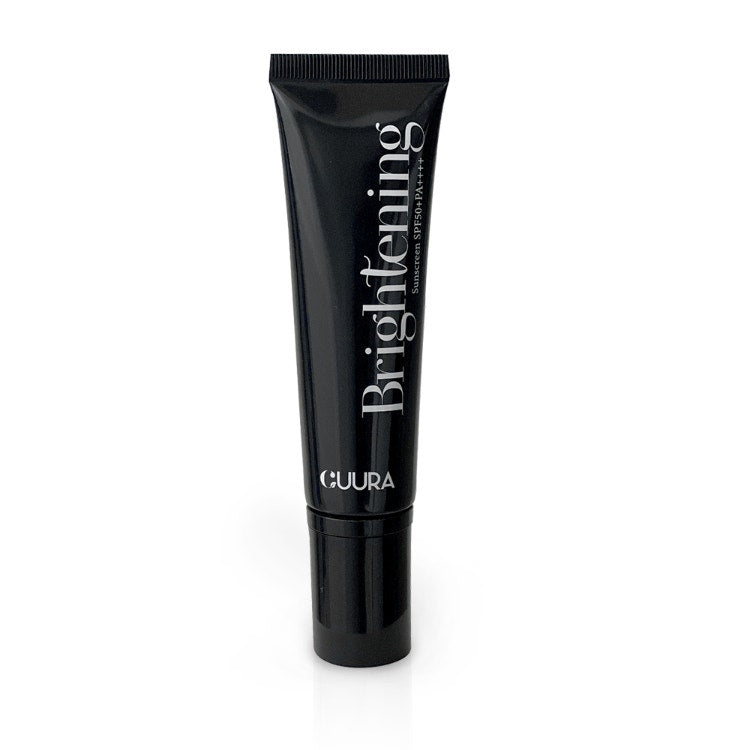
Cuura Brightening Sunscreen Spf50 50Ml

Cuura Brightening Sunscreen Spf50 50Ml
CUURA
cuura-brightening-sunscreen-spf50-50ml
Suncare
10084884218149
Morning or Evening?
How often will you use this product?
Notes


Highlights
WHAT IS IT?
Sunscreen with multiple plant extracts
FEATURES
Broad spectrum SPF 50+ PA++++, lightweight, halal, moisturizes, non-greasy, no white cast, does not clog pores, contains antioxidants and age-defying botanicals
BEST FOR
sensitive
CHECKS
Does not clog pores, no white cast, not greasy
Who Is It For?
Not SpecifiedWhat Does It Help With?
Sun Protection Skin Brightening MoisturizingBudget
Mid-range ($30-$75)How To Use
Which routine should it be used in?
Instructions:
Key Information


What CUURA Says
Product Description:
Hybrid , lightweight, halal, broad-spectrum sunscreen SPF 50+ PA++++ enriched with plant extracts to provide optimum protection and enhance skin brightening. The combination of these powerful antioxidants and age-defying botanicals provides effective sun protection against UVA and UVB and UVR rays (SPF50 +PA++++). It is very moisturizing, lightweight, non-greasy, leaves no white cast and does not clog your pores which is suitable to be used as an everyday wearing on its own or at the end of your skincare routine. The first local HALAL hybrid sunscreen of its kind.
About the Brand:
Ingredients Overview
Ingredients List
Aqua,Isononyl-Isononanoate,Ethylhexyl-Methoxycinnamate,Butyl-Methoxydibenzoylmethane,Glycerin,Caprylic/Capric-Triglycerides,Octocrylene,Butylene-Glycol,Sodium-Acylates-Copolymer,Lecithin,Simmondsia-Chinensis-(Jojoba)-Seed-Oil,Phenoxyethanol,Chlorphenesin,Glycyrrhiza-Glabra-(Licorice)-Root-Extract
Key Ingredients
Ethylhexyl Methoxycinnamate, Butyl Methoxydibenzoylmethane, Glycyrrhiza Glabra (Licorice) Root Extract
Ingredients Details
Chlorphenesin
Common Name(s): 3-(4-chlorophenoxy)-1,2-propanediol,globacid
CAS Number: 104-29-0
DESCRIPTION
What It Does: Provides gram-negative focused preservation complementary to phenoxyethanol for comprehensive spectrum coverage.
Why It's Used: Phenoxyethanol complement — chlorphenesin's gram-negative and antifungal coverage complements phenoxyethanol's gram-positive activity for full-spectrum preservation at lower individual concentrations.
How It Works: 4-chlorophenol ether glycol disrupts bacterial and fungal membranes. strong gram-negative activity (pseudomonas, e. coli). good candida antifungal activity. used with phenoxyethanol for synergistic broad-spectrum coverage. ph stable 3-9.
Typically Found In: Comprehensive preservation systems,baby products (low concentration)
TECHNICAL DETAILS
Primary Category: Functional ingredient – glycerol ether preservative
Secondary Functions: Skin conditioning
Application Areas:

Facial Skincare

Body Care
Hair Care
Beard Care
Color Cosmetics (Makeup)
Dietary/Oral Supplements
Typical Concentration Range: 0.1%–0.3%
SOURCING & ETHICS
Vegan Status: Conditional - supplier confirmation required
Halal Status: Unverified - supplier confirmation required
Source Notes: Commercially produced for cosmetic use. verify vegan/halal status with supplier. [audit 2026-07-29 rev2: the record's own source_notes does not assert a non-animal origin, or instructs the reader to verify with the supplier; "yes" asserts knowledge the record does not hold. determination requires shariah-panel sign-off.]
SKIN COMPATIBILITY
Irritancy Rating: 1/5 – very low
Comedogenicity Rating: 0/5 – non-comedogenic
Sensitivity Concerns: Well-tolerated by most skin types.
Safe for Sensitive Skin: Yes
SAFETY & COMPATIBILITY
Safety Profile: Eu max 0.3% cosmetics. good safety profile. synergistic combination with phenoxyethanol (0.3% pe + 0.1% chlorphenesin often equivalent to 1% pe alone).
Works Well With: Standard skincare actives
Avoid Combining With: No known significant incompatibilities
SCIENTIFIC NOTE
Chlorphenesin + phenoxyethanol synergy operates through a classic spectrum-filling combination: phenoxyethanol provides strong gram-positive antimicrobial activity while chlorphenesin provides gram-negative and antifungal coverage. the combination's minimum inhibitory concentration sum is subadditive (provides equivalent preservation at combined concentrations below what either alone would require) — textbook pharmacological synergy enabling lower total preservative load.
Last Verified: 2026-03-12
Primary Sources: Cosing database,eu preservative annex v,cir safety assessment
Glycerin
Common Name(s): Glycerol,glycerine,1,2,3-propanetriol
CAS Number: 56-81-5
DESCRIPTION
What It Does: Glycerin pulls water from the environment and deeper skin layers into the outer skin layer (epidermis), boosting moisture levels and keeping skin soft, smooth, and plump.
Why It's Used: It is used in virtually every moisturizer, serum, and cleanser because it is highly effective at hydrating skin, is well-tolerated by all skin types, and enhances the texture and spreadability of formulations.
How It Works: As a humectant, glycerin forms hydrogen bonds with water molecules, trapping them in the skin. it also reinforces the skin barrier by integrating into lipid structures between skin cells.
Typically Found In: Moisturizers,serums,cleansers,toners,sheet masks,sunscreens,body lotions,shampoos,conditioners
TECHNICAL DETAILS
Primary Category: Humectant
Secondary Functions: Skin barrier support,emollient,solvent
Application Areas:
Facial Skincare
Body Care
Hair Care
Beard Care
Color Cosmetics (Makeup)
Dietary/Oral Supplements
Typical Concentration Range: 1%–30% (typical: 3–10%)
SOURCING & ETHICS
Vegan Status: Conditional - feedstock declaration required
Halal Status: Unverified - feedstock declaration required (plant, animal and petrochemical routes all exist)
Source Notes: Derived from plant oils via hydrolysis or saponification; synthetic versions also available. palm-derived glycerin carries sustainability concerns. [audit 2026-07-29 rev2: origin-dependent: the same inci exists in plant, animal and petrochemical versions and the name does not discriminate. determination requires shariah-panel sign-off.]
SKIN COMPATIBILITY
Irritancy Rating: 1/5 – very low; non-irritating at all standard concentrations
Comedogenicity Rating: 0/5 – non-comedogenic
Sensitivity Concerns: Extremely rare allergic reactions; generally safe for all skin types including sensitive and baby skin
Safe for Sensitive Skin: Yes
SAFETY & COMPATIBILITY
Safety Profile: Widely recognized as safe. ewg hazard score: 1. no significant concerns for irritation, sensitization, or toxicity at typical concentrations (up to 50%).
Works Well With: Hyaluronic acid,ceramides,niacinamide,panthenol,urea,peptides,retinol,ahas/bhas
Avoid Combining With: No known incompatibilities at standard concentrations
SCIENTIFIC NOTE
Glycerin is an endogenous skin component found naturally in the stratum corneum. aquaporin-3 channels in keratinocytes facilitate glycerin transport, making it integral to natural skin hydration pathways.
Last Verified: 2026-03-12
Primary Sources: Cosing database,cir safety assessment,ewg skin deep,inci decoder
Lecithin
Common Name(s): Soy lecithin,sunflower lecithin,phosphatidylcholine complex
CAS Number: 8002-43-5
DESCRIPTION
What It Does: Provides natural phospholipid emulsification with barrier-compatible delivery and liposome-forming properties.
Why It's Used: The most biologically authentic emulsifier – identical to cell membrane composition providing barrier-compatible delivery and liposome formation unavailable from synthetic emulsifiers.
How It Works: Phosphatidylcholine (pc), phosphatidylethanolamine (pe), phosphatidylinositol (pi) mixture provides hlb 7-12 for o/w emulsification. forms liposomal bilayers for active encapsulation. pc/pe/pi composition mirrors cell membrane for barrier-compatible delivery.
Typically Found In: Natural cosmetics,liposomal products,barrier repair,penetration-enhanced formulas
TECHNICAL DETAILS
Primary Category: Functional ingredient – natural phospholipid emulsifier
Secondary Functions: Skin conditioning
Application Areas:
Facial Skincare
Body Care
Hair Care
Beard Care
Color Cosmetics (Makeup)
Dietary/Oral Supplements
Typical Concentration Range: 0.5%–10%
SOURCING & ETHICS
Vegan Status: No - animal-derived
Halal Status: Conditional - animal origin stated in the record's own description; documentation required
Source Notes: Commercially produced for cosmetic use. verify vegan/halal status with supplier. [audit 2026-07-29 rev2: pass-1 miss: the record's own detail text states an animal derivation, but pass 1 classified on the name and source_notes only. determination requires shariah-panel sign-off.]
SKIN COMPATIBILITY
Irritancy Rating: 1/5 – very low
Comedogenicity Rating: 0/5 – non-comedogenic
Sensitivity Concerns: Well-tolerated by most skin types.
Safe for Sensitive Skin: Yes
SAFETY & COMPATIBILITY
Safety Profile: Good safety profile at recommended concentrations. ewg score: 1–2.
Works Well With: Standard skincare actives
Avoid Combining With: No known significant incompatibilities
SCIENTIFIC NOTE
Lecithin's phospholipid composition mirrors the composition of the stratum corneum's own lamellar bodies that deliver barrier lipids to the skin surface. this structural mimicry allows lecithin-based delivery systems to integrate seamlessly with the barrier lipid structure, exploiting the same transport pathway the skin uses for its own lipid secretion.
Last Verified: 2026-03-12
Primary Sources: Cosing database,cir safety assessment
Octocrylene
Common Name(s): 2-ethylhexyl 2-cyano-3,3-diphenylacrylate
CAS Number: 6197-30-4
DESCRIPTION
What It Does: Provides uvb-uva-ii uv protection and essential avobenzone photostabilisation.
Why It's Used: The essential combination partner — octocrylene's dual uv filter + avobenzone photostabilisation function makes it virtually irreplaceable for durable broad-spectrum chemical sunscreens requiring uva-i coverage.
How It Works: Cyanocinnamate chromophore absorbs uvb-uva-ii (λmax 303nm). triplet energy transfer from excited avobenzone to octocrylene photostabilises avobenzone (>90% efficiency at 3:1 avobenzone:octocrylene ratio). hydrophobic character enhances water resistance.
Typically Found In: Broad-spectrum sunscreens,avobenzone-containing formulas
TECHNICAL DETAILS
Primary Category: Active ingredient – uv filter and photostabiliser
Secondary Functions: Skin conditioning
Application Areas:
Facial Skincare
Body Care
Hair Care
Beard Care
Color Cosmetics (Makeup)
Dietary/Oral Supplements
Typical Concentration Range: Up to 10% (eu), 10% (us fda)
SOURCING & ETHICS
Vegan Status: Conditional - supplier confirmation required
Halal Status: Unverified - supplier confirmation required
Source Notes: Commercially produced for cosmetic use. verify vegan/halal status with supplier. [audit 2026-07-29 rev2: the record's own source_notes does not assert a non-animal origin, or instructs the reader to verify with the supplier; "yes" asserts knowledge the record does not hold. determination requires shariah-panel sign-off.]
SKIN COMPATIBILITY
Irritancy Rating: 1/5 – very low
Comedogenicity Rating: 0/5 – non-comedogenic
Sensitivity Concerns: Well-tolerated by most skin types.
Safe for Sensitive Skin: Yes
SAFETY & COMPATIBILITY
Safety Profile: Eu max 10%. fda: 10%. ewg score: 3. recent benzophenone impurity concerns from aged product hydrolysis under study.
Works Well With: Standard skincare actives
Avoid Combining With: No known significant incompatibilities
SCIENTIFIC NOTE
Octocrylene's triplet energy transfer photostabilisation of avobenzone operates via a dexter electron exchange mechanism: excited-state avobenzone (triplet) transfers excitation energy to octocrylene via orbital overlap, allowing avobenzone to return to its ground state uv-absorbing form without photodegradation. this energy transfer is only efficient at close molecular proximity — requiring intimate mixing of the two compounds in the formulation oil phase.
Last Verified: 2026-03-12
Primary Sources: Cosing database,fda uv filter otc monograph,sccs octocrylene opinion