

Tata Harper Skincare
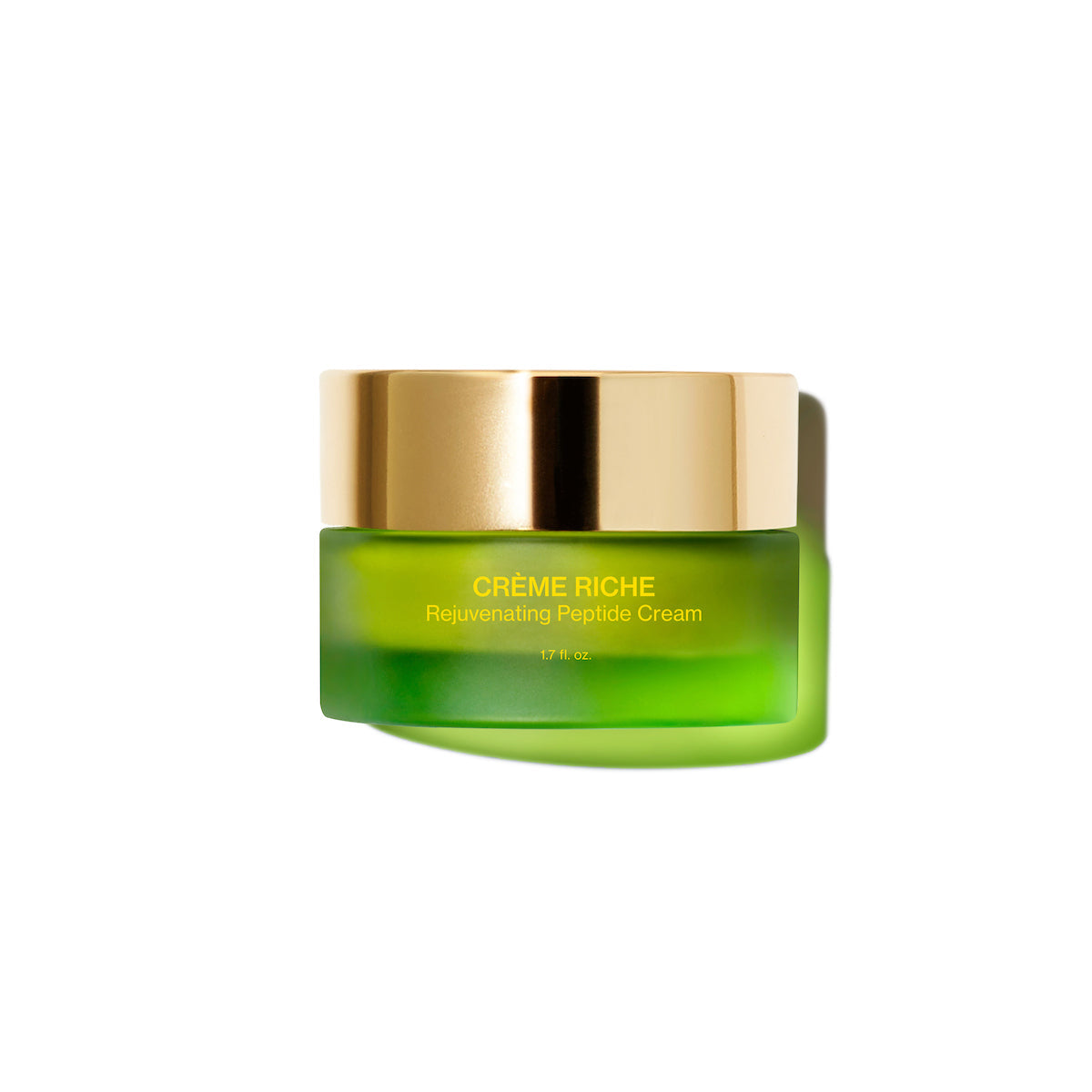
Crème Riche

Crème Riche
Tata Harper Skincare
creme-riche
Moisturize
9784763711781
Morning or Evening?
How often will you use this product?
Notes


Highlights
WHAT IS IT?
Anti-aging moisturizer with 11 benefits
FEATURES
Extra-strength hydration, rejuvenation, transforms visible signs of aging, restores youthful appearance
BEST FOR
dry
CHECKS
Free from harsh chemicals, synthetic chemicals, toxin, GMOs, fillers, artificial colors, artificial fragrances
Who Is It For?
Adults Seeking Anti-aging BenefitsWhat Does It Help With?
Signs Of Aging Hydration Skin RejuvenationBudget
Professional (over $150)How To Use
Which routine should it be used in?
Instructions:
Key Information


What Tata Harper Skincare Says
Product Description:
A rich anti-aging cream for extra-strength hydration and rejuvenation. This formula is designed to be an all-in-one anti-aging cream with 11 different benefits to transform visible signs of aging and restore a supple, youthful appearance.
About the Brand:
Ingredients Overview
Ingredients List
Hordeum Vulgare Leaf Juice*, Cetyl Alcohol, Glycerin, Cetearyl Alcohol, Aqua/Water/Eau, Glyceryl Stearate SE, Jojoba Esters, Simmondsia Chinensis (Jojoba) Seed Oil, Linoleic Acid, Shea Butter Ethyl Esters, Propanediol, Candelilla Cera/Euphorbia Cerifera (Candelilla) Wax/Cire de Candelilla, Leuconostoc Ferment Filtrate, Astrocaryum Murumuru Seed Butter*, Caprylic/Capric Triglyceride, Cetearyl Glucoside, Beta Vulgaris/Beet Root Extract/Extrait de Racine de Betterave, Hydrolyzed Avocado Protein, Magnolia Officinalis Bark Extract, Caesalpinia Spinosa Fruit Extract, Cassia Alata Leaf Extract, Carthamus Tinctorius (Safflower) Oleosomes, Calcium Ketogluconate, Sodium Hyaluronate, Kappaphycus Alvarezii Extract, Hyaluronic Acid, Jania Rubens Extract, Lavandula Stoechas Extract, Linolenic Acid, Salicornia Herbacea Extract, Acer Rubrum Bark Extract, Dunaliella Salina Extract, Saccharide Isomerate, Sodium Anisate, Camellia Oleifera Seed Oil*, Camellia Sinensis (Green Tea) Seed Oil*, Lavandula Angustifolia (Lavender) Oil, Salix Alba (Willow) Bark Extract, Pelargonium Graveolens (Geranium) Oil, Anthemis Nobilis (Chamomile) Flower Oil, Arnica Montana (Arnica) Extract*, Borago Officinalis (Borage) Leaf Extract*, Calendula Officinalis (Calendula) Flower Extract*, Medicago Sativa (Alfalfa) Extract*, Michelia Alba Leaf Oil, Spiraea Ulmaria (Meadowsweet) Extract*, Santalum Spicatum (Sandalwood) Wood Oil, Tocopherol, Sambucus Nigra Fruit Extract, Glyceryl Undecylenate, Gaultheria Procumbens (Wintergreen) Leaf Extract, Citrus Paradisi (Grapefruit) Oil, Sodium Levulinate, Acacia Senegal Gum, Xanthan Gum, Olea Europaea (Olive) Oil*, Citrus Aurantium (Bergamot) Peel Oil, Sodium Citrate, Maltodextrin, p-Anisic Acid, Glyceryl Caprylate, Hydrolyzed Corn Starch, Squalane, Phenethyl Alcohol, Citric Acid, Limonene, Linalool, Citronellol, Geraniol, Citral, Farnesol
Key Ingredients
Linolenic acid, linoleic acid, lavandula stoechas extract, salix alba bark extract, cetearyl alcohol, algae extract, hordeum vulgare leaf juice, cetyl alcohol, glycerin
Ingredients Details
Cetearyl Alcohol
Common Name(s): Cetostearyl alcohol,c16-18 fatty alcohol
CAS Number: 8005-44-5
DESCRIPTION
What It Does: Provides fatty alcohol emulsification and thickening for stable, well-textured emulsions.
Why It's Used: The most widely used fatty alcohol in cosmetics – provides emulsification, thickening, and emolliency simultaneously from a single ingredient with excellent safety profile.
How It Works: Forms bilayer lamellar structures in water with emulsifiers creating a viscous structured network that thickens and stabilizes emulsions. fatty alcohol emolliency provides direct skin conditioning. bilayer formation reduces inter-droplet coalescence in emulsions.
Typically Found In: Creams,lotions,conditioners – virtually all emulsion products
TECHNICAL DETAILS
Primary Category: Functional ingredient – fatty alcohol emulsifier/thickener
Secondary Functions: Barrier sealing,softening
Application Areas:

Facial Skincare
Body Care
Hair Care

Beard Care
Color Cosmetics (Makeup)
Dietary/Oral Supplements
Typical Concentration Range: 1%–25%
SOURCING & ETHICS
Vegan Status: Yes – from vegetable or coconut/palm fatty acids
Halal Status: Yes
Source Notes: Plant-derived, synthetic or animal-derived. verify source.
SKIN COMPATIBILITY
Irritancy Rating: 1/5 – very low
Comedogenicity Rating: 1/5 – low; formulation-dependent
Sensitivity Concerns: Non-irritating.
Safe for Sensitive Skin: Yes
SAFETY & COMPATIBILITY
Safety Profile: Excellent safety profile. ewg score: 1.
Works Well With: Humectants,ceramides,actives as carrier
Avoid Combining With: No significant incompatibilities
SCIENTIFIC NOTE
Cetearyl alcohol's ability to form lamellar liquid crystal structures ('krafft phases') with water and co-emulsifiers provides not only emulsion stability but also enhanced skin penetration via the lamellar skin barrier pathway. these crystalline structures can act as a reservoir for active ingredients, slowly releasing them as the lamellar structure melts on skin contact.
Last Verified: Cosing database,cir safety assessment
Primary Sources: 2026-03-12
Cetyl Alcohol
Common Name(s): 1-hexadecanol,palmityl alcohol,n-cetyl alcohol
CAS Number: 36653-82-4
DESCRIPTION
What It Does: Provides c16 fatty alcohol emolliency and thickening for well-textured cosmetic emulsions.
Why It's Used: Lighter-textured fatty alcohol alternative to stearyl alcohol for creams and conditioners requiring less heavy emolliency.
How It Works: C16 chain length provides slightly lower melting point (49°c) than stearyl (60°c) giving softer, lighter emulsion texture. forms lamellar networks for thickening and stability. direct skin and hair conditioning via fatty alcohol film.
Typically Found In: Creams,hair conditioners,lotions
TECHNICAL DETAILS
Primary Category: Functional ingredient – fatty alcohol
Secondary Functions: Barrier sealing,softening
Application Areas:
Facial Skincare
Body Care
Hair Care
Beard Care
Color Cosmetics (Makeup)
Dietary/Oral Supplements
Typical Concentration Range: 1%–15%
SOURCING & ETHICS
Vegan Status: Yes – from vegetable or coconut/palm fatty acids
Halal Status: Yes
Source Notes: Plant-derived, synthetic or animal-derived. verify source.
SKIN COMPATIBILITY
Irritancy Rating: 1/5 – very low
Comedogenicity Rating: 1/5 – low; formulation-dependent
Sensitivity Concerns: Non-irritating.
Safe for Sensitive Skin: Yes
SAFETY & COMPATIBILITY
Safety Profile: Excellent safety profile. ewg score: 1.
Works Well With: Humectants,ceramides,actives as carrier
Avoid Combining With: No significant incompatibilities
SCIENTIFIC NOTE
Cetyl alcohol's c16 chain length is at the approximate thermal transition point for fatty alcohol lamellar crystallization at skin temperature (33°c). this transition (from ordered crystalline to disordered liquid phase near skin temperature) provides the characteristic 'melts on application' sensory profile that makes cetyl alcohol-containing products feel cooling and light on initial application.
Last Verified: Cosing database,cir safety assessment
Primary Sources: 2026-03-12
Glycerin
Common Name(s): Glycerol,glycerine,1,2,3-propanetriol
CAS Number: 56-81-5
DESCRIPTION
What It Does: Glycerin pulls water from the environment and deeper skin layers into the outer skin layer (epidermis), boosting moisture levels and keeping skin soft, smooth, and plump.
Why It's Used: It is used in virtually every moisturizer, serum, and cleanser because it is highly effective at hydrating skin, is well-tolerated by all skin types, and enhances the texture and spreadability of formulations.
How It Works: As a humectant, glycerin forms hydrogen bonds with water molecules, trapping them in the skin. it also reinforces the skin barrier by integrating into lipid structures between skin cells.
Typically Found In: Moisturizers,serums,cleansers,toners,sheet masks,sunscreens,body lotions,shampoos,conditioners
TECHNICAL DETAILS
Primary Category: Humectant
Secondary Functions: Skin barrier support,emollient,solvent
Application Areas:
Facial Skincare
Body Care
Hair Care
Beard Care
Color Cosmetics (Makeup)
Dietary/Oral Supplements
Typical Concentration Range: 1%–30% (typical: 3–10%)
SOURCING & ETHICS
Vegan Status: Yes – plant-derived (coconut, soy, palm) or synthetic
Halal Status: Yes – when plant-derived or synthetic; verify source with supplier
Source Notes: Derived from plant oils via hydrolysis or saponification; synthetic versions also available. palm-derived glycerin carries sustainability concerns.
SKIN COMPATIBILITY
Irritancy Rating: 1/5 – very low; non-irritating at all standard concentrations
Comedogenicity Rating: 0/5 – non-comedogenic
Sensitivity Concerns: Extremely rare allergic reactions; generally safe for all skin types including sensitive and baby skin
Safe for Sensitive Skin: Yes
SAFETY & COMPATIBILITY
Safety Profile: Widely recognized as safe. ewg hazard score: 1. no significant concerns for irritation, sensitization, or toxicity at typical concentrations (up to 50%).
Works Well With: Hyaluronic acid,ceramides,niacinamide,panthenol,urea,peptides,retinol,ahas/bhas
Avoid Combining With: No known incompatibilities at standard concentrations
SCIENTIFIC NOTE
Glycerin is an endogenous skin component found naturally in the stratum corneum. aquaporin-3 channels in keratinocytes facilitate glycerin transport, making it integral to natural skin hydration pathways.
Last Verified: Cosing database,cir safety assessment,ewg skin deep,inci decoder
Primary Sources: 2026-03-12
Glyceryl Stearate Se
Common Name(s): Glyceryl monostearate se,self-emulsifying glyceryl stearate
DESCRIPTION
What It Does: Provides self-emulsifying o/w emulsification with less co-emulsifier requirement.
Why It's Used: Simplified emulsification for formulations where self-emulsification reduces complexity vs standard gms requiring hlb-matched co-emulsifier blends.
How It Works: Small amount of embedded sodium/potassium stearate soap provides in-situ hlb modification enabling self-emulsification without requiring precisely hlb-matched co-emulsifier. forms stable o/w emulsions with water alone under high-shear mixing.
Typically Found In: Simple cream formulations,single-emulsifier systems
TECHNICAL DETAILS
Primary Category: Functional ingredient – self-emulsifying monoglyceride
Secondary Functions: Barrier sealing,softening
Application Areas:
Facial Skincare
Body Care
Hair Care
Beard Care
Color Cosmetics (Makeup)
Dietary/Oral Supplements
Typical Concentration Range: 1%–10%
SOURCING & ETHICS
Vegan Status: Yes – from vegetable glycerol and stearic acid
Halal Status: Yes
Source Notes: Plant-derived, synthetic or animal-derived. verify source.
SKIN COMPATIBILITY
Irritancy Rating: 1/5 – very low
Comedogenicity Rating: 1/5 – low; formulation-dependent
Sensitivity Concerns: Non-irritating.
Safe for Sensitive Skin: Yes
SAFETY & COMPATIBILITY
Safety Profile: Excellent safety profile. ewg score: 1.
Works Well With: Humectants,ceramides,actives as carrier
Avoid Combining With: No significant incompatibilities
SCIENTIFIC NOTE
Glyceryl stearate se's built-in self-emulsification arises from the small percentage (~2-5%) of potassium stearate soap co-crystallized with the monoglyceride. this soap provides the high-hlb co-emulsifier 'partner' needed for stable o/w emulsification without requiring the formulator to select and add a separate high-hlb emulsifier – an elegant simplification of classic emulsifier hlb matching theory.
Last Verified: Cosing database,cir safety assessment
Primary Sources: 2026-03-12
