

COSMODERM
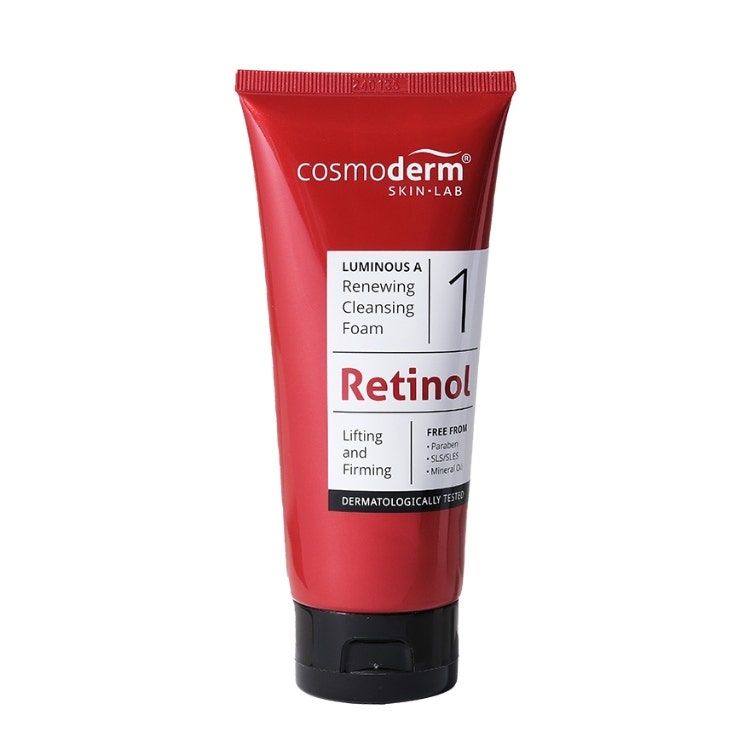
Cosmoderm Luminous A Renewing Cleansing Foam 100Ml

Cosmoderm Luminous A Renewing Cleansing Foam 100Ml
COSMODERM
cosmoderm-luminous-a-renewing-cleansing-foam-100ml
Cleanse
10084893720869
Morning or Evening?
How often will you use this product?
Notes


Highlights
WHAT IS IT?
Renewing cleansing foam with 14 ingredients
FEATURES
Lifting, firming, accelerate skin cell renewal, deep cleanse impurities and toxins, smoothen skin texture, neutralise harmful free radicals, radiant-looking skin
BEST FOR
sensitive
CHECKS
Avoid to eyes area
Who Is It For?
What Does It Help With?
Premature Aging Weary Skin Lifting Firming Radiant Skin Smoothen TextureBudget
Affordable (under $30)How To Use
Which routine should it be used in?
Instructions:
Key Information


What COSMODERM Says
Product Description:
Soft creamy foam effectively removes all impurities while enhancing skin renewal to prevent early signs of aging. - Lifting & firming - Accelerate skin cell renewal - Deep cleanse impurities & toxin effectively - Smoothen skin texture - Neutralise harmful free radicals - Radiant-looking skin after use
About the Brand:
Ingredients Overview
Ingredients List
Aqua,Glycerin,Palmitic-Acid,Cocoamidopropyl-Betaine,Myristic-Acid,Lauric-Acid,Potassium-Hydroxide,Stearic-Acid,Glyceryl-Stearate-SE,Vitamin-A-Palmitate,Trehalose,Salicylic-Acid,Disodium-EDTA,Hydroxyethyl-Cellulose,Fragrance
Key Ingredients
Vitamin A Palmitate, Salicylic Acid, Trehalose
Ingredients Details
Fragrance
Common Name(s): Fragrance ingredient,eu allergen or aromatic component,olfactory/flavour
CAS Number: N/a
DESCRIPTION
What It Does: Provides the complete fragrance profile contributing to product sensory experience and consumer appeal.
Why It's Used: Fragrance is a major consumer purchase driver — up to 70% of consumers make purchasing decisions partially based on product scent.
How It Works: Fragrance blends interact with olfactory receptors providing the sensory profile — complex mixtures activate multiple receptor types for rich, multidimensional scent experiences.
Typically Found In: All fragrance products
TECHNICAL DETAILS
Primary Category: Active ingredient – cosmetic active
Secondary Functions: Skin conditioning
Application Areas:

Facial Skincare

Body Care
Hair Care
Beard Care
Color Cosmetics (Makeup)
Dietary/Oral Supplements
Typical Concentration Range: Standard use levels
SOURCING & ETHICS
Vegan Status: Conditional - supplier confirmation required
Halal Status: Unverified - supplier confirmation required
Source Notes: Commercially produced for cosmetic use. verify vegan/halal status with supplier. [audit 2026-07-29 rev2: the record's own source_notes does not assert a non-animal origin, or instructs the reader to verify with the supplier; "yes" asserts knowledge the record does not hold. determination requires shariah-panel sign-off.]
SKIN COMPATIBILITY
Irritancy Rating: 1/5 – very low
Comedogenicity Rating: 0/5 – non-comedogenic
Sensitivity Concerns: Well-tolerated by most skin types.
Safe for Sensitive Skin: Yes
SAFETY & COMPATIBILITY
Safety Profile: Good safety profile at recommended concentrations. ewg score: 1–2.
Works Well With: Standard skincare actives
Avoid Combining With: No known significant incompatibilities
SCIENTIFIC NOTE
Ifra guidelines set usage limits for fragrance ingredients based on skin sensitisation and phototoxicity assessment for each application category.
Last Verified: 2026-03-12
Primary Sources: Eu regulation 1223/2009 annex iii,ifra standards,fragrance allergen declaration requirements
Glycerin
Common Name(s): Glycerol,glycerine,1,2,3-propanetriol
CAS Number: 56-81-5
DESCRIPTION
What It Does: Glycerin pulls water from the environment and deeper skin layers into the outer skin layer (epidermis), boosting moisture levels and keeping skin soft, smooth, and plump.
Why It's Used: It is used in virtually every moisturizer, serum, and cleanser because it is highly effective at hydrating skin, is well-tolerated by all skin types, and enhances the texture and spreadability of formulations.
How It Works: As a humectant, glycerin forms hydrogen bonds with water molecules, trapping them in the skin. it also reinforces the skin barrier by integrating into lipid structures between skin cells.
Typically Found In: Moisturizers,serums,cleansers,toners,sheet masks,sunscreens,body lotions,shampoos,conditioners
TECHNICAL DETAILS
Primary Category: Humectant
Secondary Functions: Skin barrier support,emollient,solvent
Application Areas:
Facial Skincare
Body Care
Hair Care
Beard Care
Color Cosmetics (Makeup)
Dietary/Oral Supplements
Typical Concentration Range: 1%–30% (typical: 3–10%)
SOURCING & ETHICS
Vegan Status: Conditional - feedstock declaration required
Halal Status: Unverified - feedstock declaration required (plant, animal and petrochemical routes all exist)
Source Notes: Derived from plant oils via hydrolysis or saponification; synthetic versions also available. palm-derived glycerin carries sustainability concerns. [audit 2026-07-29 rev2: origin-dependent: the same inci exists in plant, animal and petrochemical versions and the name does not discriminate. determination requires shariah-panel sign-off.]
SKIN COMPATIBILITY
Irritancy Rating: 1/5 – very low; non-irritating at all standard concentrations
Comedogenicity Rating: 0/5 – non-comedogenic
Sensitivity Concerns: Extremely rare allergic reactions; generally safe for all skin types including sensitive and baby skin
Safe for Sensitive Skin: Yes
SAFETY & COMPATIBILITY
Safety Profile: Widely recognized as safe. ewg hazard score: 1. no significant concerns for irritation, sensitization, or toxicity at typical concentrations (up to 50%).
Works Well With: Hyaluronic acid,ceramides,niacinamide,panthenol,urea,peptides,retinol,ahas/bhas
Avoid Combining With: No known incompatibilities at standard concentrations
SCIENTIFIC NOTE
Glycerin is an endogenous skin component found naturally in the stratum corneum. aquaporin-3 channels in keratinocytes facilitate glycerin transport, making it integral to natural skin hydration pathways.
Last Verified: 2026-03-12
Primary Sources: Cosing database,cir safety assessment,ewg skin deep,inci decoder
Trehalose
Common Name(s): Alpha,alpha-trehalose,mycose
CAS Number: 99-20-7
DESCRIPTION
What It Does: Provides superior moisture retention under dehydrating conditions – uniquely protective in extreme environments.
Why It's Used: Premium humectant for formulations targeting dehydration, environmental stress protection, and dry/mature skin hydration.
How It Works: Forms a protective glassy matrix that replaces water molecules around proteins and cell membranes during dehydration stress, preventing protein denaturation and membrane damage. stronger water binding than sucrose or glucose.
Typically Found In: Premium moisturizers,protective barrier formulas,anti-aging products
TECHNICAL DETAILS
Primary Category: Active ingredient – anhydrobiotic sugar / humectant
Secondary Functions: Stress protection,barrier support,cryoprotectant
Application Areas:
Facial Skincare
Body Care
Hair Care
Beard Care
Color Cosmetics (Makeup)
Dietary/Oral Supplements
Typical Concentration Range: 1%–10%
SOURCING & ETHICS
Vegan Status: Yes – fermentation-derived or from yeast
Halal Status: Yes
Source Notes: Produced by yeast fermentation or enzymatic conversion of starch. available as anhydrous or dihydrate form.
SKIN COMPATIBILITY
Irritancy Rating: 1/5 – very low
Comedogenicity Rating: 0/5 – non-comedogenic
Sensitivity Concerns: Non-irritating; exceptionally well-tolerated; endogenous to many organisms.
Safe for Sensitive Skin: Yes
SAFETY & COMPATIBILITY
Safety Profile: Excellent safety profile. ewg score: 1.
Works Well With: Ceramides,emollients,occlusives,glycerin,hyaluronic acid
Avoid Combining With: No significant incompatibilities
SCIENTIFIC NOTE
Trehalose's unique ability to form an amorphous glassy matrix during dehydration (replacing water molecules) explains the survival of tardigrades and resurrection plants. this property translates to exceptional skin protection under environmental dehydration stress.
Last Verified: 2026-03-12
Primary Sources: Cosing database,crowe et al. trehalose anhydrobiosis review,cir safety assessment