

Colorbar
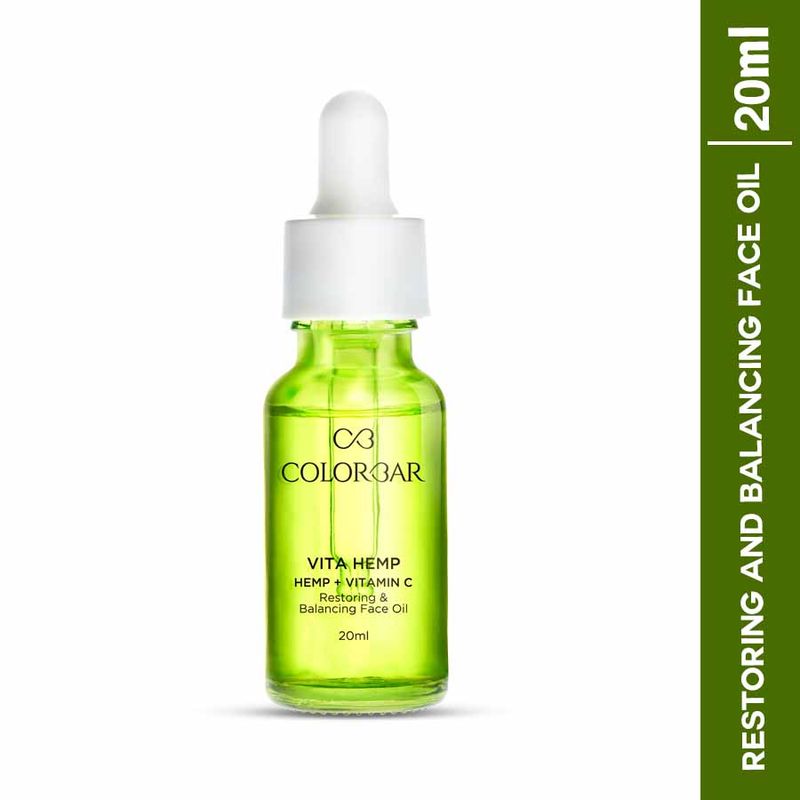
Colorbar Vita Hemp + Vitamin C Restoring and Balancing Night Oil

Colorbar Vita Hemp + Vitamin C Restoring and Balancing Night Oil
Colorbar
colorbar-vita-hemp-vitamin-c-restoring-and-balancing-night-oil
Face Oil
10085028954405
Morning or Evening?
How often will you use this product?
Notes


Highlights
WHAT IS IT?
Facial oil with multiple natural ingredients including hemp seed oil, vitamin C, vitamin E and retinol
FEATURES
Non-sticky, lightweight texture, quick absorption, restores and balances skin, hydrating, anti-ageing, antioxidant benefits
BEST FOR
sensitive
CHECKS
Paraben-Free,Sulfate-free,Alcohol-free,Silicone-free
Who Is It For?
All Genders No Specific Age Range MentionedWhat Does It Help With?
Hydration Skin Recovery Anti-ageing Antioxidant Effects Calming Sensitive SkinBudget
Mid-range ($30-$75)How To Use
Which routine should it be used in?
Instructions:
Key Information


What Colorbar Says
Product Description:
This Hemp Seed Facial Oil is a blessing with an exceptionally lightweight texture. It quickly absorbs into your skin, keeping it non-sticky, ensuring a radiant and natural glow when you wake up. Its lightweight composition makes it the perfect solution for all seasons and skin types. Combining the goodness of hemp seed oil, vitamin C, vitamin E and oil soluble retinol, it is packed with a natural blend of essential oils like argan oil, rosehip oil and almond oil. Its perfect consistency helps deliver omega 3, 6 and 9 in their natural form, it helps boost skin recovery, ensuring anti-ageing and antioxidant benefits. A few drops of this non-sticky and light oil gives you the perfect look, making it an indispensable part of your bag of beauty essentials.
About the Brand:
Ingredients Overview
Ingredients List
Caprylic-Capric-Triglyceride,Coco-Caprylate-Caprate,Cannabis-Sativa-Hemp-Seed-Oil,Polyurethane-79,Cyclopentasiloxane,Tocopheryl-Acetate,Sodium-Ascorbate,Tocopheryl,Retinol,Argania-Spinosa-Kernel-Argan-Oil,Prunus-Amygdalus-Dulcis-Sweet-Almond-Oil,Butylated-Hydroxytoluene,Perfume
Key Ingredients
Oil Soluble Retinol,Argan Oil,Rosehip Oil,Almond Oil,Oil Soluble Vitamin C,Vitamin E
Ingredients Details
Cyclopentasiloxane
Common Name(s): Cyclopentasiloxane,cyclic volatile silicone,dry-touch carrier solvent
CAS Number: N/a
DESCRIPTION
What It Does: Provides a dry, weightless application vehicle that evaporates cleanly leaving actives and non-volatile silicones deposited on skin — eliminating the residual heaviness of conventional liquid carrier solvents.
Why It's Used: Cyclosiloxanes are the unique volatile silicone solvents that dissolve non-volatile silicones (dimethicone, cyclomethicone), organic uv filters, and lipophilic actives, providing the sensory-superior dry-touch application experience in premium formulations.
How It Works: Cyclosiloxane vapour pressure (d5 cyclopentasiloxane ~0.3 mmhg at 25°c) provides clean evaporation at body temperature. the cyclic ring structure provides lower boiling point than equivalent linear dimethicone, enabling faster evaporation while the ring conformation maintains the silicone's low surface energy for smooth application.
Typically Found In: Primers,antiperspirants,sunscreens
TECHNICAL DETAILS
Primary Category: Functional ingredient – emollient
Secondary Functions: Barrier sealing,softening
Application Areas:

Facial Skincare
Body Care
Hair Care

Beard Care
Color Cosmetics (Makeup)
Dietary/Oral Supplements
Typical Concentration Range: 1%–50%
SOURCING & ETHICS
Vegan Status: Yes
Halal Status: Yes
Source Notes: Plant-derived, synthetic or animal-derived. verify source.
SKIN COMPATIBILITY
Irritancy Rating: 1/5 – very low
Comedogenicity Rating: 1/5 – low; formulation-dependent
Sensitivity Concerns: Non-irritating.
Safe for Sensitive Skin: Yes
SAFETY & COMPATIBILITY
Safety Profile: Excellent safety profile. ewg score: 1.
Works Well With: Humectants,ceramides,actives as carrier
Avoid Combining With: No significant incompatibilities
SCIENTIFIC NOTE
Cyclopentasiloxane (d5) and cyclohexasiloxane (d6) are under eu regulatory review for potential environmental persistence (pbt assessment) — formulators should monitor eu regulation 2018/35 implementation for restrictions in wash-off products.
Last Verified: Cosing database,eu cyclosiloxane regulatory review
Primary Sources: 2026-03-12
Polyurethane-79
Common Name(s): Polyurethane-79
DESCRIPTION
What It Does: Delivers targeted skin-conditioning or bioactive benefits through a specific mechanism of action suited to the formulation's intended purpose.
Why It's Used: Specialty actives address specific skin concerns through targeted molecular mechanisms, providing efficacy beyond what base formulation ingredients alone can achieve.
How It Works: The bioactive compound interacts with specific molecular targets in skin cells or the extracellular matrix — enzymes, receptors, structural proteins, or signaling molecules — triggering beneficial biological responses.
Typically Found In: Serums,treatments,moisturizers,specialty products
TECHNICAL DETAILS
Primary Category: Specialty actives
Secondary Functions: Skin-conditioning,anti-aging
Application Areas:
Facial Skincare
Body Care
Hair Care
Beard Care
Color Cosmetics (Makeup)
Dietary/Oral Supplements
Typical Concentration Range: 0.01–5%
SOURCING & ETHICS
Vegan Status: Yes
Halal Status: Yes
Source Notes: Specialty active ingredient; check individual sourcing for vegan status.
SKIN COMPATIBILITY
Irritancy Rating: 1
Comedogenicity Rating: 0
Sensitivity Concerns: Low sensitization potential at recommended use concentrations.
Safe for Sensitive Skin: Yes
SAFETY & COMPATIBILITY
Safety Profile: Well-characterized cosmetic ingredient with established safety profile. generally non-irritating at typical use concentrations. suitable for leave-on and rinse-off cosmetics.
Works Well With: Niacinamide,hyaluronic acid,vitamin c,peptides
Avoid Combining With: Incompatible with oxidizing agents; check ph stability
SCIENTIFIC NOTE
Specialty actives typically work through enzyme inhibition (e.g., tyrosinase inhibition for brightening, mmp inhibition for anti-aging), receptor activation (e.g., retinoid receptors, ppar-γ for barrier genes), or transcription factor modulation (e.g., nrf2 for antioxidant gene upregulation). structure-activity relationships determine potency and selectivity.
Last Verified: Cosing eu database; pcpc cosmetic ingredient safety reviews; ingredient-specific safety and efficacy literature
Primary Sources: 2025-01-15
Retinol
Common Name(s): Vitamin a,all-trans retinol,(all-e)-3,7-dimethyl-9-(2,6,6-trimethyl-1-cyclohexen-1-yl)-2,4,6,8-nonatetraen-1-ol
CAS Number: 68-26-8
DESCRIPTION
What It Does: Retinol accelerates skin cell turnover, stimulates collagen production, reduces fine lines and wrinkles, fades hyperpigmentation, and helps normalize pore size.
Why It's Used: It is the most evidence-backed anti-aging ingredient available without a prescription. it provides comprehensive skin renewal benefits that no other single cosmetic ingredient can match.
How It Works: Retinol is converted in the skin to retinoic acid, which binds to retinoid receptors in cell nuclei. this activates gene expression changes that accelerate cell turnover, boost collagen synthesis, and inhibit matrix metalloproteinases (collagen-degrading enzymes).
Typically Found In: Night creams,serums,eye creams,targeted treatment products,anti-aging formulations
TECHNICAL DETAILS
Primary Category: Active ingredient – vitamin a derivative
Secondary Functions: Exfoliating,anti-acne,brightening
Application Areas:
Facial Skincare
Body Care
Hair Care
Beard Care
Color Cosmetics (Makeup)
Dietary/Oral Supplements
Typical Concentration Range: 0.025%–1% (otc); start at low concentrations and build up slowly
SOURCING & ETHICS
Vegan Status: Conditional – can be animal-derived (fish liver, egg yolk) or synthetic; verify source
Halal Status: Conditional – verify source; synthetic retinol is halal
Source Notes: Cosmetic retinol is predominantly synthetically manufactured. some natural sources include fish liver oils. synthetic is preferred for purity and sustainability.
SKIN COMPATIBILITY
Irritancy Rating: 3/5 – moderate; can cause dryness, peeling, redness, especially during adjustment period (retinization)
Comedogenicity Rating: 0/5 – non-comedogenic; actually helps clear pores
Sensitivity Concerns: Retinization period: 2–6 weeks of potential dryness, flaking, and sensitivity. photosensitizing – must use spf when using retinol. avoid during pregnancy.
Safe for Sensitive Skin: Use with caution – start at 0.025%, buffer with moisturizer, use every 2–3 nights initially
SAFETY & COMPATIBILITY
Safety Profile: Safe for general use at otc concentrations. not recommended during pregnancy. avoid with waxing. use spf daily. ewg hazard score: varies by concentration.
Works Well With: Niacinamide (soothes irritation),peptides,ceramides,hyaluronic acid,spf (mandatory)
Avoid Combining With: Benzoyl peroxide (may inactivate retinol),ahas/bhas (when new to retinol – overexfoliation risk),vitamin c (use at different times)
SCIENTIFIC NOTE
Retinol is approximately 20 times less potent than prescription tretinoin (retinoic acid) but significantly better tolerated. the conversion rate of retinol to retinoic acid in skin is the rate-limiting step in its efficacy.
Last Verified: Cosing database,cir safety assessment,journal of investigative dermatology,kligman et al. studies
Primary Sources: 2026-03-12
