

Coco Baya
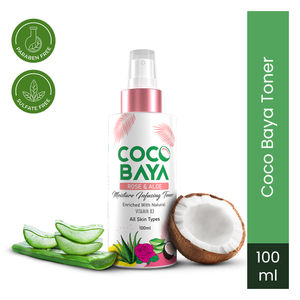
Coco Baya Rose & Aloe Moisture Infusing Toner - 100ml

Coco Baya Rose & Aloe Moisture Infusing Toner - 100ml
Coco Baya
coco-baya-rose-aloe-moisture-infusing-toner-100ml
Tone
10085461819685
Morning or Evening?
How often will you use this product?
Notes


Highlights
WHAT IS IT?
Moisture Infusing Toner, contains multiple ingredients including Niacinamide
FEATURES
Formulated with rose and aloe vera extracts, contains niacinamide, balances skin texture, suitable for dry/oily/sensitive skin, dermatologically tested, replenishes moisture, hydrating and soothing properties
BEST FOR
sensitive
CHECKS
Parabens, Sulphates
Who Is It For?
What Does It Help With?
Radiant Skin Balance Skin Texture Hydration Soothing Glowing SkinBudget
Affordable (under ₹30)How To Use
Which routine should it be used in?
Instructions:
Key Information

What Coco Baya Says
Product Description:
Cocobaya Toner Is Formulated With The Goodness Of Rose And Aloe Vera Extracts Bringing You The Power Of Nature For A Radiant Skin. The Gentle Formula Helps Balance The Skin Texture Promoting Healthier And More Resilient Skin By Removing Dust. Whether You Have Dry Oily Or Sensitive Skin Cocobaya Toner Is Suitable For All. The Moisture Infusing Toner Contains Magic Ingredient Niacinamide Which Works Magically To Give Your Skin A Gorgeous Glow. Pamper Your Skin With Its Hydrating And Soothing Properties. The Formula Is Designed To Replenish Moisture Leaving Your Skin Feeling Refreshed Revitalized And Incredibly Soft. The Toner Is Dermatologically Tested Along With Being Parabens & Sulphate Free Making It The Perfect Choice For Those Who Are Conscious Of Their Skin.
About the Brand:
Ingredients Overview
Ingredients List
Key Ingredients
Rose extract, Aloe vera extract, Niacinamide
Ingredients Details
Niacinamide
Common Name(s): Vitamin b3,nicotinamide,pyridine-3-carboxamide
CAS Number: 98-92-0
DESCRIPTION
What It Does: Niacinamide strengthens the skin barrier, reduces visible pore size, regulates sebum production, fades dark spots, and improves skin texture and tone.
Why It's Used: It is used because it addresses multiple skin concerns at once without irritation, making it suitable for all skin types. it is stable in formulations and pairs well with most other actives.
How It Works: Niacinamide inhibits the transfer of melanosomes (pigment packets) to skin cells, reducing hyperpigmentation. it also stimulates ceramide synthesis to strengthen the skin barrier and reduces inflammation by modulating cytokine activity.
Typically Found In: Serums,moisturizers,toners,cleansers,eye creams,sunscreens,primers
TECHNICAL DETAILS
Primary Category: Active ingredient – vitamin
Secondary Functions: Barrier repair,brightening,anti-inflammatory
Application Areas:

Facial Skincare
Body Care

Hair Care
Beard Care
Color Cosmetics (Makeup)
Dietary/Oral Supplements
Typical Concentration Range: 2%–10% (typical: 5%; higher concentrations may cause flushing in some individuals)
SOURCING & ETHICS
Vegan Status: Yes – synthetically produced
Halal Status: Yes – synthetic origin
Source Notes: Commercially produced via synthesis from nicotinic acid or 3-cyanopyridine. no animal-derived sources used in cosmetic-grade niacinamide.
SKIN COMPATIBILITY
Irritancy Rating: 1/5 – very low; concentrations above 10% may cause temporary flushing in sensitive individuals
Comedogenicity Rating: 0/5 – non-comedogenic
Sensitivity Concerns: At concentrations >10%, some users experience niacin flush (transient redness/tingling). generally very well-tolerated.
Safe for Sensitive Skin: Yes – one of the best-tolerated actives for sensitive skin
SAFETY & COMPATIBILITY
Safety Profile: Extensively studied and considered very safe. ewg hazard score: 1. no significant systemic toxicity concerns at topical concentrations.
Works Well With: Retinol,peptides,ahas/bhas,hyaluronic acid,ceramides,zinc,vitamin c,spf
Avoid Combining With: High concentrations of vitamin c (ascorbic acid) may theoretically convert to niacin – use at different times if using pure l-ascorbic acid above 15%
SCIENTIFIC NOTE
Niacinamide is a precursor to nad+ and nadp+, coenzymes vital to cellular energy metabolism. its benefits for dna repair and mitochondrial function make it a key ingredient in anti-aging strategies.
Last Verified: 2026-03-12
Primary Sources: Cosing database,cir safety assessment,ewg skin deep,pubmed clinical studies
Rose Extract
Common Name(s): Rose extract,rose extract,botanical extract,phytochemical active
CAS Number: N/a
DESCRIPTION
What It Does: Provides polyphenol radical scavenging, terpenoid nf-kb/cox anti-inflammatory activity, and the characteristic secondary metabolite profile of rose extract for skin conditioning.
Why It's Used: Rose extract is selected for the characteristic secondary metabolite signature of rose extract — whether polyphenols, terpenoids, alkaloids, or polysaccharides, the phytochemical profile provides antioxidant, anti-inflammatory, or skin conditioning benefits specific to this botanical species.
How It Works: Polyphenol catechol h-atom donation for ros scavenging; terpenoids inhibit iκb kinase; flavonoids compete at cox-1/2; polysaccharides provide prebiotic and humectant conditioning.
Typically Found In: Botanical skin care
TECHNICAL DETAILS
Primary Category: Active ingredient – antioxidant
Secondary Functions: Free radical scavenging,anti-aging
Application Areas:
Facial Skincare
Body Care
Hair Care
Beard Care
Color Cosmetics (Makeup)
Dietary/Oral Supplements
Typical Concentration Range: 0.1%–10%
SOURCING & ETHICS
Vegan Status: Conditional - supplier confirmation required
Halal Status: Conditional - basis not stated in source record; supplier origin confirmation required to determine what evidence applies
Source Notes: Plant-derived extract or synthetic. [audit 2026-07-29 rev2: status downgraded on audit. determination requires shariah-panel sign-off.]
SKIN COMPATIBILITY
Irritancy Rating: 1/5 – very low
Comedogenicity Rating: 0/5 – non-comedogenic
Sensitivity Concerns: Non-irritating; well-tolerated.
Safe for Sensitive Skin: Yes
SAFETY & COMPATIBILITY
Safety Profile: Excellent safety profile. ewg score: 1.
Works Well With: Vitamin c,vitamin e,ferulic acid,spf,other antioxidants
Avoid Combining With: No significant incompatibilities
SCIENTIFIC NOTE
Standardise to marker compounds for consistent bioactivity — rose extract secondary metabolite content varies 3-10× with growing conditions.
Last Verified: 2026-03-22
Primary Sources: Cosing database,rose extract botanical extract review