
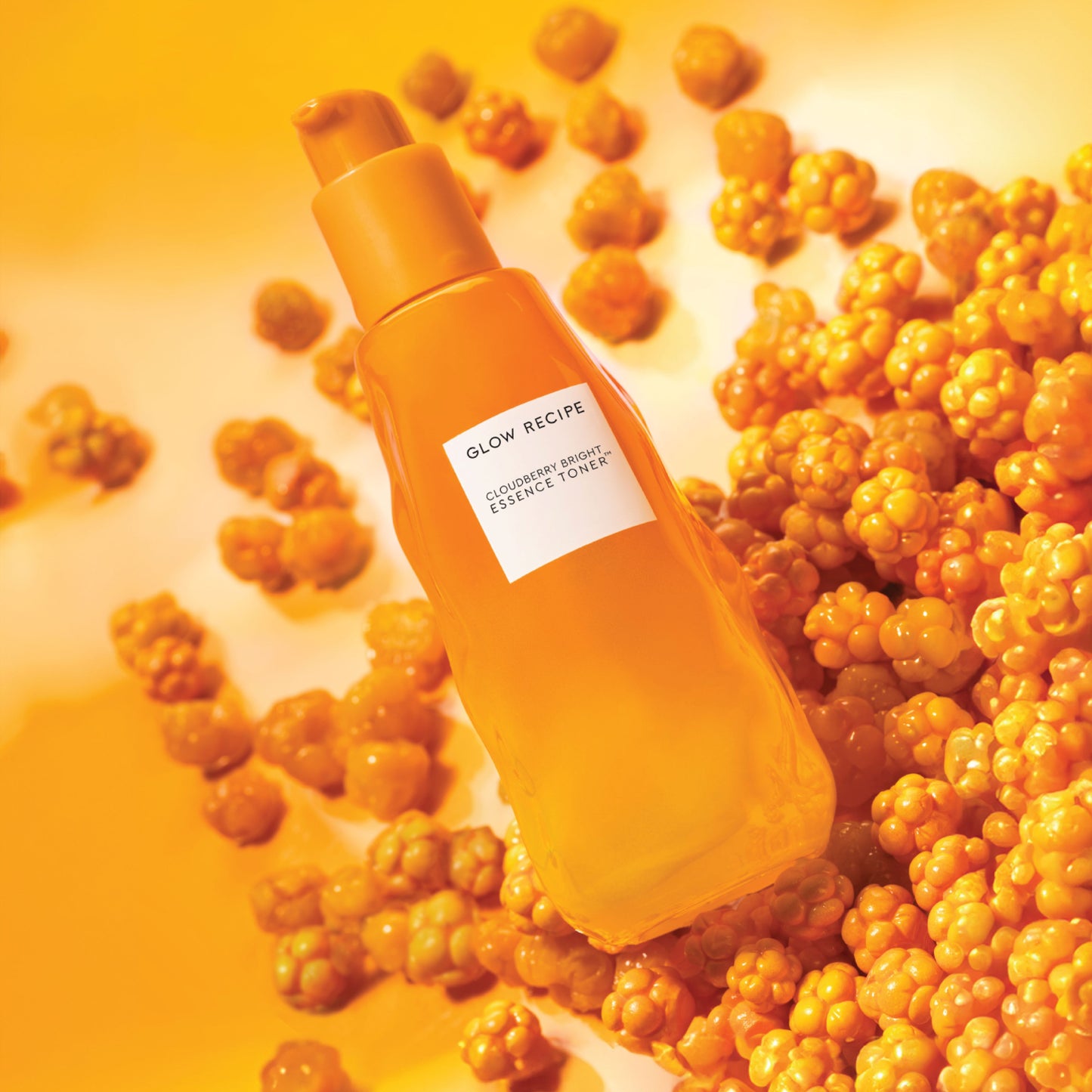

Glow Recipe
Cloudberry Bright Essence Toner

Cloudberry Bright Essence Toner
Glow Recipe
cloudberry-bright-essence-toner
Tone
9784796840229
Morning or Evening?
How often will you use this product?
Notes


Highlights
WHAT IS IT?
Brightening essence toner
FEATURES
Brightening treatment, evens tone, reduces hyperpigmentation, hydrates and softens skin, works as serum booster
BEST FOR
combination
CHECKS
Free of parabens, mineral oil, sulfates, silicones, phthalates, drying alcohols and synthetic dyes
Who Is It For?
All Ages All GendersWhat Does It Help With?
Hyperpigmentation Dullness Dehydration Uneven Tone Dark Spots Fine Lines And WrinklesBudget
Mid-range ($30-$75)How To Use
Which routine should it be used in?
Instructions:
Key Information


What Glow Recipe Says
Product Description:
This powerful brightening treatment helps to even tone, reduce the appearance of hyperpigmentation, and hydrates and softens dull, dehydrated skin for visibly enhanced radiance. The multi-tasking formula also works as a serum booster- use as the 1st step post cleanse to maximize absorption and benefits of the rest of your routine.
About the Brand:
Ingredients Overview
Ingredients List
Water/Aqua/Eau, Glycerin, Rubus Chamaemorus Fruit Extract, Ubiquinone, Lactobacillus, Rubus Chamaemorus Seed Oil, Collagen Amino Acids, Oat Amino Acids, Oryza Sativa Bran, Tocopherol, Ethyl Olivate, Algin, Capsicum Annuum Fruit Extract, Caprylic/Capric Triglyceride, Brassica Oleracea Capitata Leaf Extract, Dextrin, Molasses, Sodium Citrate, Butylene Glycol, Hydrogenated Lecithin, Cholesterol, Mentha Arvensis Extract, Barosma Betulina Leaf Extract, Citrus Limon Peel Oil, Scutellaria Baicalensis Root Extract, Paeonia Suffruticosa Root Extract, Glycyrrhiza Glabra Root Extract, Rosa Damascena Flower Water, Citrus Aurantium Bergamia Fruit Oil, Litsea Cubeba Fruit Oil, Citrus Nobilis Peel Oil, Juniperus Virginiana Oil, Elettaria Cardamomum Seed Oil, Amyris Balsamifera Bark Oil, 1,2-Hexanediol, Calcium Chloride, Salvia Sclarea Oil, Pelargonium Graveolens Flower Oil, Citrus Aurantium Dulcis Peel Oil, Juniperus Mexicana Oil, Thymus Vulgaris Flower/Leaf Oil, Cupressus Sempervirens Leaf/Nut/Stem Oil, Ocimum Basilicum Oil, Ribes Nigrum Bud Extract, Olea Europaea Leaf Extract, Vetiveria Zizanoides Root Oil, Prunus Armeniaca Fruit Extract, Pimpinella Anisum Fruit Extract, Gellan Gum, Polyglyceryl-2 Laurate, Glyceryl Caprate.
Key Ingredients
Cloudberry, Vitamin C
Ingredients Details
Collagen Amino Acids
Common Name(s): Collagen amino acids,cosmetic active,functional ingredient
CAS Number: N/a
DESCRIPTION
What It Does: Delivers characteristic cosmetic function at recommended use concentration.
Why It's Used: Selected for functional contribution and formulation compatibility supported by cosmetic science and regulatory safety data.
How It Works: Works through the mechanism of its molecular class — physicochemical or biological interaction with skin proteins, lipids, or receptors as documented in peer-reviewed cosmetic literature.
Typically Found In: Skin care formulations
TECHNICAL DETAILS
Primary Category: Active ingredient – cosmetic active
Secondary Functions: Skin conditioning
Application Areas:

Facial Skincare

Body Care
Hair Care
Beard Care
Color Cosmetics (Makeup)
Dietary/Oral Supplements
Typical Concentration Range: 0.1%–10%
SOURCING & ETHICS
Vegan Status: No - animal-derived
Halal Status: Conditional - halal slaughter certificate required (species declaration and slaughter method)
Source Notes: Commercially produced for cosmetic use. verify vegan/halal status with supplier. [audit 2026-07-29 rev2: name declares rendered fat or animal tissue; halal status depends on species and slaughter, neither of which is in the record. determination requires shariah-panel sign-off.]
SKIN COMPATIBILITY
Irritancy Rating: 1/5 – very low
Comedogenicity Rating: 0/5 – non-comedogenic
Sensitivity Concerns: Well-tolerated by most skin types.
Safe for Sensitive Skin: Yes
SAFETY & COMPATIBILITY
Safety Profile: Good safety profile at recommended concentrations. ewg score: 1–2.
Works Well With: Standard skincare actives
Avoid Combining With: No known significant incompatibilities
SCIENTIFIC NOTE
Collagen amino acids has an established safety and efficacy profile within the cosmetic regulatory framework at standard use concentrations.
Last Verified: 2026-03-12
Primary Sources: Cosing database,collagen amino acids technical literature
Ethyl Olivate
Common Name(s): Ethyl olivate,ethyl olivate,ethyl ester,simple ethanol ester emollient
CAS Number: N/a
DESCRIPTION
What It Does: Provides olive fatty acid emolliency in the lightest possible ester format — ethyl esters have the lowest molecular weight of any ester class, providing maximum sc penetration with minimal occlusive film.
Why It's Used: Ethyl olivate is selected for the ethyl ester format — ethanol's c2 chain provides the lightest, most rapid-penetrating ester matrix for olive fatty acid delivery, penetrating the sc faster than any other ester of the same acid.
How It Works: Ethyl ester: minimal steric bulk → maximum sc penetration rate; short ethyl chain → near-zero occlusion film; acid chain (olive) → specific emollient and barrier repair properties.
Typically Found In: Light emollient formulas,serums
TECHNICAL DETAILS
Primary Category: Functional ingredient – emollient
Secondary Functions: Barrier sealing,softening
Application Areas:
Facial Skincare
Body Care
Hair Care
Beard Care
Color Cosmetics (Makeup)
Dietary/Oral Supplements
Typical Concentration Range: 1%–20%
SOURCING & ETHICS
Vegan Status: Conditional - supplier confirmation required
Halal Status: Unverified - supplier confirmation required
Source Notes: Plant-derived, synthetic or animal-derived. verify source. [audit 2026-07-29 rev2: the record's own source_notes does not assert a non-animal origin, or instructs the reader to verify with the supplier; "yes" asserts knowledge the record does not hold. determination requires shariah-panel sign-off.]
SKIN COMPATIBILITY
Irritancy Rating: 1/5 – very low
Comedogenicity Rating: 1/5 – low; formulation-dependent
Sensitivity Concerns: Non-irritating.
Safe for Sensitive Skin: Yes
SAFETY & COMPATIBILITY
Safety Profile: Excellent safety profile. ewg score: 1.
Works Well With: Humectants,ceramides,actives as carrier
Avoid Combining With: No significant incompatibilities
SCIENTIFIC NOTE
Ethyl esters penetrate sc faster than isopropyl or ethylhexyl esters of the same fatty acid — the minimal ethyl group provides the optimal sc diffusion rate for rapid-absorbing formulas.
Last Verified: 2026-03-22
Primary Sources: Cosing database,ethyl olivate ethyl ester emollient review
Glycerin
Common Name(s): Glycerol,glycerine,1,2,3-propanetriol
CAS Number: 56-81-5
DESCRIPTION
What It Does: Glycerin pulls water from the environment and deeper skin layers into the outer skin layer (epidermis), boosting moisture levels and keeping skin soft, smooth, and plump.
Why It's Used: It is used in virtually every moisturizer, serum, and cleanser because it is highly effective at hydrating skin, is well-tolerated by all skin types, and enhances the texture and spreadability of formulations.
How It Works: As a humectant, glycerin forms hydrogen bonds with water molecules, trapping them in the skin. it also reinforces the skin barrier by integrating into lipid structures between skin cells.
Typically Found In: Moisturizers,serums,cleansers,toners,sheet masks,sunscreens,body lotions,shampoos,conditioners
TECHNICAL DETAILS
Primary Category: Humectant
Secondary Functions: Skin barrier support,emollient,solvent
Application Areas:
Facial Skincare
Body Care
Hair Care
Beard Care
Color Cosmetics (Makeup)
Dietary/Oral Supplements
Typical Concentration Range: 1%–30% (typical: 3–10%)
SOURCING & ETHICS
Vegan Status: Conditional - feedstock declaration required
Halal Status: Unverified - feedstock declaration required (plant, animal and petrochemical routes all exist)
Source Notes: Derived from plant oils via hydrolysis or saponification; synthetic versions also available. palm-derived glycerin carries sustainability concerns. [audit 2026-07-29 rev2: origin-dependent: the same inci exists in plant, animal and petrochemical versions and the name does not discriminate. determination requires shariah-panel sign-off.]
SKIN COMPATIBILITY
Irritancy Rating: 1/5 – very low; non-irritating at all standard concentrations
Comedogenicity Rating: 0/5 – non-comedogenic
Sensitivity Concerns: Extremely rare allergic reactions; generally safe for all skin types including sensitive and baby skin
Safe for Sensitive Skin: Yes
SAFETY & COMPATIBILITY
Safety Profile: Widely recognized as safe. ewg hazard score: 1. no significant concerns for irritation, sensitization, or toxicity at typical concentrations (up to 50%).
Works Well With: Hyaluronic acid,ceramides,niacinamide,panthenol,urea,peptides,retinol,ahas/bhas
Avoid Combining With: No known incompatibilities at standard concentrations
SCIENTIFIC NOTE
Glycerin is an endogenous skin component found naturally in the stratum corneum. aquaporin-3 channels in keratinocytes facilitate glycerin transport, making it integral to natural skin hydration pathways.
Last Verified: 2026-03-12
Primary Sources: Cosing database,cir safety assessment,ewg skin deep,inci decoder
Lactobacillus
Common Name(s): Lactobacillus,lactobacillus,cosmetic functional ingredient,established active
CAS Number: N/a
DESCRIPTION
What It Does: Provides the characteristic cosmetic function of its ingredient class through molecular chemistry at recommended use concentration.
Why It's Used: Lactobacillus is selected for the specific functional properties of its molecular class — the chemical architecture of lactobacillus delivers the required cosmetic performance through documented interactions with skin biology and formulation matrix.
How It Works: Functional groups interact with formulation components and skin through h-bonding, ionic association, surface adsorption, or receptor activity as appropriate to the molecular class.
Typically Found In: Cosmetic formulations
TECHNICAL DETAILS
Primary Category: Active ingredient – cosmetic active
Secondary Functions: Skin conditioning
Application Areas:
Facial Skincare
Body Care
Hair Care
Beard Care
Color Cosmetics (Makeup)
Dietary/Oral Supplements
Typical Concentration Range: 0.1%–10%
SOURCING & ETHICS
Vegan Status: Conditional - supplier confirmation required
Halal Status: Unverified - supplier confirmation required
Source Notes: Commercially produced for cosmetic use. verify vegan/halal status with supplier. [audit 2026-07-29 rev2: the record's own source_notes does not assert a non-animal origin, or instructs the reader to verify with the supplier; "yes" asserts knowledge the record does not hold. determination requires shariah-panel sign-off.]
SKIN COMPATIBILITY
Irritancy Rating: 1/5 – very low
Comedogenicity Rating: 0/5 – non-comedogenic
Sensitivity Concerns: Well-tolerated by most skin types.
Safe for Sensitive Skin: Yes
SAFETY & COMPATIBILITY
Safety Profile: Good safety profile at recommended concentrations. ewg score: 1–2.
Works Well With: Standard skincare actives
Avoid Combining With: No known significant incompatibilities
SCIENTIFIC NOTE
Safety documented in cosing at standard formulation concentrations.
Last Verified: 2026-03-22
Primary Sources: Cosing database,lactobacillus technical review