
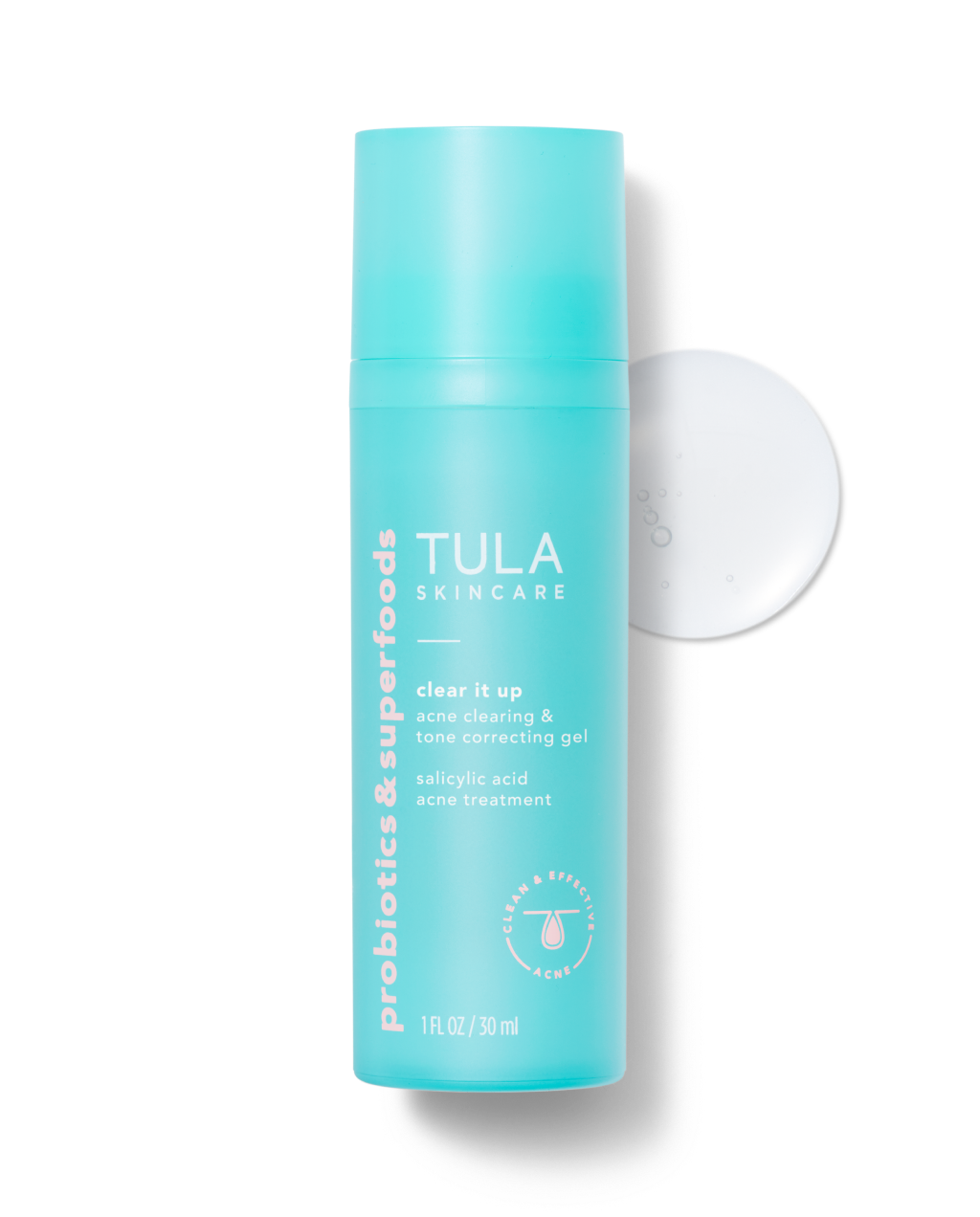

TULA
Clear It Up

Clear It Up
TULA
clear-it-up
Tone
9818384957733
Morning or Evening?
How often will you use this product?
Notes


Highlights
WHAT IS IT?
Fast-acting gel toner with salicylic acid
FEATURES
Fights & prevents breakouts, brightens & fades marks, balances skin, refines pores
BEST FOR
All skin types, Oily Acne Prone
CHECKS
No fragrance, no alcohol
Who Is It For?
All Ages All GendersWhat Does It Help With?
Acne Breakouts Dark Marks Pore RefinementBudget
Mid-range ($30-$75)How To Use
Which routine should it be used in?
Instructions:
Key Information


What TULA Says
Product Description:
Clear it up with this fast-acting gel.
About the Brand:
Ingredients Overview
Ingredients List
AQUA/WATER/EAU, SODIUM PCA, GLYCERIN, SALICYLIC ACID, SODIUM POLYACRYLATE, POLYACRYLATE CROSSPOLYMER-6, NIACINAMIDE, LACTOCOCCUS FERMENT LYSATE, AZELAIC ACID, INULIN, FOMES OFFICINALIS (MUSHROOM) EXTRACT, BUTYLENE GLYCOL, SODIUM HYALURONATE, ALLANTOIN, LACTIC ACID, PEUMUS BOLDUS LEAF EXTRACT, EPILOBIUM ANGUSTIFOLIUM FLOWER/LEAF/STEM EXTRACT, ZINC PCA, BISABOLOL, FRUCTOSE, SODIUM METABISULFITE, PEG-40 HYDROGENATED CASTOR OIL, PENTYLENE GLYCOL, SODIUM CHLORIDE, SODIUM BENZOATE, XANTHAN GUM, ETHYLHEXYLGLYCERIN, PHENOXYETHANOL
Key Ingredients
salicylic acid, niacinamide, azelaic acid, prebiotics, probiotic extracts
Ingredients Details
Azelaic Acid
Common Name(s): Nonanedioic acid,lepargylic acid
CAS Number: 123-99-9
DESCRIPTION
What It Does: Reduces acne, evens skin tone, calms rosacea, and reduces hyperpigmentation through multiple complementary mechanisms.
Why It's Used: Multi-action gold standard for hyperpigmentation, acne, rosacea, and post-inflammatory hyperpigmentation (pih) – well-tolerated by all skin tones.
How It Works: Inhibits tyrosinase (melanin synthesis) and abnormal melanocyte proliferation. inhibits 5-alpha-reductase (sebum control). antimicrobial against p. acnes and malassezia. anti-inflammatory via nf-kb pathway inhibition.
Typically Found In: Brightening serums,anti-acne treatments,rosacea products,hyperpigmentation formulations
TECHNICAL DETAILS
Primary Category: Active ingredient – dicarboxylic acid
Secondary Functions: Anti-acne,rosacea management,sebum control
Application Areas:

Facial Skincare

Body Care
Hair Care
Beard Care
Color Cosmetics (Makeup)
Dietary/Oral Supplements
Typical Concentration Range: 5%–20% (otc 5–10%; prescription 15–20%)
SOURCING & ETHICS
Vegan Status: Yes – synthetic or from wheat/rye
Halal Status: Yes
Source Notes: Naturally from malassezia yeast on skin; produced by ozonolysis of oleic acid commercially.
SKIN COMPATIBILITY
Irritancy Rating: 2/5 – low to moderate; initial tingling expected
Comedogenicity Rating: 0/5 – non-comedogenic
Sensitivity Concerns: Initial tingling and stinging normalizes within 2–4 weeks of regular use.
Safe for Sensitive Skin: Use with caution – transient tingling common during introduction
SAFETY & COMPATIBILITY
Safety Profile: Excellent long-term safety. fda-approved for acne (benzaclin) and rosacea (finacea). ewg score: 1.
Works Well With: Ceramides,niacinamide,hyaluronic acid,spf
Avoid Combining With: Multiple exfoliating acids simultaneously; high concentrations without spf
SCIENTIFIC NOTE
Azelaic acid's combined tyrosinase inhibition + abnormal melanocyte selectivity (normalizes only overactive melanocytes, unlike hydroquinone) makes it uniquely safe for long-term use without bleaching normal-pigmented skin.
Last Verified: Cosing database,draelos azelaic acid review,fda drug approval database
Primary Sources: 2026-03-12
Mushroom Extract
Common Name(s): Mushroom extract,botanical extract,phytochemical active
CAS Number: N/a
DESCRIPTION
What It Does: Provides antioxidant protection from reactive oxygen species, reduces inflammatory cytokine production in skin, and conditions skin through the plant's phytochemical complex.
Why It's Used: Natural origin narrative, traditional use heritage, and multi-functional phytochemical profile supporting concurrent skin care claims from one ingredient.
How It Works: Polyphenols, terpenoids, and alkaloids scavenge ros via h• donation, inhibit nf-kb or cox-2 inflammatory pathways, and interact with skin surface proteins for conditioning.
Typically Found In: Botanical skin care,natural products
TECHNICAL DETAILS
Primary Category: Active ingredient – antioxidant
Secondary Functions: Free radical scavenging,anti-aging
Application Areas:
Facial Skincare
Body Care
Hair Care
Beard Care
Color Cosmetics (Makeup)
Dietary/Oral Supplements
Typical Concentration Range: 0.1%–10%
SOURCING & ETHICS
Vegan Status: Conditional
Halal Status: Yes
Source Notes: Plant-derived extract or synthetic.
SKIN COMPATIBILITY
Irritancy Rating: 1/5 – very low
Comedogenicity Rating: 0/5 – non-comedogenic
Sensitivity Concerns: Non-irritating; well-tolerated.
Safe for Sensitive Skin: Yes
SAFETY & COMPATIBILITY
Safety Profile: Excellent safety profile. ewg score: 1.
Works Well With: Vitamin c,vitamin e,ferulic acid,spf,other antioxidants
Avoid Combining With: No significant incompatibilities
SCIENTIFIC NOTE
Plant secondary metabolites evolved as photoprotectants and antimicrobials — mechanisms directly applicable to cosmetic antioxidant and anti-inflammatory activity in human skin.
Last Verified: Cosing database,mushroom extract botanical review
Primary Sources: 2026-03-12
Niacinamide
Common Name(s): Vitamin b3,nicotinamide,pyridine-3-carboxamide
CAS Number: 98-92-0
DESCRIPTION
What It Does: Niacinamide strengthens the skin barrier, reduces visible pore size, regulates sebum production, fades dark spots, and improves skin texture and tone.
Why It's Used: It is used because it addresses multiple skin concerns at once without irritation, making it suitable for all skin types. it is stable in formulations and pairs well with most other actives.
How It Works: Niacinamide inhibits the transfer of melanosomes (pigment packets) to skin cells, reducing hyperpigmentation. it also stimulates ceramide synthesis to strengthen the skin barrier and reduces inflammation by modulating cytokine activity.
Typically Found In: Serums,moisturizers,toners,cleansers,eye creams,sunscreens,primers
TECHNICAL DETAILS
Primary Category: Active ingredient – vitamin
Secondary Functions: Barrier repair,brightening,anti-inflammatory
Application Areas:
Facial Skincare
Body Care
Hair Care
Beard Care
Color Cosmetics (Makeup)
Dietary/Oral Supplements
Typical Concentration Range: 2%–10% (typical: 5%; higher concentrations may cause flushing in some individuals)
SOURCING & ETHICS
Vegan Status: Yes – synthetically produced
Halal Status: Yes – synthetic origin
Source Notes: Commercially produced via synthesis from nicotinic acid or 3-cyanopyridine. no animal-derived sources used in cosmetic-grade niacinamide.
SKIN COMPATIBILITY
Irritancy Rating: 1/5 – very low; concentrations above 10% may cause temporary flushing in sensitive individuals
Comedogenicity Rating: 0/5 – non-comedogenic
Sensitivity Concerns: At concentrations >10%, some users experience niacin flush (transient redness/tingling). generally very well-tolerated.
Safe for Sensitive Skin: Yes – one of the best-tolerated actives for sensitive skin
SAFETY & COMPATIBILITY
Safety Profile: Extensively studied and considered very safe. ewg hazard score: 1. no significant systemic toxicity concerns at topical concentrations.
Works Well With: Retinol,peptides,ahas/bhas,hyaluronic acid,ceramides,zinc,vitamin c,spf
Avoid Combining With: High concentrations of vitamin c (ascorbic acid) may theoretically convert to niacin – use at different times if using pure l-ascorbic acid above 15%
SCIENTIFIC NOTE
Niacinamide is a precursor to nad+ and nadp+, coenzymes vital to cellular energy metabolism. its benefits for dna repair and mitochondrial function make it a key ingredient in anti-aging strategies.
Last Verified: Cosing database,cir safety assessment,ewg skin deep,pubmed clinical studies
Primary Sources: 2026-03-12
Salicylic Acid
Common Name(s): Bha,2-hydroxybenzoic acid,orthohydroxybenzoic acid,willow bark acid
CAS Number: 69-72-7
DESCRIPTION
What It Does: Salicylic acid exfoliates the skin surface and inside pores, dissolves the 'glue' holding dead skin cells together, reduces sebum production, and combats acne-causing bacteria.
Why It's Used: Its oil solubility makes it uniquely effective at penetrating pores and dissolving sebum plugs – a function that water-soluble ahas cannot perform. it is the preferred exfoliant for oily, acne-prone, and congested skin.
How It Works: Salicylic acid disrupts desmosomal bonds between corneocytes, promoting exfoliation. its oil solubility allows it to penetrate the sebaceous follicle, dissolving sebum and dead cells. it also has anti-inflammatory properties by inhibiting prostaglandin synthesis.
Typically Found In: Cleansers,toners,serums,spot treatments,masks,chemical peels,anti-dandruff shampoos,acne treatments
TECHNICAL DETAILS
Primary Category: Active ingredient – beta hydroxy acid (bha)
Secondary Functions: Anti-acne,anti-dandruff,keratolytic
Application Areas:
Facial Skincare
Body Care
Hair Care
Beard Care
Color Cosmetics (Makeup)
Dietary/Oral Supplements
Typical Concentration Range: 0.5%–2% (otc acne treatment in us); up to 30% in professional chemical peels
SOURCING & ETHICS
Vegan Status: Yes – synthetic or willow bark derived
Halal Status: Yes
Source Notes: Naturally occurring in willow bark (salix alba) and wintergreen oil. commercially produced synthetically via kolbe-schmitt reaction for cosmetic use.
SKIN COMPATIBILITY
Irritancy Rating: 3/5 – moderate; can cause dryness, peeling, and irritation, especially at higher concentrations
Comedogenicity Rating: 0/5 – non-comedogenic; actually anti-comedogenic
Sensitivity Concerns: Can cause irritation, dryness, and sun sensitivity. avoid contact with eyes. not recommended during pregnancy at high concentrations. can be drying – follow with moisturizer.
Safe for Sensitive Skin: Use with caution – start with lower concentrations and frequency; may not be suitable for reactive or rosacea-prone skin
SAFETY & COMPATIBILITY
Safety Profile: Safe at otc concentrations (0.5–2%). regulated as a drug in some countries (us: fda category i acne treatment). avoid in pregnancy at high concentrations.
Works Well With: Niacinamide,zinc,tea tree oil,benzoyl peroxide (at different times),hyaluronic acid (to counteract dryness)
Avoid Combining With: High concentrations of retinol (cumulative irritation),multiple exfoliating acids simultaneously,benzoyl peroxide in same step (can increase irritation)
SCIENTIFIC NOTE
Salicylic acid is a member of the salicylate family and shares structural similarity with aspirin. its anti-inflammatory mechanism mirrors aspirin's cox inhibition pathway, making it uniquely effective for inflammatory acne.
Last Verified: Cosing database,cir safety assessment,us fda acne monograph,journal of the american academy of dermatology
Primary Sources: 2026-03-12
