
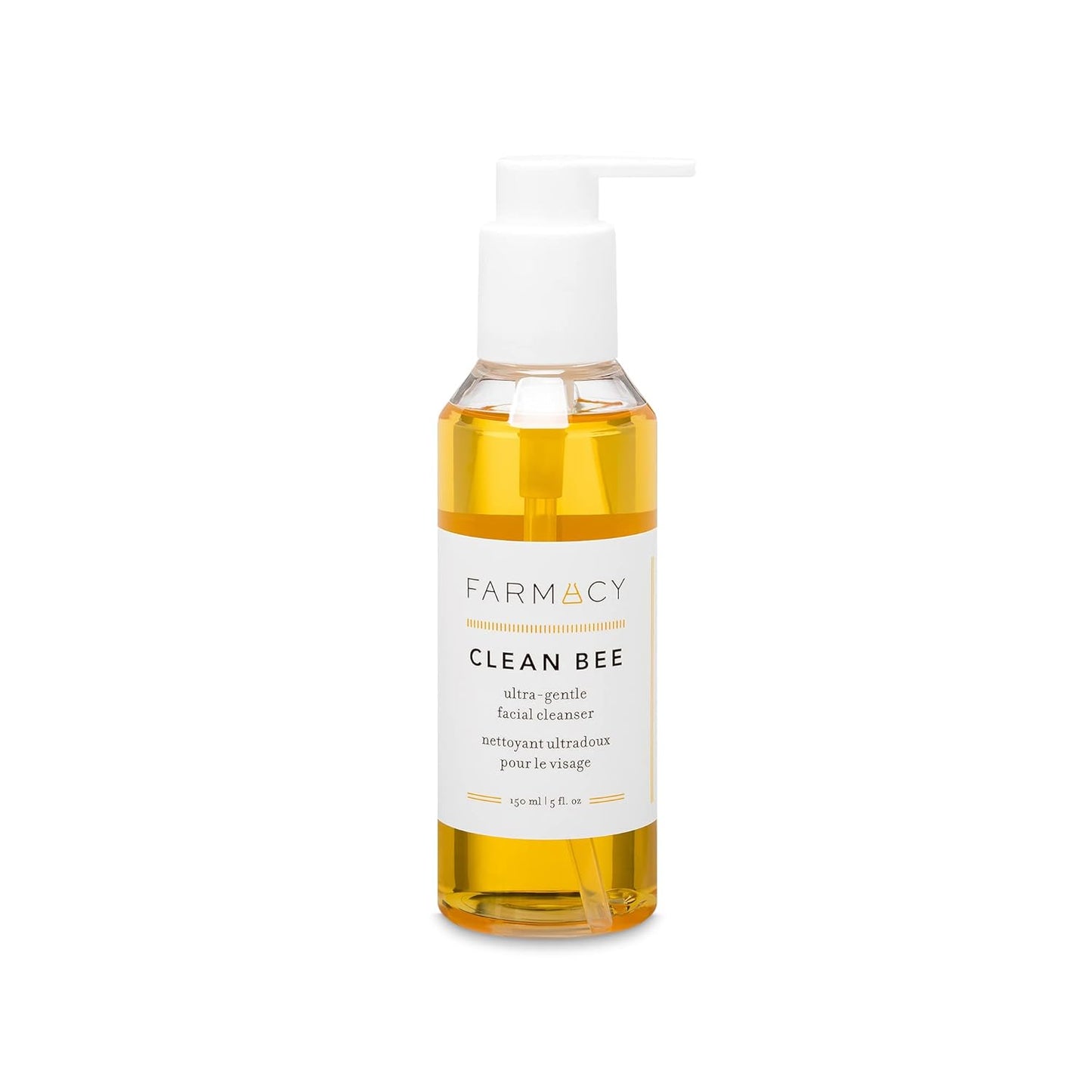

Farmacy Beauty
Clean Bee

Clean Bee
Farmacy Beauty
clean-bee
Cleanse
9628162064677
Morning or Evening?
How often will you use this product?
Notes


Highlights
WHAT IS IT?
Facial cleanser
FEATURES
Ultra-gentle, soothing, lifts away excess oil and impurities, infuses moisture
BEST FOR
Sensitive skin
CHECKS
Fragrance-free, Paraben-free, Planet Aware, Sulphate-free
Who Is It For?
Adults (18+) Men And WomenWhat Does It Help With?
Cleansing MoisturizingBudget
Mid-rangeHow To Use
Which routine should it be used in?
Instructions:
Key Information


What Farmacy Beauty Says
Product Description:
A soothing, ultra-gentle facial cleanser perfect for everyday use! Made with sensitive skin in mind, Clean Bee lifts away excess oil, impurities, and makeup while infusing moisture with honey and hyaluronic acid.
About the Brand:
Ingredients Overview
Ingredients List
AQUA; sodium lauroyl methyl isethionate; cocamidopropyl hydroxysultaine; chamomilla recutita (matricaria) flower water; decyl glucoside; maltooligosyl glucoside; lauryl glucoside; glycerin; hydrogenated starch hydrolysate; echinacea purpurea root extract; honey extract; propolis extract; royal jelly extract; hydrolyzed sodium hyaluronate; calendula officinalis flower extract; glycyrrhiza glabra (licorice) root extract; aloe barbadensis leaf juice; melia azadirachta leaf extract; lavandula angustifolia (lavender) oil; lavandula hybrida oil; curcumin; curcuma longa (turmeric) root extract; betaine; sodium PCA; disodium cocoyl glutamate; sodium cocoyl glutamate; citric acid; sodium benzoate; abies sibirica oil; cymbopogon martini oil; pelargonium graveolens oil; pogostemon cablin oil; caramel; anthemis nobilis flower oil; ocimum basilicum (basil) flower/leaf extract; ocimum sanctum leaf extract; melia azadirachta flower extract; corallina officinalis extract; flavor (aroma); potassium sorbate; maltodextrin; trisodium ethylenediamine disuccinate; sodium chloride; sodium phytate; propanediol; linalool
Key Ingredients
Calendula Officinalis Flower Extract, Curcumin, Curcuma Longa (Turmeric) Root Extract, Glycyrrhiza Glabra (Licorice) Root Extract, Curcuma Longa (Turmeric) Root Extract, Glycerin, Sodium Pca, Aloe Barbadensis Leaf Juice, Anthemis Nobilis Flower Oil
Ingredients Details
Chamomilla Recutita Matricaria Flower Water
Common Name(s): Chamomilla recutita matricaria flower water extract
DESCRIPTION
What It Does: Provides antioxidant protection, soothing anti-inflammatory effects, and skin-conditioning benefits through plant-derived polyphenols and phytochemicals.
Why It's Used: Plant extracts concentrate bioactive phytochemicals evolved for environmental protection — uv, microbial, and oxidative stressors — that translate to skin benefits.
How It Works: Polyphenols (flavonoids, phenolic acids) inhibit nf-κb-mediated inflammatory signaling, scavenge reactive oxygen species through electron donation, and chelate pro-oxidant metal ions to reduce oxidative skin damage.
Typically Found In: Serums,toners,moisturizers,masks,essences
TECHNICAL DETAILS
Primary Category: Botanical extracts
Secondary Functions: Antioxidant,anti-inflammatory
Application Areas:

Facial Skincare

Body Care
Hair Care
Beard Care
Color Cosmetics (Makeup)
Dietary/Oral Supplements
Typical Concentration Range: 0.1–10%
SOURCING & ETHICS
Vegan Status: Yes
Halal Status: Yes
Source Notes: Plant-derived extract; no animal components.
SKIN COMPATIBILITY
Irritancy Rating: 1899-12-31 00:00:00 -0800
Sensitivity Concerns: Low sensitization potential at recommended use concentrations.
Safe for Sensitive Skin: Yes
SAFETY & COMPATIBILITY
Safety Profile: Well-characterized cosmetic ingredient with established safety profile. generally non-irritating at typical use concentrations. suitable for leave-on and rinse-off cosmetics.
Works Well With: Niacinamide,hyaluronic acid,vitamin c,ceramides
Avoid Combining With: Strong oxidizing agents
SCIENTIFIC NOTE
Plant secondary metabolites (flavonoids, terpenes, phenolic acids) are biosynthesized as defense compounds against uv, herbivores, and pathogens. their anti-inflammatory activity typically derives from competitive inhibition of cox-2 and 5-lox enzymes (ic50 1–50 µm), while antioxidant activity involves single electron transfer (set) and hydrogen atom transfer (hat) mechanisms with structure-dependent rate constants.
Last Verified: 2025-01-15
Primary Sources: Cosing eu database; pcpc cosmetic ingredient safety reviews; phytochemical and ethnobotanical literature
Cocamidopropyl Hydroxysultaine
Common Name(s): Cahs,hydroxypropyl sultaine
CAS Number: 68139-30-0
DESCRIPTION
What It Does: Provides amphoteric foaming and conditioning with excellent compatibility across surfactant systems.
Why It's Used: Premium amphoteric surfactant for mild foaming shampoos and cleansers requiring broad surfactant compatibility and improved skin and eye tolerance vs capb alternatives.
How It Works: Amphoteric sultaine (internal zwitterion from quaternary ammonium + sulfonate) provides: foam stability and enhancement; antistatic conditioning on hair; mildness enhancement reducing ionic surfactant irritation; viscosity building with salt addition. superior eye tolerance vs capb (betaine).
Typically Found In: Baby shampoos,mild cleansers,eye-safe products
TECHNICAL DETAILS
Primary Category: Functional ingredient – amphoteric surfactant
Secondary Functions: Skin conditioning
Application Areas:
Facial Skincare
Body Care
Hair Care
Beard Care
Color Cosmetics (Makeup)
Dietary/Oral Supplements
Typical Concentration Range: 2%–10%
SOURCING & ETHICS
Vegan Status: Conditional - supplier confirmation required
Halal Status: Unverified - supplier confirmation required
Source Notes: Commercially produced for cosmetic use. verify vegan/halal status with supplier. [audit 2026-07-29 rev2: the record's own source_notes does not assert a non-animal origin, or instructs the reader to verify with the supplier; "yes" asserts knowledge the record does not hold. determination requires shariah-panel sign-off.]
SKIN COMPATIBILITY
Irritancy Rating: 1/5 – very low
Comedogenicity Rating: 0/5 – non-comedogenic
Sensitivity Concerns: Well-tolerated by most skin types.
Safe for Sensitive Skin: Yes
SAFETY & COMPATIBILITY
Safety Profile: Good safety profile at recommended concentrations. ewg score: 1–2.
Works Well With: Standard skincare actives
Avoid Combining With: No known significant incompatibilities
SCIENTIFIC NOTE
Cocamidopropyl hydroxysultaine's superior eye tolerance vs capb arises from its sultaine rather than betaine zwitterionic head group. the sulfonate anion (so3⁻ in sultaine) is a stronger acid group than the carboxylate (coo⁻ in betaine), providing greater charge neutralisation and better interaction with tear film proteins — the molecular basis for its improved eye irritation profile in baby and sensitive-eye formulations.
Last Verified:
Decyl Glucoside
Common Name(s): Capryl glucoside,apg surfactant,alkyl polyglucoside
CAS Number: 68515-73-1
DESCRIPTION
What It Does: Provides gentle non-ionic cleansing from natural glucose-derived surfactant chemistry.
Why It's Used: Leading natural-origin surfactant for green/natural formulations requiring gentle, non-ionic cleansing with excellent biodegradability credentials.
How It Works: Non-ionic surfactant with glucoside headgroup and decyl (c10) chain provides mild cleansing via micelle formation. non-ionic character provides lower irritation potential than anionic surfactants. fully biodegradable and from renewable sources.
Typically Found In: Natural cleansers,baby products,green beauty formulas,scalp cleansers
TECHNICAL DETAILS
Primary Category: Functional ingredient – alkyl glucoside surfactant
Secondary Functions: Skin conditioning
Application Areas:
Facial Skincare
Body Care
Hair Care
Beard Care
Color Cosmetics (Makeup)
Dietary/Oral Supplements
Typical Concentration Range: 2%–20%
SOURCING & ETHICS
Vegan Status: Conditional - supplier confirmation required
Halal Status: Unverified - supplier confirmation required
Source Notes: Commercially produced for cosmetic use. verify vegan/halal status with supplier. [audit 2026-07-29 rev2: the record's own source_notes does not assert a non-animal origin, or instructs the reader to verify with the supplier; "yes" asserts knowledge the record does not hold. determination requires shariah-panel sign-off.]
SKIN COMPATIBILITY
Irritancy Rating: 1/5 – very low
Comedogenicity Rating: 0/5 – non-comedogenic
Sensitivity Concerns: Well-tolerated by most skin types.
Safe for Sensitive Skin: Yes
SAFETY & COMPATIBILITY
Safety Profile: Good safety profile at recommended concentrations. ewg score: 1–2.
Works Well With: Standard skincare actives
Avoid Combining With: No known significant incompatibilities
SCIENTIFIC NOTE
Alkyl glucosides' (apgs) non-ionic character means they have no electrical charge that could interact with skin surface proteins and phospholipids – a key reason for their exceptional mildness. ionic surfactants (sulfates, carboxylates) bind to positively charged protein lysine/arginine residues causing denaturation; apgs have no such binding affinity.
Last Verified: 2026-03-12
Primary Sources: Cosing database,cir safety assessment
Echinacea Purpurea Root Extract
Common Name(s): Echinacea purpurea root extract,echinacea extract,coneflower immunomodulating active,alkylamide cb2 agonist
CAS Number: N/a
DESCRIPTION
What It Does: Activates cb2 cannabinoid receptors through alkylamide compounds providing anti-inflammatory immunomodulation, delivers antioxidant protection from echinacoside and cichoric acid polyphenols, and promotes wound healing through immune cell activation.
Why It's Used: Echinacea alkylamides are cb2 receptor agonists (kd ~0.1-1 μm) — the same endocannabinoid pathway as beta-caryophyllene — providing genuine receptor-mediated immunomodulation supporting the centuries of documented wound healing and anti-inflammatory traditional use.
How It Works: Echinacea n-alkylamides (e.g., n-(2-methylbutyl)-2e,4e,8z,10e/z-dodecatetraenamide) activate cb2 receptors on skin macrophages and mast cells → inhibition of tnf-α, il-6 → anti-inflammatory immune modulation. echinacoside (hydroxycinnamic acid glycoside) provides radical scavenging ic50 ~0.1 mg/ml. wound healing from activated macrophage vegf release.
Typically Found In: Anti-inflammatory,wound healing,immunomodulating
TECHNICAL DETAILS
Primary Category: Active ingredient – antioxidant
Secondary Functions: Free radical scavenging,anti-aging
Application Areas:
Facial Skincare
Body Care
Hair Care
Beard Care
Color Cosmetics (Makeup)
Dietary/Oral Supplements
Typical Concentration Range: 0.1%–5%
SOURCING & ETHICS
Vegan Status: Yes
Halal Status: Yes
Source Notes: Plant-derived extract or synthetic.
SKIN COMPATIBILITY
Irritancy Rating: 1/5 – very low
Comedogenicity Rating: 0/5 – non-comedogenic
Sensitivity Concerns: Non-irritating; well-tolerated.
Safe for Sensitive Skin: Yes
SAFETY & COMPATIBILITY
Safety Profile: Excellent safety profile. ewg score: 1.
Works Well With: Vitamin c,vitamin e,ferulic acid,spf,other antioxidants
Avoid Combining With: No significant incompatibilities
SCIENTIFIC NOTE
Echinacea species specificity: e. purpurea provides highest alkylamide content (cb2 agonist); e. angustifolia provides highest echinacoside content (antioxidant); e. pallida provides highest polysaccharide content (immunomodulation). species selection depends on target mechanism.
Last Verified: 2026-03-22
Primary Sources: Cosing database,echinacea alkylamide cb2 anti-inflammatory immunomodulating review