

Tata Harper Skincare
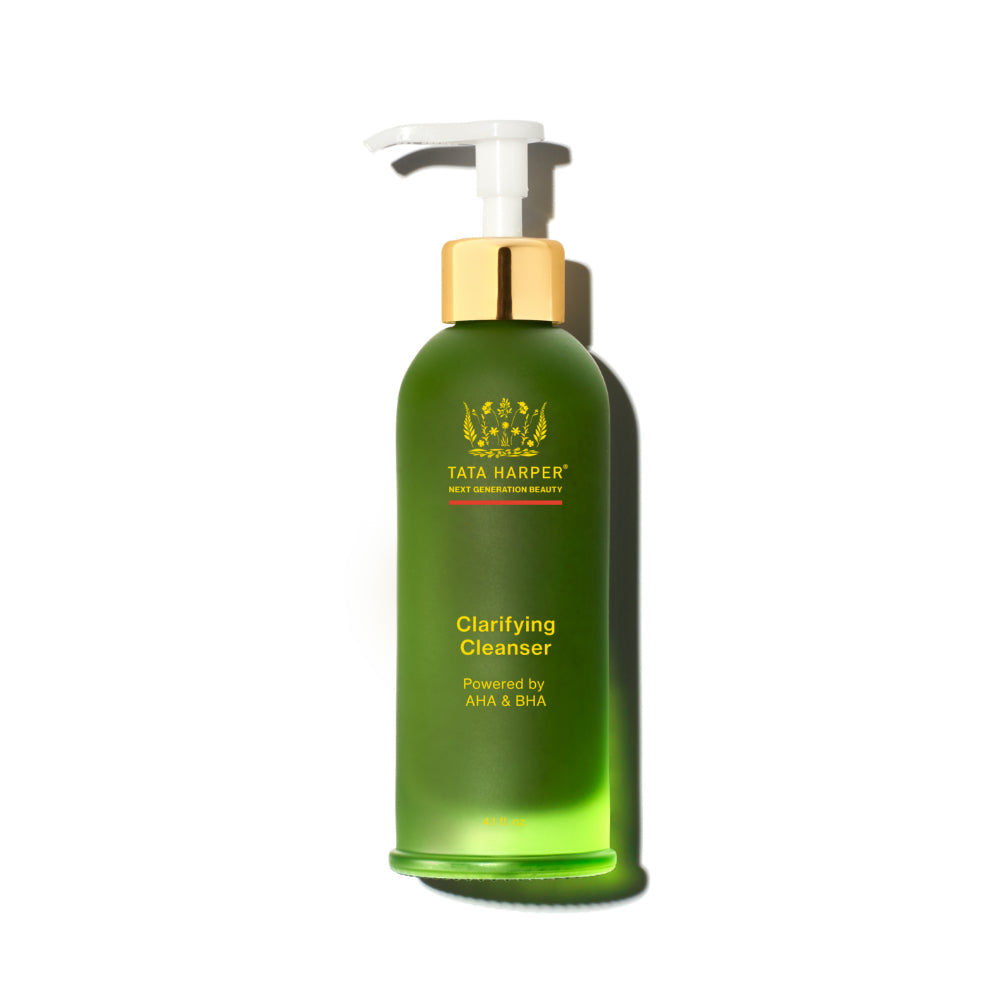
Clarifying Cleanser

Clarifying Cleanser
Tata Harper Skincare
clarifying-cleanser
Cleanse
9784761680165
Morning or Evening?
How often will you use this product?
Notes


Highlights
WHAT IS IT?
Foaming gel cleanser
FEATURES
Natural foaming action, targets impurities, balances oil, provides matte finish
BEST FOR
oily
CHECKS
Sulfates
Who Is It For?
All Ages With Oily And Blemish-prone SkinWhat Does It Help With?
Oil Control Blemish Prevention Skin ClarifyingBudget
Premium ($76-$150)How To Use
Which routine should it be used in?
Instructions:
Key Information


What Tata Harper Skincare Says
Product Description:
A foaming gel cleanser that targets impurities and balances oil for clear, comfortably matte skin. Best for oily, blemish prone skin. Our Clarifying Cleanser foams because of nature, not synthetics. We don't use sulfates, we use Cassava Tapioca and Wild Harvested Mojave Yucca. This is sulfate-free, worry-free foaming - with a new spring packaging look.
About the Brand:
Ingredients Overview
Ingredients List
Hordeum Vulgare Leaf Juice*, Caprylyl/Capryl Glucoside, Lauryl Glucoside, Decyl Glucoside, Glycerin, Maltooligosyl Glucoside, Hydrogenated Starch Hydrolysate, Mel/Honey/Miel*, Aqua/Water/Eau, Salix Alba (Willow) Bark Extract, Hydrolyzed Opuntia Ficus-Indica Flower Extract, Gaultheria Procumbens (Wintergreen) Leaf Extract, Yucca Schidigera Extract, Chlorella Pyrenoidosa, Juniperus Communis Fruit Extract, Serenoa Serrulata Fruit Extract, Saccharide Isomerate, Arnica Montana (Arnica) Extract*, Borago Officinalis (Borage) Leaf Extract*, Calendula Officinalis (Calendula) Flower Extract*, Medicago Sativa (Alfalfa) Extract*, Spiraea Ulmaria (Meadowsweet) Extract*, Sambucus Nigra Fruit Extract, Polyglyceryl-10 Laurate, Olea Europaea (Olive) Oil*, Helianthus Annuus (Sunflower) Seed Oil, Rosmarinus Officinalis (Rosemary) Leaf Extract, Sodium Caproyl/Lauroyl Lactylate, Lavandula Angustifolia (Lavender) Oil, Sucrose Stearate, Acacia Senegal Gum, Citrus Sinensis (Orange) Oil, Xanthan Gum, Citrus Paradisi (Grapefruit) Oil, Sodium Levulinate, Melaleuca Ericifolia Leaf Oil, Citric Acid, Pogostemon Cablin (Patchouli) Leaf, Oil, Sodium Citrate, Sodium Anisate, Menthol, L (+) Lactic Acid, CI 77288, Sodium Phytate, Menthyl Lactate, Sucrose Palmitate, Alcohol, Limonene, Linalool
Key Ingredients
Cassava Tapioca, Wild Harvested Mojave Yucca
Ingredients Details
Caprylyl/capryl Glucoside
Common Name(s): C8-c10 apg,light cleansing glucoside,natural light cleanser
CAS Number: N/a
DESCRIPTION
What It Does: Provides the lightest apg mild cleansing for facial and micellar applications.
Why It's Used: Light facial apg cleanser — c8-c10 short chain apg provides the mildest, lightest-rinse apg cleansing suited for everyday facial washing and micellar water formulation where heavier c12-c16 apgs leave residue.
How It Works: Caprylyl (c8) + capryl (c10) glucose glucoside: short chain apg. very gentle: non-ionic + short chain. very fast rinse: short chain high solubility. micellar: compatible as non-ionic surfactant. cosmos. minimal skin feel.
Typically Found In: Micellar water,gentle facial cleanser,daily cosmos wash
TECHNICAL DETAILS
Primary Category: Active ingredient – cosmetic active
Secondary Functions: Skin conditioning
Application Areas:

Facial Skincare

Body Care
Hair Care
Beard Care
Color Cosmetics (Makeup)
Dietary/Oral Supplements
Typical Concentration Range: 2%–15%
SOURCING & ETHICS
Vegan Status: Conditional - supplier confirmation required
Halal Status: Unverified - supplier confirmation required
Source Notes: Commercially produced for cosmetic use. verify vegan/halal status with supplier. [audit 2026-07-29 rev2: the record's own source_notes does not assert a non-animal origin, or instructs the reader to verify with the supplier; "yes" asserts knowledge the record does not hold. determination requires shariah-panel sign-off.]
SKIN COMPATIBILITY
Irritancy Rating: 1/5 – very low
Comedogenicity Rating: 0/5 – non-comedogenic
Sensitivity Concerns: Well-tolerated by most skin types.
Safe for Sensitive Skin: Yes
SAFETY & COMPATIBILITY
Safety Profile: Good safety profile at recommended concentrations. ewg score: 1–2.
Works Well With: Standard skincare actives
Avoid Combining With: No known significant incompatibilities
SCIENTIFIC NOTE
C8-c10 apg lighter rinse vs c12-c16 from cmc differences: shorter chain apgs have higher cmc (critical micelle concentration) → less tendency to remain on skin post-rinse as micelles vs monomer ratio favours monomer at post-rinse dilution. this higher cmc means c8-c10 apg leaves less surfactant residue on skin post-rinsing vs longer chain apgs, providing the faster 'clean rinse' sensation.
Last Verified: 2026-03-12
Primary Sources: Cosing database,short-chain apg technical literature
Decyl Glucoside
Common Name(s): Capryl glucoside,apg surfactant,alkyl polyglucoside
CAS Number: 68515-73-1
DESCRIPTION
What It Does: Provides gentle non-ionic cleansing from natural glucose-derived surfactant chemistry.
Why It's Used: Leading natural-origin surfactant for green/natural formulations requiring gentle, non-ionic cleansing with excellent biodegradability credentials.
How It Works: Non-ionic surfactant with glucoside headgroup and decyl (c10) chain provides mild cleansing via micelle formation. non-ionic character provides lower irritation potential than anionic surfactants. fully biodegradable and from renewable sources.
Typically Found In: Natural cleansers,baby products,green beauty formulas,scalp cleansers
TECHNICAL DETAILS
Primary Category: Functional ingredient – alkyl glucoside surfactant
Secondary Functions: Skin conditioning
Application Areas:
Facial Skincare
Body Care
Hair Care
Beard Care
Color Cosmetics (Makeup)
Dietary/Oral Supplements
Typical Concentration Range: 2%–20%
SOURCING & ETHICS
Vegan Status: Conditional - supplier confirmation required
Halal Status: Unverified - supplier confirmation required
Source Notes: Commercially produced for cosmetic use. verify vegan/halal status with supplier. [audit 2026-07-29 rev2: the record's own source_notes does not assert a non-animal origin, or instructs the reader to verify with the supplier; "yes" asserts knowledge the record does not hold. determination requires shariah-panel sign-off.]
SKIN COMPATIBILITY
Irritancy Rating: 1/5 – very low
Comedogenicity Rating: 0/5 – non-comedogenic
Sensitivity Concerns: Well-tolerated by most skin types.
Safe for Sensitive Skin: Yes
SAFETY & COMPATIBILITY
Safety Profile: Good safety profile at recommended concentrations. ewg score: 1–2.
Works Well With: Standard skincare actives
Avoid Combining With: No known significant incompatibilities
SCIENTIFIC NOTE
Alkyl glucosides' (apgs) non-ionic character means they have no electrical charge that could interact with skin surface proteins and phospholipids – a key reason for their exceptional mildness. ionic surfactants (sulfates, carboxylates) bind to positively charged protein lysine/arginine residues causing denaturation; apgs have no such binding affinity.
Last Verified: 2026-03-12
Primary Sources: Cosing database,cir safety assessment
Glycerin
Common Name(s): Glycerol,glycerine,1,2,3-propanetriol
CAS Number: 56-81-5
DESCRIPTION
What It Does: Glycerin pulls water from the environment and deeper skin layers into the outer skin layer (epidermis), boosting moisture levels and keeping skin soft, smooth, and plump.
Why It's Used: It is used in virtually every moisturizer, serum, and cleanser because it is highly effective at hydrating skin, is well-tolerated by all skin types, and enhances the texture and spreadability of formulations.
How It Works: As a humectant, glycerin forms hydrogen bonds with water molecules, trapping them in the skin. it also reinforces the skin barrier by integrating into lipid structures between skin cells.
Typically Found In: Moisturizers,serums,cleansers,toners,sheet masks,sunscreens,body lotions,shampoos,conditioners
TECHNICAL DETAILS
Primary Category: Humectant
Secondary Functions: Skin barrier support,emollient,solvent
Application Areas:
Facial Skincare
Body Care
Hair Care
Beard Care
Color Cosmetics (Makeup)
Dietary/Oral Supplements
Typical Concentration Range: 1%–30% (typical: 3–10%)
SOURCING & ETHICS
Vegan Status: Conditional - feedstock declaration required
Halal Status: Unverified - feedstock declaration required (plant, animal and petrochemical routes all exist)
Source Notes: Derived from plant oils via hydrolysis or saponification; synthetic versions also available. palm-derived glycerin carries sustainability concerns. [audit 2026-07-29 rev2: origin-dependent: the same inci exists in plant, animal and petrochemical versions and the name does not discriminate. determination requires shariah-panel sign-off.]
SKIN COMPATIBILITY
Irritancy Rating: 1/5 – very low; non-irritating at all standard concentrations
Comedogenicity Rating: 0/5 – non-comedogenic
Sensitivity Concerns: Extremely rare allergic reactions; generally safe for all skin types including sensitive and baby skin
Safe for Sensitive Skin: Yes
SAFETY & COMPATIBILITY
Safety Profile: Widely recognized as safe. ewg hazard score: 1. no significant concerns for irritation, sensitization, or toxicity at typical concentrations (up to 50%).
Works Well With: Hyaluronic acid,ceramides,niacinamide,panthenol,urea,peptides,retinol,ahas/bhas
Avoid Combining With: No known incompatibilities at standard concentrations
SCIENTIFIC NOTE
Glycerin is an endogenous skin component found naturally in the stratum corneum. aquaporin-3 channels in keratinocytes facilitate glycerin transport, making it integral to natural skin hydration pathways.
Last Verified: 2026-03-12
Primary Sources: Cosing database,cir safety assessment,ewg skin deep,inci decoder
Hordeum Vulgare Leaf Juice
Common Name(s): Hordeum vulgare leaf juice,hordeum vulgare (barley) young leaf juice (barley grass) extract
DESCRIPTION
What It Does: Provides antioxidant,sod enzyme,chlorophyll,alkaline mineral rich and skin-conditioning activity from natural plant source.
Why It's Used: Used for its antioxidant,sod enzyme,chlorophyll,alkaline mineral rich activity derived from hordeum vulgare (barley); supports skin health and vitality.
How It Works: Bioactive compounds from hordeum vulgare (barley) young leaf juice (barley grass) — including polyphenols, flavonoids, and plant-specific phytochemicals — deliver antioxidant,sod enzyme,chlorophyll,alkaline mineral rich benefits.
Typically Found In: Green skin care,antioxidant products,detox formulas
TECHNICAL DETAILS
Primary Category: Active ingredient – botanical
Secondary Functions: Skin conditioning,antioxidant,botanical active
Application Areas:
Facial Skincare
Body Care
Hair Care
Beard Care
Color Cosmetics (Makeup)
Dietary/Oral Supplements
Typical Concentration Range: 0.1%–5%
SOURCING & ETHICS
Vegan Status: Conditional - supplier confirmation required
Halal Status: Unverified - supplier confirmation required
Source Notes: Extract from hordeum vulgare (barley); natural plant origin. [audit 2026-07-29 rev2: the record's own source_notes does not assert a non-animal origin, or instructs the reader to verify with the supplier; "yes" asserts knowledge the record does not hold. determination requires shariah-panel sign-off.]
SKIN COMPATIBILITY
Irritancy Rating: 1/5 – very low
Comedogenicity Rating: 0/5 – non-comedogenic
Sensitivity Concerns: Generally well tolerated; rare botanical sensitivity possible.
Safe for Sensitive Skin: Yes
SAFETY & COMPATIBILITY
Safety Profile: Good safety profile. ewg score: 1.
Works Well With: Other botanical extracts,antioxidants,humectants
Avoid Combining With: No significant incompatibilities
SCIENTIFIC NOTE
Barley leaf juice contains 2-o-giv — a barley-unique flavone with potent antioxidant activity — and sod enzyme; sod is among the most powerful natural antioxidant enzymes; young barley grass juice is used in both food supplements and cosmetics for its dense antioxidant content.
Last Verified: 2026-03-28
Primary Sources: Cosing database,inci dictionary