

CHI
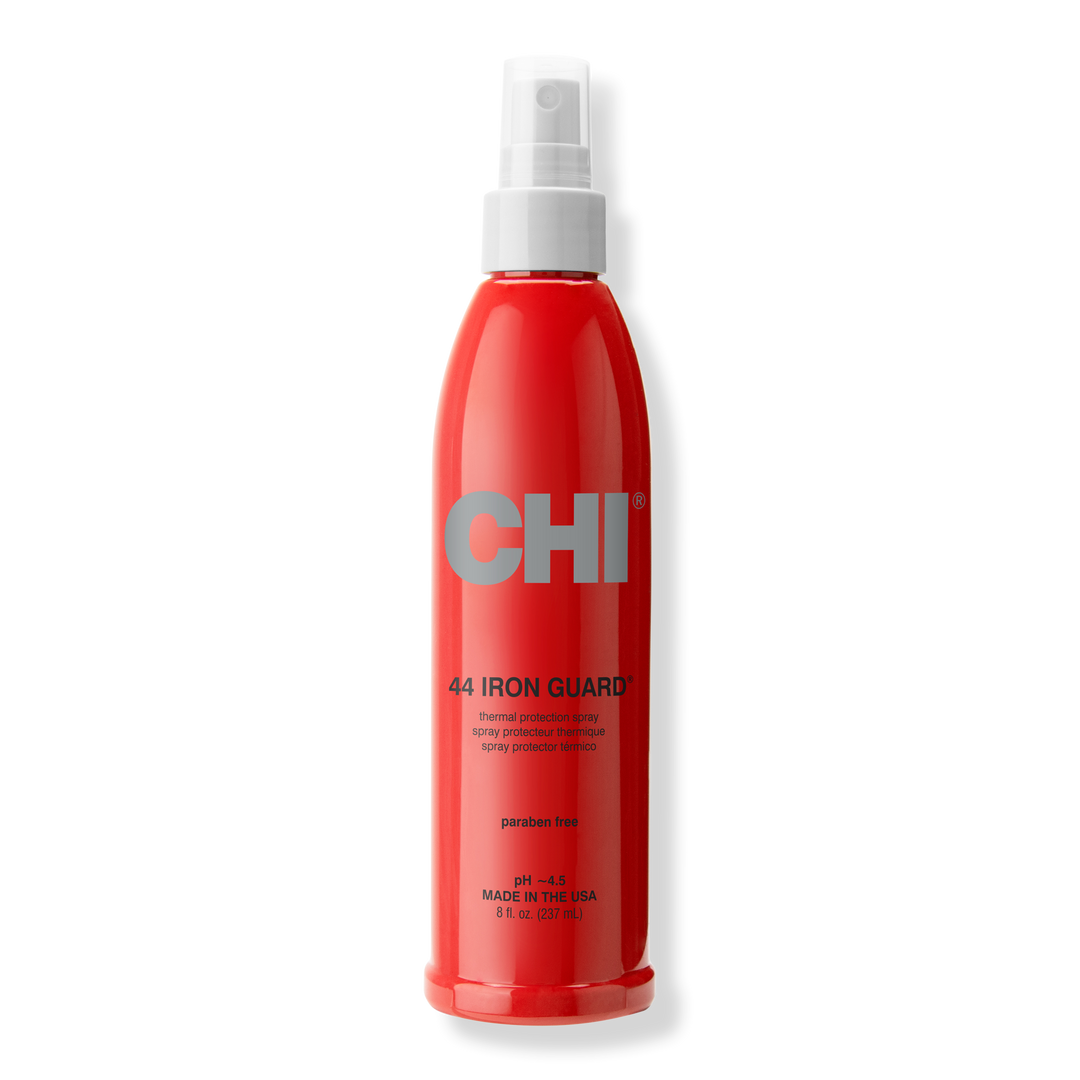
CHI 44 Iron Guard Thermal Protection Spray
CHI 44 Iron Guard Thermal Protection Spray is a superior thermal protection spray that works from the inside out, helping to protect hair from thermal damage and breakage. Its weightless formula with no added build-up helps to seal the cuticle and works to prevent future damage.
Heat Protection
Damage Repair
Breakage
Fine
Thick
Curly
Optimized for Your Environment & Lifestyle
Nykaa
In stock
Recommended

CHI 44 Iron Guard Thermal Protection Spray
CHI
chi-44-iron-guard-thermal-protection-spray
Heat Protectant Spray
10355403030821
Morning or Evening?
How often will you use this product?
Notes


Secure payment protection
Your Biodata Compatibility Analysis
Based on your 6 hair health indices and environmental factors
Poor Match
Significant incompatibilities
Growth Cycle Health Index
Hair Match
Hair Health Index Alignment
Optimal for OSI, SSI, DI, HSI
Ingredient Efficacy
Matching Ingredient Score
Environment Compatibility
Current UV, Air Quality & Humidity
Why This Works for Your Specific Profile
Damage Index:
Damage levels outside specified range may not benefit optimally from product formulation
Water Quality:
Hair:
No porosity-specific conflicts
Active Lifestyle:
Low activity produces insufficient stress or buildup making product intensity unnecessarily harsh
Your Hair Profile Integration
Your Hair Archetype

Density Level

Washing Frequency

Shedding Level

Oil Level
Your Hair Health Indices
Oil Secretion (OSI)
Very low oil production
Scalp Sensitivity (SSI)
Very low sensitivity
Growth Rate (CMR)
Poor metabolism rate
Damage Index (DI)
Minimal damage
Hair Strength (HSI)
Very weak strength
Softness Index (SI)
Significant improvement needed
Water & Environmental Integration

Water:


Expected Results & Timeline
Key Highlights

What is it?
Heat Protectant Spray with 14 ingredients

Who Is It For
All ages and genders

Budget
$18.50 - $37.00

Timeline
Immediate protection upon application
Why You’ll Love It

What Does It Help With?
Protecting hair from thermal damage and breakage

Best for
Protecting hair from heat damage

Features
Weightless formula with no added build-up, helps to seal the cuticle, prevents future damage, adds essential moisture, protects against thermal damage, suitable for all hair types

Checks
Clean Ingredients, Cruelty Free
Ingredients Overview
Ingredients List
aqua-water-eau, sodium-polystyrene-sulfonate, alcohol-denat, polysorbate-20, propanediol, cocodimonium-hydroxypropyl-hydrolyzed-keratin, hydrolyzed-silk, caprylyl-glycol, phenoxyethanol, ppg-20-methyl-glucose-ether, potassium-sorbate, hexylene-glycol, citric-acid, alumina, silica, fragrance-parfum, benzyl-benzoate, citronellol, hexyl-cinnamal, titanium-dioxide-ci-77891
Key Ingredients
Hydrolyzed Silk, Cocodimonium Hydroxypropyl Hydrolyzed Keratin
Ingredients Details
Alumina
Common Name(s): Alumina,cosmetic active,functional ingredient
CAS Number: N/a
DESCRIPTION
What It Does: Delivers characteristic cosmetic function at recommended use concentration.
Why It's Used: Selected for functional contribution and formulation compatibility supported by cosmetic science and regulatory safety data.
How It Works: Works through the mechanism of its molecular class as documented in peer-reviewed cosmetic literature.
Typically Found In: Skin care formulations
TECHNICAL DETAILS
Primary Category: Active ingredient – cosmetic active
Secondary Functions: Skin conditioning
Application Areas:

Facial Skincare

Body Care
Hair Care
Beard Care
Color Cosmetics (Makeup)
Dietary/Oral Supplements
Typical Concentration Range: 0.1%–10%
SOURCING & ETHICS
Vegan Status: Conditional
Halal Status: Yes
Source Notes: Commercially produced for cosmetic use. verify vegan/halal status with supplier.
SKIN COMPATIBILITY
Irritancy Rating: 1/5 – very low
Comedogenicity Rating: 0/5 – non-comedogenic
Sensitivity Concerns: Well-tolerated by most skin types.
Safe for Sensitive Skin: Yes
SAFETY & COMPATIBILITY
Safety Profile: Good safety profile at recommended concentrations. ewg score: 1–2.
Works Well With: Standard skincare actives
Avoid Combining With: No known significant incompatibilities
SCIENTIFIC NOTE
Alumina has an established safety profile within the cosmetic regulatory framework at standard use concentrations.
Last Verified: Cosing database,alumina technical literature
Primary Sources: 2026-03-12
Citronellol
Common Name(s): (r)-3,7-dimethyl-6-octen-1-ol,rhodinol
CAS Number: 106-22-9
DESCRIPTION
What It Does: Provides soft, lasting rose-floral fragrance note.
Why It's Used: Essential rose fragrance monoterpene for lasting smooth floral notes in high-quality perfumery and cosmetic fragrances.
How It Works: Allylic alcohol monoterpene provides fixative property in fragrance blends. good skin substantivity for lasting scent. softer, rounder rose note vs geraniol's fresher character. natural in rose otto at 18-34%.
Typically Found In: Rose perfumes,floral fragrances,luxury skincare
TECHNICAL DETAILS
Primary Category: Fragrance component – monoterpene alcohol
Secondary Functions: Skin conditioning
Application Areas:
Facial Skincare
Body Care
Hair Care
Beard Care
Color Cosmetics (Makeup)
Dietary/Oral Supplements
Typical Concentration Range: 0.001%–1%
SOURCING & ETHICS
Vegan Status: Yes – from rose, geranium, citronella oils
Halal Status: Yes
Source Notes: Commercially produced for cosmetic use. verify vegan/halal status with supplier.
SKIN COMPATIBILITY
Irritancy Rating: 1/5 – very low
Comedogenicity Rating: 0/5 – non-comedogenic
Sensitivity Concerns: Well-tolerated by most skin types.
Safe for Sensitive Skin: Yes
SAFETY & COMPATIBILITY
Safety Profile: Eu cosmetics regulation: declared fragrance allergen. ifra guidelines apply.
Works Well With: Standard skincare actives
Avoid Combining With: No known significant incompatibilities
SCIENTIFIC NOTE
Citronellol's r-enantiomer (natural) vs s-enantiomer (synthetic) provide meaningfully different scent character – a remarkable demonstration of chiral scent discrimination by olfactory receptors. the (r) form provides the characteristic rose note while the (s) form has a distinctly different, less pleasant character. this enantiomeric scent difference means that the biological handedness of naturally-sourced vs racemic synthetic citronellol produces perceptibly different fragrance quality.
Last Verified: Cosing database,ifra standards
Primary Sources: 2026-03-12
Cocodimonium Hydroxypropyl Hydrolyzed Keratin
Common Name(s): Cocodimonium hydroxypropyl hydrolyzed keratin,inci ingredient,cosmetic active
CAS Number: N/a
DESCRIPTION
What It Does: Provides documented cosmetic activity from cocodimonium hydroxypropyl hydrolyzed ke.
Why It's Used: Cocodimonium hydroxypropyl hydrolyzed ke delivers formulation value through its specific biological activity and established safety and efficacy.
How It Works: Source: cocodimonium hydroxypropyl hydrolyzed ke. mechanism: documented in cosmetic literature. safety: cosing-reviewed. standard cosmetic use concentrations.
Typically Found In: Skin care formulations,active products
TECHNICAL DETAILS
Primary Category: Active ingredient – antioxidant
Secondary Functions: Free radical scavenging,anti-aging
Application Areas:
Facial Skincare
Body Care
Hair Care
Beard Care
Color Cosmetics (Makeup)
Dietary/Oral Supplements
Typical Concentration Range: 0.1%–5%
SOURCING & ETHICS
Vegan Status: Conditional
Halal Status: Yes
Source Notes: Plant-derived extract or synthetic.
SKIN COMPATIBILITY
Irritancy Rating: 1/5 – very low
Comedogenicity Rating: 0/5 – non-comedogenic
Sensitivity Concerns: Non-irritating; well-tolerated.
Safe for Sensitive Skin: Yes
SAFETY & COMPATIBILITY
Safety Profile: Excellent safety profile. ewg score: 1.
Works Well With: Vitamin c,vitamin e,ferulic acid,spf,other antioxidants
Avoid Combining With: No significant incompatibilities
SCIENTIFIC NOTE
Cocodimonium hydroxypropyl hydrolyzed keratin provides cosmetic activity through its characteristic mechanism. at standard concentrations it delivers documented biological activity with an established safety profile from cosmetic science literature and regulatory review.
Last Verified: Cosing database,cocodimonium hydroxypropyl hydrolyzed ke technical literature
Primary Sources: 2026-03-12
Hydrolyzed Silk
Common Name(s): Hydrolyzed silk,conditioning protein hydrolysate,amino acid film-former
CAS Number: N/a
DESCRIPTION
What It Does: Deposits conditioning protein film on skin and hair through electrostatic and h-bonding surface adsorption, provides amino acid humectancy, reduces friction and improves combability in hair, and temporarily smooths skin surface texture.
Why It's Used: Hydrolysed proteins provide dual-weight-dependent function: high-mw fractions (>5000 da) adsorb on surfaces for film-forming conditioning; low-mw fractions (<500 da) penetrate sc for deeper conditioning and metabolic amino acid delivery.
How It Works: Enzymatic hydrolysis yields a distribution of peptide fragments 100–10,000 da. positively charged (basic) amino acid residues (lysine, arginine) in the peptide fragments electrostatically bind the negatively charged hair cuticle surface; hydrophobic residues provide lipophilic anchoring. the resulting protein film reduces tewl and surface friction while providing amino acid nutrients.
Typically Found In: Hair conditioners,skin serums,protein formulas
TECHNICAL DETAILS
Primary Category: Functional ingredient – humectant
Secondary Functions: Tewl reduction,skin plumping
Application Areas:
Facial Skincare
Body Care
Hair Care
Beard Care
Color Cosmetics (Makeup)
Dietary/Oral Supplements
Typical Concentration Range: 0.1%–5%
SOURCING & ETHICS
Vegan Status: Conditional
Halal Status: Conditional
Source Notes: Synthetic or naturally derived. excellent aqueous solubility.
SKIN COMPATIBILITY
Irritancy Rating: 1/5 – very low
Comedogenicity Rating: 0/5 – non-comedogenic
Sensitivity Concerns: Non-irritating; suitable for all skin types.
Safe for Sensitive Skin: Yes
SAFETY & COMPATIBILITY
Safety Profile: Excellent safety profile. ewg score: 1.
Works Well With: Ceramides,emollients,occlusives,glycerin,hyaluronic acid
Avoid Combining With: No significant incompatibilities
SCIENTIFIC NOTE
Optimal hydrolysis degree for hair conditioning uses mw 1,000–5,000 da fragments — large enough for stable cuticle adsorption but small enough to penetrate damaged cuticle cracks and access internal cortex protein repair sites.
Last Verified: Cosing database,hydrolyzed silk protein conditioning review
Primary Sources: 2026-03-12
Personalized Usage Instructions
How to Use
Step 1
Section hair and spray CHI 44 Iron Guard evenly over dry hair
Step 2
Start using your heat tool from roots to ends
Medical Chemicals

Protein/Moisture
- Protein/Moisture balance
pH Level
- Acidic

Porosity Taget
- Normal Porosity
Customized for Your Profile
Scalp Condtions
pH Balanced
Climate Suitability
Humid, Dry, Winter, Summer
Clinical Claims
Frequency
Section hair and spray CHI 44 Iron Guard evenly over dry hair. Start using your heat tool from roots to ends.
Product Information

Clean Ingredients
Cruelty Free
