

Chemist at Play
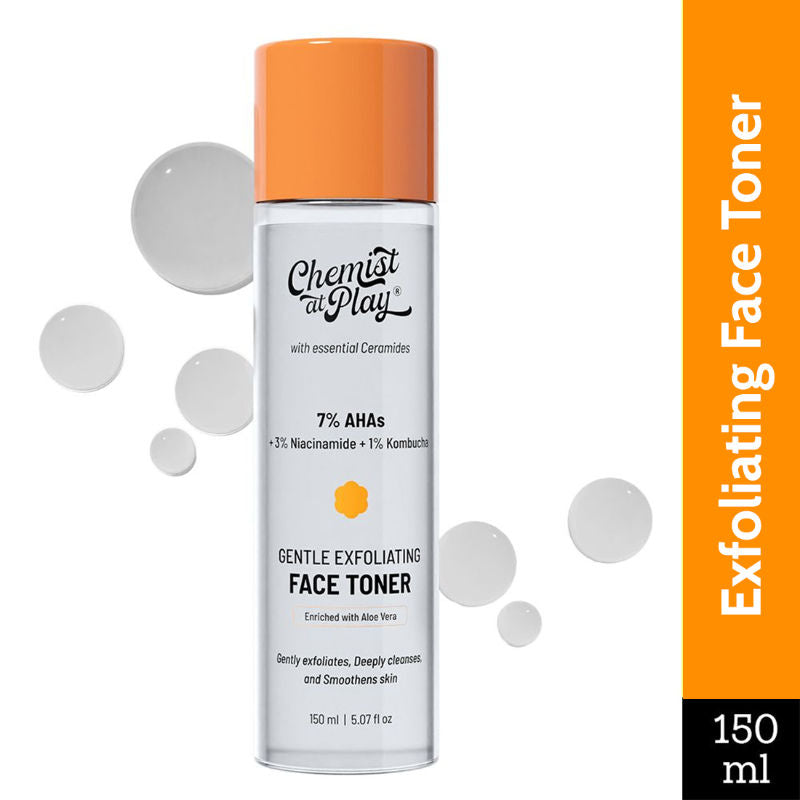
Chemist at Play Gentle Exfoliating Face Toner For Glowing Skin

Chemist at Play Gentle Exfoliating Face Toner For Glowing Skin
Chemist at Play
chemist-at-play-gentle-exfoliating-face-toner-for-glowing-skin
Tone
10084788338981
Morning or Evening?
How often will you use this product?
Notes


Highlights
WHAT IS IT?
Gentle exfoliating face toner with glycolic acid, mandelic acid, niacinamide, kombucha - 27 ingredients
FEATURES
Comprehensive hydration, skin barrier enhancement, antioxidant protection, powerful exfoliation, suitable for all skin types, dermatologically tested, vegan and cruelty-free
BEST FOR
sensitive
CHECKS
Does not contain fragrance (implied by no fragrance tag and gentle formula), likely paraben-free, sulfate-free, silicone-free, PEG-free (not explicitly listed but no mention)
Who Is It For?
All Genders No Specific Age Range MentionedWhat Does It Help With?
Exfoliation Hydration Skin Texture Refinement Reducing Inflammation And Scars Antioxidant Protection Oil Production Regulation Pore Size ReductionBudget
Affordable (under $30)How To Use
Which routine should it be used in?
Instructions:
Key Information


What Chemist at Play Says
Product Description:
Chemist at Play Gentle Exfoliating Face Toner is your all-in-one solution for exfoliation, hydration, and smooth skin. Suitable for all skin types, it features glycolic acid and mandelic acid to deeply exfoliate and refine texture. 3% niacinamide strengthens the skin barrier, reduces inflammation, and fades scars. Infused with 1% kombucha, it offers antioxidant protection, shields against environmental damage, and enhances hydration. Achieve a radiant, even complexion with every use of this transformative toner.
About the Brand:
Ingredients Overview
Ingredients List
aloe-barbadensis-aloe-vera-extract, purified-water, glycolic-acid, mandelic-acid, niacinamide, triethanolamine, allantoin, cetrimonium-chloride, lactic-acid, arginine, glutamic-acid, proline, saccharomyces-xylinum-black-tea-ferment, triethylene-glycol, aspartic-acid, phenylalanine, leucine, lysine, valine, serine, histidine, threonine, tyrosine, isoleucine, alanine, methionine, cysteine, glycine, sodium-hyaluronate, amorphophallus-konjac-ceramide, oryza-sativa-rice-ceramide, phospholipids, sphingolipids, phenoxyethanol, disodium-edta
Key Ingredients
glycolic-acid, mandelic-acid, niacinamide, kombucha, aloe-vera-extract
Ingredients Details
Alanine
Common Name(s): L-alanine,2-aminopropanoic acid
CAS Number: 56-41-7
DESCRIPTION
What It Does: Provides nmf-type humectant moisture retention and skin conditioning.
Why It's Used: Simple, well-tolerated nmf amino acid humectant for skin conditioning formulations.
How It Works: Small methyl side chain contributes to protein hydrophobic core but as free amino acid provides direct humectant activity via amino and carboxyl groups. converted to pyruvate for cellular atp production via gluconeogenesis.
Typically Found In: Nmf moisturizers,skin conditioning products
TECHNICAL DETAILS
Primary Category: Active ingredient – amino acid
Secondary Functions: Nmf component,cellular energy
Application Areas:

Facial Skincare

Body Care
Hair Care
Beard Care
Color Cosmetics (Makeup)
Dietary/Oral Supplements
Typical Concentration Range: 0.5%–5%
SOURCING & ETHICS
Vegan Status: Yes – plant-derived or synthetic
Halal Status: Yes
Source Notes: Fermentation-derived or synthetic. natural skin component.
SKIN COMPATIBILITY
Irritancy Rating: 1/5 – very low
Comedogenicity Rating: 0/5 – non-comedogenic
Sensitivity Concerns: Non-irritating; endogenous skin molecule.
Safe for Sensitive Skin: Yes
SAFETY & COMPATIBILITY
Safety Profile: Excellent safety profile. natural skin nmf component. ewg score: 1.
Works Well With: Hyaluronic acid,ceramides,peptides,other amino acids
Avoid Combining With: No significant incompatibilities
SCIENTIFIC NOTE
Free alanine is among the most abundant amino acids in the stratum corneum nmf, where it contributes to the aqueous phase hydration that keeps the stratum corneum flexible and functional.
Last Verified: Cosing database,cir safety assessment
Primary Sources: 2026-03-12
Allantoin
Common Name(s): 5-ureidohydantoin,glyoxyldiureide,aluminum dihydroxy allantoinate
CAS Number: 97-59-6
DESCRIPTION
What It Does: Soothes irritation, accelerates wound healing, promotes skin cell renewal, and provides mild keratolytic exfoliation.
Why It's Used: Gold standard multi-function soothing active – one of the most widely used cosmetic ingredients across all product types for its exceptional tolerability and clinically proven multi-action skin conditioning.
How It Works: Promotes keratinocyte proliferation and fibroblast migration for wound healing. mild keratolytic activity by disrupting corneocyte binding. anti-irritant via direct protein binding and anti-inflammatory cytokine reduction. humectant activity via hydroxyl groups.
Typically Found In: Post-procedure products,sensitive skin formulas,wound care,anti-acne treatments,baby products
TECHNICAL DETAILS
Primary Category: Active ingredient – soothing / anti-inflammatory
Secondary Functions: Wound healing,keratolytic,anti-irritant
Application Areas:
Facial Skincare
Body Care
Hair Care
Beard Care
Color Cosmetics (Makeup)
Dietary/Oral Supplements
Typical Concentration Range: 0.1%–2%
SOURCING & ETHICS
Vegan Status: Yes – synthetic or comfrey-derived
Halal Status: Yes
Source Notes: Plant-derived extract or synthetic.
SKIN COMPATIBILITY
Irritancy Rating: 1/5 – very low
Comedogenicity Rating: 0/5 – non-comedogenic
Sensitivity Concerns: Exceptionally well-tolerated; suitable for all skin types including baby and compromised skin.
Safe for Sensitive Skin: Yes – particularly recommended for sensitive skin
SAFETY & COMPATIBILITY
Safety Profile: Excellent safety profile. ewg score: 1.
Works Well With: Ceramides,panthenol,allantoin,hyaluronic acid,centella asiatica
Avoid Combining With: No significant incompatibilities
SCIENTIFIC NOTE
Allantoin's keratinocyte proliferation stimulation occurs via receptor-mediated signaling (possibly machr activation) rather than non-specific irritation-driven proliferation, making it a true wound-healing stimulant rather than a pro-inflammatory proliferative signal.
Last Verified: Cosing database,cir safety assessment,araújo et al. allantoin review
Primary Sources: 2026-03-12
Arginine
Common Name(s): L-arginine,2-amino-5-guanidinopentanoic acid
CAS Number: 74-79-3
DESCRIPTION
What It Does: Conditions skin, attracts moisture, supports wound healing, and improves microcirculation via no synthesis.
Why It's Used: Multi-functional amino acid for skin hydration, conditioning, and wound healing in peptide and nmf formulations.
How It Works: Guanidinium group binds water (humectant). substrate for nitric oxide synthase (enos) producing nitric oxide that vasodilates capillaries improving skin nutrition. stimulates fibroblast proliferation for wound healing.
Typically Found In: Anti-aging serums,wound healing products,nmf moisturizers,scalp treatments
TECHNICAL DETAILS
Primary Category: Active ingredient – amino acid
Secondary Functions: Wound healing,microcirculation,nmf component
Application Areas:
Facial Skincare
Body Care
Hair Care
Beard Care
Color Cosmetics (Makeup)
Dietary/Oral Supplements
Typical Concentration Range: 0.5%–5%
SOURCING & ETHICS
Vegan Status: Yes – plant-derived or synthetic
Halal Status: Yes
Source Notes: Fermentation-derived or synthetic. natural skin component.
SKIN COMPATIBILITY
Irritancy Rating: 1/5 – very low
Comedogenicity Rating: 0/5 – non-comedogenic
Sensitivity Concerns: Non-irritating; endogenous skin molecule.
Safe for Sensitive Skin: Yes
SAFETY & COMPATIBILITY
Safety Profile: Excellent safety profile. natural skin nmf component. ewg score: 1.
Works Well With: Hyaluronic acid,ceramides,peptides,other amino acids
Avoid Combining With: No significant incompatibilities
SCIENTIFIC NOTE
Arginine is a conditionally essential amino acid in wound healing where local demand exceeds synthesis capacity. topical arginine provides the nos substrate locally for no-mediated vasodilation and immune cell function in healing tissue.
Last Verified: Cosing database,cir safety assessment,witte & barbul arginine wound healing review
Primary Sources: 2026-03-12
Cysteine
Common Name(s): L-cysteine,2-amino-3-mercaptopropanoic acid
CAS Number: 52-90-4
DESCRIPTION
What It Does: Provides sulfur for keratin disulfide bonds, supports glutathione antioxidant synthesis, and directly scavenges free radicals.
Why It's Used: Hair strengthening via keratin disulfide bond support and antioxidant defense as a glutathione precursor.
How It Works: Thiol group (-sh) forms disulfide bonds (-s-s-) between adjacent keratin chains providing mechanical strength to hair and nails. glutathione synthase uses cysteine as the rate-limiting substrate for the master antioxidant glutathione.
Typically Found In: Hair strengthening treatments,keratin products,antioxidant formulations
TECHNICAL DETAILS
Primary Category: Active ingredient – amino acid
Secondary Functions: Keratin disulfide bond,glutathione precursor
Application Areas:
Facial Skincare
Body Care
Hair Care
Beard Care
Color Cosmetics (Makeup)
Dietary/Oral Supplements
Typical Concentration Range: 0.1%–2%
SOURCING & ETHICS
Vegan Status: Yes – plant-derived or synthetic
Halal Status: Yes
Source Notes: Fermentation-derived or synthetic. natural skin component.
SKIN COMPATIBILITY
Irritancy Rating: 1/5 – very low
Comedogenicity Rating: 0/5 – non-comedogenic
Sensitivity Concerns: Non-irritating; endogenous skin molecule.
Safe for Sensitive Skin: Yes
SAFETY & COMPATIBILITY
Safety Profile: Excellent safety profile. natural skin nmf component. ewg score: 1.
Works Well With: Hyaluronic acid,ceramides,peptides,other amino acids
Avoid Combining With: No significant incompatibilities
SCIENTIFIC NOTE
Hair's mechanical strength (tensile and torsional) is primarily determined by the density of disulfide crosslinks between adjacent keratin alpha-helices. chemical treatments (bleaching, perming) break these bonds; cysteine topical application may support their restoration.
Last Verified: Cosing database,cir safety assessment,keratin chemistry literature
Primary Sources: 2026-03-12
