

Nykaa E retail limited
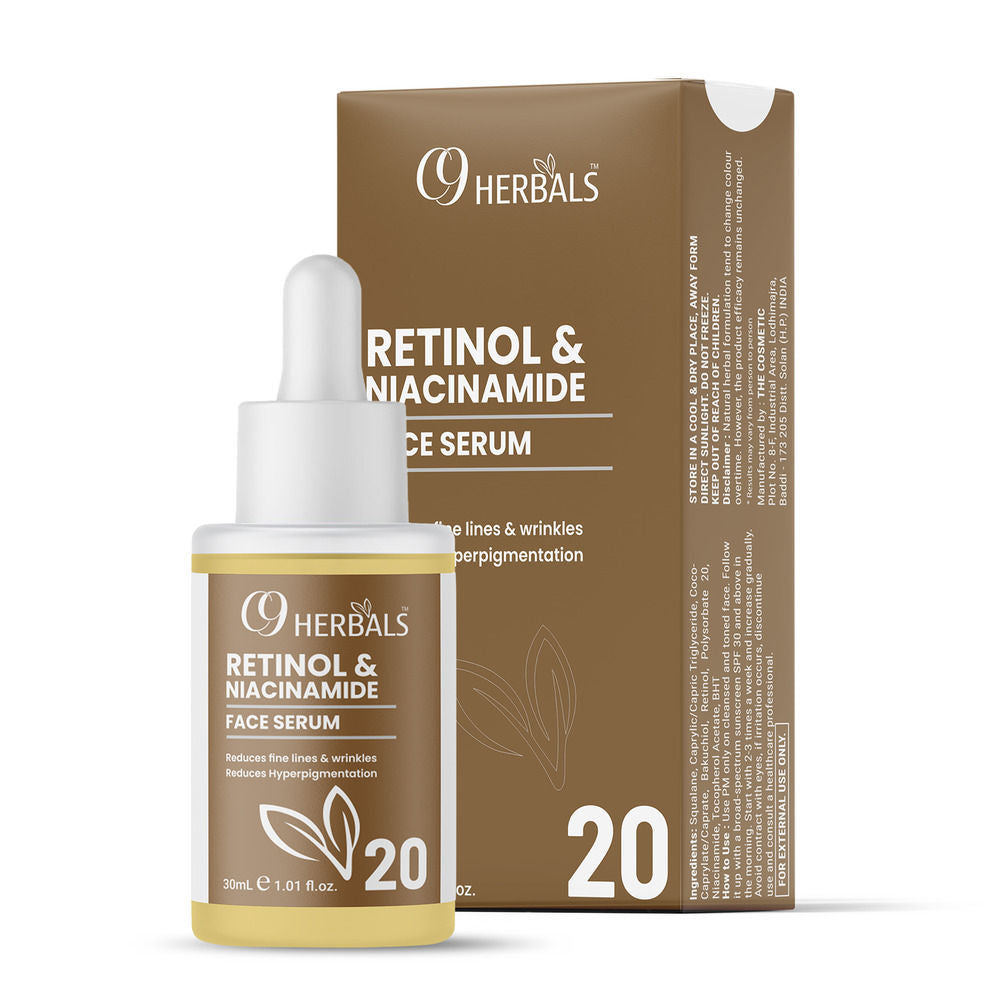
C9 Herbals Retinol & Niacinamide Face Serum

C9 Herbals Retinol & Niacinamide Face Serum
Nykaa E retail limited
c9-herbals-retinol-niacinamide-face-serum
Serum
10085095932197
Morning or Evening?
How often will you use this product?
Notes


Highlights
WHAT IS IT?
Face serum with 6 active ingredients
FEATURES
Reduces wrinkles and fine lines, improves skin texture, easy to use, gentle on all skin types, vegan, cruelty-free and paraben-free
BEST FOR
sensitive
CHECKS
parabens
Who Is It For?
Unspecified Age Range UnisexWhat Does It Help With?
Aging Signs Acne Dark Spots Wrinkles Big Pores Uneven Skin Tone Fine LinesBudget
Mid-range ($30-$75)How To Use
Which routine should it be used in?
Instructions:
Key Information


What Nykaa E retail limited Says
Product Description:
Niacinamide and retinol can both help with a lot of the same skin problems, like signs of aging, acne, and dark spots. Retinol can help your face make new cells, clear out clogged pores, and make collagen. Besides that, it can help with skin tone and structure. Niacinamide is a vitamin that dissolves in water and can help with DNA damage, inflammation, and cell energy. Also, it can help with wrinkles, big pores, uneven skin tone, and fine lines and wrinkles. Both niacinamide and retinol can work together to help with skin problems like acne, pores, fine lines and wrinkles, dark spots, and uneven skin tone. Niacinamide can help with some of the bad effects that retinol can cause. Niacinamide is a gentle agent in skin care products that helps fade age spots, discoloration, and other skin problems. Niacinamide and retinol both do good things for your skin, but retinol is stronger. People have also said that it makes skin red, irritated, and dry. Putting the two together is safe and can make it easier to use retinol. Niacinamide helps keep the skin moist, which makes it less likely that retinol will irritate it. Features: Reduces wrinkles and fine lines by boosting collagen, improves skin texture by promoting cell turnover, easy to use with a few drops to cleansed and toned skin, gentle on all skin types including sensitive skin, vegan, cruelty-free and paraben-free.
About the Brand:
Ingredients Overview
Ingredients List
Squalane,Retinol,Caprylic/-/Capric,Triglyceride,Niacinamide,Tocopherol Acetate
Key Ingredients
Retinol,Niacinamide,Squalane,Tocopherol Acetate
Ingredients Details
Niacinamide
Common Name(s): Vitamin b3,nicotinamide,pyridine-3-carboxamide
CAS Number: 98-92-0
DESCRIPTION
What It Does: Niacinamide strengthens the skin barrier, reduces visible pore size, regulates sebum production, fades dark spots, and improves skin texture and tone.
Why It's Used: It is used because it addresses multiple skin concerns at once without irritation, making it suitable for all skin types. it is stable in formulations and pairs well with most other actives.
How It Works: Niacinamide inhibits the transfer of melanosomes (pigment packets) to skin cells, reducing hyperpigmentation. it also stimulates ceramide synthesis to strengthen the skin barrier and reduces inflammation by modulating cytokine activity.
Typically Found In: Serums,moisturizers,toners,cleansers,eye creams,sunscreens,primers
TECHNICAL DETAILS
Primary Category: Active ingredient – vitamin
Secondary Functions: Barrier repair,brightening,anti-inflammatory
Application Areas:

Facial Skincare
Body Care

Hair Care
Beard Care
Color Cosmetics (Makeup)
Dietary/Oral Supplements
Typical Concentration Range: 2%–10% (typical: 5%; higher concentrations may cause flushing in some individuals)
SOURCING & ETHICS
Vegan Status: Yes – synthetically produced
Halal Status: Yes – synthetic origin
Source Notes: Commercially produced via synthesis from nicotinic acid or 3-cyanopyridine. no animal-derived sources used in cosmetic-grade niacinamide.
SKIN COMPATIBILITY
Irritancy Rating: 1/5 – very low; concentrations above 10% may cause temporary flushing in sensitive individuals
Comedogenicity Rating: 0/5 – non-comedogenic
Sensitivity Concerns: At concentrations >10%, some users experience niacin flush (transient redness/tingling). generally very well-tolerated.
Safe for Sensitive Skin: Yes – one of the best-tolerated actives for sensitive skin
SAFETY & COMPATIBILITY
Safety Profile: Extensively studied and considered very safe. ewg hazard score: 1. no significant systemic toxicity concerns at topical concentrations.
Works Well With: Retinol,peptides,ahas/bhas,hyaluronic acid,ceramides,zinc,vitamin c,spf
Avoid Combining With: High concentrations of vitamin c (ascorbic acid) may theoretically convert to niacin – use at different times if using pure l-ascorbic acid above 15%
SCIENTIFIC NOTE
Niacinamide is a precursor to nad+ and nadp+, coenzymes vital to cellular energy metabolism. its benefits for dna repair and mitochondrial function make it a key ingredient in anti-aging strategies.
Last Verified: 2026-03-12
Primary Sources: Cosing database,cir safety assessment,ewg skin deep,pubmed clinical studies
Retinol
Common Name(s): Vitamin a,all-trans retinol,(all-e)-3,7-dimethyl-9-(2,6,6-trimethyl-1-cyclohexen-1-yl)-2,4,6,8-nonatetraen-1-ol
CAS Number: 68-26-8
DESCRIPTION
What It Does: Retinol accelerates skin cell turnover, stimulates collagen production, reduces fine lines and wrinkles, fades hyperpigmentation, and helps normalize pore size.
Why It's Used: It is the most evidence-backed anti-aging ingredient available without a prescription. it provides comprehensive skin renewal benefits that no other single cosmetic ingredient can match.
How It Works: Retinol is converted in the skin to retinoic acid, which binds to retinoid receptors in cell nuclei. this activates gene expression changes that accelerate cell turnover, boost collagen synthesis, and inhibit matrix metalloproteinases (collagen-degrading enzymes).
Typically Found In: Night creams,serums,eye creams,targeted treatment products,anti-aging formulations
TECHNICAL DETAILS
Primary Category: Active ingredient – vitamin a derivative
Secondary Functions: Exfoliating,anti-acne,brightening
Application Areas:
Facial Skincare
Body Care
Hair Care
Beard Care
Color Cosmetics (Makeup)
Dietary/Oral Supplements
Typical Concentration Range: 0.025%–1% (otc); start at low concentrations and build up slowly
SOURCING & ETHICS
Vegan Status: Conditional - feedstock declaration required
Halal Status: Unverified - feedstock declaration required (plant, animal and petrochemical routes all exist)
Source Notes: Cosmetic retinol is predominantly synthetically manufactured. some natural sources include fish liver oils. synthetic is preferred for purity and sustainability. [audit 2026-07-29 rev2: origin-dependent: the same inci exists in plant, animal and petrochemical versions and the name does not discriminate. determination requires shariah-panel sign-off.]
SKIN COMPATIBILITY
Irritancy Rating: 3/5 – moderate; can cause dryness, peeling, redness, especially during adjustment period (retinization)
Comedogenicity Rating: 0/5 – non-comedogenic; actually helps clear pores
Sensitivity Concerns: Retinization period: 2–6 weeks of potential dryness, flaking, and sensitivity. photosensitizing – must use spf when using retinol. avoid during pregnancy.
Safe for Sensitive Skin: Use with caution – start at 0.025%, buffer with moisturizer, use every 2–3 nights initially
SAFETY & COMPATIBILITY
Safety Profile: Safe for general use at otc concentrations. not recommended during pregnancy. avoid with waxing. use spf daily. ewg hazard score: varies by concentration.
Works Well With: Niacinamide (soothes irritation),peptides,ceramides,hyaluronic acid,spf (mandatory)
Avoid Combining With: Benzoyl peroxide (may inactivate retinol),ahas/bhas (when new to retinol – overexfoliation risk),vitamin c (use at different times)
SCIENTIFIC NOTE
Retinol is approximately 20 times less potent than prescription tretinoin (retinoic acid) but significantly better tolerated. the conversion rate of retinol to retinoic acid in skin is the rate-limiting step in its efficacy.
Last Verified: 2026-03-12
Primary Sources: Cosing database,cir safety assessment,journal of investigative dermatology,kligman et al. studies
Squalane
Common Name(s): Perhydrosqualene,2,6,10,15,19,23-hexamethyltetracosane
CAS Number: 0111-01-03
DESCRIPTION
What It Does: Provides endogenous-skin-identical emolliency with exceptional stability and skin compatibility.
Why It's Used: The most skin-compatible emollient – chemically identical to human sebum squalene component with outstanding tolerability across all skin types.
How It Works: Fully saturated hydrocarbon with zero oxidation sites provides exceptional stability unlike squalene's 6 double bonds. integrates into stratum corneum lipid bilayers with near-perfect biocompatibility. provides antioxidant protection to formulation via radical quenching.
Typically Found In: Facial oils,serums,non-comedogenic moisturizers,luxury body care
TECHNICAL DETAILS
Primary Category: Functional ingredient – emollient
Secondary Functions: Maximum biocompatibility,antioxidant stabilizer,non-comedogenic
Application Areas:
Facial Skincare
Body Care
Hair Care
Beard Care
Color Cosmetics (Makeup)
Dietary/Oral Supplements
Typical Concentration Range: 1%–100%
SOURCING & ETHICS
Vegan Status: Conditional - feedstock declaration required
Halal Status: Unverified - feedstock declaration required (plant, animal and petrochemical routes all exist)
Source Notes: Sustainable plant-derived squalane from sugarcane fermentation (amyris) or olive oil fractionation is preferred over shark liver-derived. chemically identical regardless of source. [audit 2026-07-29 rev2: origin-dependent: the same inci exists in plant, animal and petrochemical versions and the name does not discriminate. determination requires shariah-panel sign-off.]
SKIN COMPATIBILITY
Irritancy Rating: 1/5 – very low
Comedogenicity Rating: 0/5 – non-comedogenic
Sensitivity Concerns: Non-irritating.
Safe for Sensitive Skin: Yes
SAFETY & COMPATIBILITY
Safety Profile: Excellent safety profile. ewg score: 1.
Works Well With: Humectants,ceramides,actives as carrier
Avoid Combining With: No significant incompatibilities
SCIENTIFIC NOTE
Squalene constitutes approximately 12-15% of human sebum – the highest proportion of any skin lipid. topical squalane (stable, hydrogenated form) replenishes this abundant endogenous skin lipid. the complete absence of oxidizable double bonds (unlike squalene's 6 double bonds) eliminates the pro-oxidant concerns of natural squalene oxidation.
Last Verified: 2026-03-12
Primary Sources: Cosing database,huang et al. squalane review,cir safety assessment
Tocopherol Acetate
Common Name(s): Vitamin e tocopherol,lipophilic antioxidant,skin conditioning active
CAS Number: N/a
DESCRIPTION
What It Does: Quenches lipid peroxyl radicals (loo•) in the sc lipid phase preventing lipid peroxidation chain reactions, stabilises co-formulated vitamin c through radical recycling synergy, and conditions skin with emollient tocopherol character.
Why It's Used: The primary lipid-phase antioxidant in human skin — essential for protecting sc lipid bilayers from uv-induced peroxidation that is not accessible to water-soluble antioxidants, and uniquely synergistic with vitamin c which regenerates oxidised vitamin e.
How It Works: Tocopherol donates h• to lipid peroxyl radicals (loo• + phoh → looh + pho•); the resulting tocopheroxyl radical (pho•) is reduced back to tocopherol by ascorbate — providing catalytic antioxidant activity. ester forms (acetate, succinate) require sc esterases for hydrolysis to active tocopherol.
Typically Found In: Antioxidant formulas,vitamin c serums,moisturisers
TECHNICAL DETAILS
Primary Category: Active ingredient – vitamin e derivative
Secondary Functions: Formulation stabilizer,emollient
Application Areas:
Facial Skincare
Body Care
Hair Care
Beard Care
Color Cosmetics (Makeup)
Dietary/Oral Supplements
Typical Concentration Range: 0.1%–5%
SOURCING & ETHICS
Vegan Status: Yes
Halal Status: Yes
Source Notes: Plant-derived (soy, sunflower) or synthetic. requires antioxidant stabilization.
SKIN COMPATIBILITY
Irritancy Rating: 1/5 – very low
Comedogenicity Rating: 1/5 – very low
Sensitivity Concerns: Rare contact sensitization; generally very well-tolerated.
Safe for Sensitive Skin: Yes
SAFETY & COMPATIBILITY
Safety Profile: Excellent safety profile. ewg score: 1.
Works Well With: Ascorbic acid,ferulic acid,ceramides,spf
Avoid Combining With: No significant incompatibilities
SCIENTIFIC NOTE
Tocopherol's lipophilicity (logp ~10) restricts it to the lipid phase of the sc — exactly where lipid peroxidation chain reactions from uv exposure occur. this phase-specific targeting makes vitamin e uniquely effective at preventing the lipid oxidation that drives photoaging.
Last Verified: 2026-03-12
Primary Sources: Cosing database,vitamin e tocopherol lipid antioxidant review