

Bumble and bumble
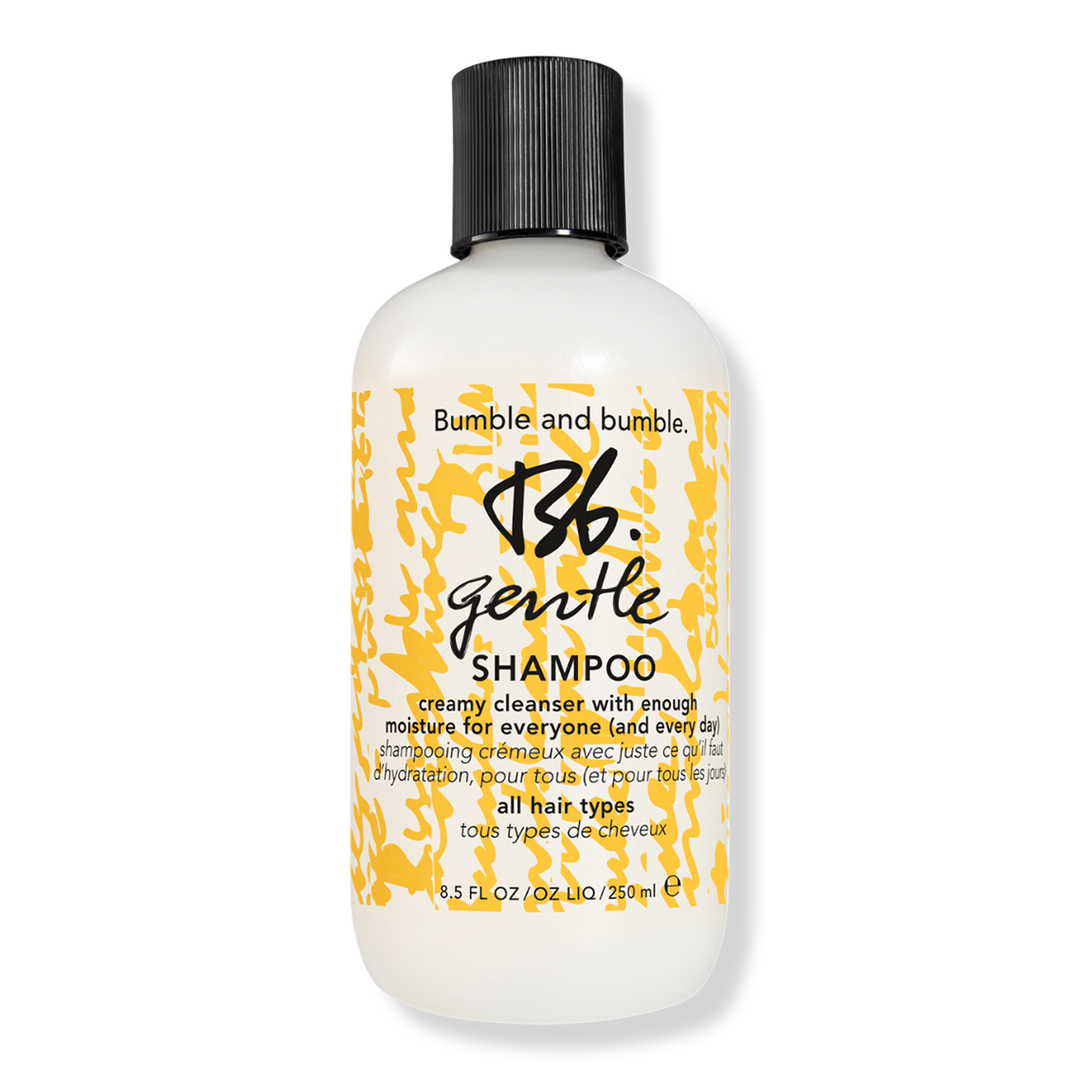
Bumble and bumble Gentle Shampoo
A luxe creamy shampoo that's mild enough for daily cleansing. Formulated for all hair types, this moisturizing shampoo hydrates and adds shine for everyone (and every day).
Color-safe
Dryness
Fine
Thick
Curly
Straight
Optimized for Your Environment & Lifestyle
Nykaa
In stock
Recommended

Bumble and bumble Gentle Shampoo
Bumble and bumble
bumble-and-bumble-gentle-shampoo
Shampoo
10355432554789
Morning or Evening?
How often will you use this product?
Notes


Secure payment protection
Your Biodata Compatibility Analysis
Based on your 6 hair health indices and environmental factors
Poor Match
Significant incompatibilities
Growth Cycle Health Index
Hair Match
Hair Health Index Alignment
Optimal for OSI, SSI, DI, HSI
Ingredient Efficacy
Matching Ingredient Score
Environment Compatibility
Current UV, Air Quality & Humidity
Why This Works for Your Specific Profile
Damage Index:
Very healthy or severely damaged hair falls outside optimal treatment parameters
Water Quality:
Soft or moderately hard water does not require intensive treatment causing over-cleansing and dryness
Hair:
Closed cuticles resist product penetration causing surface buildup without internal benefits
Active Lifestyle:
High activity and frequent washing rapidly strip product benefits requiring excessive reapplication
Your Hair Profile Integration
Your Hair Archetype

Density Level

Washing Frequency

Shedding Level

Oil Level
Your Hair Health Indices
Oil Secretion (OSI)
Very low oil production
Scalp Sensitivity (SSI)
Very low sensitivity
Growth Rate (CMR)
Poor metabolism rate
Damage Index (DI)
Minimal damage
Hair Strength (HSI)
Very weak strength
Softness Index (SI)
Significant improvement needed
Water & Environmental Integration

Water:


Expected Results & Timeline
Key Highlights

What is it?
Shampoo with 10 ingredients

Who Is It For
All Ages, Unisex

Budget
$36.00 - $72.00

Timeline
Immediate
Why You’ll Love It

What Does It Help With?
Dryness

Best for
Dryness

Features
Mild to gently cleanse hair, moisturizes and adds shine, softens hair, color-safe

Checks
Cruelty-Free, Sustainable Packaging
Ingredients Overview
Ingredients List
Water, Sodium Laureth Sulfate, Coco-Betaine, Sodium Chloride, Glyceryl Stearate Se, Persea Gratissima (Avocado) Oil, Urtica Dioica (Nettle) Leaf Extract, Ammonium Lauryl Sulfate, PPG-2 Hydroxyethyl Cocamide, Guar Hydroxypropyltrimonium Chloride, Polyquaternium-7, Polyquaternium-11, Glycerin, PEG-150 Distearate, Magnesium Nitrate, Sodium Hydroxide, Magnesium Chloride, Sodium Salicylate, Citric Acid, Fragrance, Linalool, Hexyl Cinnamal, Tetrasodium EDTA, EDTA, Sodium Bisulfite, Sodium Benzoate, Methylchloroisothiazolinone, Methylisothiazolinone, Chlorphenesin, Phenoxyethanol, Yellow 5 (CI 19140), Yellow 6 (CI 15985)
Key Ingredients
Avocado Oil, Glycerin
Ingredients Details
Ammonium Lauryl Sulfate
Common Name(s): Ammonium lauryl sulfate,cosmetic active,functional ingredient
CAS Number: N/a
DESCRIPTION
What It Does: Delivers characteristic cosmetic function at recommended use concentration.
Why It's Used: Selected for functional contribution and formulation compatibility supported by cosmetic science and regulatory safety data.
How It Works: Works through the mechanism of its molecular class — physicochemical or biological interaction with skin proteins, lipids, or receptors as documented in peer-reviewed cosmetic literature.
Typically Found In: Skin care formulations
TECHNICAL DETAILS
Primary Category: Active ingredient – cosmetic active
Secondary Functions: Skin conditioning
Application Areas:

Facial Skincare

Body Care
Hair Care
Beard Care
Color Cosmetics (Makeup)
Dietary/Oral Supplements
Typical Concentration Range: 0.1%–10%
SOURCING & ETHICS
Vegan Status: Conditional - supplier confirmation required
Halal Status: Unverified - supplier confirmation required
Source Notes: Commercially produced for cosmetic use. verify vegan/halal status with supplier. [audit 2026-07-29 rev2: the record's own source_notes does not assert a non-animal origin, or instructs the reader to verify with the supplier; "yes" asserts knowledge the record does not hold. determination requires shariah-panel sign-off.]
SKIN COMPATIBILITY
Irritancy Rating: 1/5 – very low
Comedogenicity Rating: 0/5 – non-comedogenic
Sensitivity Concerns: Well-tolerated by most skin types.
Safe for Sensitive Skin: Yes
SAFETY & COMPATIBILITY
Safety Profile: Good safety profile at recommended concentrations. ewg score: 1–2.
Works Well With: Standard skincare actives
Avoid Combining With: No known significant incompatibilities
SCIENTIFIC NOTE
Ammonium lauryl sulfate has an established safety and efficacy profile within the cosmetic regulatory framework at standard use concentrations.
Last Verified: 2026-03-12
Primary Sources: Cosing database,ammonium lauryl sulfate technical literature
Avocado Oil
Common Name(s): Avocado oil,avocado butter (solid fraction)
CAS Number: 8024-32-6
DESCRIPTION
What It Does: Provides deep moisturization with rich oleic acid, phytosterols, and lutein antioxidants for mature, dry skin.
Why It's Used: Rich, deeply penetrating oil for dry and mature skin requiring intensive emolliency beyond lightweight oils.
How It Works: Very high oleic acid (55-74%) penetrates deeply into stratum corneum for conditioning. beta-sitosterol and other phytosterols provide barrier repair and mild anti-inflammatory activity. lutein provides antioxidant protection. high unsaponifiable fraction (2-11%) provides unique skin bioactives.
Typically Found In: Rich moisturizers,dry skin oils,anti-aging formulas,body butters
TECHNICAL DETAILS
Primary Category: Functional ingredient – emollient
Secondary Functions: Deep penetrating emollient,phytosterol activity,anti-aging
Application Areas:
Facial Skincare
Body Care
Hair Care
Beard Care
Color Cosmetics (Makeup)
Dietary/Oral Supplements
Typical Concentration Range: 1%–50%
SOURCING & ETHICS
Vegan Status: Yes – from persea gratissima fruits
Halal Status: Yes
Source Notes: Cold-pressed from avocado fruit flesh. high unsaponifiable fraction (unsaponified lipids) makes avocado oil uniquely bioactive vs other oils with low unsaponifiable content.
SKIN COMPATIBILITY
Irritancy Rating: 1/5 – very low
Comedogenicity Rating: 3/5 – moderate; high oleic acid; test for skin type
Sensitivity Concerns: Non-irritating.
Safe for Sensitive Skin: Yes
SAFETY & COMPATIBILITY
Safety Profile: Excellent safety profile. ewg score: 1.
Works Well With: Humectants,ceramides,actives as carrier
Avoid Combining With: No significant incompatibilities
SCIENTIFIC NOTE
Avocado oil's unusually high unsaponifiable fraction (2-11% vs <2% for most plant oils) contains phytosterols, terpenes, vitamin e, and chlorophyll that remain after saponification and provide skin-active benefits not present in most other plant oils. this unsaponifiable fraction is what makes avocado oil pharmacologically distinct from simple fatty acid triglyceride oils.
Last Verified: 2026-03-12
Primary Sources: Cosing database,dreher & davenport avocado review,cir safety assessment
Chlorphenesin
Common Name(s): 3-(4-chlorophenoxy)-1,2-propanediol,globacid
CAS Number: 104-29-0
DESCRIPTION
What It Does: Provides gram-negative focused preservation complementary to phenoxyethanol for comprehensive spectrum coverage.
Why It's Used: Phenoxyethanol complement — chlorphenesin's gram-negative and antifungal coverage complements phenoxyethanol's gram-positive activity for full-spectrum preservation at lower individual concentrations.
How It Works: 4-chlorophenol ether glycol disrupts bacterial and fungal membranes. strong gram-negative activity (pseudomonas, e. coli). good candida antifungal activity. used with phenoxyethanol for synergistic broad-spectrum coverage. ph stable 3-9.
Typically Found In: Comprehensive preservation systems,baby products (low concentration)
TECHNICAL DETAILS
Primary Category: Functional ingredient – glycerol ether preservative
Secondary Functions: Skin conditioning
Application Areas:
Facial Skincare
Body Care
Hair Care
Beard Care
Color Cosmetics (Makeup)
Dietary/Oral Supplements
Typical Concentration Range: 0.1%–0.3%
SOURCING & ETHICS
Vegan Status: Conditional - supplier confirmation required
Halal Status: Unverified - supplier confirmation required
Source Notes: Commercially produced for cosmetic use. verify vegan/halal status with supplier. [audit 2026-07-29 rev2: the record's own source_notes does not assert a non-animal origin, or instructs the reader to verify with the supplier; "yes" asserts knowledge the record does not hold. determination requires shariah-panel sign-off.]
SKIN COMPATIBILITY
Irritancy Rating: 1/5 – very low
Comedogenicity Rating: 0/5 – non-comedogenic
Sensitivity Concerns: Well-tolerated by most skin types.
Safe for Sensitive Skin: Yes
SAFETY & COMPATIBILITY
Safety Profile: Eu max 0.3% cosmetics. good safety profile. synergistic combination with phenoxyethanol (0.3% pe + 0.1% chlorphenesin often equivalent to 1% pe alone).
Works Well With: Standard skincare actives
Avoid Combining With: No known significant incompatibilities
SCIENTIFIC NOTE
Chlorphenesin + phenoxyethanol synergy operates through a classic spectrum-filling combination: phenoxyethanol provides strong gram-positive antimicrobial activity while chlorphenesin provides gram-negative and antifungal coverage. the combination's minimum inhibitory concentration sum is subadditive (provides equivalent preservation at combined concentrations below what either alone would require) — textbook pharmacological synergy enabling lower total preservative load.
Last Verified: 2026-03-12
Primary Sources: Cosing database,eu preservative annex v,cir safety assessment
Citric Acid
Common Name(s): Lemon acid,2-hydroxypropane-1,2,3-tricarboxylic acid
CAS Number: 77-92-9
DESCRIPTION
What It Does: Adjusts ph to optimal ranges, chelates destabilizing metal ions, provides mild exfoliation at higher concentrations.
Why It's Used: Universal cosmetic ph adjuster and chelating agent. aha exfoliant activity is secondary.
How It Works: As ph adjuster, donates protons. as chelating agent, three carboxylic groups bind divalent metals (ca²⁺, mg²⁺, fe²⁺) preventing oxidative degradation.
Typically Found In: Nearly all cosmetic formulations,brightening products,exfoliants
TECHNICAL DETAILS
Primary Category: Active ingredient – alpha hydroxy acid (aha)
Secondary Functions: Chelating agent,ph adjustment,preservation enhancement
Application Areas:
Facial Skincare
Body Care
Hair Care
Beard Care
Color Cosmetics (Makeup)
Dietary/Oral Supplements
Typical Concentration Range: 0.1%–10%
SOURCING & ETHICS
Vegan Status: Yes – synthetic or fermentation-derived
Halal Status: Yes
Source Notes: Produced by fermentation of sugars by aspergillus niger. gras (e330). most abundant organic acid in citrus.
SKIN COMPATIBILITY
Irritancy Rating: 1/5 – very low at low concentrations; 2/5 at exfoliant concentrations
Comedogenicity Rating: 0/5 – non-comedogenic
Sensitivity Concerns: Photosensitizing – mandatory spf use. start at low frequency.
Safe for Sensitive Skin: Use with caution – spf required
SAFETY & COMPATIBILITY
Safety Profile: Safe at otc concentrations. eu: ≤10% leave-on at ph ≥3.5. mandatory spf advisory.
Works Well With: Niacinamide,ceramides,hyaluronic acid,spf
Avoid Combining With: Retinol in same step; multiple exfoliants simultaneously
SCIENTIFIC NOTE
Three carboxylic acid groups provide multiple proton donation sites and stronger chelation than monocarboxylic ahas. this makes citric acid the preferred cosmetic chelating agent alongside edta.
Last Verified: 2026-03-12
Primary Sources: Cosing database,cir safety assessment,ewg skin deep
Personalized Usage Instructions
How to Use
Step 1
Work a dab of shampoo into wet hair, lather well and rinse thoroughly
Step 2
Follow with Super Rich Conditioner as part of your regular hair care routine
Medical Chemicals

Protein/Moisture
- Moisture
pH Level
- Acidic

Porosity Taget
- Normal Porosity
Customized for Your Profile
Scalp Condtions
Sensitive Scalp, pH Balanced
Climate Suitability
Humid, Dry
Clinical Claims
None
Frequency
Work a dab of shampoo into wet hair, lather well and rinse thoroughly. Follow with Super Rich Conditioner as part of your regular hair care routine.
Product Information

Cruelty-Free
Sustainable Packaging