
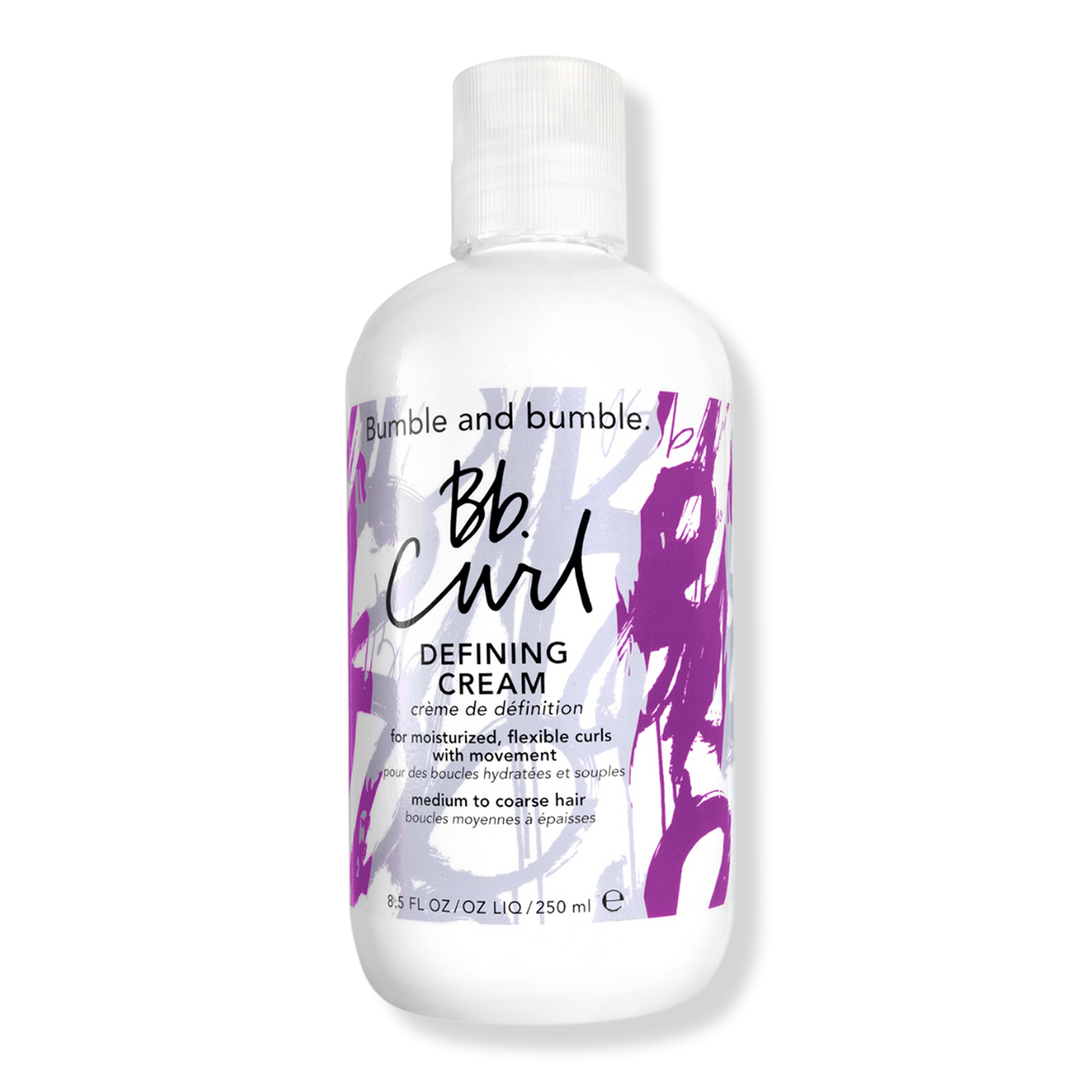

Bumble and bumble
Bumble and bumble Curl Defining Hair Styling Cream
A rich curl cream that shapes, styles, and defines hair for flexible curls with movement. It reduces frizz, adds shine, and provides soft hold.
Paraben-free
Color-safe
Silicone-free
Natural
CGM
UV Protection
Optimized for Your Environment & Lifestyle
Nykaa
In stock
Recommended

Bumble and bumble Curl Defining Hair Styling Cream
Bumble and bumble
bumble-and-bumble-curl-defining-hair-styling-cream
Curl Defining Hair Styling Cream
10355420234021
Morning or Evening?
How often will you use this product?
Notes


Secure payment protection
Your Biodata Compatibility Analysis
Based on your 6 hair health indices and environmental factors
Poor Match
Significant incompatibilities
Growth Cycle Health Index
Hair Match
Hair Health Index Alignment
Optimal for OSI, SSI, DI, HSI
Ingredient Efficacy
Matching Ingredient Score
Environment Compatibility
Current UV, Air Quality & Humidity
Why This Works for Your Specific Profile
Damage Index:
Damage levels outside specified range may not benefit optimally from product formulation
Water Quality:
Straight to wavy hair lacks curl structure becoming weighed down without curl definition benefits
Hair:
Closed to moderately open cuticles limit product penetration causing surface buildup or inadequate absorption
Active Lifestyle:
High activity and frequent washing rapidly strip product benefits requiring excessive reapplication
Your Hair Profile Integration
Your Hair Archetype

Density Level

Washing Frequency

Shedding Level

Oil Level
Your Hair Health Indices
Oil Secretion (OSI)
Very low oil production
Scalp Sensitivity (SSI)
Very low sensitivity
Growth Rate (CMR)
Poor metabolism rate
Damage Index (DI)
Minimal damage
Hair Strength (HSI)
Very weak strength
Softness Index (SI)
Significant improvement needed
Water & Environmental Integration

Water:


Expected Results & Timeline
Key Highlights

What is it?
Curl Defining Hair Styling Cream with a blend of oils and butters

Who Is It For
Adults, All Genders

Budget
$37.00 - $74.00

Timeline
Immediate
Why You’ll Love It

What Does It Help With?
Frizz control, Moisture replenishment, Curl definition

Best for
Curly, Wavy, Coily hair types seeking moisture and definition

Features
Defines curls, adds shine, reduces frizz, provides hold, replenishes moisture, detangles, softens, includes UV filters

Checks
Paraben-free, Phthalate-free, Mineral Oil-free, Formaldehyde-free
Ingredients Overview
Ingredients List
water-aqua-eau, glycerin, cetyl-alcohol, petrolatum, cetearyl-alcohol, isopropyl-myristate, ceteareth-20, dimethicone, persea-gratissima-avocado-oil, cocos-nucifera-coconut-oil, simmondsia-chinensis-jojoba-seed-oil, theobroma-cacao-cocoa-seed-butter, butyrospermum-parkii-shea-butter, glycine-soja-soybean-oil, tocopherol, microcrystalline-wax-cera-microcristallina-cire-microcristalline, beeswax-cera-alba-cire-d-abeille, sodium-hyaluronate, pantethine, panthenol, squalane, octyldodecyl-citrate-crosspolymer, sodium-pca, phytantriol, panthenyl-ethyl-ether, phenyl-trimethicone, peg-8-dimethicone, cetrimonium-chloride, pvp, polyquaternium-7, butyl-methoxydibenzoylmethane, ethylhexyl-salicylate, ethylhexyl-methoxycinnamate, bht, fragrance-parfum, citral, geraniol, limonene, linalool, chlorphenesin, sodium-benzoate, phenoxyethanol
Key Ingredients
avocado-oil, coconut-oil, jojoba-oil, cocoa-butter, shea-butter
Ingredients Details
Bht
Common Name(s): Bht
DESCRIPTION
What It Does: Delivers targeted skin-conditioning or bioactive benefits through a specific mechanism of action suited to the formulation's intended purpose.
Why It's Used: Specialty actives address specific skin concerns through targeted molecular mechanisms, providing efficacy beyond what base formulation ingredients alone can achieve.
How It Works: The bioactive compound interacts with specific molecular targets in skin cells or the extracellular matrix — enzymes, receptors, structural proteins, or signaling molecules — triggering beneficial biological responses.
Typically Found In: Serums,treatments,moisturizers,specialty products
TECHNICAL DETAILS
Primary Category: Specialty actives
Secondary Functions: Skin-conditioning,anti-aging
Application Areas:

Facial Skincare

Body Care
Hair Care
Beard Care
Color Cosmetics (Makeup)
Dietary/Oral Supplements
Typical Concentration Range: 0.01–5%
SOURCING & ETHICS
Vegan Status: Yes
Halal Status: Yes
Source Notes: Specialty active ingredient; check individual sourcing for vegan status.
SKIN COMPATIBILITY
Irritancy Rating: 1
Comedogenicity Rating: 0
Sensitivity Concerns: Low sensitization potential at recommended use concentrations.
Safe for Sensitive Skin: Yes
SAFETY & COMPATIBILITY
Safety Profile: Well-characterized cosmetic ingredient with established safety profile. generally non-irritating at typical use concentrations. suitable for leave-on and rinse-off cosmetics.
Works Well With: Niacinamide,hyaluronic acid,vitamin c,peptides
Avoid Combining With: Incompatible with oxidizing agents; check ph stability
SCIENTIFIC NOTE
Specialty actives typically work through enzyme inhibition (e.g., tyrosinase inhibition for brightening, mmp inhibition for anti-aging), receptor activation (e.g., retinoid receptors, ppar-γ for barrier genes), or transcription factor modulation (e.g., nrf2 for antioxidant gene upregulation). structure-activity relationships determine potency and selectivity.
Last Verified: Cosing eu database; pcpc cosmetic ingredient safety reviews; ingredient-specific safety and efficacy literature
Primary Sources: 2025-01-15
Ceteareth-20
Common Name(s): Polyethylene glycol cetearyl ether,peg-20 cetearyl ether
CAS Number: 68439-49-6
DESCRIPTION
What It Does: Provides high-hlb o/w emulsification for stable cream formation from ethoxylated cetearyl alcohol.
Why It's Used: Classic self-emulsifying wax component for standard pharmaceutical and cosmetic cream formulation.
How It Works: 20 eo units on cetearyl alcohol chain provide hlb ~15-17 for strong o/w emulsification. often pre-blended with cetearyl alcohol as 'emulsifying wax' for simplified cream making. combined low-hlb cetearyl alcohol + high-hlb ceteareth-20 forms a balanced self-emulsifying system.
Typically Found In: Classic pharmaceutical and cosmetic creams
TECHNICAL DETAILS
Primary Category: Functional ingredient – ethoxylated fatty alcohol emulsifier
Secondary Functions: Skin conditioning
Application Areas:
Facial Skincare
Body Care
Hair Care
Beard Care
Color Cosmetics (Makeup)
Dietary/Oral Supplements
Typical Concentration Range: 1%–8%
SOURCING & ETHICS
Vegan Status: Conditional – peg petroleum; cetearyl vegetable
Halal Status: Yes
Source Notes: Commercially produced for cosmetic use. verify vegan/halal status with supplier.
SKIN COMPATIBILITY
Irritancy Rating: 1/5 – very low
Comedogenicity Rating: 0/5 – non-comedogenic
Sensitivity Concerns: Well-tolerated by most skin types.
Safe for Sensitive Skin: Yes
SAFETY & COMPATIBILITY
Safety Profile: Good safety profile at recommended concentrations. ewg score: 1–2.
Works Well With: Standard skincare actives
Avoid Combining With: No known significant incompatibilities
SCIENTIFIC NOTE
Ceteareth-20's combination with cetearyl alcohol in the classic 'emulsifying wax nf' creates what is called a 'mixed emulsifier system' where the fatty alcohol forms lamellar crystal phases that physically trap and stabilize oil droplets. this physical (lamellar crystal) + chemical (hlb balance) dual stabilization provides superior stability compared to either component alone.
Last Verified: Cosing database,cir safety assessment
Primary Sources: 2026-03-12
Chlorphenesin
Common Name(s): 3-(4-chlorophenoxy)-1,2-propanediol,globacid
CAS Number: 104-29-0
DESCRIPTION
What It Does: Provides gram-negative focused preservation complementary to phenoxyethanol for comprehensive spectrum coverage.
Why It's Used: Phenoxyethanol complement — chlorphenesin's gram-negative and antifungal coverage complements phenoxyethanol's gram-positive activity for full-spectrum preservation at lower individual concentrations.
How It Works: 4-chlorophenol ether glycol disrupts bacterial and fungal membranes. strong gram-negative activity (pseudomonas, e. coli). good candida antifungal activity. used with phenoxyethanol for synergistic broad-spectrum coverage. ph stable 3-9.
Typically Found In: Comprehensive preservation systems,baby products (low concentration)
TECHNICAL DETAILS
Primary Category: Functional ingredient – glycerol ether preservative
Secondary Functions: Skin conditioning
Application Areas:
Facial Skincare
Body Care
Hair Care
Beard Care
Color Cosmetics (Makeup)
Dietary/Oral Supplements
Typical Concentration Range: 0.1%–0.3%
SOURCING & ETHICS
Vegan Status: Yes – synthetic
Halal Status: Yes
Source Notes: Commercially produced for cosmetic use. verify vegan/halal status with supplier.
SKIN COMPATIBILITY
Irritancy Rating: 1/5 – very low
Comedogenicity Rating: 0/5 – non-comedogenic
Sensitivity Concerns: Well-tolerated by most skin types.
Safe for Sensitive Skin: Yes
SAFETY & COMPATIBILITY
Safety Profile: Eu max 0.3% cosmetics. good safety profile. synergistic combination with phenoxyethanol (0.3% pe + 0.1% chlorphenesin often equivalent to 1% pe alone).
Works Well With: Standard skincare actives
Avoid Combining With: No known significant incompatibilities
SCIENTIFIC NOTE
Chlorphenesin + phenoxyethanol synergy operates through a classic spectrum-filling combination: phenoxyethanol provides strong gram-positive antimicrobial activity while chlorphenesin provides gram-negative and antifungal coverage. the combination's minimum inhibitory concentration sum is subadditive (provides equivalent preservation at combined concentrations below what either alone would require) — textbook pharmacological synergy enabling lower total preservative load.
Last Verified: Cosing database,eu preservative annex v,cir safety assessment
Primary Sources: 2026-03-12
Citral
Common Name(s): 3,7-dimethyl-2,6-octadienal,geranial+neral mix
CAS Number: 5392-40-5
DESCRIPTION
What It Does: Provides the defining intense lemon-citrus fragrance note.
Why It's Used: The lemon scent compound – citral defines the fresh lemon scent in lemon essential oil and lemongrass with potent antimicrobial activity.
How It Works: Mixture of e-isomer (geranial) and z-isomer (neral). antimicrobial via michael addition to thiol enzymes. inhibits nf-kb for anti-inflammatory activity. antioxidant via allylic aldehyde.
Typically Found In: Citrus fragrances,antibacterial products,lemon-scented cosmetics
TECHNICAL DETAILS
Primary Category: Fragrance component – lemon aldehyde
Secondary Functions: Skin conditioning
Application Areas:
Facial Skincare
Body Care
Hair Care
Beard Care
Color Cosmetics (Makeup)
Dietary/Oral Supplements
Typical Concentration Range: 0.001%–0.5%
SOURCING & ETHICS
Vegan Status: Yes – from lemon, lemongrass, melissa oils
Halal Status: Yes
Source Notes: Commercially produced for cosmetic use. verify vegan/halal status with supplier.
SKIN COMPATIBILITY
Irritancy Rating: 1/5 – very low
Comedogenicity Rating: 0/5 – non-comedogenic
Sensitivity Concerns: Well-tolerated by most skin types.
Safe for Sensitive Skin: Yes
SAFETY & COMPATIBILITY
Safety Profile: Eu cosmetics regulation: declared fragrance allergen. high sensitisation potential from alpha,beta-unsaturated aldehyde structure. ifra strict limits.
Works Well With: Standard skincare actives
Avoid Combining With: No known significant incompatibilities
SCIENTIFIC NOTE
Citral's high sensitisation potential (llna ec3 ~0.11%) is a consequence of its alpha,beta-unsaturated aldehyde structure providing a highly reactive michael acceptor for skin protein covalent binding. the e/z mixture (geranial/neral) in natural citral means both isomers contribute to the sensitisation burden – explaining why lemongrass oil (very high citral content, ~60-80%) is one of the more common essential oil allergens.
Last Verified: Cosing database,ifra standards
Primary Sources: 2026-03-12
Personalized Usage Instructions
How to Use
Step 1
Emulsify one or two quarter-sized dollops between hands
Step 2
Press and squeeze into damp or wet hair, from mid-shaft to ends
Step 3
Air-dry or diffuse
Medical Chemicals

Protein/Moisture
- Moisture
pH Level
- Acidic

Porosity Taget
- High Porosity
Customized for Your Profile
Scalp Condtions
Sensitive Scalp, pH Balanced
Climate Suitability
Humid, Dry, UV Protection
Clinical Claims
Frequency
Emulsify one or two quarter-sized dollops between hands. Press and squeeze into damp or wet hair, from mid-shaft to ends. Air-dry or diffuse.
Product Information

Paraben-free
Phthalate-free
Mineral Oil-free
Formaldehyde-free
