

TULA
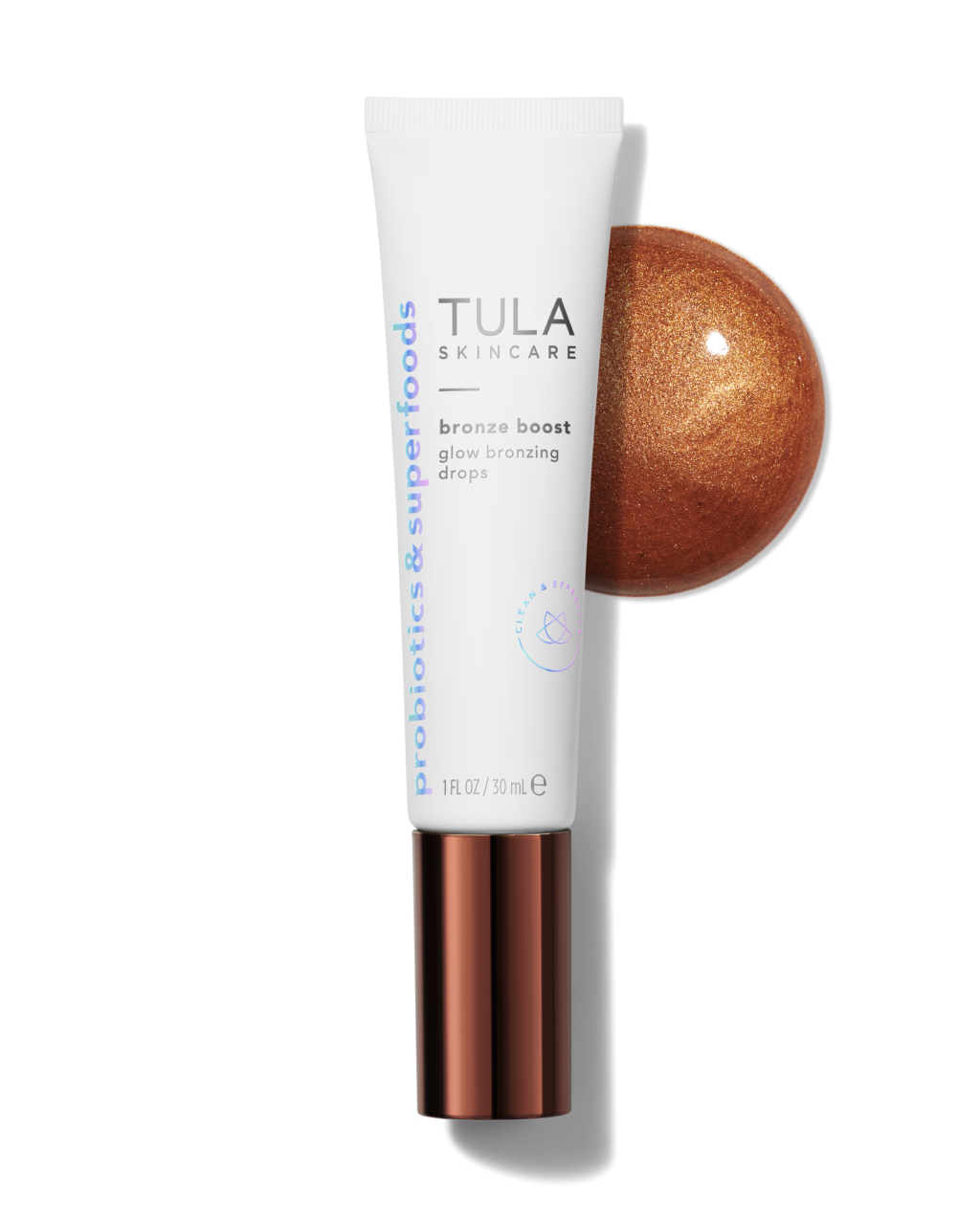
Bronze Boost

Bronze Boost
TULA
bronze-boost
Moisturize
9818383941925
Morning or Evening?
How often will you use this product?
Notes


Highlights
WHAT IS IT?
Bronzing drops with copper peptides and niacinamide
FEATURES
Evens skin tone, provides bronze glow, defends against blue light & pollution, brightens skin, improves skin barrier
BEST FOR
Oily, Combination, Sensitive, Dry, Normal
CHECKS
Free of alcohol, fragrance, essential oil
Who Is It For?
All AdultsWhat Does It Help With?
Skin Tone Evening Hydration Skin Barrier Improvement BrightnessBudget
Affordable (under $30)How To Use
Which routine should it be used in?
Instructions:
Key Information


What TULA Says
Product Description:
Sun-kissed skin, without the sun damage. Powered by copper peptides & niacinamide, these luminous bronzing drops instantly even the look of skin tone & plump skin with hydration.
About the Brand:
Ingredients Overview
Ingredients List
Aqua/Water/Eau, Butylene Glycol, Glycerin, Caprylic/Capric Triglyceride, Coco-Caprylate/Caprate, Mica, Glyceryl Stearate SE, Cetyl Alcohol, Copper Palmitoyl Heptapeptide-14, Hydrolyzed Hyaluronic Acid, Niacinamide, Lactococcus Ferment Lysate, Lactobacillus Ferment, Lactobacillus, Curcuma Longa (Turmeric) Root Extract, Beta Vulgaris (Beet) Root Extract, Alpha-Glucan Oligosaccharide, Inulin, Cystoseira Tamariscifolia (Rainbow Wrack) Extract, Aspergillus/Camellia Sinensis Leaf Ferment Extract, Dunaliella Salina (Algae) Extract, Lactic Acid, Phenoxyethanol, Ammonium Acryloyldimethyltaurate/VP Copolymer, Hydroxyacetophenone, Propanediol, Squalane, Pongamia Glabra (Pongam) seed oil, Sodium Dilauramidoglutamide Lysine, Ethylhexylglycerin, Sodium Citrate, Caprylyl Glycol, Polymnia Sonchifolia (Yacon) Root Juice, Haematococcus Pluvialis (Algae) Extract, Maltodextrin, Glyceryl Caprylate, Polyvinyl Alcohol, Palmitoyl sh-Hexapeptide-13 Serine SP Amide, Phenylpropanol, Sodium Benzoate, Lactic Acid/Glycolic Acid Copolymer, 1,2-Hexanediol, Sodium Chloride, Xanthan Gum
Key Ingredients
copper peptides, niacinamide
Ingredients Details
Copper Peptides
Common Name(s): Copper peptide,cu-ghk wound healing remodelling,anti-aging active
CAS Number: N/a
DESCRIPTION
What It Does: Stimulates production of collagen i, ii, iii, elastin, and glycosaminoglycans, activates antioxidant copper-zinc sod for ros protection, promotes wound healing through keratinocyte migration stimulation, and remodels scar tissue.
Why It's Used: Ghk-cu is naturally produced after skin injury (serum ghk rises dramatically post-wound) providing the body's own post-damage repair signal — topical ghk-cu supplements this repair signalling outside wound contexts for continuous maintenance anti-aging.
How It Works: Ghk-cu coordinates cu²⁺ through the histidine imidazole and glycine/lysine terminal amines forming a stable 1:1 complex. this cu-peptide activates tgf-β1, bfgf, and vegf receptor pathways → fibroblast proliferation and collagen gene upregulation. copper coordination also provides superoxide dismutase-like antioxidant activity.
Typically Found In: Anti-aging serums,wound healing
TECHNICAL DETAILS
Primary Category: Active ingredient – signal peptide
Secondary Functions: Collagen stimulation,skin firming,anti-aging
Application Areas:

Facial Skincare

Body Care
Hair Care
Beard Care
Color Cosmetics (Makeup)
Dietary/Oral Supplements
Typical Concentration Range: 0.1%–5%
SOURCING & ETHICS
Vegan Status: Yes
Halal Status: Yes
Source Notes: Synthetically produced by solid-phase peptide synthesis (spps). may be palmitoylated for stability.
SKIN COMPATIBILITY
Irritancy Rating: 1/5 – very low
Comedogenicity Rating: 0/5 – non-comedogenic
Sensitivity Concerns: Non-irritating; suitable for all skin types.
Safe for Sensitive Skin: Yes
SAFETY & COMPATIBILITY
Safety Profile: Exceptional safety profile. ewg score: 1.
Works Well With: Hyaluronic acid,ceramides,retinol,vitamin c,niacinamide
Avoid Combining With: Avoid mixing with high-concentration ahas at same ph (may hydrolyze peptide bonds)
SCIENTIFIC NOTE
Ghk-cu genome-wide studies show it modulates 31% of the expressed human genome toward younger expression patterns — regulating over 4,000 human genes involved in collagen synthesis, antioxidant defence, and anti-inflammatory signalling.
Last Verified: Cosing database,copper tripeptide ghk-cu anti-aging genomic review
Primary Sources: 2026-03-12
Niacinamide
Common Name(s): Vitamin b3,nicotinamide,pyridine-3-carboxamide
CAS Number: 98-92-0
DESCRIPTION
What It Does: Niacinamide strengthens the skin barrier, reduces visible pore size, regulates sebum production, fades dark spots, and improves skin texture and tone.
Why It's Used: It is used because it addresses multiple skin concerns at once without irritation, making it suitable for all skin types. it is stable in formulations and pairs well with most other actives.
How It Works: Niacinamide inhibits the transfer of melanosomes (pigment packets) to skin cells, reducing hyperpigmentation. it also stimulates ceramide synthesis to strengthen the skin barrier and reduces inflammation by modulating cytokine activity.
Typically Found In: Serums,moisturizers,toners,cleansers,eye creams,sunscreens,primers
TECHNICAL DETAILS
Primary Category: Active ingredient – vitamin
Secondary Functions: Barrier repair,brightening,anti-inflammatory
Application Areas:
Facial Skincare
Body Care
Hair Care
Beard Care
Color Cosmetics (Makeup)
Dietary/Oral Supplements
Typical Concentration Range: 2%–10% (typical: 5%; higher concentrations may cause flushing in some individuals)
SOURCING & ETHICS
Vegan Status: Yes – synthetically produced
Halal Status: Yes – synthetic origin
Source Notes: Commercially produced via synthesis from nicotinic acid or 3-cyanopyridine. no animal-derived sources used in cosmetic-grade niacinamide.
SKIN COMPATIBILITY
Irritancy Rating: 1/5 – very low; concentrations above 10% may cause temporary flushing in sensitive individuals
Comedogenicity Rating: 0/5 – non-comedogenic
Sensitivity Concerns: At concentrations >10%, some users experience niacin flush (transient redness/tingling). generally very well-tolerated.
Safe for Sensitive Skin: Yes – one of the best-tolerated actives for sensitive skin
SAFETY & COMPATIBILITY
Safety Profile: Extensively studied and considered very safe. ewg hazard score: 1. no significant systemic toxicity concerns at topical concentrations.
Works Well With: Retinol,peptides,ahas/bhas,hyaluronic acid,ceramides,zinc,vitamin c,spf
Avoid Combining With: High concentrations of vitamin c (ascorbic acid) may theoretically convert to niacin – use at different times if using pure l-ascorbic acid above 15%
SCIENTIFIC NOTE
Niacinamide is a precursor to nad+ and nadp+, coenzymes vital to cellular energy metabolism. its benefits for dna repair and mitochondrial function make it a key ingredient in anti-aging strategies.
Last Verified: Cosing database,cir safety assessment,ewg skin deep,pubmed clinical studies
Primary Sources: 2026-03-12
