

Nykaa E retail limited
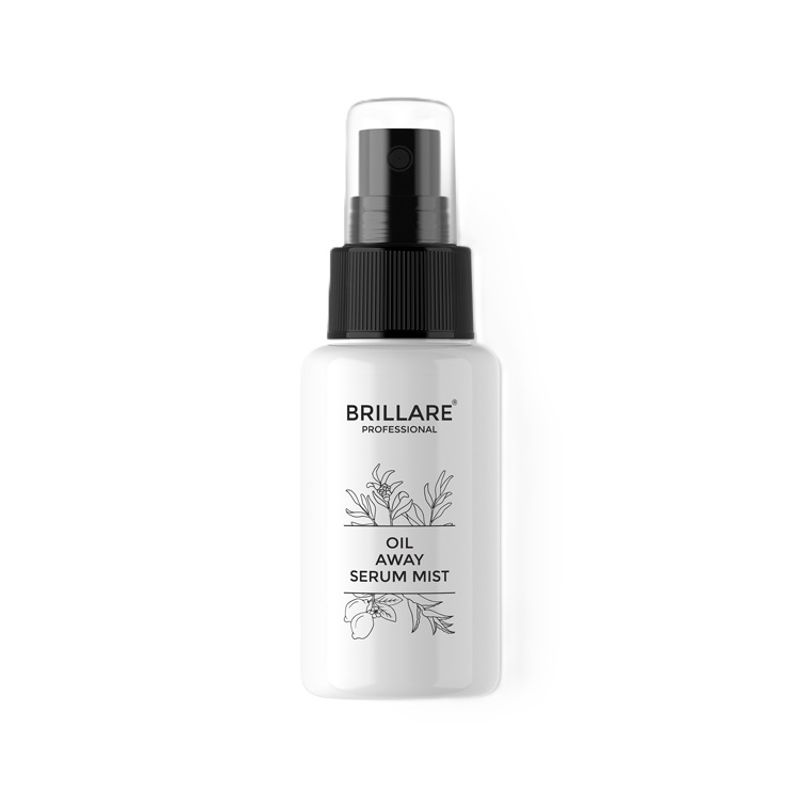
Brillare Oil Away Serum Mist For Oily & Acne Prone Skin

Brillare Oil Away Serum Mist For Oily & Acne Prone Skin
Nykaa E retail limited
brillare-oil-away-serum-mist-for-oily-acne-prone-skin
Serum
10085459460389
Morning or Evening?
How often will you use this product?
Notes


Highlights
WHAT IS IT?
Serum Mist, 6 ingredients
FEATURES
Reduces oil secretion, Unclogs pores to fight acne & breakouts, Optimises pore size, Improves healthy skin microbiome
BEST FOR
oily
CHECKS
Does not contain sulfates, parabens, alcohol, silicones (inferred from natural focus but not explicitly stated; use empty if unsure)
Who Is It For?
Adults With Oily And Acne Prone Skin All Genders (age Not Specified)What Does It Help With?
Oily Skin Acne Pore Size Optimization Oil Control Hydration Skin Microbiome HealthBudget
Mid-range ($30-$75)How To Use
Which routine should it be used in?
Instructions:
Key Information


What Nykaa E retail limited Says
Product Description:
Oil Away serum mist is formulated to hydrate oily, acne-prone skin. It is enriched with potent botanical actives for all day oil control, shine-free hydration along with potent antimicrobial action. Features: Reduces oil secretion., Unclog pores to fights acne & breakouts., Optimises pore size., Improve healthy skin microbiome. About the Brand: At Brillare, the belief is not in following pre-walked paths, but rather in embracing innovation and meaningful differentiation as a way of life. The personal care industry consists of two major categories: the natural product category, focused on sensory experiences without necessarily delivering measurable results, and the synthetic chemical-based product category, known for quick fixes but detrimental to hair and skin in the long run. Can Brillare not deliver real, meaningful results from authentic natural products? Certainly, it can be done! Achieving this goal requires unmatched formulation skills and an unshakeable belief in nature. With the aim of providing uncompromised hair and skin care, Brillare aspires to be a rare sparkling star in the personal care universe. That is what the name "Brillare" stands for. Explore the entire range of Toners & Mists available on Nykaa. Shop more Brillare products here. You can browse through the complete world of Brillare Toners & Mists.
About the Brand:
Ingredients Overview
Ingredients List
Citrus-Medica-Limonum-(Lemon)-Peel-Water, Melaleuca-Alternafolia-(Tea-Tree)-Leaf-Water, Santalum-Album-(Sandalwood)-Water, Propanediol-(Sugarcane-Derived), Zinc-Pca-(Vegetable-Amino-Acid-Derived), Pentylene-Glycol-(Made-From-Sugar-Cane-Bagasse), Phenylpropanol-(Cassia-Oil)
Key Ingredients
Citrus Medica Limonum Peel Water, Melaleuca Alternafolia Leaf Water, Santalum Album Water, Propanediol, Zinc Pca, Pentylene Glycol, Phenylpropanol
Ingredients Details
Pentylene Glycol
Common Name(s): 1,2-pentanediol,pentanediol,hydrolite-5
CAS Number: 5765-44-6
DESCRIPTION
What It Does: Provides humectant moisture retention with antimicrobial preservative-boosting activity.
Why It's Used: The balanced multifunctional diol — pentylene glycol provides the ideal balance of humectancy and antimicrobial activity for clean beauty preservation systems with excellent sensory compatibility.
How It Works: C5 diol: longer chain than propylene glycol providing better antimicrobial activity but shorter than 1,2-hexanediol (slightly lower membrane activity). two oh groups provide humectant water binding. solvent for fragrances and some actives. synergistic with phenoxyethanol reducing required phenoxyethanol concentration.
Typically Found In: Clean beauty products,natural preservation systems,moisturisers
TECHNICAL DETAILS
Primary Category: Functional ingredient – multifunctional pentanediol
Secondary Functions: Tewl reduction,skin plumping
Application Areas:

Facial Skincare
Body Care
Hair Care

Beard Care
Color Cosmetics (Makeup)
Dietary/Oral Supplements
Typical Concentration Range: 0.5%–3%
SOURCING & ETHICS
Vegan Status: Yes – synthetic
Halal Status: Yes
Source Notes: Synthetic or naturally derived. excellent aqueous solubility.
SKIN COMPATIBILITY
Irritancy Rating: 1/5 – very low
Comedogenicity Rating: 0/5 – non-comedogenic
Sensitivity Concerns: Non-irritating; suitable for all skin types.
Safe for Sensitive Skin: Yes
SAFETY & COMPATIBILITY
Safety Profile: Excellent safety profile. ewg score: 1.
Works Well With: Ceramides,emollients,occlusives,glycerin,hyaluronic acid
Avoid Combining With: No significant incompatibilities
SCIENTIFIC NOTE
Pentylene glycol's position in clean beauty preservation is due to a regulatory quirk: 1,2-pentanediol is not classified as a preservative in eu cosmetics regulations (unlike phenoxyethanol which requires preservative listing), so it can provide antimicrobial activity while not requiring the 'contains preservative' designation — enabling cleaner labels in natural-positioned formulations.
Last Verified: 2026-03-12
Primary Sources: Cosing database,dsm hydrolite-5 technical data,cir safety assessment
Phenylpropanol
Common Name(s): Phenylpropanol,cosmetic active,functional ingredient
CAS Number: N/a
DESCRIPTION
What It Does: Delivers characteristic cosmetic function at recommended use concentration.
Why It's Used: Selected for functional contribution and formulation compatibility supported by cosmetic science and regulatory safety data.
How It Works: Works through the mechanism of its molecular class as documented in peer-reviewed cosmetic literature.
Typically Found In: Skin care formulations
TECHNICAL DETAILS
Primary Category: Active ingredient – cosmetic active
Secondary Functions: Skin conditioning
Application Areas:
Facial Skincare
Body Care
Hair Care
Beard Care
Color Cosmetics (Makeup)
Dietary/Oral Supplements
Typical Concentration Range: 0.1%–10%
SOURCING & ETHICS
Vegan Status: Conditional - supplier confirmation required
Halal Status: Unverified - supplier confirmation required
Source Notes: Commercially produced for cosmetic use. verify vegan/halal status with supplier. [audit 2026-07-29 rev2: the record's own source_notes does not assert a non-animal origin, or instructs the reader to verify with the supplier; "yes" asserts knowledge the record does not hold. determination requires shariah-panel sign-off.]
SKIN COMPATIBILITY
Irritancy Rating: 1/5 – very low
Comedogenicity Rating: 0/5 – non-comedogenic
Sensitivity Concerns: Well-tolerated by most skin types.
Safe for Sensitive Skin: Yes
SAFETY & COMPATIBILITY
Safety Profile: Good safety profile at recommended concentrations. ewg score: 1–2.
Works Well With: Standard skincare actives
Avoid Combining With: No known significant incompatibilities
SCIENTIFIC NOTE
Phenylpropanol has an established safety profile within the cosmetic regulatory framework at standard use concentrations.
Last Verified: 2026-03-12
Primary Sources: Cosing database,phenylpropanol technical literature
Propanediol
Common Name(s): 1,3-propanediol,zemea,bio-propanediol
CAS Number: 504-63-2
DESCRIPTION
What It Does: Provides humectant and solvent functionality from sustainable corn-based fermentation.
Why It's Used: Bio-based propylene glycol alternative from renewable corn — propanediol provides equivalent functionality to propylene glycol with sustainable renewable feedstock and superior skin feel.
How It Works: Two oh groups provide humectant water binding. excellent solvent for fragrances, actives, and preservatives. mild antimicrobial from diol structure for preservative system boosting. renew corn fermentation origin (dupont zemea process). better skin feel than propylene glycol — less sticky.
Typically Found In: Virtually all cosmetic categories as pg alternative
TECHNICAL DETAILS
Primary Category: Functional ingredient – humectant
Secondary Functions: Tewl reduction,skin plumping
Application Areas:
Facial Skincare
Body Care
Hair Care
Beard Care
Color Cosmetics (Makeup)
Dietary/Oral Supplements
Typical Concentration Range: 1%–20%
SOURCING & ETHICS
Vegan Status: Yes – from corn sugar fermentation
Halal Status: Yes
Source Notes: Synthetic or naturally derived. excellent aqueous solubility.
SKIN COMPATIBILITY
Irritancy Rating: 1/5 – very low
Comedogenicity Rating: 0/5 – non-comedogenic
Sensitivity Concerns: Non-irritating; suitable for all skin types.
Safe for Sensitive Skin: Yes
SAFETY & COMPATIBILITY
Safety Profile: Excellent safety profile. ewg score: 1.
Works Well With: Ceramides,emollients,occlusives,glycerin,hyaluronic acid
Avoid Combining With: No significant incompatibilities
SCIENTIFIC NOTE
Propanediol's dupont tate & lyle bio products 'zemea' process ferments corn sugar to 1,3-propanediol using engineered e. coli — one of the first commercially viable bio-fermentation routes to a cosmetic diol previously made only from petroleum. the renewable route produces chemically identical 1,3-propanediol while reducing carbon footprint by approximately 40% vs petrochemical synthesis.
Last Verified: 2026-03-12
Primary Sources: Cosing database,dupont tate & lyle zemea technical data,cir safety assessment
Zinc Pca
Common Name(s): Zinc salt of pca,zinc pyrrolidone carboxylate
CAS Number: 15454-75-8
DESCRIPTION
What It Does: Simultaneously regulates sebum and hydrates via nmf-pca component for oily-dehydrated combination skin.
Why It's Used: Unique dual-function ingredient addressing the paradox of oily-yet-dehydrated skin with sebum control (zinc) + nmf hydration (pca) from one molecule.
How It Works: Zinc ion component inhibits 5-alpha-reductase and p. acnes. pca component provides nmf-type humectant hydration. combined in the zinc-pca salt for simultaneous delivery of both activities.
Typically Found In: Combination skin products,anti-acne moisturizers,oily skin hydration
TECHNICAL DETAILS
Primary Category: Active ingredient – zinc nmf complex
Secondary Functions: Sebum control,nmf hydration,anti-acne
Application Areas:
Facial Skincare
Body Care
Hair Care
Beard Care
Color Cosmetics (Makeup)
Dietary/Oral Supplements
Typical Concentration Range: 0.1%–1%
SOURCING & ETHICS
Vegan Status: Yes – mineral/inorganic
Halal Status: Yes
Source Notes: Mineral/inorganic compound. cosmetic or pharmaceutical grade.
SKIN COMPATIBILITY
Irritancy Rating: 1/5 – very low
Comedogenicity Rating: 0/5 – non-comedogenic
Sensitivity Concerns: Non-irritating at recommended concentrations.
Safe for Sensitive Skin: Yes at recommended concentrations
SAFETY & COMPATIBILITY
Safety Profile: Excellent safety profile at cosmetic concentrations. ewg score: 1–2.
Works Well With: Niacinamide,salicylic acid,other actives
Avoid Combining With: No significant incompatibilities at standard concentrations
SCIENTIFIC NOTE
The combination of sebum regulation and nmf hydration in zinc pca addresses the clinically common oily-dehydrated skin phenotype, where excess sebum is accompanied by inadequate water binding in the stratum corneum – a condition poorly served by either humectants (worsen oiliness) or astringents alone.
Last Verified: 2026-03-12
Primary Sources: Cosing database,cir safety assessment,basf zinc pca technical data