
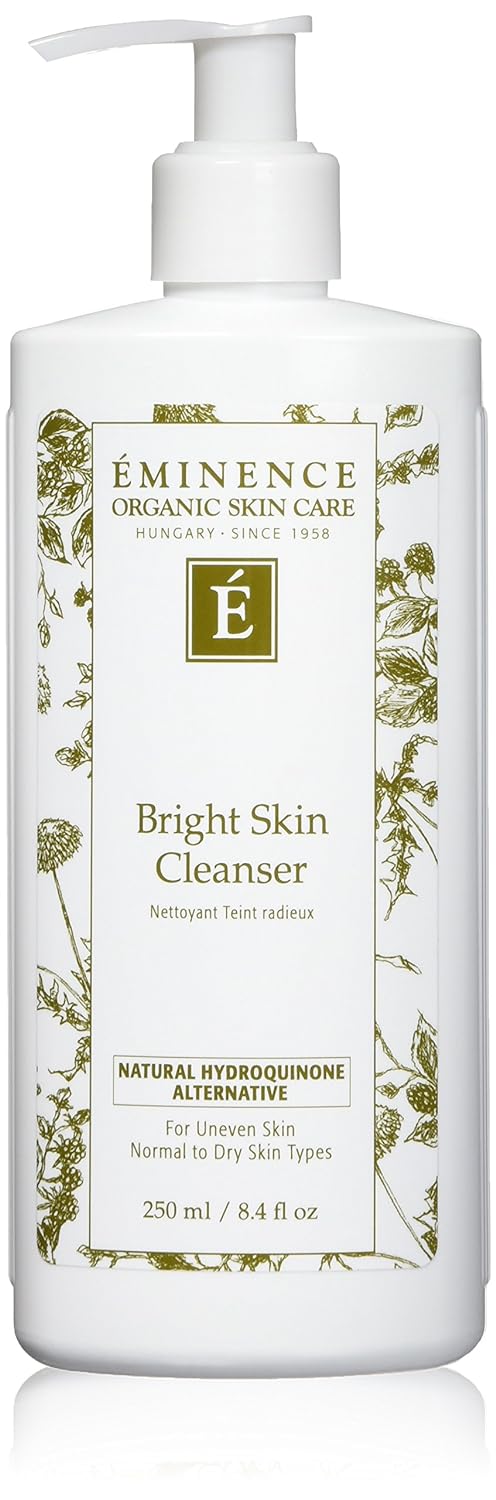

Eminence Organic Skin Care
Bright Skin Cleanser

Bright Skin Cleanser
Eminence Organic Skin Care
bright-skin-cleanser
Cleanse
9628188180773
Morning or Evening?
How often will you use this product?
Notes


Highlights
WHAT IS IT?
Cleanser
FEATURES
Brightens skin appearance, reduces signs of aging, suitable for normal to dry skin types
BEST FOR
Normal to dry skin types
CHECKS
Does not contain parabens, sodium lauryl sulfates, synthetic dyes, petrochemicals, animal by-products, phthalates, GMOs, triclosan
Who Is It For?
Adults Both Women And MenWhat Does It Help With?
Brightening Skin Reducing Signs Of AgingBudget
Mid-rangeHow To Use
Which routine should it be used in?
Instructions:
Key Information


What Eminence Organic Skin Care Says
Product Description:
Brighten the appearance of skin and reduce the signs of aging with the help of our Bright Skin Cleanser. For normal to dry skin types, this cleanser uses two actives – Swiss Alpine Plant Extracts and a Natural Hydroquinone Alternative – to give skin the appearance of being brighter and younger looking. Cruelty-free and formulated without parabens, sodium lauryl sulfates, synthetic dyes, petrochemicals, animal by-products, phthalates, GMOs and triclosan.
About the Brand:
Ingredients Overview
Ingredients List
Aloe Barbadensis (Aloe) Leaf Juice, Helianthus Annuus (Sunflower) Seed Oil, Glycyrrhiza Glabra (Licorice) Root Extract, Citrus Limon (Lemon) Peel Extract, Cymbopogon Citratus (Lemongrass) Extract, Salix Alba (Willow) Bark Extract, Arctostaphylos Uva-Ursi (Bearberry) Leaf Extract, Mentha Piperita (Peppermint) Leaf Extract, Rosmarinus Officinalis (Rosemary) Leaf Extract, Salvia Officinalis (Sage) Leaf Extract, Sempervivum Tectorum (Stone Crop) Extract, Zea Mays (Corn Germ) Oil and Vegetable Glycerin], Helianthus Annuus (Sunflower) Seed Oil, Stearic Acid, Arginine, 1,2-Hexanediol, Vegetable Glycerin, Lauryl Lactate, Cetearyl Alcohol, Isopropyl Palmitate, Glyceryl Stearate, Sodium Cocoyl Isethionate, Caprylyl Glycol, Acrylates/C10-30 Alkyl Acrylate Crosspolymer, Malva Sylvestris (Mallow) Extract, Mentha Piperita (Peppermint) Leaf Extract, Primula Veris Extract, Alchemilla Vulgaris Extract, Veronica Officinalis Flower/Leaf/Stem Extract, Melissa Officinalis Leaf Extract, Achillea Millefolium Extract, Helianthus Annuus (Sunflower) Seed Oil, Calendula Officinalis Flower Extract, Sodium Cetearyl Sulfate, Chlorophyll, Caramel, Xanthan Gum, Hypoxis Rooperi (African Potato) Rhizome Extract, Caesalpinia Spinosa (Tara Tree) Gum, Lactic Acid, Sodium Dehydroacetate, Vegetable Heptyl Glucoside, Rosmarinus Officinalis (Rosemary) Leaf Extract, Tropolone, Chromium Oxide, Plant-Derived Methyl Glucose Sesquistearate, Iron Oxides, Ascorbyl Palmitate (Vitamin C Ester), Tocopheryl Acetate (Vitamin E), Corn-Derived Propanediol, AQUA, Alcohol, Natural Fragrance, Biocomplex2™ [Euterpe Oleracea (Acai) Fruit Extract, Citrus Limon (Lemon) Juice, Malpighia Glabra (Barbados Cherry) Fruit Extract, Emblica Officinalis (Indian Gooseberry) Fruit Extract, Adansonia Digitata (Baobab) Fruit Extract, Myrciaria Dubia (Camu Camu) Fruit Extract, Daucus Carota Sativa (Carrot) Root Extract, Cocos Nucifera (Coconut) Water, Lycium Barbarum (Goji) Fruit Extract, Helianthus Annuus (Sunflower) Seed Oil, Plant-Derived Maltodextrin, Vegetable Glycerin, Thioctic Acid (Alpha Lipoic Acid) and Ubiquinone (Coenzyme Q10)
Key Ingredients
Bearberry Extract, GigaWhite, Licorice Root, Natural Hydroquinone Alternative, BioComplex
Ingredients Details
Glycyrrhiza Glabra (licorice) Root Extract
Common Name(s): Licorice triterpenoid,glycyrrhetinic acid active,anti-inflammatory brightening
CAS Number: N/a
DESCRIPTION
What It Does: Reduces skin inflammation and redness through 11β-hsd inhibition (cortisol-amplifying mechanism), inhibits tyrosinase and melanogenesis for brightening, and provides antioxidant protection from the triterpenoid phenol system.
Why It's Used: One of few botanicals with documented cortisone-amplifying anti-inflammatory mechanism — 11β-hsd inhibition elevates local cortisol concentration in skin tissue, providing a pharmaceutical-level anti-inflammatory effect without direct corticosteroid application.
How It Works: Glycyrrhetinic acid inhibits 11β-hydroxysteroid dehydrogenase (11β-hsd) — the enzyme that converts active cortisol to inactive cortisone in peripheral tissues. inhibition elevates local skin cortisol, amplifying the glucocorticoid anti-inflammatory response. simultaneously, glabridin (a flavonoid in licorice) inhibits tyrosinase for brightening.
Typically Found In: Anti-inflammatory,soothing,brightening
TECHNICAL DETAILS
Primary Category: Active ingredient – antioxidant
Secondary Functions: Free radical scavenging,anti-aging
Application Areas:

Facial Skincare
Body Care

Hair Care
Beard Care
Color Cosmetics (Makeup)
Dietary/Oral Supplements
Typical Concentration Range: 0.01%–2%
SOURCING & ETHICS
Vegan Status: Yes
Halal Status: Yes
Source Notes: Plant-derived extract or synthetic.
SKIN COMPATIBILITY
Irritancy Rating: 1/5 – very low
Comedogenicity Rating: 0/5 – non-comedogenic
Sensitivity Concerns: Non-irritating; well-tolerated.
Safe for Sensitive Skin: Yes
SAFETY & COMPATIBILITY
Safety Profile: Excellent safety profile. ewg score: 1.
Works Well With: Vitamin c,vitamin e,ferulic acid,spf,other antioxidants
Avoid Combining With: No significant incompatibilities
SCIENTIFIC NOTE
11β-hsd inhibition by glycyrrhetinic acid was first documented in the context of licorice consumption causing pseudoaldosteronism — the same enzyme inhibition applied topically provides localised cortisol amplification for cosmetic anti-inflammatory activity without systemic effects.
Last Verified: 2026-03-12
Primary Sources: Cosing database,glycyrrhetinic acid 11β-hsd anti-inflammatory review
Helianthus Annuus (sunflower) Seed Oil
Common Name(s): Helianthus annuus (sunflower) seed oil,botanical oil,phytochemical active
CAS Number: N/a
DESCRIPTION
What It Does: Provides antioxidant protection from reactive oxygen species, reduces inflammatory cytokine production in skin, and conditions skin through the plant's phytochemical complex.
Why It's Used: Natural origin narrative, traditional use heritage, and multi-functional phytochemical profile supporting concurrent skin care claims from one ingredient.
How It Works: Polyphenols, terpenoids, and alkaloids scavenge ros via h• donation, inhibit nf-kb or cox-2 inflammatory pathways, and interact with skin surface proteins for conditioning.
Typically Found In: Botanical skin care,natural products
TECHNICAL DETAILS
Primary Category: Active ingredient – antioxidant
Secondary Functions: Free radical scavenging,anti-aging
Application Areas:
Facial Skincare
Body Care
Hair Care
Beard Care
Color Cosmetics (Makeup)
Dietary/Oral Supplements
Typical Concentration Range: 0.1%–10%
SOURCING & ETHICS
Vegan Status: Conditional - supplier confirmation required
Halal Status: Yes
Source Notes: Plant-derived extract or synthetic. [audit 2026-07-29 rev2: status downgraded on audit. determination requires shariah-panel sign-off.]
SKIN COMPATIBILITY
Irritancy Rating: 1/5 – very low
Comedogenicity Rating: 0/5 – non-comedogenic
Sensitivity Concerns: Non-irritating; well-tolerated.
Safe for Sensitive Skin: Yes
SAFETY & COMPATIBILITY
Safety Profile: Excellent safety profile. ewg score: 1.
Works Well With: Vitamin c,vitamin e,ferulic acid,spf,other antioxidants
Avoid Combining With: No significant incompatibilities
SCIENTIFIC NOTE
Plant secondary metabolites evolved as photoprotectants and antimicrobials — mechanisms directly applicable to cosmetic antioxidant and anti-inflammatory activity in human skin.
Last Verified: 2026-03-12
Primary Sources: Cosing database,helianthus annuus (sunflower) seed botanical review
Rosmarinus Officinalis (rosemary) Leaf Extract
Common Name(s): Rosmarinus officinalis (rosemary) leaf extract,botanical extract,phytochemical active
CAS Number: N/a
DESCRIPTION
What It Does: Provides antioxidant protection, anti-inflammatory activity, and skin conditioning from polyphenols, terpenoids, and phytochemicals.
Why It's Used: Multi-functional phytochemical profiles support concurrent skin care claims with authentic botanical heritage from one ingredient.
How It Works: Polyphenols scavenge ros, inhibit nf-kb/cox pathways, and interact with skin surface proteins for conditioning.
Typically Found In: Botanical skin care,natural products
TECHNICAL DETAILS
Primary Category: Active ingredient – antioxidant
Secondary Functions: Free radical scavenging,anti-aging
Application Areas:
Facial Skincare
Body Care
Hair Care
Beard Care
Color Cosmetics (Makeup)
Dietary/Oral Supplements
Typical Concentration Range: 0.1%–30%
SOURCING & ETHICS
Vegan Status: Conditional - supplier confirmation required
Halal Status: Conditional - basis not stated in source record; supplier origin confirmation required to determine what evidence applies
Source Notes: Plant-derived extract or synthetic. [audit 2026-07-29 rev2: status downgraded on audit. determination requires shariah-panel sign-off.]
SKIN COMPATIBILITY
Irritancy Rating: 1/5 – very low
Comedogenicity Rating: 0/5 – non-comedogenic
Sensitivity Concerns: Non-irritating; well-tolerated.
Safe for Sensitive Skin: Yes
SAFETY & COMPATIBILITY
Safety Profile: Excellent safety profile. ewg score: 1.
Works Well With: Vitamin c,vitamin e,ferulic acid,spf,other antioxidants
Avoid Combining With: No significant incompatibilities
SCIENTIFIC NOTE
Plant secondary metabolites evolved for uv photoprotection and pathogen defence — mechanisms directly translatable to cosmetic antioxidant and anti-inflammatory activity in human skin.
Last Verified: 2026-03-12
Primary Sources: Cosing database,rosmarinus officinalis (rosemary) l botanical review
Salix Alba (willow) Bark Extract
Common Name(s): Salix alba (willow) bark extract,botanical extract,phytochemical active
CAS Number: N/a
DESCRIPTION
What It Does: Provides antioxidant protection, anti-inflammatory activity, and skin conditioning from polyphenols, terpenoids, and phytochemicals.
Why It's Used: Multi-functional phytochemical profiles support concurrent skin care claims with authentic botanical heritage from one ingredient.
How It Works: Polyphenols scavenge ros, inhibit nf-kb/cox pathways, and interact with skin surface proteins for conditioning.
Typically Found In: Botanical skin care,natural products
TECHNICAL DETAILS
Primary Category: Active ingredient – antioxidant
Secondary Functions: Free radical scavenging,anti-aging
Application Areas:
Facial Skincare
Body Care
Hair Care
Beard Care
Color Cosmetics (Makeup)
Dietary/Oral Supplements
Typical Concentration Range: 0.1%–30%
SOURCING & ETHICS
Vegan Status: Conditional - supplier confirmation required
Halal Status: Conditional - basis not stated in source record; supplier origin confirmation required to determine what evidence applies
Source Notes: Plant-derived extract or synthetic. [audit 2026-07-29 rev2: status downgraded on audit. determination requires shariah-panel sign-off.]
SKIN COMPATIBILITY
Irritancy Rating: 1/5 – very low
Comedogenicity Rating: 0/5 – non-comedogenic
Sensitivity Concerns: Non-irritating; well-tolerated.
Safe for Sensitive Skin: Yes
SAFETY & COMPATIBILITY
Safety Profile: Excellent safety profile. ewg score: 1.
Works Well With: Vitamin c,vitamin e,ferulic acid,spf,other antioxidants
Avoid Combining With: No significant incompatibilities
SCIENTIFIC NOTE
Plant secondary metabolites evolved for uv photoprotection and pathogen defence — mechanisms directly translatable to cosmetic antioxidant and anti-inflammatory activity in human skin.
Last Verified: 2026-03-12
Primary Sources: Cosing database,salix alba (willow) bark extract botanical review