
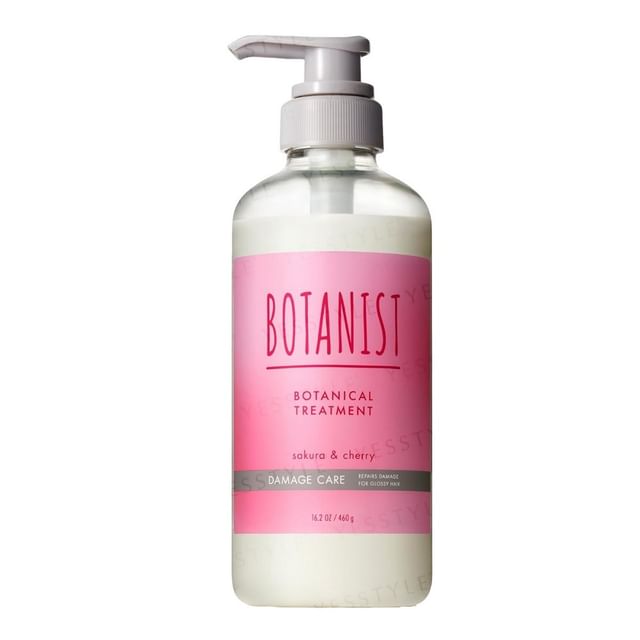

BOTANIST
BOTANIST Botanical Treatment Damage Care Sakura & Cherry 460g
A botanical hair treatment designed to repair damaged hair, providing a smooth, shiny, and soft finish with a delightful Sakura & Cherry fragrance.
Paraben-free
Silicone-free
Natural
Damage Repair
Dryness
Dullness
Optimized for Your Environment & Lifestyle
Nykaa
In stock
Recommended

BOTANIST Botanical Treatment Damage Care Sakura & Cherry 460g
BOTANIST
botanist-botanical-treatment-damage-care-sakura-cherry-460g
Hair Treatment
10407578501413
Morning or Evening?
How often will you use this product?
Notes


Secure payment protection
Your Biodata Compatibility Analysis
Based on your 6 hair health indices and environmental factors
Poor Match
Significant incompatibilities
Growth Cycle Health Index
Hair Match
Hair Health Index Alignment
Optimal for OSI, SSI, DI, HSI
Ingredient Efficacy
Matching Ingredient Score
Environment Compatibility
Current UV, Air Quality & Humidity
Why This Works for Your Specific Profile
Damage Index:
Healthy to moderately damaged hair experiences over-conditioning or protein overload causing limpness or rigidity
Water Quality:
Dry or dull hair experiences increased brittleness from protein concentration without moisture balance
Hair:
Closed cuticles resist product penetration causing surface buildup without internal benefits
Active Lifestyle:
Low activity produces insufficient stress or buildup making product intensity unnecessarily harsh
Your Hair Profile Integration
Your Hair Archetype

Density Level

Washing Frequency

Shedding Level

Oil Level
Your Hair Health Indices
Oil Secretion (OSI)
Very low oil production
Scalp Sensitivity (SSI)
Very low sensitivity
Growth Rate (CMR)
Poor metabolism rate
Damage Index (DI)
Minimal damage
Hair Strength (HSI)
Very weak strength
Softness Index (SI)
Significant improvement needed
Water & Environmental Integration

Water:


Expected Results & Timeline
Key Highlights

What is it?
Hair treatment with botanical ingredients

Who Is It For
All ages, Unisex

Budget
$31.20 - $62.40

Timeline
Immediate smoothness and shine; improved hair condition with regular use
Why You’ll Love It

What Does It Help With?
Repairing damaged hair, providing smoothness and shine

Best for
Damage Repair

Features
Contains camellia seed oil for moisturizing, free from parabens and synthetic colorants, formulated with a unique blend of botanical ingredients for optimal hair care.

Checks
Paraben-free, Synthetic colorant-free
Ingredients Overview
Ingredients List
water, cetearyl-alcohol, glycerin, dimethicone, behentrimonium-chloride, glyceryl-stearate, squalane, dialkyl-(C12-18)-dimonium-chloride, amodimethicone, macadamia-nut-fatty-acid-phytosteryl, hydrolyzed-vegetable-protein, sugar-sugar-lipid, birch-sap, galactomyce/biracamba-sap-fermented-liquid, glycyrrhizic-acid-K, grape-seed-extract, terminaria-ferdinanziana-fruit-extract, camellia-seed-oil, peony-root-extract, sake-lees-extract, dilauroyl-glutamate-lysine-Na, meadowform-delta-lactone, zein, hydrolyzed-rice-protein, yuzu-fruit-extract, sunflower-seed-extract, arginine, betaine, jojoba-seed-oil, sunflower-seed-oil, salvia-hispanica-seed-oil, lauroyl-glutamate-tosteril/octyldodecyl, triisostearin, diisopropyl-dilinoleate, malic-acid, BG, DPG, PEG-40-hydrogenated-castor-oil, hydrogenated-lysolecithin, hydrogenated-lecithin, stearamidopropyl-dimethylamine, distearyldimonium-chloride, aminopropyl-dimethicone, phytosterols, pentylene-glycol, hexylene-glycol, EDTA-2Na, ethanol, isopropanol, tocopherol, benzoic-acid-Na, fragrance
Key Ingredients
Camellia-seed-oil, Macadamia-nut-fatty-acid-phytosteryl, Birch-sap, Peony-root-extract, Hydrolyzed-vegetable-protein
Ingredients Details
Amodimethicone
Common Name(s): Aminosilicone,amino-modified polydimethylsiloxane
CAS Number: 71750-79-3
DESCRIPTION
What It Does: Provides amino group-mediated preferential adsorption to damaged hair for targeted conditioning.
Why It's Used: Premium hair conditioning silicone – amino groups provide substantive adsorption to hair far exceeding pdms, with automatic targeting to the most damaged areas requiring conditioning.
How It Works: Amino (nh2) groups on silicone chain provide cationic character at normal ph, electrostatic adsorption to anionic hair surface. higher charge density at damaged sites increases adsorption where conditioning is most needed. si-o-si backbone provides permanent conditioning film with heat protection.
Typically Found In: Intensive conditioners,anti-frizz products,damage repair conditioners
TECHNICAL DETAILS
Primary Category: Functional ingredient – amino-functional silicone
Secondary Functions: Skin conditioning
Application Areas:

Facial Skincare
Body Care

Hair Care
Beard Care
Color Cosmetics (Makeup)
Dietary/Oral Supplements
Typical Concentration Range: 0.1%–5%
SOURCING & ETHICS
Vegan Status: Yes – synthetic
Halal Status: Yes
Source Notes: Commercially produced for cosmetic use. verify vegan/halal status with supplier.
SKIN COMPATIBILITY
Irritancy Rating: 1/5 – very low
Comedogenicity Rating: 0/5 – non-comedogenic
Sensitivity Concerns: Well-tolerated by most skin types.
Safe for Sensitive Skin: Yes
SAFETY & COMPATIBILITY
Safety Profile: Good safety profile at recommended concentrations. ewg score: 1–2.
Works Well With: Standard skincare actives
Avoid Combining With: No known significant incompatibilities
SCIENTIFIC NOTE
Amodimethicone's amino group-driven substantivity to damaged hair is dramatically greater than non-functionalized pdms. studies show amodimethicone deposits 50-200× more mass on bleach-damaged hair vs virgin hair, providing an automatic 'damage detection' conditioning system that directs the most conditioning to the hair areas that need it most.
Last Verified: Cosing database,robbins hair science,cir safety assessment
Primary Sources: 2026-03-12
Arginine
Common Name(s): L-arginine,2-amino-5-guanidinopentanoic acid
CAS Number: 74-79-3
DESCRIPTION
What It Does: Conditions skin, attracts moisture, supports wound healing, and improves microcirculation via no synthesis.
Why It's Used: Multi-functional amino acid for skin hydration, conditioning, and wound healing in peptide and nmf formulations.
How It Works: Guanidinium group binds water (humectant). substrate for nitric oxide synthase (enos) producing nitric oxide that vasodilates capillaries improving skin nutrition. stimulates fibroblast proliferation for wound healing.
Typically Found In: Anti-aging serums,wound healing products,nmf moisturizers,scalp treatments
TECHNICAL DETAILS
Primary Category: Active ingredient – amino acid
Secondary Functions: Wound healing,microcirculation,nmf component
Application Areas:
Facial Skincare
Body Care
Hair Care
Beard Care
Color Cosmetics (Makeup)
Dietary/Oral Supplements
Typical Concentration Range: 0.5%–5%
SOURCING & ETHICS
Vegan Status: Yes – plant-derived or synthetic
Halal Status: Yes
Source Notes: Fermentation-derived or synthetic. natural skin component.
SKIN COMPATIBILITY
Irritancy Rating: 1/5 – very low
Comedogenicity Rating: 0/5 – non-comedogenic
Sensitivity Concerns: Non-irritating; endogenous skin molecule.
Safe for Sensitive Skin: Yes
SAFETY & COMPATIBILITY
Safety Profile: Excellent safety profile. natural skin nmf component. ewg score: 1.
Works Well With: Hyaluronic acid,ceramides,peptides,other amino acids
Avoid Combining With: No significant incompatibilities
SCIENTIFIC NOTE
Arginine is a conditionally essential amino acid in wound healing where local demand exceeds synthesis capacity. topical arginine provides the nos substrate locally for no-mediated vasodilation and immune cell function in healing tissue.
Last Verified: Cosing database,cir safety assessment,witte & barbul arginine wound healing review
Primary Sources: 2026-03-12
Betaine
Common Name(s): Trimethylglycine,tmg,natural betaine
CAS Number: 107-43-7
DESCRIPTION
What It Does: Provides osmoprotective humectant conditioning with anti-irritant and mild foam-boosting activity.
Why It's Used: Natural-origin multifunctional osmolyte from sugar beet providing hydration, anti-irritancy, and conditioning in virtually every cosmetic category.
How It Works: Quaternary ammonium betaine provides zwitterionic character for water binding via ionic hydration. osmoprotective function at 100–500mm as compatible solute protecting cells from osmotic stress. reduces surfactant irritation by competing with sls for protein binding sites. mild foam enhancement.
Typically Found In: Virtually all categories — moisturisers, shampoos, cleansers
TECHNICAL DETAILS
Primary Category: Functional ingredient – humectant
Secondary Functions: Tewl reduction,skin plumping
Application Areas:
Facial Skincare
Body Care
Hair Care
Beard Care
Color Cosmetics (Makeup)
Dietary/Oral Supplements
Typical Concentration Range: 0.5%–10%
SOURCING & ETHICS
Vegan Status: Yes – from beta vulgaris (sugar beet) molasses
Halal Status: Yes
Source Notes: Synthetic or naturally derived. excellent aqueous solubility.
SKIN COMPATIBILITY
Irritancy Rating: 1/5 – very low
Comedogenicity Rating: 0/5 – non-comedogenic
Sensitivity Concerns: Non-irritating; suitable for all skin types.
Safe for Sensitive Skin: Yes
SAFETY & COMPATIBILITY
Safety Profile: Excellent safety profile. ewg score: 1.
Works Well With: Ceramides,emollients,occlusives,glycerin,hyaluronic acid
Avoid Combining With: No significant incompatibilities
SCIENTIFIC NOTE
Betaine's anti-irritant mechanism for surfactant systems involves competitive protein protection: betaine at high concentrations preferentially interacts with skin proteins, occupying binding sites that would otherwise be occupied by surfactant molecules causing protein denaturation. this competition reduces available protein binding for irritating surfactants, explaining betaine's well-documented ability to reduce sls irritation when co-formulated.
Last Verified: Cosing database,craig betaine osmoprotective review,cir safety assessment
Primary Sources: 2026-03-12
Dimethicone
Common Name(s): Pdms,polydimethylsiloxane,silicone fluid
CAS Number: 9006-65-9
DESCRIPTION
What It Does: Provides silicone-characteristic silky feel and skin protection with adjustable viscosity.
Why It's Used: The benchmark cosmetic silicone – sets the gold standard for silky application feel, spreadability, and skin protection in virtually all skin care categories.
How It Works: Polydimethylsiloxane chain flexibility provides extremely low surface tension and high spreadability. inert si-o backbone provides chemical stability and excellent skin tolerance. occlusive film formation reduces tewl. higher viscosity grades provide more intense conditioning.
Typically Found In: Moisturizers,foundations,primers,sunscreens – nearly universal
TECHNICAL DETAILS
Primary Category: Functional ingredient – polydimethylsiloxane
Secondary Functions: Barrier sealing,softening
Application Areas:
Facial Skincare
Body Care
Hair Care
Beard Care
Color Cosmetics (Makeup)
Dietary/Oral Supplements
Typical Concentration Range: 0.1%–30%
SOURCING & ETHICS
Vegan Status: Yes – synthetic
Halal Status: Yes
Source Notes: Plant-derived, synthetic or animal-derived. verify source.
SKIN COMPATIBILITY
Irritancy Rating: 1/5 – very low
Comedogenicity Rating: 1/5 – low; formulation-dependent
Sensitivity Concerns: Non-irritating.
Safe for Sensitive Skin: Yes
SAFETY & COMPATIBILITY
Safety Profile: Excellent safety profile. ewg score: 1.
Works Well With: Humectants,ceramides,actives as carrier
Avoid Combining With: No significant incompatibilities
SCIENTIFIC NOTE
Dimethicone's exceptional silky feel arises from its very low intermolecular attractive forces (weak van der waals forces due to non-polar methyl groups) that allow silicone chains to slide freely over skin. the coefficient of kinetic friction for pdms against skin (~0.04) is among the lowest of any cosmetic material – explaining why even small amounts transform product feel.
Last Verified: Cosing database,cir safety assessment
Primary Sources: 2026-03-12
Personalized Usage Instructions
How to Use
Step 1
After washing your hair, lightly drain the water and apply an appropriate amount to the mid-lengths and ends of the hair
Step 2
Rinse until it remains smooth
Step 3
Avoid applying from the roots to prevent stickiness
Medical Chemicals

Protein/Moisture
- Protein/Moisture balance
pH Level
- Acidic

Porosity Taget
- All Porosity Levels
Customized for Your Profile
Scalp Condtions
Sensitive Scalp, pH Balanced, Dry Scalp
Climate Suitability
Humid, Dry, UV Protection
Clinical Claims
Frequency
After washing your hair, lightly drain the water and apply an appropriate amount to the mid-lengths and ends of the hair. Rinse until it remains smooth. Avoid applying from the roots to prevent stickiness.
Product Information

Paraben-free
Synthetic colorant-free
