
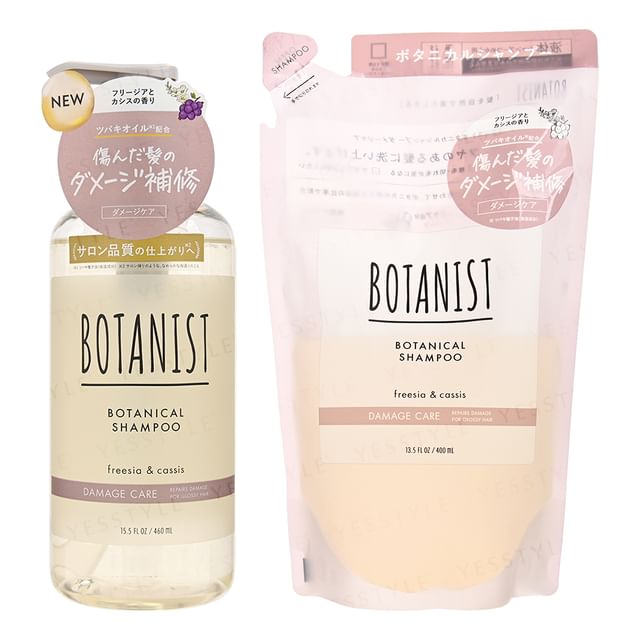

BOTANIST
BOTANIST Botanical Damage Care Shampoo (Iris & Freesia)
Gently cleanses and gives shine to damaged hair. Nourishes damaged hair for silky smooth hair with shine.
Sulfate-free
Paraben-free
Silicone-free
Natural
Damage Repair
Dryness
Optimized for Your Environment & Lifestyle
Nykaa
In stock
Recommended

BOTANIST Botanical Damage Care Shampoo (Iris & Freesia)
BOTANIST
botanist-botanical-damage-care-shampoo-iris-freesia
Shampoo
10407578370341
Morning or Evening?
How often will you use this product?
Notes


Secure payment protection
Your Biodata Compatibility Analysis
Based on your 6 hair health indices and environmental factors
Poor Match
Significant incompatibilities
Growth Cycle Health Index
Hair Match
Hair Health Index Alignment
Optimal for OSI, SSI, DI, HSI
Ingredient Efficacy
Matching Ingredient Score
Environment Compatibility
Current UV, Air Quality & Humidity
Why This Works for Your Specific Profile
Damage Index:
Very healthy or severely damaged hair falls outside optimal treatment parameters
Water Quality:
Soft or moderately hard water does not require intensive treatment causing over-cleansing and dryness
Hair:
Closed cuticles resist product penetration causing surface buildup without internal benefits
Active Lifestyle:
High activity and frequent washing rapidly strip product benefits requiring excessive reapplication
Your Hair Profile Integration
Your Hair Archetype

Density Level

Washing Frequency

Shedding Level

Oil Level
Your Hair Health Indices
Oil Secretion (OSI)
Very low oil production
Scalp Sensitivity (SSI)
Very low sensitivity
Growth Rate (CMR)
Poor metabolism rate
Damage Index (DI)
Minimal damage
Hair Strength (HSI)
Very weak strength
Softness Index (SI)
Significant improvement needed
Water & Environmental Integration

Water:


Expected Results & Timeline
Key Highlights

What is it?
Shampoo with botanical ingredients

Who Is It For
All ages and genders

Budget
$31.20 - $62.40

Timeline
Immediate improvement in hair texture and shine
Why You’ll Love It

What Does It Help With?
Damage Repair, Dryness, Breakage, Split Ends

Best for
Damage Repair

Features
Double-Botanical Repair Formula™, Botanical Seed Oil, Botanical Care Agents, Plant Water, Plant-derived ingredients, Double-Fragrance (Iris & Freesia), Free from Silicones and Synthetic Pigments

Checks
Free from Silicones and Synthetic Pigments
Ingredients Overview
Ingredients List
water, cocamidopropyl-betaine, sodium-methyl-cocoyl-taurate, sodium-lauroyl-methylalanine, lauramidopropyl-betaine, sodium-lauroyl-sarcosinate, sodium-laureth-4-carboxylate, sodium-cocoyl-glutamate, phytosteryl-macadamiate, hydrolyzed-vegetable-protein, honey, glycosphingolipids, betula-platyphylla-japonica-juice, galactomyces/betula-platyphylla-japonica-juice-ferment-filtrate, dipotassium-glycyrrhizate, vitis-vinifera-seed-extract, terminalia-ferdinandiana-fruit-extract, camellia-sinensis-seed-oil, ribes-nigrum-fruit-extract, sake-lees-extract, sodium-dilauramidoglutamide-lysine, meadowfoam-delta-lactone, zein, hydrolyzed-rice-protein, citrus-junos-fruit-extract, helianthus-annuus-seed-extract, argania-spinosa-kernel-oil, simmondsia-chinensis-seed-oil, helianthus-annuus-seed-oil, salvia-hispanica-seed-oil, arginine, hydrolyzed-keratin, malic-acid, polyquaternium-10, butylene-glycol, dipropylene-glycol, decyl-glucoside, methyl-gluceth-20, pca-isostearate, peg-40-hydrogenated-castor-oil, cocamide-mea, peg-120-methyl-glucose-dioleate, peg-30-hydrogenated-castor-oil, peg-40-hydrogenated-castor-oil, hydrogenated-lecithin, hydrogenated-lysolecithin, stearamidopropyl-dimethylamine, distearyldimonium-chloride, behentrimonium-chloride, glycerin, phytosterols, pentylene-glycol, hexylene-glycol, edta-2na, ethanol, sodium-chloride, tocopherol, phenoxyethanol, sodium-benzoate, fragrance
Key Ingredients
Argan Oil, Camellia Oil, Jojoba Oil, Sunflower Oil, Chia Seed Oil, Citron Extract, Corn Zein, Meadowfoam Delta-Lactone, Hydrolyzed Rice Protein, Sunflower Seed Extract, Sugarcane Extract
Ingredients Details
Argan Oil
Common Name(s): Argan oil,moroccan oil
CAS Number: 223747-87-3
DESCRIPTION
What It Does: Conditions and nourishes skin and hair with exceptional fatty acid, squalene, and tocopherol content.
Why It's Used: Premium multi-nutrient facial and hair oil – its unique phytosterol and squalene composition provides anti-aging benefits beyond simple emolliency.
How It Works: Balanced oleic/linoleic acid ratio provides both emolliency and barrier repair. high squalene content (6-7%) provides antioxidant and sebum-compatible emolliency. tocopherols provide antioxidant stability and skin benefit. phytosterols inhibit 5-alpha-reductase and reduce inflammation.
Typically Found In: Premium facial oils,hair oils,anti-aging products
TECHNICAL DETAILS
Primary Category: Functional ingredient – emollient
Secondary Functions: Squalene content,phytosterol activity,anti-aging
Application Areas:

Facial Skincare
Body Care
Hair Care
Beard Care

Color Cosmetics (Makeup)
Dietary/Oral Supplements
Typical Concentration Range: 1%–100%
SOURCING & ETHICS
Vegan Status: Yes – from argania spinosa kernels
Halal Status: Yes
Source Notes: Cold-pressed from roasted (food) or unroasted (cosmetic) argan kernels. unesco world heritage traditional production. fair trade certified sources available.
SKIN COMPATIBILITY
Irritancy Rating: 1/5 – very low
Comedogenicity Rating: 0/5 – non-comedogenic
Sensitivity Concerns: Non-irritating.
Safe for Sensitive Skin: Yes
SAFETY & COMPATIBILITY
Safety Profile: Excellent safety profile. ewg score: 1.
Works Well With: Humectants,ceramides,actives as carrier
Avoid Combining With: No significant incompatibilities
SCIENTIFIC NOTE
Argan oil's squalene content (6-7%) is among the highest of all plant oils, second only to olive oil. squalene is an endogenous skin lipid that declines with age, making argan oil's high squalene level particularly relevant for anti-aging facial use – replenishing both essential fatty acids and age-depleting skin lipids simultaneously.
Last Verified: 2026-03-12
Primary Sources: Cosing database,boucetta et al. argan oil review,cir safety assessment
Arginine
Common Name(s): L-arginine,2-amino-5-guanidinopentanoic acid
CAS Number: 74-79-3
DESCRIPTION
What It Does: Conditions skin, attracts moisture, supports wound healing, and improves microcirculation via no synthesis.
Why It's Used: Multi-functional amino acid for skin hydration, conditioning, and wound healing in peptide and nmf formulations.
How It Works: Guanidinium group binds water (humectant). substrate for nitric oxide synthase (enos) producing nitric oxide that vasodilates capillaries improving skin nutrition. stimulates fibroblast proliferation for wound healing.
Typically Found In: Anti-aging serums,wound healing products,nmf moisturizers,scalp treatments
TECHNICAL DETAILS
Primary Category: Active ingredient – amino acid
Secondary Functions: Wound healing,microcirculation,nmf component
Application Areas:
Facial Skincare
Body Care
Hair Care
Beard Care
Color Cosmetics (Makeup)
Dietary/Oral Supplements
Typical Concentration Range: 0.5%–5%
SOURCING & ETHICS
Vegan Status: Conditional - feedstock declaration required
Halal Status: Unverified - feedstock declaration required (plant, animal and petrochemical routes all exist)
Source Notes: Fermentation-derived or synthetic. natural skin component. [audit 2026-07-29 rev2: origin-dependent: the same inci exists in plant, animal and petrochemical versions and the name does not discriminate. determination requires shariah-panel sign-off.]
SKIN COMPATIBILITY
Irritancy Rating: 1/5 – very low
Comedogenicity Rating: 0/5 – non-comedogenic
Sensitivity Concerns: Non-irritating; endogenous skin molecule.
Safe for Sensitive Skin: Yes
SAFETY & COMPATIBILITY
Safety Profile: Excellent safety profile. natural skin nmf component. ewg score: 1.
Works Well With: Hyaluronic acid,ceramides,peptides,other amino acids
Avoid Combining With: No significant incompatibilities
SCIENTIFIC NOTE
Arginine is a conditionally essential amino acid in wound healing where local demand exceeds synthesis capacity. topical arginine provides the nos substrate locally for no-mediated vasodilation and immune cell function in healing tissue.
Last Verified: 2026-03-12
Primary Sources: Cosing database,cir safety assessment,witte & barbul arginine wound healing review
Glycosphingolipids
Common Name(s): Glycosphingolipids
DESCRIPTION
What It Does: Delivers targeted skin-conditioning or bioactive benefits through a specific mechanism of action suited to the formulation's intended purpose.
Why It's Used: Specialty actives address specific skin concerns through targeted molecular mechanisms, providing efficacy beyond what base formulation ingredients alone can achieve.
How It Works: The bioactive compound interacts with specific molecular targets in skin cells or the extracellular matrix — enzymes, receptors, structural proteins, or signaling molecules — triggering beneficial biological responses.
Typically Found In: Serums,treatments,moisturizers,specialty products
TECHNICAL DETAILS
Primary Category: Specialty actives
Secondary Functions: Skin-conditioning,anti-aging
Application Areas:
Facial Skincare
Body Care
Hair Care
Beard Care
Color Cosmetics (Makeup)
Dietary/Oral Supplements
Typical Concentration Range: 0.01–5%
SOURCING & ETHICS
Vegan Status: Conditional - feedstock declaration required
Halal Status: Unverified - feedstock declaration required (plant, animal and petrochemical routes all exist)
Source Notes: Specialty active ingredient; check individual sourcing for vegan status. [audit 2026-07-29 rev2: origin-dependent: the same inci exists in plant, animal and petrochemical versions and the name does not discriminate. determination requires shariah-panel sign-off.]
SKIN COMPATIBILITY
Irritancy Rating: 1
Comedogenicity Rating: 0
Sensitivity Concerns: Low sensitization potential at recommended use concentrations.
Safe for Sensitive Skin: Yes
SAFETY & COMPATIBILITY
Safety Profile: Well-characterized cosmetic ingredient with established safety profile. generally non-irritating at typical use concentrations. suitable for leave-on and rinse-off cosmetics.
Works Well With: Niacinamide,hyaluronic acid,vitamin c,peptides
Avoid Combining With: Incompatible with oxidizing agents; check ph stability
SCIENTIFIC NOTE
Specialty actives typically work through enzyme inhibition (e.g., tyrosinase inhibition for brightening, mmp inhibition for anti-aging), receptor activation (e.g., retinoid receptors, ppar-γ for barrier genes), or transcription factor modulation (e.g., nrf2 for antioxidant gene upregulation). structure-activity relationships determine potency and selectivity.
Last Verified: 2025-01-15
Primary Sources: Cosing eu database; pcpc cosmetic ingredient safety reviews; ingredient-specific safety and efficacy literature
Honey
Common Name(s): Honey,bee-derived humectant antimicrobial,wound healing active
CAS Number: N/a
DESCRIPTION
What It Does: Provides humectant moisture retention from the hygroscopic fructose/glucose matrix, antimicrobial activity from enzymatically generated h₂o₂ and (in manuka) methylglyoxal, anti-inflammatory activity from phenolic compounds, and wound healing promotion from growth factor activation.
Why It's Used: Honey is the only food-derived ingredient with documented clinical wound healing efficacy in medical grade form (medihoney) — combining humectancy, antimicrobial, anti-inflammatory, and healing activity in a gras, consumer-familiar ingredient.
How It Works: Glucose oxidase in honey catalyses glucose + o₂ → gluconolactone + h₂o₂ — providing sustained low-level h₂o₂ generation that provides bactericidal activity without tissue toxicity. manuka honey's methylglyoxal (mgo) provides additional non-peroxide antimicrobial activity through protein glycation of bacterial enzymes.
Typically Found In: Wound care,anti-aging,humectant products
TECHNICAL DETAILS
Primary Category: Active ingredient – cosmetic active
Secondary Functions: Skin conditioning
Application Areas:
Facial Skincare
Body Care
Hair Care
Beard Care
Color Cosmetics (Makeup)
Dietary/Oral Supplements
Typical Concentration Range: 1%–20%
SOURCING & ETHICS
Vegan Status: No - animal-derived
Halal Status: Conditional - bee-derived; widely held permissible, confirm certifier stance
Source Notes: Commercially produced for cosmetic use. verify vegan/halal status with supplier. [audit 2026-07-29 rev2: bee-derived; permissibility widely accepted but fatwa varies by jurisdiction. determination requires shariah-panel sign-off.]
SKIN COMPATIBILITY
Irritancy Rating: 1/5 – very low
Comedogenicity Rating: 0/5 – non-comedogenic
Sensitivity Concerns: Well-tolerated by most skin types.
Safe for Sensitive Skin: Yes
SAFETY & COMPATIBILITY
Safety Profile: Good safety profile at recommended concentrations. ewg score: 1–2.
Works Well With: Standard skincare actives
Avoid Combining With: No known significant incompatibilities
SCIENTIFIC NOTE
Manuka honey's unique mānuka factor (umf) grades correlate with methylglyoxal (mgo) concentration — umf10+ (mgo 263 mg/kg) provides bactericidal activity against mrsa at concentrations achievable in topical formulation.
Last Verified: 2026-03-12
Primary Sources: Cosing database,honey manuka honey wound healing antimicrobial review
Personalized Usage Instructions
How to Use
Step 1
After wetting your entire hair, apply an appropriate amount, lather well and wash, then rinse thoroughly
Medical Chemicals

Protein/Moisture
- Protein/Moisture balance
pH Level
- Acidic

Porosity Taget
- All Porosity Levels
Customized for Your Profile
Scalp Condtions
Sensitive Scalp, pH Balanced, Dry Scalp
Climate Suitability
Humid, Dry, Hard Water, Soft Water, UV Protection, Pollution Shield, Winter, Summer
Clinical Claims
Frequency
After wetting your entire hair, apply an appropriate amount, lather well and wash, then rinse thoroughly.
Product Information

Free from Silicones and Synthetic Pigments