

Banila Co.
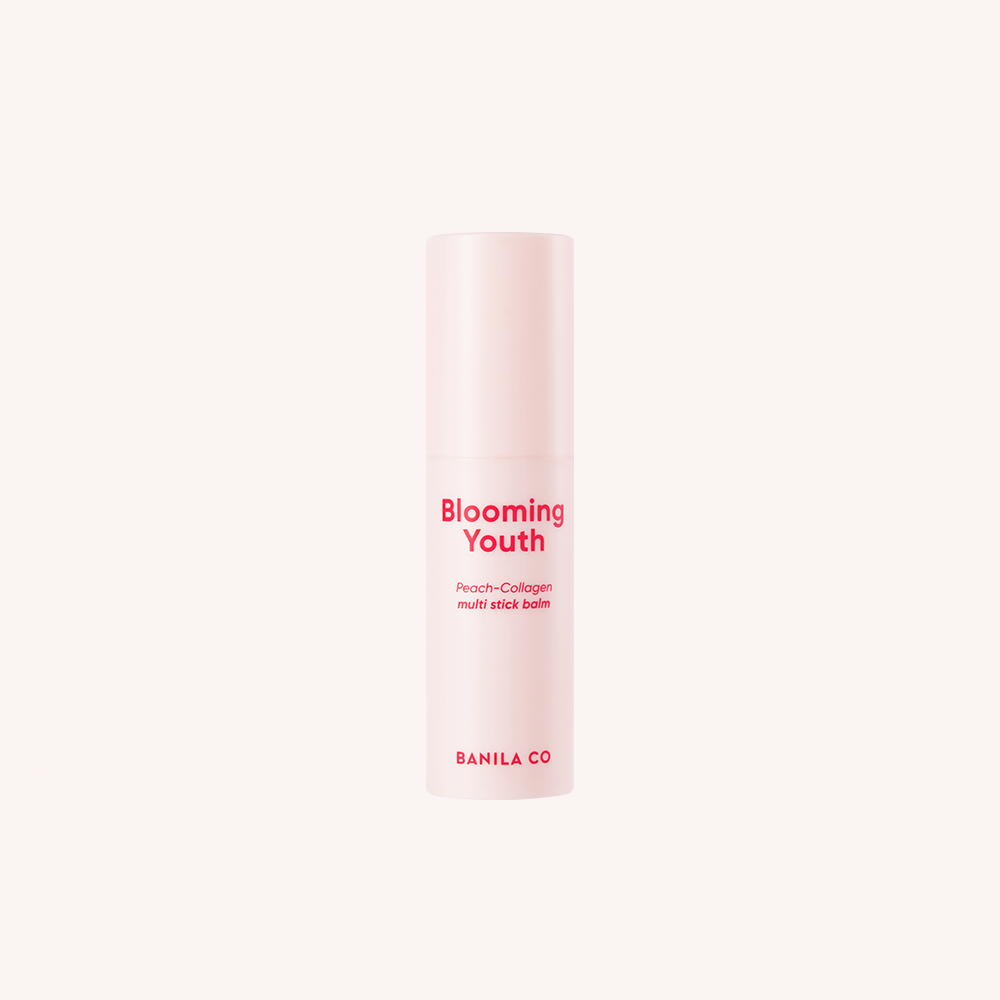
Blooming Youth Multi-Stick Balm

Blooming Youth Multi-Stick Balm
Banila Co.
blooming-youth-multi-stick-balm
Moisturize
9706821058853
Morning or Evening?
How often will you use this product?
Notes


Highlights
WHAT IS IT?
A hydrating face mosturizer
FEATURES
Lightweight formula deeply moisturizes skin instantly.
BEST FOR
All skin types, especially dry and aging
CHECKS
Free of parabens, sulfates, phthalates
Who Is It For?
TeenWhat Does It Help With?
Peach Collagen Provides Defense Against Dryness And Signs Of AgingBudget
AffordableHow To Use
Which routine should it be used in?
Instructions:
Key Information


What Banila Co. Says
Product Description:
Blooming Youth Multi-Stick Balm is powered by peach collagen & hyaluronic acid for portable and easy-to-use hydration on the go! Instant intensive hydration that plumps and helps to replenish your skin anytime, anywhere. Peach collagen provides the perfect defense against dryness and signs of aging while hyaluronic acid locks in moisture & provides a dewy glow. Suitable for all skin types, especially dry & aging, and wears beautifully under or over make-up.
Ingredients Overview
Ingredients List
WATER, CERESIN, CAPRYLIC/CAPRIC TRIGLYCERIDE, ISODECYL NEOPENTANOATE, DIBUTYL ADIPATE, BUTYLENE GLYCOL, COCO-CAPRYLATE/CAPRATE, GLYCERIN, DIPROPYLENE GLYCOL, TOCOPHERYL ACETATE, EUPHORBIA CERIFERA (CANDELILLA) WAX, SYNTHETIC WAX, SORBITAN SESQUIOLEATE, STEARYL HEPTANOATE, LAURYL PEG-8 DIMETHICONE, VINYL DIMETHICONE/METHICONE SILSESQUIOXANE CROSSPOLYMER, LAURYL PEG-10 TRIS(TRIMETHYLSILOXY)SILYLETHYL DIMETHICONE, 1,2-HEXANEDIOL, SODIUM CHLORIDE, STEARYL CAPRYLATE, GLYCERYL BEHENATE/EICOSADIOATE, GLYCERYL CAPRYLATE, BISABOLOL, FRAGRANCE, ECLIPTA PROSTRATA EXTRACT, STEARALKONIUM HECTORITE, PROPYLENE CARBONATE, MELIA AZADIRACHTA LEAF EXTRACT, MORINGA OLEIFERA SEED OIL, METHYLPROPANEDIOL, TOCOPHEROL, PRUNUS PERSICA (PEACH) FRUIT EXTRACT, COLLAGEN, LEUCONOSTOC/RADISH ROOT FERMENT FILTRATE, HIBISCUS SABDARIFFA FLOWER EXTRACT, PRUNUS PERSICA (PEACH) FLOWER EXTRACT, SACCHAROMYCES FERMENT FILTRATE, PRUNUS PERSICA (PEACH) LEAF EXTRACT
Key Ingredients
Tocopheryl Acetate, Tocopherol, Glycerin, Alpha-Bisabolol, Saccharomyces Ferment Filtrate
Ingredients Details
Tocopheryl Acetate
Common Name(s): Vitamin e acetate,alpha-tocopherol acetate,dl-alpha-tocopheryl acetate
CAS Number: 7695-91-2
DESCRIPTION
What It Does: Provides stable vitamin e delivery with antioxidant activity after esterase hydrolysis in skin.
Why It's Used: The formulation-stable vitamin e — tocopheryl acetate's ester protection prevents oxidative degradation during shelf life while releasing active tocopherol in skin for equivalent biological activity.
How It Works: Acetate ester blocks the phenolic oh group responsible for oxidation and radical scavenging. skin esterases cleave acetate bond releasing free tocopherol. released tocopherol provides lipid peroxyl radical scavenging in cell membranes. also provides direct emollient and skin conditioning.
Typically Found In: Moisturisers,sunscreens,anti-aging products — extremely widespread
TECHNICAL DETAILS
Primary Category: Active ingredient – stable vitamin e ester
Secondary Functions: Free radical scavenging,anti-aging
Application Areas:

Facial Skincare
Body Care

Hair Care
Beard Care
Color Cosmetics (Makeup)
Dietary/Oral Supplements
Typical Concentration Range: 0.1%–5%
SOURCING & ETHICS
Vegan Status: Conditional – natural from vegetable oils (soy, sunflower); synthetic dl-form
Halal Status: Yes
Source Notes: Plant-derived extract or synthetic.
SKIN COMPATIBILITY
Irritancy Rating: 1/5 – very low
Comedogenicity Rating: 0/5 – non-comedogenic
Sensitivity Concerns: Non-irritating; well-tolerated.
Safe for Sensitive Skin: Yes
SAFETY & COMPATIBILITY
Safety Profile: The d-alpha-tocopheryl acetate (natural isomer) is biologically superior to dl-alpha-tocopheryl acetate (racemic synthetic) for skin antioxidant activity. ingredient label d- vs dl- prefix identifies natural vs synthetic origin.
Works Well With: Vitamin c,vitamin e,ferulic acid,spf,other antioxidants
Avoid Combining With: No significant incompatibilities
SCIENTIFIC NOTE
Tocopheryl acetate's conversion to active tocopherol in skin is quantitatively efficient: skin esterase activity is sufficient to cleave 60-80% of applied tocopheryl acetate within 24 hours of application. however, the conversion rate varies with skin condition (eczematous or barrier-compromised skin has reduced esterase activity), meaning tocopheryl acetate efficacy may be reduced precisely in the skin conditions that most need antioxidant support.
Last Verified: Cosing database,cir safety assessment
Primary Sources: 2026-03-12
Water
Common Name(s): Water,purified water,deionised water,inci water
CAS Number: 7732-18-5
DESCRIPTION
What It Does: Provides the universal solvent and vehicle for water-soluble actives and the continuous phase of all o/w emulsions.
Why It's Used: The most essential cosmetic ingredient — aqua (water) is listed first on virtually all water-containing cosmetic inci labels as the highest-concentration ingredient, serving as the foundation of the global cosmetics industry.
How It Works: Acts as solvent for all water-soluble ingredients (glycols, amino acids, water-soluble actives). forms the continuous external phase of o/w emulsions (lotions, creams, serums). provides aqueous environment for enzymatic and chemical reactions between actives. ph adjustment medium.
Typically Found In: Virtually all cosmetic products — the most universal cosmetic ingredient globally
TECHNICAL DETAILS
Primary Category: Functional ingredient – water
Secondary Functions: Skin conditioning
Application Areas:
Facial Skincare
Body Care
Hair Care
Beard Care
Color Cosmetics (Makeup)
Dietary/Oral Supplements
Typical Concentration Range: Varies widely — up to 95% in some toners and serums
SOURCING & ETHICS
Vegan Status: Yes – water (deionised/purified)
Halal Status: Yes
Source Notes: Cosmetic-grade water is purified (deionised, distilled, or ro filtered) to prevent mineral content interference with formulation stability. european pharmacopoeial water (aqua purificata ph. eur.) is the quality standard for pharmaceutical and high-end cosmetic formulations.
SKIN COMPATIBILITY
Irritancy Rating: 1/5 – non-irritant
Comedogenicity Rating: 0/5 – non-comedogenic
Sensitivity Concerns: Well-tolerated by most skin types.
Safe for Sensitive Skin: Yes
SAFETY & COMPATIBILITY
Safety Profile: Good safety profile at recommended concentrations. ewg score: 1–2.
Works Well With: Standard skincare actives
Avoid Combining With: No known significant incompatibilities
SCIENTIFIC NOTE
Water's position as the first inci ingredient on most cosmetic labels reflects the regulatory requirement to list ingredients in descending concentration order — meaning water is the most abundant ingredient in the majority of cosmetic products. the fundamental role of water as the universal cosmetic solvent and vehicle makes it simultaneously the most important cosmetic ingredient and the one that requires the most sophisticated formulation chemistry to control — every emulsifier, thickener, preservative, and ph adjuster exists primarily to manage water's interaction with other ingredients in formulation.
Last Verified: Cosing database,eu cosmetics regulation 1223/2009 inci requirements,ph. eur. aqua purificata monograph
Primary Sources: 2026-03-12
