

dermalogica
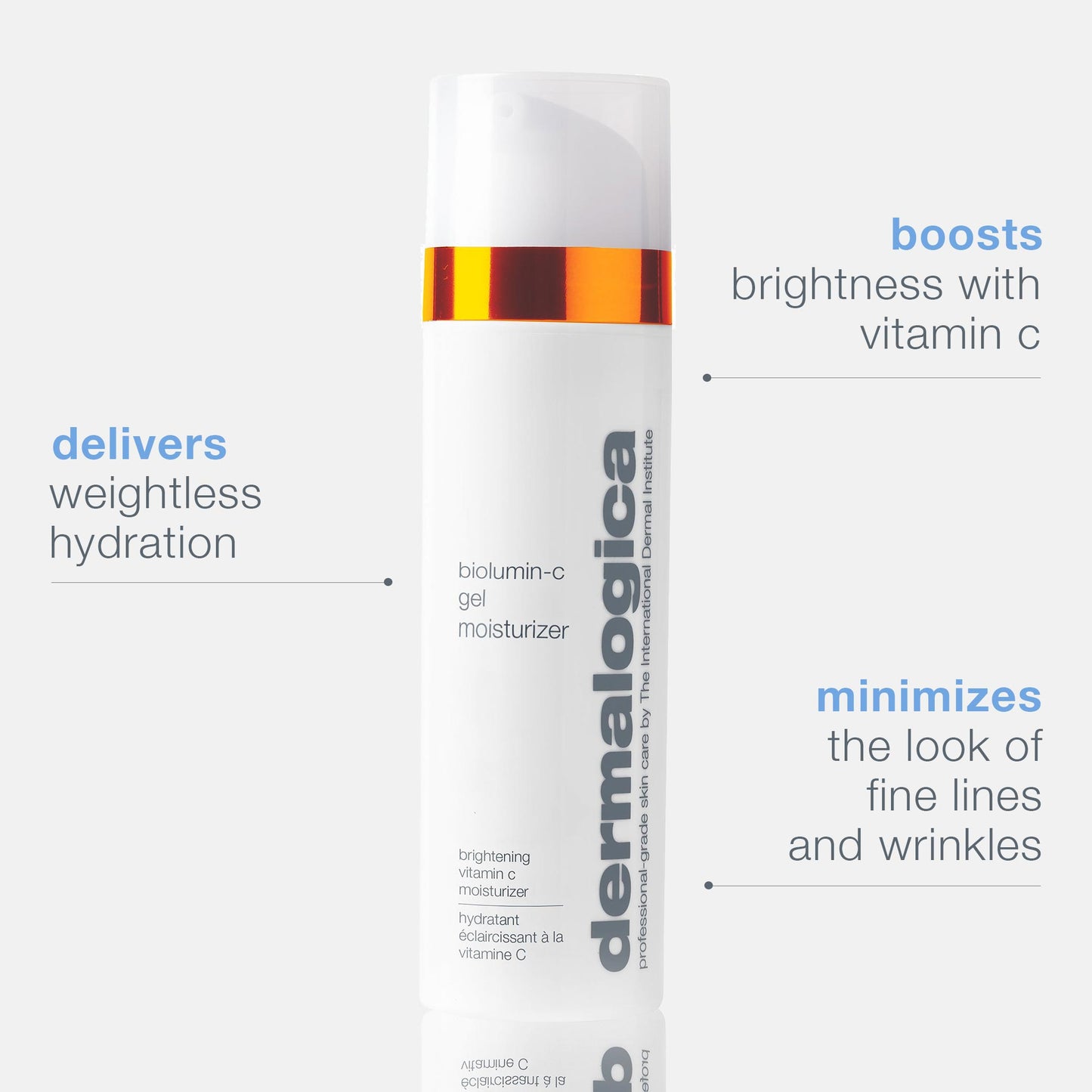
BioLumin-C Vitamin C Gel Moisturizer

BioLumin-C Vitamin C Gel Moisturizer
dermalogica
biolumin-c-vitamin-c-gel-moisturizer
Moisturize
9784812536101
Morning or Evening?
How often will you use this product?
Notes


Highlights
WHAT IS IT?
Brightening gel moisturizer with Vitamin C complex
FEATURES
Weightless hydration, radiance boost, improved barrier defense, contains five types of Hyaluronic Acid
BEST FOR
all
CHECKS
Without Sulfates SLS & SLES
Who Is It For?
All Skin TypesWhat Does It Help With?
Fine Lines Wrinkles Hyperpigmentation Loss Of Firmness And ElasticityBudget
Mid-range ($30-$75)How To Use
Which routine should it be used in?
Instructions:
Key Information


What dermalogica Says
Product Description:
Daily brightening gel moisturizer provides weightless hydration and gives skin a radiance boost for healthy-looking skin. Features highly-stable Vitamin C complex with advanced re-activation biotechnology for brighter skin and improved barrier defense.
About the Brand:
Ingredients Overview
Ingredients List
Water/Aqua/Eau, Glycerin, Squalane, Propanediol, Butylene Glycol, PPG-24-Glycereth-24, Jojoba Wax PEG-120 Esters, Hydroxyethyl Urea, Trehalose, Aminopropyl Ascorbyl Phosphate, Allantoin, Hyaluronic Acid, Hydrolyzed Hyaluronic Acid, Hydrolyzed Jojoba Esters, Biosaccharide Gum-1, Ethylhexylglycerin, Sodium PCA, Sodium Levulinate, Ergothioneine, Beta-Carotene, Lactobacillus Ferment, Aloe Barbadensis Leaf Juice, Camellia Sinensis Leaf Extract, Centella Asiatica Extract, Chamomilla Recutita (Matricaria) Flower Extract, Glycyrrhiza Glabra (Licorice) Root Extract, Verbascum Thapsus Extract, Lactobacillus/Pumpkin Ferment Extract, Glycine Soja (Soybean) Oil, Citrus Aurantium Dulcis (Orange) Peel Extract, Citrus Paradisi (Grapefruit) Peel Oil, Helianthus Annuus (Sunflower) Seed Oil, Citrus Aurantium Bergamia (Bergamot) Fruit Oil, Raspberry Ketone, Jasminum Sambac (Jasmine) Flower Extract, Santalum Album (Sandalwood) Oil, Daucus Carota Sativa (Carrot) Root Extract, Bisabolol, Cystine, Glycine, Dipotassium Glycyrrhizate, Hydrolyzed Glycosaminoglycans, Sodium Hyaluronate Crosspolymer, Sodium Hyaluronate, Pentylene Glycol, Caprylyl Glycol, Tocopherol, Mannitol, Tetrasodium Glutamate Diacetate, Sodium Hydroxide, Phytic Acid, Citric Acid, PEG-40 Hydrogenated Castor Oil, C12-13 Pareth-3, Xanthan Gum, Sclerotium Gum, Polyacrylate Crosspolymer-6, Ascorbyl Methylsilanol Pectinate, Glyceryl Caprylate, p-Anisic Acid, Benzyl Glycol, Methylpropanediol, Sodium Benzoate, Potassium Sorbate, Limonene
Key Ingredients
Vitamin C complex, Squalane, Hyaluronic Acid, Verbascum Thapsus Flower Extract, Phytic Acid, Pumpkin Enzymes
Ingredients Details
Allantoin
Common Name(s): 5-ureidohydantoin,glyoxyldiureide,aluminum dihydroxy allantoinate
CAS Number: 97-59-6
DESCRIPTION
What It Does: Soothes irritation, accelerates wound healing, promotes skin cell renewal, and provides mild keratolytic exfoliation.
Why It's Used: Gold standard multi-function soothing active – one of the most widely used cosmetic ingredients across all product types for its exceptional tolerability and clinically proven multi-action skin conditioning.
How It Works: Promotes keratinocyte proliferation and fibroblast migration for wound healing. mild keratolytic activity by disrupting corneocyte binding. anti-irritant via direct protein binding and anti-inflammatory cytokine reduction. humectant activity via hydroxyl groups.
Typically Found In: Post-procedure products,sensitive skin formulas,wound care,anti-acne treatments,baby products
TECHNICAL DETAILS
Primary Category: Active ingredient – soothing / anti-inflammatory
Secondary Functions: Wound healing,keratolytic,anti-irritant
Application Areas:

Facial Skincare
Body Care

Hair Care
Beard Care
Color Cosmetics (Makeup)
Dietary/Oral Supplements
Typical Concentration Range: 0.1%–2%
SOURCING & ETHICS
Vegan Status: Yes – synthetic or comfrey-derived
Halal Status: Yes
Source Notes: Plant-derived extract or synthetic.
SKIN COMPATIBILITY
Irritancy Rating: 1/5 – very low
Comedogenicity Rating: 0/5 – non-comedogenic
Sensitivity Concerns: Exceptionally well-tolerated; suitable for all skin types including baby and compromised skin.
Safe for Sensitive Skin: Yes – particularly recommended for sensitive skin
SAFETY & COMPATIBILITY
Safety Profile: Excellent safety profile. ewg score: 1.
Works Well With: Ceramides,panthenol,allantoin,hyaluronic acid,centella asiatica
Avoid Combining With: No significant incompatibilities
SCIENTIFIC NOTE
Allantoin's keratinocyte proliferation stimulation occurs via receptor-mediated signaling (possibly machr activation) rather than non-specific irritation-driven proliferation, making it a true wound-healing stimulant rather than a pro-inflammatory proliferative signal.
Last Verified: Cosing database,cir safety assessment,araújo et al. allantoin review
Primary Sources: 2026-03-12
Aminopropyl Ascorbyl Phosphate
Common Name(s): Vitamin c amphoteric derivative,ap ascorbyl phosphate
CAS Number: N/a
DESCRIPTION
What It Does: Provides antioxidant and brightening vitamin c activity with enhanced skin retention for prolonged efficacy.
Why It's Used: Used where sustained vitamin c activity and skin substantivity are desired in leave-on treatments.
How It Works: Aminopropyl cationic group increases electrostatic interaction with negatively charged skin proteins, extending contact time. enzymatic hydrolysis releases active ascorbate.
Typically Found In: Leave-on treatments,extended-wear vitamin c,hair care
TECHNICAL DETAILS
Primary Category: Active ingredient – vitamin c derivative
Secondary Functions: Substantive vitamin c,prolonged antioxidant
Application Areas:
Facial Skincare
Body Care
Hair Care
Beard Care
Color Cosmetics (Makeup)
Dietary/Oral Supplements
Typical Concentration Range: 1%–5%
SOURCING & ETHICS
Vegan Status: Yes – synthetic
Halal Status: Yes
Source Notes: Synthetically produced vitamin c derivative.
SKIN COMPATIBILITY
Irritancy Rating: 1/5 – very low
Comedogenicity Rating: 0/5 – non-comedogenic
Sensitivity Concerns: Non-irritating; suitable for all skin types.
Safe for Sensitive Skin: Yes
SAFETY & COMPATIBILITY
Safety Profile: Excellent safety profile. ewg score: 1.
Works Well With: Tocopherol,ferulic acid,niacinamide,spf
Avoid Combining With: No significant incompatibilities
SCIENTIFIC NOTE
Substantivity via ionic interaction extends active vitamin c presence beyond typical contact times. positive charge also contributes hair conditioning via attraction to negatively charged hair surface.
Last Verified: Cosing database,cir assessment
Primary Sources: 2026-03-12
Butylene Glycol
Common Name(s): 1,3-butanediol,bg,1,3-butylene glycol
CAS Number: 107-88-0
DESCRIPTION
What It Does: Provides humectant hydration and active ingredient solubilization with excellent skin feel.
Why It's Used: Preferred glycol humectant in premium and k-beauty formulations for superior skin feel vs propylene glycol with equivalent functionality.
How It Works: Two hydroxyl groups at 1,3-positions provide water binding and solvent activity. better tolerated than propylene glycol with minimal sensitization risk. 4-carbon backbone provides slightly greater hydrophobic character enabling dissolution of less polar actives vs pg.
Typically Found In: Toners,essences,serums,k-beauty formulas
TECHNICAL DETAILS
Primary Category: Functional ingredient – glycol humectant
Secondary Functions: Tewl reduction,skin plumping
Application Areas:
Facial Skincare
Body Care
Hair Care
Beard Care
Color Cosmetics (Makeup)
Dietary/Oral Supplements
Typical Concentration Range: 1%–10%
SOURCING & ETHICS
Vegan Status: Yes – synthetic
Halal Status: Yes
Source Notes: Synthetic or naturally derived. excellent aqueous solubility.
SKIN COMPATIBILITY
Irritancy Rating: 1/5 – very low
Comedogenicity Rating: 0/5 – non-comedogenic
Sensitivity Concerns: Non-irritating; suitable for all skin types.
Safe for Sensitive Skin: Yes
SAFETY & COMPATIBILITY
Safety Profile: Excellent safety profile. ewg score: 1.
Works Well With: Ceramides,emollients,occlusives,glycerin,hyaluronic acid
Avoid Combining With: No significant incompatibilities
SCIENTIFIC NOTE
K-beauty's preference for butylene glycol over propylene glycol is driven by two factors: bg's superior skin feel (less tacky than pg's higher viscosity) and its lower sensitization potential (1,3-bg has better spatial distribution of hydroxyl groups that reduces protein interaction vs pg's 1,2-position oh groups).
Last Verified: Cosing database,cir safety assessment
Primary Sources: 2026-03-12
Glycerin
Common Name(s): Glycerol,glycerine,1,2,3-propanetriol
CAS Number: 56-81-5
DESCRIPTION
What It Does: Glycerin pulls water from the environment and deeper skin layers into the outer skin layer (epidermis), boosting moisture levels and keeping skin soft, smooth, and plump.
Why It's Used: It is used in virtually every moisturizer, serum, and cleanser because it is highly effective at hydrating skin, is well-tolerated by all skin types, and enhances the texture and spreadability of formulations.
How It Works: As a humectant, glycerin forms hydrogen bonds with water molecules, trapping them in the skin. it also reinforces the skin barrier by integrating into lipid structures between skin cells.
Typically Found In: Moisturizers,serums,cleansers,toners,sheet masks,sunscreens,body lotions,shampoos,conditioners
TECHNICAL DETAILS
Primary Category: Humectant
Secondary Functions: Skin barrier support,emollient,solvent
Application Areas:
Facial Skincare
Body Care
Hair Care
Beard Care
Color Cosmetics (Makeup)
Dietary/Oral Supplements
Typical Concentration Range: 1%–30% (typical: 3–10%)
SOURCING & ETHICS
Vegan Status: Yes – plant-derived (coconut, soy, palm) or synthetic
Halal Status: Yes – when plant-derived or synthetic; verify source with supplier
Source Notes: Derived from plant oils via hydrolysis or saponification; synthetic versions also available. palm-derived glycerin carries sustainability concerns.
SKIN COMPATIBILITY
Irritancy Rating: 1/5 – very low; non-irritating at all standard concentrations
Comedogenicity Rating: 0/5 – non-comedogenic
Sensitivity Concerns: Extremely rare allergic reactions; generally safe for all skin types including sensitive and baby skin
Safe for Sensitive Skin: Yes
SAFETY & COMPATIBILITY
Safety Profile: Widely recognized as safe. ewg hazard score: 1. no significant concerns for irritation, sensitization, or toxicity at typical concentrations (up to 50%).
Works Well With: Hyaluronic acid,ceramides,niacinamide,panthenol,urea,peptides,retinol,ahas/bhas
Avoid Combining With: No known incompatibilities at standard concentrations
SCIENTIFIC NOTE
Glycerin is an endogenous skin component found naturally in the stratum corneum. aquaporin-3 channels in keratinocytes facilitate glycerin transport, making it integral to natural skin hydration pathways.
Last Verified: Cosing database,cir safety assessment,ewg skin deep,inci decoder
Primary Sources: 2026-03-12
