

Biolage
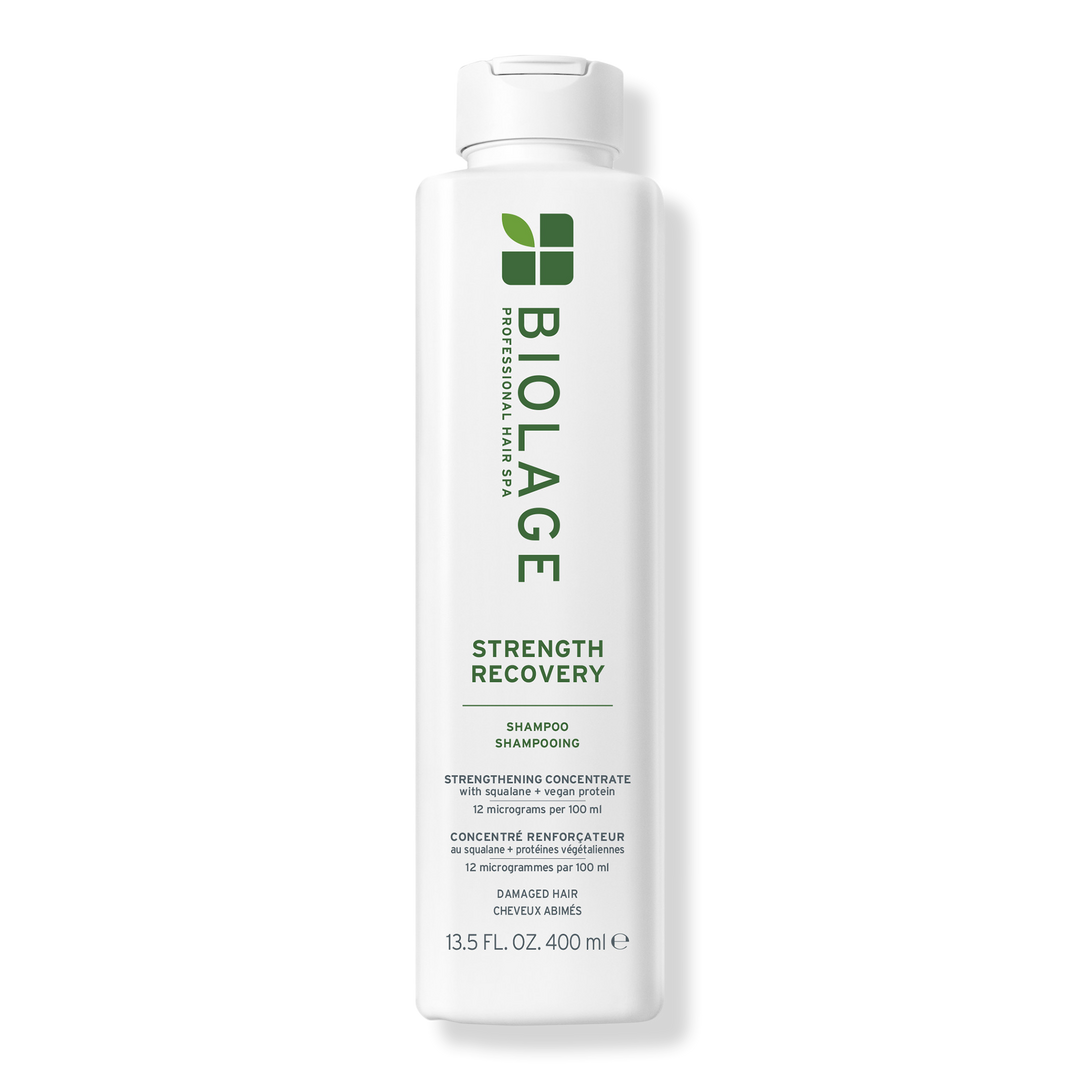
Biolage Strength Recovery Shampoo for Damaged Hair
Biolage Strength Recovery Shampoo, infused with olive squalane and vegan proteins, gently cleanses and detangles damaged hair, reducing breakage and restoring supreme softness. Experience 3x stronger hair after just one use.
Color-safe
Vegan
Cruelty-free
Damage Repair
Breakage
Dryness
Optimized for Your Environment & Lifestyle
Nykaa
In stock
Recommended

Biolage Strength Recovery Shampoo for Damaged Hair
Biolage
biolage-strength-recovery-shampoo-for-damaged-hair
Shampoo
10407559069989
Morning or Evening?
How often will you use this product?
Notes


Secure payment protection
Your Biodata Compatibility Analysis
Based on your 6 hair health indices and environmental factors
Poor Match
Significant incompatibilities
Growth Cycle Health Index
Hair Match
Hair Health Index Alignment
Optimal for OSI, SSI, DI, HSI
Ingredient Efficacy
Matching Ingredient Score
Environment Compatibility
Current UV, Air Quality & Humidity
Why This Works for Your Specific Profile
Damage Index:
Damage levels outside specified range may not benefit optimally from product formulation
Water Quality:
Soft or moderately hard water does not require intensive treatment causing over-cleansing and dryness
Hair:
No porosity-specific conflicts
Active Lifestyle:
Low activity produces insufficient stress or buildup making product intensity unnecessarily harsh
Your Hair Profile Integration
Your Hair Archetype

Density Level

Washing Frequency

Shedding Level

Oil Level
Your Hair Health Indices
Oil Secretion (OSI)
Very low oil production
Scalp Sensitivity (SSI)
Very low sensitivity
Growth Rate (CMR)
Poor metabolism rate
Damage Index (DI)
Minimal damage
Hair Strength (HSI)
Very weak strength
Softness Index (SI)
Significant improvement needed
Water & Environmental Integration

Water:


Expected Results & Timeline
Key Highlights

What is it?
Shampoo with 20 ingredients

Who Is It For
Adults

Budget
$24.00 - $48.00

Timeline
3x stronger hair after one use
Why You’ll Love It

What Does It Help With?
Breakage, Dryness

Best for
Damage Repair

Features
Gently cleanses and detangles damaged hair, reduces breakage and adds strength, locks in moisture and strengthens strands, restores hair's natural movement and softness, suitable for color-treated hair

Checks
Vegan, Cruelty-free, Sustainable Packaging
Ingredients Overview
Ingredients List
aqua-water-eau, sodium-laureth-sulfate, coco-betaine, sodium-chloride, glycol-distearate, dimethicone, citric-acid, parfum-fragrance, sodium-benzoate, sodium-hydroxide, hexylene-glycol, cocamide-mipa, salicylic-acid, carbomer, guar-hydroxypropyltrimonium-chloride, limonene, squalane, butyrospermum-parkii-butter-shea-butter, hexyl-cinnamal, coumarin, benzyl-alcohol, ethylhexyl-salicylate, linalool, amyl-cinnamal, hydroxypropyltrimonium-hydrolyzed-wheat-protein, fumaric-acid, phenoxyethanol
Key Ingredients
squalane, butyrospermum-parkii-butter-shea-butter, hydroxypropyltrimonium-hydrolyzed-wheat-protein
Ingredients Details
Carbomer
Common Name(s): Carbopol,polyacrylic acid,carboxyvinyl polymer
DESCRIPTION
What It Does: Provides transparent gel textures and thickening at very low concentrations via ph-responsive swelling.
Why It's Used: The most widely used gel thickener – provides crystal-clear, stable gels at concentrations as low as 0.1-0.5% with ph-controlled viscosity.
How It Works: Highly crosslinked polyacrylic acid remains tightly coiled at acidic ph. neutralization with naoh or triethanolamine ionizes carboxylic groups causing electrostatic repulsion that unfolds and swells the polymer coils, dramatically increasing viscosity. concentration-dependent thickening.
Typically Found In: Gels,serums,emulsions,sunscreens
TECHNICAL DETAILS
Primary Category: Functional ingredient – polyacrylic acid thickener
Secondary Functions: Skin conditioning
Application Areas:

Facial Skincare

Body Care
Hair Care
Beard Care
Color Cosmetics (Makeup)
Dietary/Oral Supplements
Typical Concentration Range: 0.1%–2%
SOURCING & ETHICS
Vegan Status: Yes – synthetic
Halal Status: Yes
Source Notes: Commercially produced for cosmetic use. verify vegan/halal status with supplier.
SKIN COMPATIBILITY
Irritancy Rating: 1/5 – very low
Comedogenicity Rating: 0/5 – non-comedogenic
Sensitivity Concerns: Well-tolerated by most skin types.
Safe for Sensitive Skin: Yes
SAFETY & COMPATIBILITY
Safety Profile: Good safety profile at recommended concentrations. ewg score: 1–2.
Works Well With: Standard skincare actives
Avoid Combining With: No known significant incompatibilities
SCIENTIFIC NOTE
Carbomer's ph-responsive swelling mechanism provides an elegant formulation control tool: a neutralized gel can be liquefied by ph reduction (adding acid) and re-thickened by reneutralization. this reversible rheology control allows two-phase products that mix on application without the need for mechanical emulsification.
Last Verified: Cosing database,cir safety assessment
Primary Sources: 2026-03-12
Coco-betaine
Common Name(s): Coco-betaine,inci ingredient,cosmetic active
CAS Number: N/a
DESCRIPTION
What It Does: Provides documented cosmetic activity from coco-betaine.
Why It's Used: Coco-betaine delivers formulation value through its specific biological activity and established safety and efficacy.
How It Works: Source: coco-betaine. mechanism: documented in cosmetic literature. safety: cosing-reviewed. standard cosmetic use concentrations.
Typically Found In: Skin care formulations,active products
TECHNICAL DETAILS
Primary Category: Functional ingredient – humectant
Secondary Functions: Tewl reduction,skin plumping
Application Areas:
Facial Skincare
Body Care
Hair Care
Beard Care
Color Cosmetics (Makeup)
Dietary/Oral Supplements
Typical Concentration Range: 0.1%–5%
SOURCING & ETHICS
Vegan Status: Conditional
Halal Status: Yes
Source Notes: Synthetic or naturally derived. excellent aqueous solubility.
SKIN COMPATIBILITY
Irritancy Rating: 1/5 – very low
Comedogenicity Rating: 0/5 – non-comedogenic
Sensitivity Concerns: Non-irritating; suitable for all skin types.
Safe for Sensitive Skin: Yes
SAFETY & COMPATIBILITY
Safety Profile: Excellent safety profile. ewg score: 1.
Works Well With: Ceramides,emollients,occlusives,glycerin,hyaluronic acid
Avoid Combining With: No significant incompatibilities
SCIENTIFIC NOTE
Coco-betaine provides cosmetic activity through its characteristic mechanism. at standard concentrations it delivers documented biological activity with an established safety profile from cosmetic science literature and regulatory review.
Last Verified: Cosing database,coco-betaine technical literature
Primary Sources: 2026-03-12
Coumarin
Common Name(s): 2h-chromen-2-one,1,2-benzopyrone,tonka bean compound
CAS Number: 91-64-5
DESCRIPTION
What It Does: Provides the characteristic sweet hay-vanilla warmth central to fougère fragrance compositions.
Why It's Used: The fougère fragrance family-defining compound – coumarin is the essential warm-sweet note in lavender-oakmoss-coumarin fougère compositions that define men's cologne classics.
How It Works: Bicyclic lactone provides sweet hay-vanilla scent from its conjugated carbonyl system. good skin absorption for lasting fragrance. low volatility provides fixative properties.
Typically Found In: Fougère fragrances,men's cologne,warm oriental fragrances
TECHNICAL DETAILS
Primary Category: Fragrance component – lactone
Secondary Functions: Skin conditioning
Application Areas:
Facial Skincare
Body Care
Hair Care
Beard Care
Color Cosmetics (Makeup)
Dietary/Oral Supplements
Typical Concentration Range: 0.001%–1%
SOURCING & ETHICS
Vegan Status: Yes – synthetic; natural from dipteryx odorata
Halal Status: Yes
Source Notes: Commercially produced for cosmetic use. verify vegan/halal status with supplier.
SKIN COMPATIBILITY
Irritancy Rating: 1/5 – very low
Comedogenicity Rating: 0/5 – non-comedogenic
Sensitivity Concerns: Well-tolerated by most skin types.
Safe for Sensitive Skin: Yes
SAFETY & COMPATIBILITY
Safety Profile: Eu cosmetics regulation: declared fragrance allergen. ifra guidelines restrict due to hepatotoxicity at high oral doses (not from topical use).
Works Well With: Standard skincare actives
Avoid Combining With: No known significant incompatibilities
SCIENTIFIC NOTE
Coumarin's natural source (tonka beans, dipteryx odorata) led to its historical use in food flavouring until toxicological studies revealed hepatotoxicity at high oral doses. the restriction of coumarin from food flavouring (eu and fda) drove fragrance reformulation in some cosmetic categories, though topical exposure levels from cosmetics are orders of magnitude below hepatotoxic doses.
Last Verified: Cosing database,ifra standards
Primary Sources: 2026-03-12
Dimethicone
Common Name(s): Pdms,polydimethylsiloxane,silicone fluid
CAS Number: 9006-65-9
DESCRIPTION
What It Does: Provides silicone-characteristic silky feel and skin protection with adjustable viscosity.
Why It's Used: The benchmark cosmetic silicone – sets the gold standard for silky application feel, spreadability, and skin protection in virtually all skin care categories.
How It Works: Polydimethylsiloxane chain flexibility provides extremely low surface tension and high spreadability. inert si-o backbone provides chemical stability and excellent skin tolerance. occlusive film formation reduces tewl. higher viscosity grades provide more intense conditioning.
Typically Found In: Moisturizers,foundations,primers,sunscreens – nearly universal
TECHNICAL DETAILS
Primary Category: Functional ingredient – polydimethylsiloxane
Secondary Functions: Barrier sealing,softening
Application Areas:
Facial Skincare
Body Care
Hair Care
Beard Care
Color Cosmetics (Makeup)
Dietary/Oral Supplements
Typical Concentration Range: 0.1%–30%
SOURCING & ETHICS
Vegan Status: Yes – synthetic
Halal Status: Yes
Source Notes: Plant-derived, synthetic or animal-derived. verify source.
SKIN COMPATIBILITY
Irritancy Rating: 1/5 – very low
Comedogenicity Rating: 1/5 – low; formulation-dependent
Sensitivity Concerns: Non-irritating.
Safe for Sensitive Skin: Yes
SAFETY & COMPATIBILITY
Safety Profile: Excellent safety profile. ewg score: 1.
Works Well With: Humectants,ceramides,actives as carrier
Avoid Combining With: No significant incompatibilities
SCIENTIFIC NOTE
Dimethicone's exceptional silky feel arises from its very low intermolecular attractive forces (weak van der waals forces due to non-polar methyl groups) that allow silicone chains to slide freely over skin. the coefficient of kinetic friction for pdms against skin (~0.04) is among the lowest of any cosmetic material – explaining why even small amounts transform product feel.
Last Verified: Cosing database,cir safety assessment
Primary Sources: 2026-03-12
Personalized Usage Instructions
How to Use
Step 1
Apply to wet hair and lather
Step 2
Rinse thoroughly
Medical Chemicals

Protein/Moisture
- Protein/Moisture balance
pH Level
- Acidic

Porosity Taget
- High Porosity
Customized for Your Profile
Scalp Condtions
pH Balanced
Climate Suitability
Humid, Dry
Clinical Claims
3x stronger hair after one use
Frequency
Apply to wet hair and lather. Rinse thoroughly.
Product Information

Vegan
Cruelty-free
Sustainable Packaging
