

Nykaa E retail limited
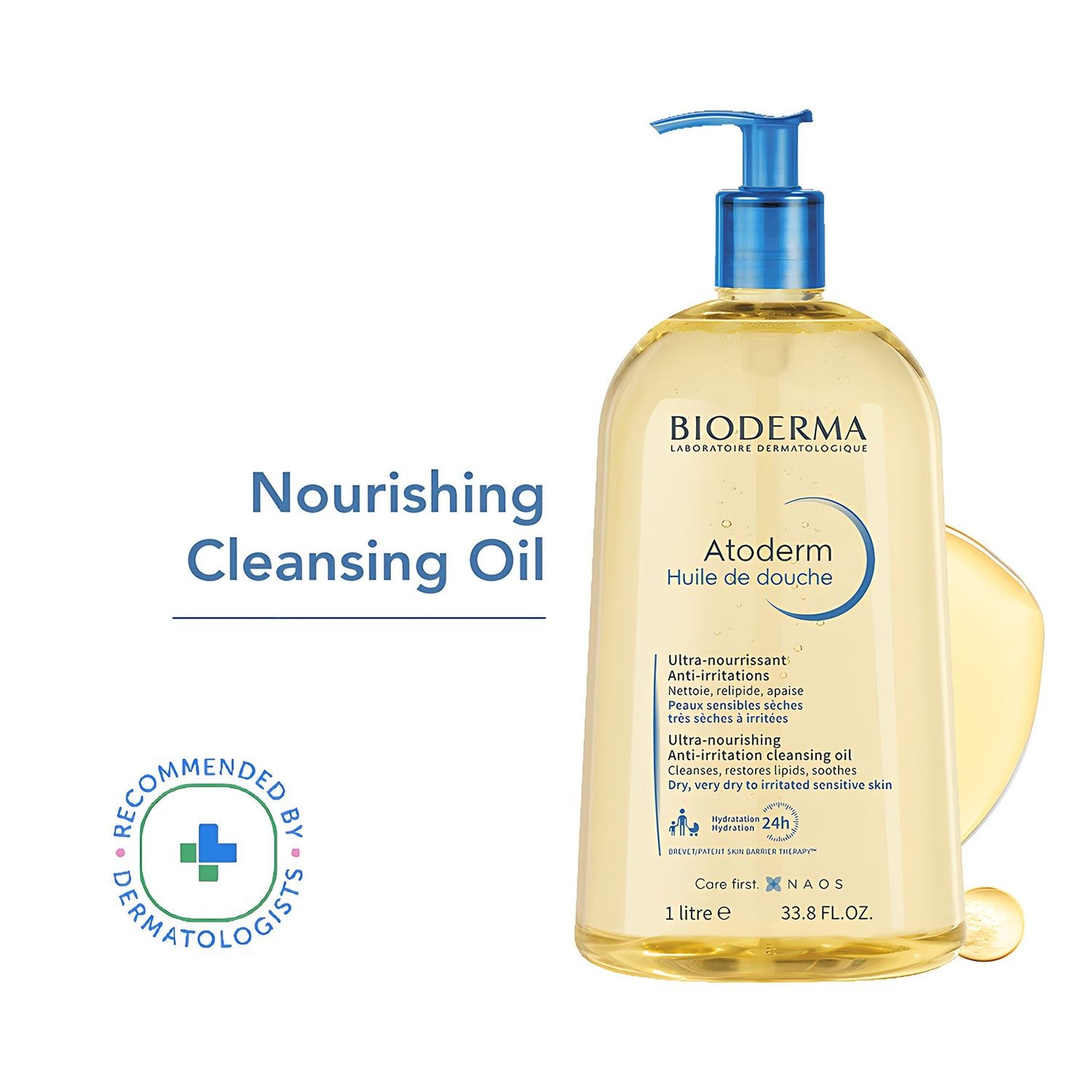
BIODERMA SHOWER OIL - ATODERM HUILE DE DOUCHE WITH NIACINAMIDE(1000ML)

BIODERMA SHOWER OIL - ATODERM HUILE DE DOUCHE WITH NIACINAMIDE(1000ML)
Nykaa E retail limited
bioderma-shower-oil-atoderm-huile-de-douche-with-niacinamide-1000ml
Body care
10084944118053
Morning or Evening?
How often will you use this product?
Notes


Highlights
WHAT IS IT?
Shower Oil with Niacinamide
FEATURES
BEST FOR
sensitive
CHECKS
Who Is It For?
What Does It Help With?
Budget
Premium ($76-$150)How To Use
Which routine should it be used in?
Instructions:
Key Information

About the Brand:
Ingredients Overview
Ingredients List
Aqua/Water/Eau, Glycerin, PEG-7 Glyceryl Cocoate, Sodium Cocoamphoacetate, Lauryl Glucoside, Coco-Glucoside, Glyceryl Oleate, Citric Acid, PEG-90 Glyceryl Isostearate, Fragrance (Parfum), Mannitol, Polysorbate 20, Xylitol, Laureth-2, Rhamnose, Niacinamide, Fructooligosaccharides, Tocopherol, Hydrogenated Palm Glycerides Citrate, Lecithin, Ascorbyl Palmitate
Key Ingredients
niacinamide
Ingredients Details
Aqua/water/eau
Common Name(s): Aqua/water/eau extract
DESCRIPTION
What It Does: Provides antioxidant protection, soothing anti-inflammatory effects, and skin-conditioning benefits through plant-derived polyphenols and phytochemicals.
Why It's Used: Plant extracts concentrate bioactive phytochemicals evolved for environmental protection — uv, microbial, and oxidative stressors — that translate to skin benefits.
How It Works: Polyphenols (flavonoids, phenolic acids) inhibit nf-κb-mediated inflammatory signaling, scavenge reactive oxygen species through electron donation, and chelate pro-oxidant metal ions to reduce oxidative skin damage.
Typically Found In: Serums,toners,moisturizers,masks,essences
TECHNICAL DETAILS
Primary Category: Botanical extracts
Secondary Functions: Antioxidant,anti-inflammatory
Application Areas:

Facial Skincare

Body Care
Hair Care
Beard Care
Color Cosmetics (Makeup)
Dietary/Oral Supplements
Typical Concentration Range: 0.1–10%
SOURCING & ETHICS
Vegan Status: Yes
Halal Status: Yes
Source Notes: Plant-derived extract; no animal components.
SKIN COMPATIBILITY
Irritancy Rating: 1
Comedogenicity Rating: 0
Sensitivity Concerns: Low sensitization potential at recommended use concentrations.
Safe for Sensitive Skin: Yes
SAFETY & COMPATIBILITY
Safety Profile: Well-characterized cosmetic ingredient with established safety profile. generally non-irritating at typical use concentrations. suitable for leave-on and rinse-off cosmetics.
Works Well With: Niacinamide,hyaluronic acid,vitamin c,ceramides
Avoid Combining With: Strong oxidizing agents
SCIENTIFIC NOTE
Plant secondary metabolites (flavonoids, terpenes, phenolic acids) are biosynthesized as defense compounds against uv, herbivores, and pathogens. their anti-inflammatory activity typically derives from competitive inhibition of cox-2 and 5-lox enzymes (ic50 1–50 µm), while antioxidant activity involves single electron transfer (set) and hydrogen atom transfer (hat) mechanisms with structure-dependent rate constants.
Last Verified: Cosing eu database; pcpc cosmetic ingredient safety reviews; phytochemical and ethnobotanical literature
Primary Sources: 2025-01-15
Ascorbyl Palmitate
Common Name(s): L-ascorbyl-6-palmitate,vitamin c palmitate,fat-soluble vitamin c
CAS Number: 137-66-6
DESCRIPTION
What It Does: Provides lipid-soluble antioxidant protection in skin and oil-based formulations.
Why It's Used: Oil-based formulations as fat-soluble vitamin c active and formulation antioxidant preservative (e304).
How It Works: Skin esterases cleave the bond releasing ascorbic acid and palmitic acid. lipophilic form may integrate into cell membranes for lipid-phase antioxidant protection.
Typically Found In: Oil serums,emulsions,sunscreens,anti-aging creams
TECHNICAL DETAILS
Primary Category: Active ingredient – vitamin c derivative
Secondary Functions: Lipid-soluble antioxidant,formulation preservative
Application Areas:
Facial Skincare
Body Care
Hair Care
Beard Care
Color Cosmetics (Makeup)
Dietary/Oral Supplements
Typical Concentration Range: 0.1%–1%
SOURCING & ETHICS
Vegan Status: Yes – synthetic
Halal Status: Yes
Source Notes: Esterification of ascorbic acid with palmitic acid. gras food additive (e304).
SKIN COMPATIBILITY
Irritancy Rating: 1/5 – very low
Comedogenicity Rating: 1/5 – very low; palmitic acid minor concern
Sensitivity Concerns: Non-irritating; suitable for all skin types.
Safe for Sensitive Skin: Yes
SAFETY & COMPATIBILITY
Safety Profile: Excellent safety profile. ewg score: 1.
Works Well With: Tocopherol,ferulic acid,niacinamide,spf
Avoid Combining With: No significant incompatibilities
SCIENTIFIC NOTE
Debate exists about efficiency of ester hydrolysis in intact skin and prooxidant potential of uv degradation products. formulating with the antioxidant triad (c+e+ferulic) mitigates this concern.
Last Verified: Cosing database,cir safety assessment,ewg skin deep
Primary Sources: 2026-03-12
Citric Acid
Common Name(s): Lemon acid,2-hydroxypropane-1,2,3-tricarboxylic acid
CAS Number: 77-92-9
DESCRIPTION
What It Does: Adjusts ph to optimal ranges, chelates destabilizing metal ions, provides mild exfoliation at higher concentrations.
Why It's Used: Universal cosmetic ph adjuster and chelating agent. aha exfoliant activity is secondary.
How It Works: As ph adjuster, donates protons. as chelating agent, three carboxylic groups bind divalent metals (ca²⁺, mg²⁺, fe²⁺) preventing oxidative degradation.
Typically Found In: Nearly all cosmetic formulations,brightening products,exfoliants
TECHNICAL DETAILS
Primary Category: Active ingredient – alpha hydroxy acid (aha)
Secondary Functions: Chelating agent,ph adjustment,preservation enhancement
Application Areas:
Facial Skincare
Body Care
Hair Care
Beard Care
Color Cosmetics (Makeup)
Dietary/Oral Supplements
Typical Concentration Range: 0.1%–10%
SOURCING & ETHICS
Vegan Status: Yes – synthetic or fermentation-derived
Halal Status: Yes
Source Notes: Produced by fermentation of sugars by aspergillus niger. gras (e330). most abundant organic acid in citrus.
SKIN COMPATIBILITY
Irritancy Rating: 1/5 – very low at low concentrations; 2/5 at exfoliant concentrations
Comedogenicity Rating: 0/5 – non-comedogenic
Sensitivity Concerns: Photosensitizing – mandatory spf use. start at low frequency.
Safe for Sensitive Skin: Use with caution – spf required
SAFETY & COMPATIBILITY
Safety Profile: Safe at otc concentrations. eu: ≤10% leave-on at ph ≥3.5. mandatory spf advisory.
Works Well With: Niacinamide,ceramides,hyaluronic acid,spf
Avoid Combining With: Retinol in same step; multiple exfoliants simultaneously
SCIENTIFIC NOTE
Three carboxylic acid groups provide multiple proton donation sites and stronger chelation than monocarboxylic ahas. this makes citric acid the preferred cosmetic chelating agent alongside edta.
Last Verified: Cosing database,cir safety assessment,ewg skin deep
Primary Sources: 2026-03-12
Coco-glucoside
Common Name(s): Coconut glucoside,apg c8-c16
CAS Number: 68515-73-1
DESCRIPTION
What It Does: Provides gentle, natural-origin cleansing with good foam from mixed coconut chain alkyl glucosides.
Why It's Used: Widely used natural surfactant for green beauty formulations requiring good foam performance with natural-origin and mild credentials.
How It Works: Mixed c8-c16 fatty alcohol chain lengths from coconut provide broader foam stability than single-chain glucosides. non-ionic glucoside headgroup provides mildness. better detergency and rinsing than individual chain-length apgs due to mixed chain distribution.
Typically Found In: Natural shampoos,body washes,facial cleansers
TECHNICAL DETAILS
Primary Category: Functional ingredient – coconut alkyl glucoside
Secondary Functions: Skin conditioning
Application Areas:
Facial Skincare
Body Care
Hair Care
Beard Care
Color Cosmetics (Makeup)
Dietary/Oral Supplements
Typical Concentration Range: 2%–20%
SOURCING & ETHICS
Vegan Status: Yes – from coconut fatty alcohols and glucose
Halal Status: Yes
Source Notes: Commercially produced for cosmetic use. verify vegan/halal status with supplier.
SKIN COMPATIBILITY
Irritancy Rating: 1/5 – very low
Comedogenicity Rating: 0/5 – non-comedogenic
Sensitivity Concerns: Well-tolerated by most skin types.
Safe for Sensitive Skin: Yes
SAFETY & COMPATIBILITY
Safety Profile: Good safety profile at recommended concentrations. ewg score: 1–2.
Works Well With: Standard skincare actives
Avoid Combining With: No known significant incompatibilities
SCIENTIFIC NOTE
Coco-glucoside's natural chain length distribution (c8-c16) provides synergistic surfactant effects where different chain lengths optimize different properties: shorter chains provide initial foam burst, longer chains provide foam stability and soil removal, creating better overall performance than any single chain length alone.
Last Verified: Cosing database,cir safety assessment
Primary Sources: 2026-03-12
