

Bioderma
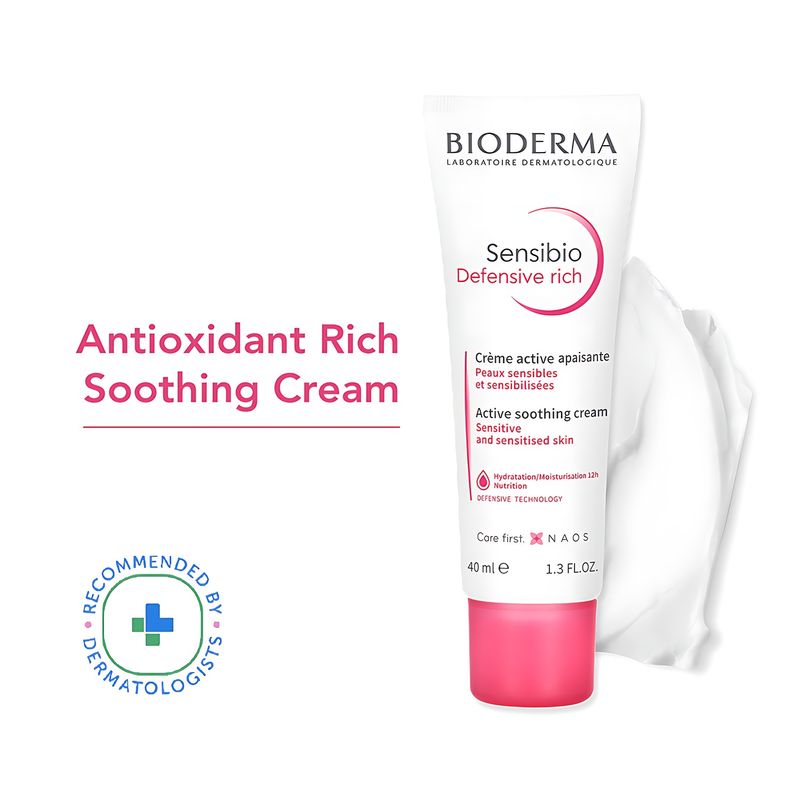
Bioderma Sensibio Defensive Rich Soothing 12hr Moisturizer With Vitamin E - Sensitive Skin

Bioderma Sensibio Defensive Rich Soothing 12hr Moisturizer With Vitamin E - Sensitive Skin
Bioderma
bioderma-sensibio-defensive-rich-soothing-12hr-moisturizer-with-vitamin-e-sensitive-skin
Moisturize
10084944052517
Morning or Evening?
How often will you use this product?
Notes


Highlights
WHAT IS IT?
Rich Soothing 12hr Moisturizer with 16 key ingredients
FEATURES
Antioxidant protective action with carnosine and vitamin E, soothing action with polyphenols of red sage, fortifying barrier function with tetrapeptide-10
BEST FOR
sensitive
CHECKS
Who Is It For?
General Adults Sensitive SkinWhat Does It Help With?
Calms Skin Sensitivity Protects Against Environmental Aggressors Soothes Inflammation Fortifies Skin BarrierBudget
Affordable (under $30)How To Use
Which routine should it be used in?
Instructions:
Key Information


What Bioderma Says
Product Description:
Sensitive skin can have a dual origin: a natural sensitivity resulting from a biological dysfunction (sensitive skin) or a sensitivity induced by the environment and the way of life (sensitised skin). Resulting from advanced Bioderma research, defensive technology acts on these two types of sensitivity. This technology not only calms the symptoms associated with sensitivity, but strengthens the self-defence power of the skin and acts on the vicious circle of sensitive skin to provide long-term results. Results: Antioxidant protective action with the combination of carnosine and vitamin E. Soothing action with polyphenols of red sage which act on double inflammation (neurogenic and keratinocyte). Fortifying action of the barrier function to protect against attacks thanks to tetrapeptide-10.
About the Brand:
Ingredients Overview
Ingredients List
Aqua/Water/EAU,Glycerin,Dicaprylyl-Ether,Glycol-Palmitate,Butylene-Glycol,Cetyl-Palmitate,Glyceryl-Stearate-Citrate,Squalane,Sucrose-Stearate,Tridecyl-Trimellitate,Glyceryl-Dibehenate,Polysorbate-60,Pentylene-Glycol,Tribehenin,Glyceryl-Behenate,Acrylates/c10-30-Alkyl-Acrylate-Crosspolymer,Caprylyl-Glycol,Carnosine,Hydroxyethyl-Acrylate/sodium-Acryloyldimethyl-Taurate-Copolymer,Mannitol,Xylitol,Tocopherol,Salvia-Miltiorrhiza-Flower/Leaf/root-Extract,Rhamnose,Glycine-Soja-(soybean)-Oil,Sorbitan-Isostearate,Sodium-Hydroxide,Palmitoyl-Tetrapeptide-10
Key Ingredients
Carnosine, Vitamin E (Tocopherol), Polyphenols of red sage, Tetrapeptide-10
Ingredients Details
Aqua/water/eau
Common Name(s): Aqua/water/eau extract
DESCRIPTION
What It Does: Provides antioxidant protection, soothing anti-inflammatory effects, and skin-conditioning benefits through plant-derived polyphenols and phytochemicals.
Why It's Used: Plant extracts concentrate bioactive phytochemicals evolved for environmental protection — uv, microbial, and oxidative stressors — that translate to skin benefits.
How It Works: Polyphenols (flavonoids, phenolic acids) inhibit nf-κb-mediated inflammatory signaling, scavenge reactive oxygen species through electron donation, and chelate pro-oxidant metal ions to reduce oxidative skin damage.
Typically Found In: Serums,toners,moisturizers,masks,essences
TECHNICAL DETAILS
Primary Category: Botanical extracts
Secondary Functions: Antioxidant,anti-inflammatory
Application Areas:

Facial Skincare

Body Care
Hair Care
Beard Care
Color Cosmetics (Makeup)
Dietary/Oral Supplements
Typical Concentration Range: 0.1–10%
SOURCING & ETHICS
Vegan Status: Yes
Halal Status: Yes
Source Notes: Plant-derived extract; no animal components.
SKIN COMPATIBILITY
Irritancy Rating: 1
Comedogenicity Rating: 0
Sensitivity Concerns: Low sensitization potential at recommended use concentrations.
Safe for Sensitive Skin: Yes
SAFETY & COMPATIBILITY
Safety Profile: Well-characterized cosmetic ingredient with established safety profile. generally non-irritating at typical use concentrations. suitable for leave-on and rinse-off cosmetics.
Works Well With: Niacinamide,hyaluronic acid,vitamin c,ceramides
Avoid Combining With: Strong oxidizing agents
SCIENTIFIC NOTE
Plant secondary metabolites (flavonoids, terpenes, phenolic acids) are biosynthesized as defense compounds against uv, herbivores, and pathogens. their anti-inflammatory activity typically derives from competitive inhibition of cox-2 and 5-lox enzymes (ic50 1–50 µm), while antioxidant activity involves single electron transfer (set) and hydrogen atom transfer (hat) mechanisms with structure-dependent rate constants.
Last Verified: Cosing eu database; pcpc cosmetic ingredient safety reviews; phytochemical and ethnobotanical literature
Primary Sources: 2025-01-15
Carnosine
Common Name(s): Beta-alanyl-l-histidine,n-beta-alanyl-l-histidine dipeptide
CAS Number: 305-84-0
DESCRIPTION
What It Does: Provides anti-glycation and anti-carbonylation activity protecting collagen from glycation-induced crosslinking.
Why It's Used: Natural anti-age dipeptide targeting glycation — complementary to antioxidant-only anti-aging strategies with documented collagen protection.
How It Works: Histidine imidazole chelates cu²⁺ for antioxidant metal chelation. beta-alanine traps reactive carbonyl species (glycating aldehydes). quenches 4-hydroxynonenal (hne) protein carbonylation. anti-glycation via competing with lysine residues.
Typically Found In: Anti-aging serums,anti-glycation products,longevity skincare
TECHNICAL DETAILS
Primary Category: Active ingredient – antioxidant
Secondary Functions: Free radical scavenging,anti-aging
Application Areas:
Facial Skincare
Body Care
Hair Care
Beard Care
Color Cosmetics (Makeup)
Dietary/Oral Supplements
Typical Concentration Range: 0.5%–5%
SOURCING & ETHICS
Vegan Status: Yes – synthetic
Halal Status: Yes
Source Notes: Plant-derived extract or synthetic.
SKIN COMPATIBILITY
Irritancy Rating: 1/5 – very low
Comedogenicity Rating: 0/5 – non-comedogenic
Sensitivity Concerns: Non-irritating; well-tolerated.
Safe for Sensitive Skin: Yes
SAFETY & COMPATIBILITY
Safety Profile: Excellent safety profile. ewg score: 1.
Works Well With: Vitamin c,vitamin e,ferulic acid,spf,other antioxidants
Avoid Combining With: No significant incompatibilities
SCIENTIFIC NOTE
Carnosine's anti-glycation mechanism is sacrificial carbonyl trapping: reactive carbonyl species (methylglyoxal, glyoxal) that would normally glycate collagen lysines are instead captured by carnosine's free amino groups — carnosine acts as a sacrificial protector for collagen, being consumed in the process of preventing more damaging collagen glycation.
Last Verified: Cosing database,guiotto et al. carnosine anti-glycation review
Primary Sources: 2026-03-12
Glycerin
Common Name(s): Glycerol,glycerine,1,2,3-propanetriol
CAS Number: 56-81-5
DESCRIPTION
What It Does: Glycerin pulls water from the environment and deeper skin layers into the outer skin layer (epidermis), boosting moisture levels and keeping skin soft, smooth, and plump.
Why It's Used: It is used in virtually every moisturizer, serum, and cleanser because it is highly effective at hydrating skin, is well-tolerated by all skin types, and enhances the texture and spreadability of formulations.
How It Works: As a humectant, glycerin forms hydrogen bonds with water molecules, trapping them in the skin. it also reinforces the skin barrier by integrating into lipid structures between skin cells.
Typically Found In: Moisturizers,serums,cleansers,toners,sheet masks,sunscreens,body lotions,shampoos,conditioners
TECHNICAL DETAILS
Primary Category: Humectant
Secondary Functions: Skin barrier support,emollient,solvent
Application Areas:
Facial Skincare
Body Care
Hair Care
Beard Care
Color Cosmetics (Makeup)
Dietary/Oral Supplements
Typical Concentration Range: 1%–30% (typical: 3–10%)
SOURCING & ETHICS
Vegan Status: Yes – plant-derived (coconut, soy, palm) or synthetic
Halal Status: Yes – when plant-derived or synthetic; verify source with supplier
Source Notes: Derived from plant oils via hydrolysis or saponification; synthetic versions also available. palm-derived glycerin carries sustainability concerns.
SKIN COMPATIBILITY
Irritancy Rating: 1/5 – very low; non-irritating at all standard concentrations
Comedogenicity Rating: 0/5 – non-comedogenic
Sensitivity Concerns: Extremely rare allergic reactions; generally safe for all skin types including sensitive and baby skin
Safe for Sensitive Skin: Yes
SAFETY & COMPATIBILITY
Safety Profile: Widely recognized as safe. ewg hazard score: 1. no significant concerns for irritation, sensitization, or toxicity at typical concentrations (up to 50%).
Works Well With: Hyaluronic acid,ceramides,niacinamide,panthenol,urea,peptides,retinol,ahas/bhas
Avoid Combining With: No known incompatibilities at standard concentrations
SCIENTIFIC NOTE
Glycerin is an endogenous skin component found naturally in the stratum corneum. aquaporin-3 channels in keratinocytes facilitate glycerin transport, making it integral to natural skin hydration pathways.
Last Verified: Cosing database,cir safety assessment,ewg skin deep,inci decoder
Primary Sources: 2026-03-12
Mannitol
Common Name(s): D-mannitol,manna sugar,mannite
CAS Number: 69-65-8
DESCRIPTION
What It Does: Provides exceptional hydroxyl radical scavenging antioxidant protection alongside humectant moisture retention.
Why It's Used: Used for potent hydroxyl radical scavenging where standard antioxidants (tocopherol, ascorbic acid) are less effective, combined with humectant activity.
How It Works: 6 hydroxyl groups provide both water binding (humectant) and direct hydroxyl radical (.oh) scavenging. hydroxyl radicals are the most reactive and damaging free radicals – mannitol is one of few compounds that scavenges them directly.
Typically Found In: Antioxidant formulations,premium moisturizers,protective skincare
TECHNICAL DETAILS
Primary Category: Functional ingredient – sugar alcohol / free radical scavenger
Secondary Functions: Free radical scavenger,superior antioxidant
Application Areas:
Facial Skincare
Body Care
Hair Care
Beard Care
Color Cosmetics (Makeup)
Dietary/Oral Supplements
Typical Concentration Range: 1%–10%
SOURCING & ETHICS
Vegan Status: Yes – plant-derived or synthetic
Halal Status: Yes
Source Notes: Plant-derived from ash tree manna, seaweed, mushrooms, or produced by reduction of mannose. gras food-approved.
SKIN COMPATIBILITY
Irritancy Rating: 1/5 – very low
Comedogenicity Rating: 0/5 – non-comedogenic
Sensitivity Concerns: Non-irritating; suitable for all skin types.
Safe for Sensitive Skin: Yes
SAFETY & COMPATIBILITY
Safety Profile: Excellent safety profile. ewg score: 1.
Works Well With: Ceramides,emollients,occlusives,glycerin,hyaluronic acid
Avoid Combining With: No significant incompatibilities
SCIENTIFIC NOTE
Mannitol's rate constant for hydroxyl radical scavenging (k = 1.4 × 10^7 m^-1s^-1) makes it one of the most effective biological hydroxyl radical scavengers. this is important because hydroxyl radicals cannot be scavenged by standard antioxidants like tocopherol or ascorbic acid.
Last Verified: Cosing database,halliwell et al. free radical scavenging,cir safety assessment
Primary Sources: 2026-03-12
