

Nykaa E retail limited
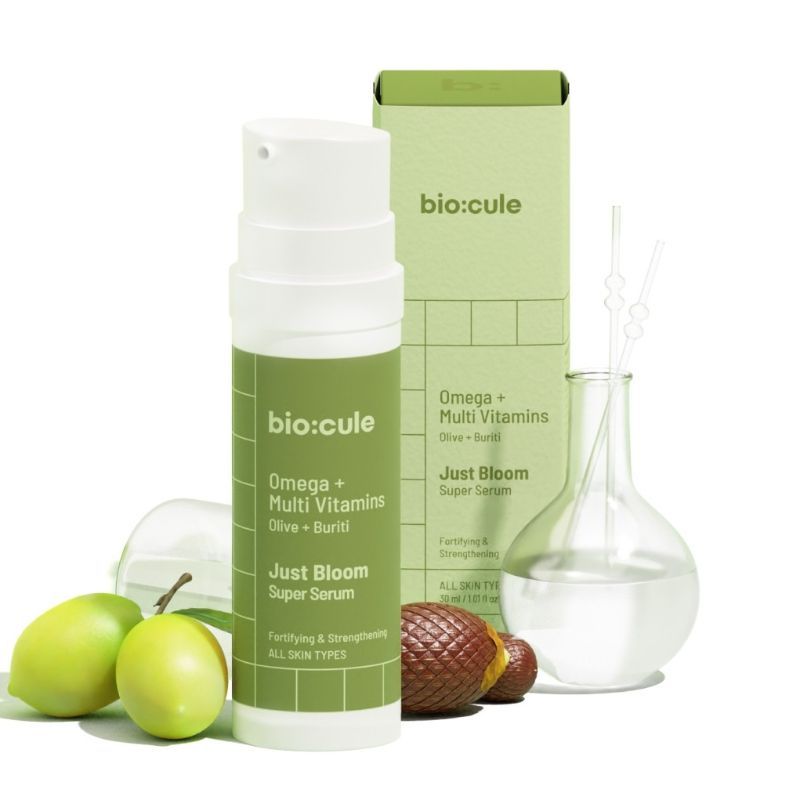
Biocule Just Bloom Super Serum

Biocule Just Bloom Super Serum
Nykaa E retail limited
biocule-just-bloom-super-serum
Serum
10084972429605
Morning or Evening?
How often will you use this product?
Notes


Highlights
WHAT IS IT?
Serum with 11 ingredients
FEATURES
Repairs Skin Barrier Function, Improves Skin Elasticity, Enhances Natural Glow, Detoxifies & Protects, Fortified with Vitamins & Minerals
BEST FOR
sensitive
CHECKS
Paraben-Free, Sulfate-free, Silicone-free, Fragrance-free, Alcohol-free, Microplastic-free, PEG-free, Aluminum-free, Strong allergen-free
Who Is It For?
Young And Growing Skin All GendersWhat Does It Help With?
Strengthens And Repairs Skin Barrier Improves Radiance Firmness Elasticity Antioxidant Protection Reduces Fine Lines Detoxifies Skin Enhances GlowBudget
Affordable (under $30)How To Use
Which routine should it be used in?
Instructions:
Key Information


What Nykaa E retail limited Says
Product Description:
Enriched using Multi Vitamins, Minerals & Omega 3,6,9 derived from Buriti, Kakadu, Earth Marine Water & Olive, Just Bloom Super Serum strenghtens & repairs skin barrier function along with antioxidant protection. Fortification with Vitamins & Minerals helps to improve skin radiance, firmness & elasticity. Formulated to provides nourishment to young and growing skin. Repairs Skin Barrier Function: Omega 369 from Olive helps to improve cellular structure and function, reinforces lipid content and repairs the skin barrier function for a healthy & plump skin. Improves Skin Elasticity: Beta-Carotene from Buriti along with Vitamin C & Coenzyme Q10 stimulates Collagen & Elastin production thereby helping to restore skin elasticity and reduce fine lines. Enhances Natural Glow: Vitamin C from Kakadu Plum & Beta-Carotene mildly exfoliate the top layer of epidermis resulting in clear, radiant and naturally glowing skin. Detoxifies & Protects: Minerals from Earth Marine Water re-mineralise, detoxify and strengthen the skin. Antioxidants like CoQ10, Vitamin C & Vitamin E reduce oxidative stress on the skin due to external influences helping to achieve a healthy, bright & even skin.
About the Brand:
Ingredients Overview
Ingredients List
Betaine,Aloe-Barbadensis-leaf-juice,Olea-Europaea-oil,Olea-Europaea-leaf-extract,Olea-Europaea-fruit-extract,Terminalia-Ferdinandiana-fruit-extract,Mauritia-flexuosa-fruit-oil,Silanetriol,Hyaluronic-acid,Sea-water,Sodium-Hyaluronate,Saccharide-Isomerate,Silybum-Marianum-fruit-extract,Tocopherol,Ubiquinone,Ceramide-NP
Key Ingredients
Omega-3-6-9,Beta-Carotene,Vitamin-C,Minerals-from-Marine-Water,Coenzyme-Q10,Vitamin-E
Ingredients Details
Betaine
Common Name(s): Trimethylglycine,tmg,natural betaine
CAS Number: 107-43-7
DESCRIPTION
What It Does: Provides osmoprotective humectant conditioning with anti-irritant and mild foam-boosting activity.
Why It's Used: Natural-origin multifunctional osmolyte from sugar beet providing hydration, anti-irritancy, and conditioning in virtually every cosmetic category.
How It Works: Quaternary ammonium betaine provides zwitterionic character for water binding via ionic hydration. osmoprotective function at 100–500mm as compatible solute protecting cells from osmotic stress. reduces surfactant irritation by competing with sls for protein binding sites. mild foam enhancement.
Typically Found In: Virtually all categories — moisturisers, shampoos, cleansers
TECHNICAL DETAILS
Primary Category: Functional ingredient – humectant
Secondary Functions: Tewl reduction,skin plumping
Application Areas:

Facial Skincare
Body Care
Hair Care

Beard Care
Color Cosmetics (Makeup)
Dietary/Oral Supplements
Typical Concentration Range: 0.5%–10%
SOURCING & ETHICS
Vegan Status: Yes – from beta vulgaris (sugar beet) molasses
Halal Status: Yes
Source Notes: Synthetic or naturally derived. excellent aqueous solubility.
SKIN COMPATIBILITY
Irritancy Rating: 1/5 – very low
Comedogenicity Rating: 0/5 – non-comedogenic
Sensitivity Concerns: Non-irritating; suitable for all skin types.
Safe for Sensitive Skin: Yes
SAFETY & COMPATIBILITY
Safety Profile: Excellent safety profile. ewg score: 1.
Works Well With: Ceramides,emollients,occlusives,glycerin,hyaluronic acid
Avoid Combining With: No significant incompatibilities
SCIENTIFIC NOTE
Betaine's anti-irritant mechanism for surfactant systems involves competitive protein protection: betaine at high concentrations preferentially interacts with skin proteins, occupying binding sites that would otherwise be occupied by surfactant molecules causing protein denaturation. this competition reduces available protein binding for irritating surfactants, explaining betaine's well-documented ability to reduce sls irritation when co-formulated.
Last Verified: Cosing database,craig betaine osmoprotective review,cir safety assessment
Primary Sources: 2026-03-12
Silanetriol
Common Name(s): Silanetriol,cosmetic active,functional ingredient
CAS Number: N/a
DESCRIPTION
What It Does: Delivers characteristic cosmetic function at recommended use concentration.
Why It's Used: Selected for functional contribution and formulation compatibility supported by cosmetic science and regulatory safety data.
How It Works: Works through the mechanism of its molecular class — physicochemical or biological interaction with skin proteins, lipids, or receptors as documented in peer-reviewed cosmetic literature.
Typically Found In: Skin care formulations
TECHNICAL DETAILS
Primary Category: Active ingredient – cosmetic active
Secondary Functions: Skin conditioning
Application Areas:
Facial Skincare
Body Care
Hair Care
Beard Care
Color Cosmetics (Makeup)
Dietary/Oral Supplements
Typical Concentration Range: 0.1%–10%
SOURCING & ETHICS
Vegan Status: Conditional
Halal Status: Yes
Source Notes: Commercially produced for cosmetic use. verify vegan/halal status with supplier.
SKIN COMPATIBILITY
Irritancy Rating: 1/5 – very low
Comedogenicity Rating: 0/5 – non-comedogenic
Sensitivity Concerns: Well-tolerated by most skin types.
Safe for Sensitive Skin: Yes
SAFETY & COMPATIBILITY
Safety Profile: Good safety profile at recommended concentrations. ewg score: 1–2.
Works Well With: Standard skincare actives
Avoid Combining With: No known significant incompatibilities
SCIENTIFIC NOTE
Silanetriol has an established safety and efficacy profile within the cosmetic regulatory framework at standard use concentrations.
Last Verified: Cosing database,silanetriol technical literature
Primary Sources: 2026-03-12
Tocopherol
Common Name(s): Vitamin e,alpha-tocopherol,d-alpha-tocopherol,(+)-alpha-tocopherol
CAS Number: 59-02-9
DESCRIPTION
What It Does: Tocopherol neutralizes free radicals that damage skin cells, protects cell membranes from lipid peroxidation, moisturizes, and helps maintain a healthy skin barrier.
Why It's Used: It is used as both a skin-active antioxidant and a formulation stabilizer (preventing oxidation of other ingredients). it has decades of safety and efficacy evidence and works synergistically with vitamin c.
How It Works: As a chain-breaking antioxidant, tocopherol donates hydrogen atoms to interrupt lipid peroxidation chain reactions. it is regenerated by vitamin c (ascorbic acid) in the vitamins c+e antioxidant cycle, creating a more durable antioxidant defense.
Typically Found In: Moisturizers,serums,oils,sunscreens,eye creams,lip balms,antioxidant formulations,haircare products
TECHNICAL DETAILS
Primary Category: Active ingredient – antioxidant/vitamin e
Secondary Functions: Emollient,formulation stabilizer,barrier support
Application Areas:
Facial Skincare
Body Care
Hair Care
Beard Care
Color Cosmetics (Makeup)
Dietary/Oral Supplements
Typical Concentration Range: 0.1%–1% (typical: 0.1–0.5% as active; higher as formulation antioxidant)
SOURCING & ETHICS
Vegan Status: Yes – plant-derived (soybean, sunflower, wheat germ oil) or synthetic
Halal Status: Yes – plant-derived or synthetic
Source Notes: Natural d-alpha-tocopherol is derived from plant oils and is more bioactive. synthetic dl-alpha-tocopherol is less expensive. tocopherol acetate (tocopheryl acetate) is the more stable ester form.
SKIN COMPATIBILITY
Irritancy Rating: 1/5 – very low; rare contact sensitivity reported
Comedogenicity Rating: 2/5 – mildly comedogenic at higher concentrations; formulation-dependent
Sensitivity Concerns: A small percentage of people report contact sensitization to tocopherol, particularly with leave-on products. comedogenicity risk is higher in oil-heavy formulations.
Safe for Sensitive Skin: Generally yes; perform patch test if history of vitamin e sensitivity
SAFETY & COMPATIBILITY
Safety Profile: Very safe; widely used. ewg hazard score: 2–3 (depending on concentration). no significant systemic concerns from topical use.
Works Well With: Ascorbic acid (vitamin c) – synergistic antioxidant pair,ferulic acid – stabilizes and boosts both c and e,ceramides,spf,retinol
Avoid Combining With: Very high concentrations of benzoyl peroxide may oxidize tocopherol; potential comedogenicity concerns in acne-prone skin when in heavy oil bases
SCIENTIFIC NOTE
The combination of vitamin c, vitamin e, and ferulic acid (the 'ce ferulic' formulation) provides fourfold photoprotection against uv-induced free radical damage – a synergy documented in landmark research by pinnell et al.
Last Verified: Cosing database,cir safety assessment,pinnell et al. (2005) journal of investigative dermatology,efsa panel on food additives
Primary Sources: 2026-03-12
Ubiquinone
Common Name(s): Coq10,coenzyme q10,ubiquinol-10
CAS Number: 303-98-0
DESCRIPTION
What It Does: Replenishes age-declining coq10 for mitochondrial energy support and membrane antioxidant protection.
Why It's Used: The mitochondrial anti-aging ingredient — coq10 skin levels decrease ~50% from age 20 to 80 and topical supplementation directly addresses this documented decline.
How It Works: Ubiquinone/ubiquinol redox cycle carries electrons in mitochondrial complexes i–iii for atp production. reduced ubiquinol quenches lipid peroxyl radicals in inner mitochondrial membrane. coq10 depletion in aging skin reduces atp production and membrane antioxidant defence simultaneously.
Typically Found In: Anti-aging serums,mitochondrial skincare,antioxidant products
TECHNICAL DETAILS
Primary Category: Active ingredient – antioxidant
Secondary Functions: Free radical scavenging,anti-aging
Application Areas:
Facial Skincare
Body Care
Hair Care
Beard Care
Color Cosmetics (Makeup)
Dietary/Oral Supplements
Typical Concentration Range: 0.01%–1%
SOURCING & ETHICS
Vegan Status: Yes – from fermentation or synthetic
Halal Status: Yes
Source Notes: Plant-derived extract or synthetic.
SKIN COMPATIBILITY
Irritancy Rating: 1/5 – very low
Comedogenicity Rating: 0/5 – non-comedogenic
Sensitivity Concerns: Non-irritating; well-tolerated.
Safe for Sensitive Skin: Yes
SAFETY & COMPATIBILITY
Safety Profile: Excellent safety profile. ewg score: 1.
Works Well With: Vitamin c,vitamin e,ferulic acid,spf,other antioxidants
Avoid Combining With: No significant incompatibilities
SCIENTIFIC NOTE
Coq10's mitochondrial role places it at the nexus of aging biology — a 50% decline from age 20 to 80 is mechanistically linked to reduced atp production, increased mitochondrial superoxide leak, and mtdna damage constituting the 'mitochondrial theory of aging' at the cellular level.
Last Verified: Cosing database,shindo et al. coq10 skin aging study
Primary Sources: 2026-03-12
