

REN Clean Skincare
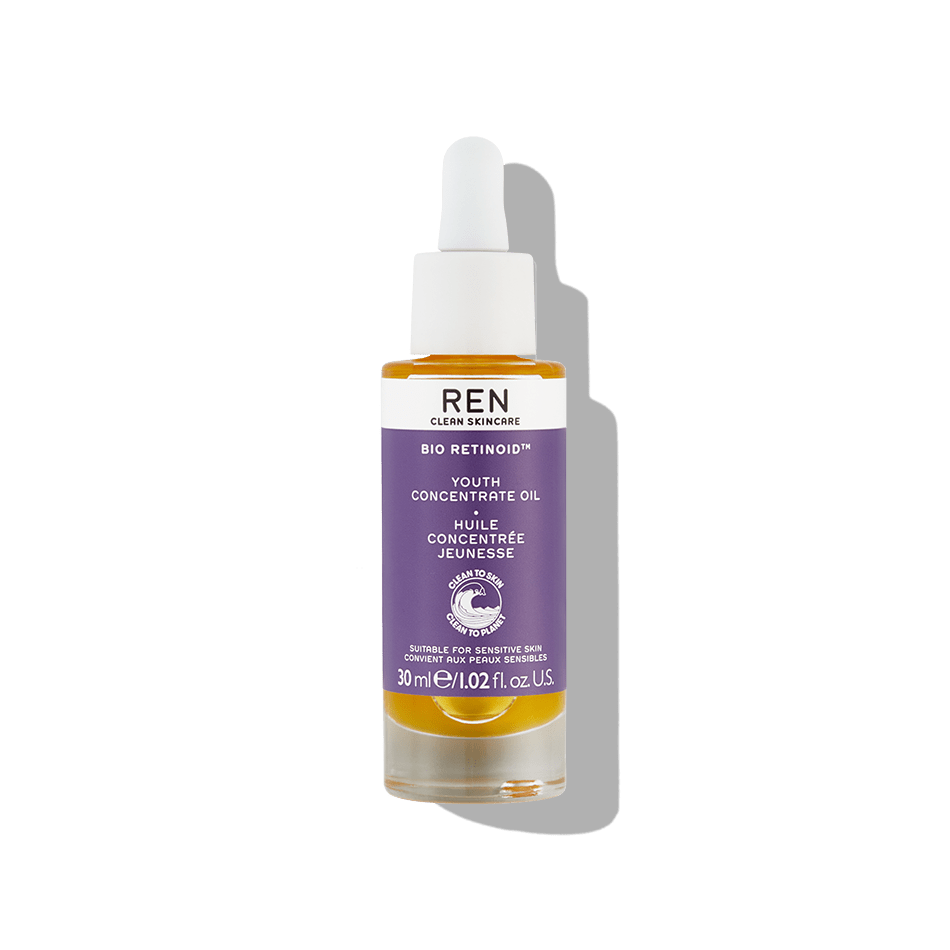
Bio Retinoid Youth Concentrate Oil

Bio Retinoid Youth Concentrate Oil
REN Clean Skincare
bio-retinoid-youth-concentrate-oil
Face Oil
9706856972581
Morning or Evening?
How often will you use this product?
Notes


Highlights
WHAT IS IT?
Anti-aging face oil with plant-derived retinol alternative
FEATURES
Visibly firms and nourishes skin, suitable for sensitive skin, can be used twice daily
BEST FOR
Dry, mature skin
CHECKS
Clean beauty, free of synthetic fragrances or colors, silicones, sulfates, PEGs, parabens, urea, TEA/DEA
Who Is It For?
Adults Women And MenWhat Does It Help With?
Fine Lines Wrinkles DrynessBudget
PremiumHow To Use
Which routine should it be used in?
Instructions:
Key Information


What REN Clean Skincare Says
Product Description:
Our Bio Retinoid™ Youth Concentrate Oil is an anti-aging retinol-alternative face oil, powered by a complex of key anti-aging actives to deliver visibly firmer and deeply nourished skin in 28 days
About the Brand:
Ingredients Overview
Ingredients List
Rosa Canina Fruit Oil, Glycine Soja Oil, Elaeis Guineensis Oil, Gossypium Herbaceum Seed Oil, Bidens Pilosa Extract, Parfum, Hippophae Rhamnoides Oil, Linum Usitatissimum Seed Oil, Tocopherol, Linalool, Helianthus Annuus Seed Oil, Rosmarinus Officinalis Leaf Extract.
Key Ingredients
Bidens Pilosa Extract, Organic Rosehip Oil, Sea Buckthorn Oil
Ingredients Details
Bidens Pilosa Extract
Common Name(s): Bidens pilosa extract,bidens pilosa extract,botanical extract,phytochemical active
CAS Number: N/a
DESCRIPTION
What It Does: Provides antioxidant protection from polyphenol radical scavenging, anti-inflammatory activity from terpenoid nf-kb/cox pathway inhibition, and multi-active skin conditioning from the botanical secondary metabolite complex.
Why It's Used: Bidens pilosa extract is selected for the characteristic secondary metabolite signature of bidens pilosa — whether polyphenols, terpenoids, alkaloids, or polysaccharides, the phytochemical profile provides antioxidant, anti-inflammatory, or skin conditioning benefits specific to this botanical species.
How It Works: Botanical secondary metabolites provide: polyphenol catechol h-atom donation for ros scavenging; terpenoid ikb kinase inhibition blocking nf-kb; flavonoid cox-1/2 competitive inhibition reducing prostaglandins; alkaloid/iridoid receptor-specific modulation for targeted skin benefit.
Typically Found In: Botanical skin care
TECHNICAL DETAILS
Primary Category: Active ingredient – antioxidant
Secondary Functions: Free radical scavenging,anti-aging
Application Areas:

Facial Skincare
Body Care

Hair Care
Beard Care
Color Cosmetics (Makeup)
Dietary/Oral Supplements
Typical Concentration Range: 0.1%–10%
SOURCING & ETHICS
Vegan Status: Conditional
Halal Status: Conditional
Source Notes: Plant-derived extract or synthetic.
SKIN COMPATIBILITY
Irritancy Rating: 1/5 – very low
Comedogenicity Rating: 0/5 – non-comedogenic
Sensitivity Concerns: Non-irritating; well-tolerated.
Safe for Sensitive Skin: Yes
SAFETY & COMPATIBILITY
Safety Profile: Excellent safety profile. ewg score: 1.
Works Well With: Vitamin c,vitamin e,ferulic acid,spf,other antioxidants
Avoid Combining With: No significant incompatibilities
SCIENTIFIC NOTE
Extract standardisation to active marker compounds ensures consistent bioactivity — field-harvested plant material varies 3-10x in secondary metabolite content. standardised extracts provide reproducible clinical outcomes.
Last Verified: Cosing database,bidens pilosa extract botanical extract review
Primary Sources: 2026-03-22
Elaeis Guineensis Oil
Common Name(s): Elaeis guineensis oil,botanical oil,phytochemical active
CAS Number: N/a
DESCRIPTION
What It Does: Provides antioxidant protection from reactive oxygen species, reduces inflammatory cytokine production in skin, and conditions skin through the plant's phytochemical complex.
Why It's Used: Natural origin narrative, traditional use heritage, and multi-functional phytochemical profile supporting concurrent skin care claims from one ingredient.
How It Works: Polyphenols, terpenoids, and alkaloids scavenge ros via h• donation, inhibit nf-kb or cox-2 inflammatory pathways, and interact with skin surface proteins for conditioning.
Typically Found In: Botanical skin care,natural products
TECHNICAL DETAILS
Primary Category: Active ingredient – antioxidant
Secondary Functions: Free radical scavenging,anti-aging
Application Areas:
Facial Skincare
Body Care
Hair Care
Beard Care
Color Cosmetics (Makeup)
Dietary/Oral Supplements
Typical Concentration Range: 0.1%–10%
SOURCING & ETHICS
Vegan Status: Conditional
Halal Status: Yes
Source Notes: Plant-derived extract or synthetic.
SKIN COMPATIBILITY
Irritancy Rating: 1/5 – very low
Comedogenicity Rating: 0/5 – non-comedogenic
Sensitivity Concerns: Non-irritating; well-tolerated.
Safe for Sensitive Skin: Yes
SAFETY & COMPATIBILITY
Safety Profile: Excellent safety profile. ewg score: 1.
Works Well With: Vitamin c,vitamin e,ferulic acid,spf,other antioxidants
Avoid Combining With: No significant incompatibilities
SCIENTIFIC NOTE
Plant secondary metabolites evolved as photoprotectants and antimicrobials — mechanisms directly applicable to cosmetic antioxidant and anti-inflammatory activity in human skin.
Last Verified: Cosing database,elaeis guineensis oil botanical review
Primary Sources: 2026-03-12
Glycine Soja Oil
Common Name(s): Glycine soja oil,botanical oil,phytochemical active
CAS Number: N/a
DESCRIPTION
What It Does: Provides antioxidant protection from reactive oxygen species, reduces inflammatory cytokine production in skin, and conditions skin through the plant's phytochemical complex.
Why It's Used: Natural origin narrative, traditional use heritage, and multi-functional phytochemical profile supporting concurrent skin care claims from one ingredient.
How It Works: Polyphenols, terpenoids, and alkaloids scavenge ros via h• donation, inhibit nf-kb or cox-2 inflammatory pathways, and interact with skin surface proteins for conditioning.
Typically Found In: Botanical skin care,natural products
TECHNICAL DETAILS
Primary Category: Active ingredient – antioxidant
Secondary Functions: Free radical scavenging,anti-aging
Application Areas:
Facial Skincare
Body Care
Hair Care
Beard Care
Color Cosmetics (Makeup)
Dietary/Oral Supplements
Typical Concentration Range: 0.1%–10%
SOURCING & ETHICS
Vegan Status: Conditional
Halal Status: Yes
Source Notes: Plant-derived extract or synthetic.
SKIN COMPATIBILITY
Irritancy Rating: 1/5 – very low
Comedogenicity Rating: 0/5 – non-comedogenic
Sensitivity Concerns: Non-irritating; well-tolerated.
Safe for Sensitive Skin: Yes
SAFETY & COMPATIBILITY
Safety Profile: Excellent safety profile. ewg score: 1.
Works Well With: Vitamin c,vitamin e,ferulic acid,spf,other antioxidants
Avoid Combining With: No significant incompatibilities
SCIENTIFIC NOTE
Plant secondary metabolites evolved as photoprotectants and antimicrobials — mechanisms directly applicable to cosmetic antioxidant and anti-inflammatory activity in human skin.
Last Verified: Cosing database,glycine soja oil botanical review
Primary Sources: 2026-03-12
Gossypium Herbaceum Seed Oil
Common Name(s): Gossypium herbaceum seed oil,gossypium herbaceum seed oil,botanical oil/butter,emollient efa source
CAS Number: N/a
DESCRIPTION
What It Does: Provides emollient conditioning from sc-compatible fatty acid triglycerides supporting barrier lipid supplementation and ceramide precursor delivery.
Why It's Used: Gossypium herbaceum seed oil is selected for the distinctive triglyceride fatty acid profile of gossypium herbaceum — the specific oleic, linoleic, and saturated fatty acid ratio determines the spreading speed, occlusion level, and sc barrier integration properties unique to this botanical oil.
How It Works: Fatty acid triglycerides integrate into sc: oleic (c18:1) provides fluid emolliency; linoleic (c18:2) serves as ceramide precursor; gamma-linolenic (c18:3 n-6) provides anti-inflammatory benefit.
Typically Found In: Skin care,barrier repair
TECHNICAL DETAILS
Primary Category: Active ingredient – antioxidant
Secondary Functions: Free radical scavenging,anti-aging
Application Areas:
Facial Skincare
Body Care
Hair Care
Beard Care
Color Cosmetics (Makeup)
Dietary/Oral Supplements
Typical Concentration Range: 0.5%–30%
SOURCING & ETHICS
Vegan Status: Conditional
Halal Status: Conditional
Source Notes: Plant-derived extract or synthetic.
SKIN COMPATIBILITY
Irritancy Rating: 1/5 – very low
Comedogenicity Rating: 0/5 – non-comedogenic
Sensitivity Concerns: Non-irritating; well-tolerated.
Safe for Sensitive Skin: Yes
SAFETY & COMPATIBILITY
Safety Profile: Excellent safety profile. ewg score: 1.
Works Well With: Vitamin c,vitamin e,ferulic acid,spf,other antioxidants
Avoid Combining With: No significant incompatibilities
SCIENTIFIC NOTE
Verify specific oil's efa composition and oxidative stability index for target application.
Last Verified: Cosing database,gossypium herbaceum seed oil botanical oil review
Primary Sources: 2026-03-22
