
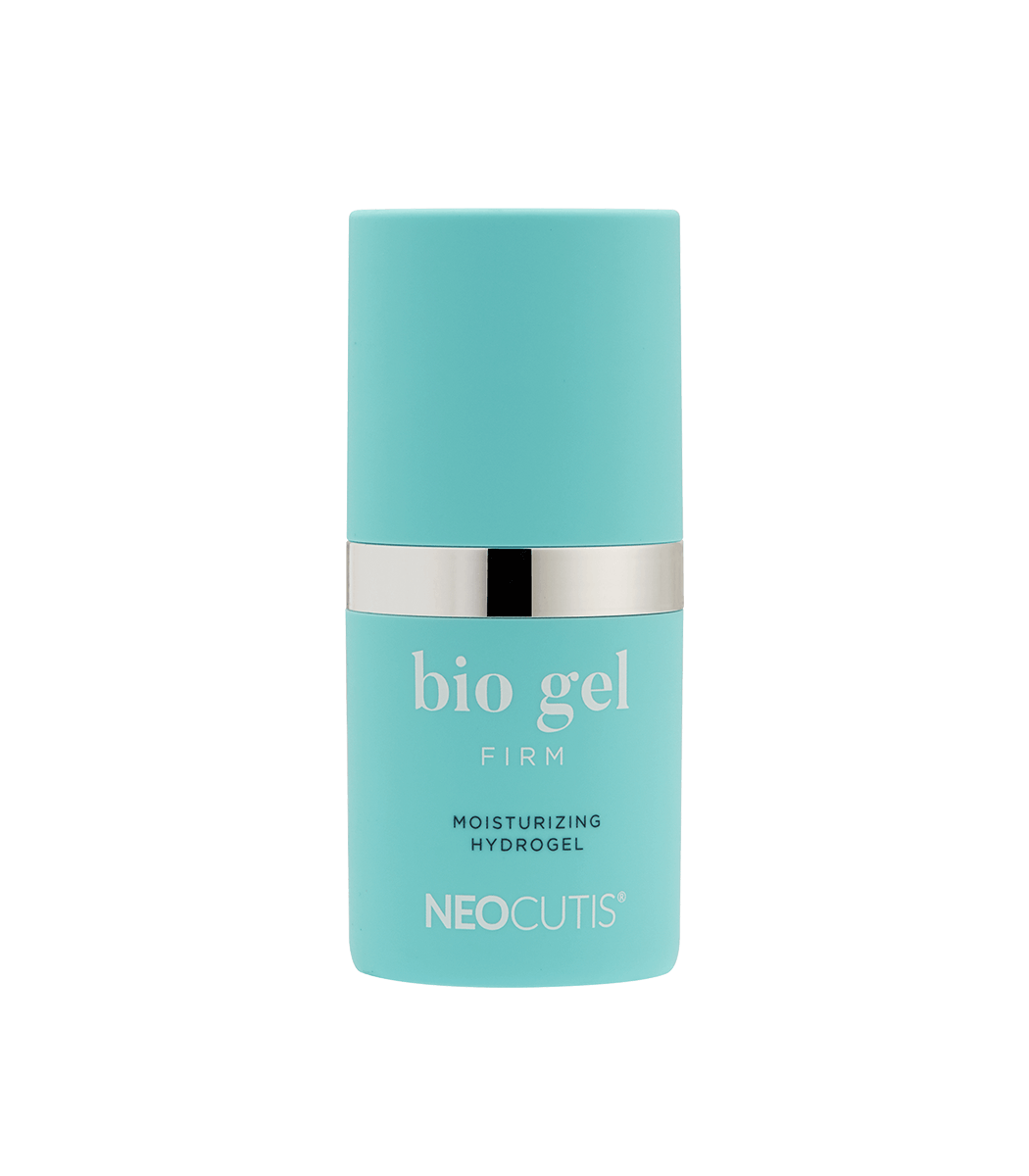

NEOCUTIS
BIO GEL FIRM

BIO GEL FIRM
NEOCUTIS
bio-gel-firm
Moisturize
9643591500069
Morning or Evening?
How often will you use this product?
Notes


Highlights
WHAT IS IT?
A hydrogel moisturizer with multiple ingredients
FEATURES
Lightweight, anti-aging, skin-plumping, improves skin tone and texture
BEST FOR
Oily, Normal, Combination skin types
CHECKS
Free of color additives, fragrance-free
Who Is It For?
Men And Women Age Range Not Specified (default Above 18)What Does It Help With?
Fine Lines And Wrinkles Sagginess Oiliness Acne-prone SkinBudget
PremiumHow To Use
Which routine should it be used in?
Instructions:
Key Information


What NEOCUTIS Says
Product Description:
A lightweight, anti-aging hydrogel formulation that provides skin-plumping hydration, helps support collagen and elastin production and improves skin tone and texture. Skin feels smoother and tighter and looks brighter and healthier after just 14 days.
About the Brand:
Ingredients Overview
Ingredients List
Water (Aqua), Butylene Glycol, Glycerin, Tetrapeptide-21, Palmitoyl Tripeptide-1 Acetate, Cutaneous Lysate, Sodium Hyaluronate, Chondrus Crispus (Carrageenan) Extract, Peg-40 Hydrogenated Castor Oil, Ppg-26-Buteth-26, Carbomer, Caprylyl Glycol, Peg-8, Potassium Sorbate, Hexylene Glycol, Sodium Polyacrylate, Capryloyl Carnosine, Disodium Edta, Sodium Hydroxide, Phenoxyethanol
Key Ingredients
Growth Factors, Proprietary Peptides, Sodium Hyaluronate, Glycerin
Ingredients Details
Butylene Glycol
Common Name(s): 1,3-butanediol,bg,1,3-butylene glycol
CAS Number: 107-88-0
DESCRIPTION
What It Does: Provides humectant hydration and active ingredient solubilization with excellent skin feel.
Why It's Used: Preferred glycol humectant in premium and k-beauty formulations for superior skin feel vs propylene glycol with equivalent functionality.
How It Works: Two hydroxyl groups at 1,3-positions provide water binding and solvent activity. better tolerated than propylene glycol with minimal sensitization risk. 4-carbon backbone provides slightly greater hydrophobic character enabling dissolution of less polar actives vs pg.
Typically Found In: Toners,essences,serums,k-beauty formulas
TECHNICAL DETAILS
Primary Category: Functional ingredient – glycol humectant
Secondary Functions: Tewl reduction,skin plumping
Application Areas:

Facial Skincare
Body Care
Hair Care

Beard Care
Color Cosmetics (Makeup)
Dietary/Oral Supplements
Typical Concentration Range: 1%–10%
SOURCING & ETHICS
Vegan Status: Yes – synthetic
Halal Status: Yes
Source Notes: Synthetic or naturally derived. excellent aqueous solubility.
SKIN COMPATIBILITY
Irritancy Rating: 1/5 – very low
Comedogenicity Rating: 0/5 – non-comedogenic
Sensitivity Concerns: Non-irritating; suitable for all skin types.
Safe for Sensitive Skin: Yes
SAFETY & COMPATIBILITY
Safety Profile: Excellent safety profile. ewg score: 1.
Works Well With: Ceramides,emollients,occlusives,glycerin,hyaluronic acid
Avoid Combining With: No significant incompatibilities
SCIENTIFIC NOTE
K-beauty's preference for butylene glycol over propylene glycol is driven by two factors: bg's superior skin feel (less tacky than pg's higher viscosity) and its lower sensitization potential (1,3-bg has better spatial distribution of hydroxyl groups that reduces protein interaction vs pg's 1,2-position oh groups).
Last Verified: 2026-03-12
Primary Sources: Cosing database,cir safety assessment
Cutaneous Lysate
Common Name(s): Cutaneous lysate,cutaneous lysate,multi-organism postbiotic ferment,biotransformed active filtrate
CAS Number: N/a
DESCRIPTION
What It Does: Provides acid mantle ph support, biotransformed substrate actives with improved sc penetration, and multi-organism-specific metabolites for skin conditioning.
Why It's Used: Postbiotic ferments deliver microbiome-active benefits in a stable preservable cosmetic format without the cold-chain requirements of live probiotic formulations.
How It Works: Multi-organism fermentation: enzyme biotransformation of substrate polyphenol glycosides to bioavailable aglycones; organic acid acid-mantle reinforcement; organism-specific secondary metabolite production.
Typically Found In: Microbiome skin care,postbiotic
TECHNICAL DETAILS
Primary Category: Active ingredient – skin microbiome support
Secondary Functions: Microbiome balance,prebiotic effect
Application Areas:
Facial Skincare
Body Care
Hair Care
Beard Care
Color Cosmetics (Makeup)
Dietary/Oral Supplements
Typical Concentration Range: 0.5%–15%
SOURCING & ETHICS
Vegan Status: Yes
Halal Status: Yes
Source Notes: Fermentation-derived or plant-extracted.
SKIN COMPATIBILITY
Irritancy Rating: 1/5 – very low
Comedogenicity Rating: 0/5 – non-comedogenic
Sensitivity Concerns: Non-irritating; beneficial for sensitive skin.
Safe for Sensitive Skin: Yes
SAFETY & COMPATIBILITY
Safety Profile: Excellent safety profile. ewg score: 1.
Works Well With: Ceramides,niacinamide,soothing actives
Avoid Combining With: No significant incompatibilities
SCIENTIFIC NOTE
Substrate selection determines supplementary bioactive output beyond the organism's inherent metabolite profile.
Last Verified: 2026-03-22
Primary Sources: Cosing database,multi-organism postbiotic ferment review
Glycerin
Common Name(s): Glycerol,glycerine,1,2,3-propanetriol
CAS Number: 56-81-5
DESCRIPTION
What It Does: Glycerin pulls water from the environment and deeper skin layers into the outer skin layer (epidermis), boosting moisture levels and keeping skin soft, smooth, and plump.
Why It's Used: It is used in virtually every moisturizer, serum, and cleanser because it is highly effective at hydrating skin, is well-tolerated by all skin types, and enhances the texture and spreadability of formulations.
How It Works: As a humectant, glycerin forms hydrogen bonds with water molecules, trapping them in the skin. it also reinforces the skin barrier by integrating into lipid structures between skin cells.
Typically Found In: Moisturizers,serums,cleansers,toners,sheet masks,sunscreens,body lotions,shampoos,conditioners
TECHNICAL DETAILS
Primary Category: Humectant
Secondary Functions: Skin barrier support,emollient,solvent
Application Areas:
Facial Skincare
Body Care
Hair Care
Beard Care
Color Cosmetics (Makeup)
Dietary/Oral Supplements
Typical Concentration Range: 1%–30% (typical: 3–10%)
SOURCING & ETHICS
Vegan Status: Conditional - feedstock declaration required
Halal Status: Unverified - feedstock declaration required (plant, animal and petrochemical routes all exist)
Source Notes: Derived from plant oils via hydrolysis or saponification; synthetic versions also available. palm-derived glycerin carries sustainability concerns. [audit 2026-07-29 rev2: origin-dependent: the same inci exists in plant, animal and petrochemical versions and the name does not discriminate. determination requires shariah-panel sign-off.]
SKIN COMPATIBILITY
Irritancy Rating: 1/5 – very low; non-irritating at all standard concentrations
Comedogenicity Rating: 0/5 – non-comedogenic
Sensitivity Concerns: Extremely rare allergic reactions; generally safe for all skin types including sensitive and baby skin
Safe for Sensitive Skin: Yes
SAFETY & COMPATIBILITY
Safety Profile: Widely recognized as safe. ewg hazard score: 1. no significant concerns for irritation, sensitization, or toxicity at typical concentrations (up to 50%).
Works Well With: Hyaluronic acid,ceramides,niacinamide,panthenol,urea,peptides,retinol,ahas/bhas
Avoid Combining With: No known incompatibilities at standard concentrations
SCIENTIFIC NOTE
Glycerin is an endogenous skin component found naturally in the stratum corneum. aquaporin-3 channels in keratinocytes facilitate glycerin transport, making it integral to natural skin hydration pathways.
Last Verified: 2026-03-12
Primary Sources: Cosing database,cir safety assessment,ewg skin deep,inci decoder
Palmitoyl Tripeptide-1 Acetate
Common Name(s): Palmitoyl tripeptide-1 acetate,palmitoyl tripeptide-1 acetate,palmitoyl-anchored tripeptide signal peptide,sc-penetrating anti-aging active
CAS Number: N/a
DESCRIPTION
What It Does: Delivers signal peptide anti-aging activity to the dermis via sc lipid-phase partitioning — the palmitoyl anchor providing 10-100× deeper penetration to reach fibroblast collagen synthesis receptors compared to unanchored peptide sequences.
Why It's Used: Palmitoyl anchoring is the most validated approach for signal peptide sc delivery — the c16 chain provides the optimal length for sc lipid bilayer integration without excessive lipophilicity that would trap the peptide in the sc before reaching dermal fibroblasts.
How It Works: Palmitoyl c16 amide bond: raises peptide logp by ~3 units → sc lamellar lipid partitioning → lateral diffusion toward dermis → skin amidase cleavage → free active peptide + palmitic acid. released peptide → tgf-β/integrin/collagen receptor binding → smad/fak → col1a1/col3a1 upregulation + mmp-1/mmp-3 downregulation.
Typically Found In: Anti-aging serums,collagen products
TECHNICAL DETAILS
Primary Category: Active ingredient – peptide
Secondary Functions: Collagen synthesis,anti-aging
Application Areas:
Facial Skincare
Body Care
Hair Care
Beard Care
Color Cosmetics (Makeup)
Dietary/Oral Supplements
Typical Concentration Range: 1–5000 ppm
SOURCING & ETHICS
Vegan Status: Yes
Halal Status: Yes
Source Notes: Synthetically produced via solid-phase peptide synthesis (spps).
SKIN COMPATIBILITY
Irritancy Rating: 1/5 – very low
Comedogenicity Rating: 0/5 – non-comedogenic
Sensitivity Concerns: Non-irritating at recommended concentrations.
Safe for Sensitive Skin: Yes
SAFETY & COMPATIBILITY
Safety Profile: Excellent safety profile. ewg score: 1.
Works Well With: Retinoids,niacinamide,vitamin c,hyaluronic acid
Avoid Combining With: Strong acids below ph 3.5; oxidising agents
SCIENTIFIC NOTE
Palmitoyl peptide benchmark: palmitoyl-lys-val-lys (pal-kvk, kttks parent) is the reference palmitoyl pentapeptide showing 300% collagen synthesis increase in clinical studies — all numbered palmitoyl peptides are designed for similar or superior collagen stimulation at equivalent concentrations.
Last Verified: 2026-03-22
Primary Sources: Cosing database,palmitoyl tripeptide-1 acetate palmitoyl peptide sc-penetrating review