

BIO-ESSENCE
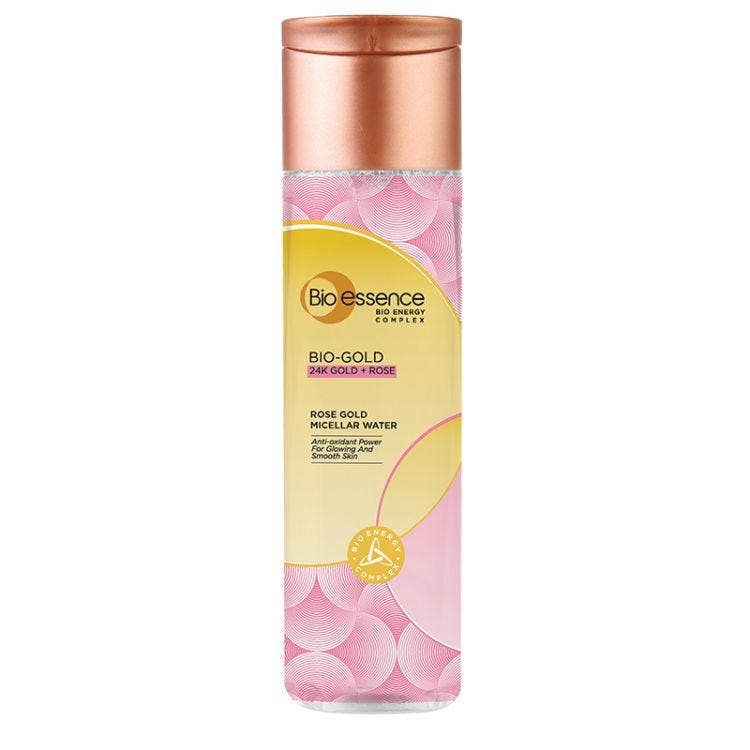
Bio Essence Bio Gold 24K Gold Rose Micellar Water 190Ml

Bio Essence Bio Gold 24K Gold Rose Micellar Water 190Ml
BIO-ESSENCE
bio-essence-bio-gold-24k-gold-rose-micellar-water-190ml
Cleanse
10084971544869
Morning or Evening?
How often will you use this product?
Notes


Highlights
WHAT IS IT?
Micellar water with 25 ingredients
FEATURES
Gently removes waterproof makeup, dirt and impurities, leaves skin refreshed and hydrated
BEST FOR
sensitive
CHECKS
No parabens, No sulfates, No alcohol
Who Is It For?
All Ages All GendersWhat Does It Help With?
Makeup Removal Cleansing HydrationBudget
Affordable (under $30)How To Use
Which routine should it be used in?
Instructions:
Key Information


What BIO-ESSENCE Says
Product Description:
Bio Gold Rose Gold Micellar Water gently removes waterproof makeup, dirt and impurities, leaving skin refreshed and hydrated
About the Brand:
Ingredients Overview
Ingredients List
water,propanediol,peg-6-caprylic/capric-glycerides,peg-7-glyceryl-cocoate,betaine,sodium-pca,glycerin,xanthan-gum,sodium-hyaluronate,biosaccharide-gum-4,niacinamide,euglena-gracilis-extract,pentylene-glycol,rosa-damascena-flower-water,rosa-damascena-flower-oil,tocopherol,disodium-edta,sodium-citrate,citric-acid,lysine,isoleucine,hydroxyproline,gold,glycine,glutamine,cysteine,fragrance,phenoxyethanol,chlorphesin
Key Ingredients
24K gold, rosa damascena flower water, niacinamide, sodium hyaluronate
Ingredients Details
Betaine
Common Name(s): Trimethylglycine,tmg,natural betaine
CAS Number: 107-43-7
DESCRIPTION
What It Does: Provides osmoprotective humectant conditioning with anti-irritant and mild foam-boosting activity.
Why It's Used: Natural-origin multifunctional osmolyte from sugar beet providing hydration, anti-irritancy, and conditioning in virtually every cosmetic category.
How It Works: Quaternary ammonium betaine provides zwitterionic character for water binding via ionic hydration. osmoprotective function at 100–500mm as compatible solute protecting cells from osmotic stress. reduces surfactant irritation by competing with sls for protein binding sites. mild foam enhancement.
Typically Found In: Virtually all categories — moisturisers, shampoos, cleansers
TECHNICAL DETAILS
Primary Category: Functional ingredient – humectant
Secondary Functions: Tewl reduction,skin plumping
Application Areas:

Facial Skincare
Body Care
Hair Care

Beard Care
Color Cosmetics (Makeup)
Dietary/Oral Supplements
Typical Concentration Range: 0.5%–10%
SOURCING & ETHICS
Vegan Status: Conditional - feedstock declaration required
Halal Status: Unverified - feedstock declaration required (plant, animal and petrochemical routes all exist)
Source Notes: Synthetic or naturally derived. excellent aqueous solubility. [audit 2026-07-29 rev2: origin-dependent: the same inci exists in plant, animal and petrochemical versions and the name does not discriminate. determination requires shariah-panel sign-off.]
SKIN COMPATIBILITY
Irritancy Rating: 1/5 – very low
Comedogenicity Rating: 0/5 – non-comedogenic
Sensitivity Concerns: Non-irritating; suitable for all skin types.
Safe for Sensitive Skin: Yes
SAFETY & COMPATIBILITY
Safety Profile: Excellent safety profile. ewg score: 1.
Works Well With: Ceramides,emollients,occlusives,glycerin,hyaluronic acid
Avoid Combining With: No significant incompatibilities
SCIENTIFIC NOTE
Betaine's anti-irritant mechanism for surfactant systems involves competitive protein protection: betaine at high concentrations preferentially interacts with skin proteins, occupying binding sites that would otherwise be occupied by surfactant molecules causing protein denaturation. this competition reduces available protein binding for irritating surfactants, explaining betaine's well-documented ability to reduce sls irritation when co-formulated.
Last Verified: 2026-03-12
Primary Sources: Cosing database,craig betaine osmoprotective review,cir safety assessment
Cysteine
Common Name(s): L-cysteine,2-amino-3-mercaptopropanoic acid
CAS Number: 52-90-4
DESCRIPTION
What It Does: Provides sulfur for keratin disulfide bonds, supports glutathione antioxidant synthesis, and directly scavenges free radicals.
Why It's Used: Hair strengthening via keratin disulfide bond support and antioxidant defense as a glutathione precursor.
How It Works: Thiol group (-sh) forms disulfide bonds (-s-s-) between adjacent keratin chains providing mechanical strength to hair and nails. glutathione synthase uses cysteine as the rate-limiting substrate for the master antioxidant glutathione.
Typically Found In: Hair strengthening treatments,keratin products,antioxidant formulations
TECHNICAL DETAILS
Primary Category: Active ingredient – amino acid
Secondary Functions: Keratin disulfide bond,glutathione precursor
Application Areas:
Facial Skincare
Body Care
Hair Care
Beard Care
Color Cosmetics (Makeup)
Dietary/Oral Supplements
Typical Concentration Range: 0.1%–2%
SOURCING & ETHICS
Vegan Status: Conditional - feedstock declaration required
Halal Status: Unverified - feedstock declaration required (plant, animal and petrochemical routes all exist)
Source Notes: Fermentation-derived or synthetic. natural skin component. [audit 2026-07-29 rev2: origin-dependent: the same inci exists in plant, animal and petrochemical versions and the name does not discriminate. determination requires shariah-panel sign-off.]
SKIN COMPATIBILITY
Irritancy Rating: 1/5 – very low
Comedogenicity Rating: 0/5 – non-comedogenic
Sensitivity Concerns: Non-irritating; endogenous skin molecule.
Safe for Sensitive Skin: Yes
SAFETY & COMPATIBILITY
Safety Profile: Excellent safety profile. natural skin nmf component. ewg score: 1.
Works Well With: Hyaluronic acid,ceramides,peptides,other amino acids
Avoid Combining With: No significant incompatibilities
SCIENTIFIC NOTE
Hair's mechanical strength (tensile and torsional) is primarily determined by the density of disulfide crosslinks between adjacent keratin alpha-helices. chemical treatments (bleaching, perming) break these bonds; cysteine topical application may support their restoration.
Last Verified:
Fragrance
Common Name(s): Fragrance ingredient,eu allergen or aromatic component,olfactory/flavour
CAS Number: N/a
DESCRIPTION
What It Does: Provides the complete fragrance profile contributing to product sensory experience and consumer appeal.
Why It's Used: Fragrance is a major consumer purchase driver — up to 70% of consumers make purchasing decisions partially based on product scent.
How It Works: Fragrance blends interact with olfactory receptors providing the sensory profile — complex mixtures activate multiple receptor types for rich, multidimensional scent experiences.
Typically Found In: All fragrance products
TECHNICAL DETAILS
Primary Category: Active ingredient – cosmetic active
Secondary Functions: Skin conditioning
Application Areas:
Facial Skincare
Body Care
Hair Care
Beard Care
Color Cosmetics (Makeup)
Dietary/Oral Supplements
Typical Concentration Range: Standard use levels
SOURCING & ETHICS
Vegan Status: Conditional - supplier confirmation required
Halal Status: Unverified - supplier confirmation required
Source Notes: Commercially produced for cosmetic use. verify vegan/halal status with supplier. [audit 2026-07-29 rev2: the record's own source_notes does not assert a non-animal origin, or instructs the reader to verify with the supplier; "yes" asserts knowledge the record does not hold. determination requires shariah-panel sign-off.]
SKIN COMPATIBILITY
Irritancy Rating: 1/5 – very low
Comedogenicity Rating: 0/5 – non-comedogenic
Sensitivity Concerns: Well-tolerated by most skin types.
Safe for Sensitive Skin: Yes
SAFETY & COMPATIBILITY
Safety Profile: Good safety profile at recommended concentrations. ewg score: 1–2.
Works Well With: Standard skincare actives
Avoid Combining With: No known significant incompatibilities
SCIENTIFIC NOTE
Ifra guidelines set usage limits for fragrance ingredients based on skin sensitisation and phototoxicity assessment for each application category.
Last Verified: 2026-03-12
Primary Sources: Eu regulation 1223/2009 annex iii,ifra standards,fragrance allergen declaration requirements
Glutamine
Common Name(s): L-glutamine,2-amino-4-carbamoylbutanoic acid
CAS Number: 56-85-9
DESCRIPTION
What It Does: Provides critical fuel for wound-healing keratinocytes and antioxidant glutathione precursor activity.
Why It's Used: Key wound healing amino acid providing cellular fuel for keratinocyte proliferation and glutathione precursor for antioxidant defense.
How It Works: Primary fuel for rapidly dividing cells (keratinocytes, fibroblasts) via conversion to alpha-ketoglutarate for krebs cycle. also substrate for glutathione synthesis (with cysteine and glycine) for antioxidant defense.
Typically Found In: Wound healing products,post-procedure recovery
TECHNICAL DETAILS
Primary Category: Active ingredient – amino acid
Secondary Functions: Wound healing,glutathione precursor
Application Areas:
Facial Skincare
Body Care
Hair Care
Beard Care
Color Cosmetics (Makeup)
Dietary/Oral Supplements
Typical Concentration Range: 0.5%–5%
SOURCING & ETHICS
Vegan Status: Conditional - supplier confirmation required
Halal Status: Unverified - supplier confirmation required
Source Notes: Fermentation-derived or synthetic. natural skin component. [audit 2026-07-29 rev2: status downgraded on audit. determination requires shariah-panel sign-off.]
SKIN COMPATIBILITY
Irritancy Rating: 1/5 – very low
Comedogenicity Rating: 0/5 – non-comedogenic
Sensitivity Concerns: Non-irritating; endogenous skin molecule.
Safe for Sensitive Skin: Yes
SAFETY & COMPATIBILITY
Safety Profile: Excellent safety profile. natural skin nmf component. ewg score: 1.
Works Well With: Hyaluronic acid,ceramides,peptides,other amino acids
Avoid Combining With: No significant incompatibilities
SCIENTIFIC NOTE
Glutamine is conditionally essential under stress conditions (surgery, trauma, burns) where local demand exceeds synthesis capacity. in skin wounds, glutamine becomes the primary fuel for keratinocyte proliferation – supplementation accelerates re-epithelialization in clinical studies.
Last Verified: 2026-03-12
Primary Sources: Cosing database,cir safety assessment,wernerman glutamine wound healing review