

Biluma
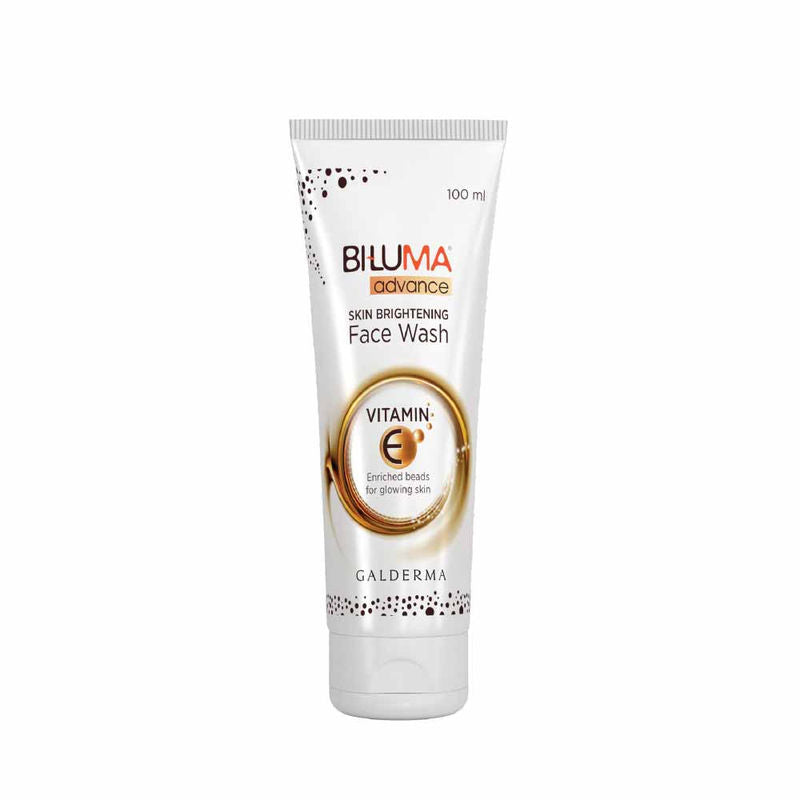
Biluma Advance Skin Brightening Face Wash

Biluma Advance Skin Brightening Face Wash
Biluma
biluma-advance-skin-brightening-face-wash
Cleanse
10084947755301
Morning or Evening?
How often will you use this product?
Notes


Highlights
WHAT IS IT?
Face wash, 6 key ingredients
FEATURES
Gently cleanses, brightens, hydrates, maintains pH balance of 5.5, soap-free formulation, suitable for all skin types
BEST FOR
all skin types
CHECKS
Soap-free
Who Is It For?
What Does It Help With?
Brightening Hydration Pimple And Blemish Protection Pore CleansingBudget
Mid-range ($30-$75)How To Use
Which routine should it be used in?
Instructions:
Key Information


What Biluma Says
Product Description:
Biluma Advance Skin Brightening Face Wash gently cleanses, brightens, and hydrates the skin. It gives you glowing skin. It helps maintain the skin's pH balance of 5.5. Formulated with celsphere technology, it comes in a soap-free formulation. This product is suitable for all skin types. Features: Face wash that cleanses and brightens your skin, Enriched with vitamin E and aloe vera, Helps to balance and maintain the pH level of skin, Protects the skin against pimples and blemishes, Helps to unclog and cleanse the pores, Hydrates the skin making it soft and supple, Gives you bright and radiant-looking skin, Comes in the soap-free formulation, Suitable for all skin types.
About the Brand:
Ingredients Overview
Ingredients List
Vitamin-E-Beads,Aloe-Vera,Arbutin,Tetrahydrocurcumin,Licorice-Extract,Panthenol
Key Ingredients
Vitamin E Beads, Aloe Vera, Arbutin, Tetrahydrocurcumin, Licorice Extract, Panthenol
Ingredients Details
Arbutin
Common Name(s): Arbutin,cosmetic active,functional ingredient
CAS Number: N/a
DESCRIPTION
What It Does: Delivers characteristic cosmetic function — skin conditioning, protection, preservation, or active biological benefit — at recommended use concentration.
Why It's Used: Selected for its functional contribution and formulation compatibility — supported by cosmetic science literature and regulatory safety assessment.
How It Works: Works through the mechanism of its molecular class — physicochemical interaction with the formulation or biological interaction with skin proteins, lipids, or receptors as documented in peer-reviewed literature.
Typically Found In: Skin care formulations
TECHNICAL DETAILS
Primary Category: Active ingredient – cosmetic active
Secondary Functions: Skin conditioning
Application Areas:

Facial Skincare

Body Care
Hair Care
Beard Care
Color Cosmetics (Makeup)
Dietary/Oral Supplements
Typical Concentration Range: 0.1%–10%
SOURCING & ETHICS
Vegan Status: Conditional - supplier confirmation required
Halal Status: Unverified - supplier confirmation required
Source Notes: Commercially produced for cosmetic use. verify vegan/halal status with supplier. [audit 2026-07-29 rev2: the record's own source_notes does not assert a non-animal origin, or instructs the reader to verify with the supplier; "yes" asserts knowledge the record does not hold. determination requires shariah-panel sign-off.]
SKIN COMPATIBILITY
Irritancy Rating: 1/5 – very low
Comedogenicity Rating: 0/5 – non-comedogenic
Sensitivity Concerns: Well-tolerated by most skin types.
Safe for Sensitive Skin: Yes
SAFETY & COMPATIBILITY
Safety Profile: Good safety profile at recommended concentrations. ewg score: 1–2.
Works Well With: Standard skincare actives
Avoid Combining With: No known significant incompatibilities
SCIENTIFIC NOTE
Arbutin delivers documented functional benefit with an established safety profile within the cosmetic regulatory framework (cosing eu, cir usa).
Last Verified:
Panthenol
Common Name(s): Provitamin b5,d-panthenol,dl-panthenol,d-pantothenyl alcohol,(r)-2,4-dihydroxy-n-(3-hydroxypropyl)-3,3-dimethylbutanamide
DESCRIPTION
What It Does: Panthenol deeply moisturizes skin and hair, soothes irritation, accelerates wound healing, strengthens the skin barrier, and improves hair elasticity and shine.
Why It's Used: It is used because it is exceptionally versatile, working in both skin and hair formulations. it is gentle enough for sensitive and post-procedure skin, and converts to the active vitamin b5 within the skin.
How It Works: Panthenol penetrates skin and hair, where it is oxidized to pantothenic acid (vitamin b5), a coenzyme a precursor essential to metabolism. in skin, it acts as a humectant and stimulates fibroblast proliferation. in hair, it coats the shaft, improving manageability.
Typically Found In: Moisturizers,serums,toners,after-sun products,wound healing products,shampoos,conditioners,hair masks,beard care
TECHNICAL DETAILS
Primary Category: Active ingredient – provitamin b5
Secondary Functions: Anti-inflammatory,wound healing,hair conditioning
Application Areas:
Facial Skincare
Body Care
Hair Care
Beard Care
Color Cosmetics (Makeup)
Dietary/Oral Supplements
Typical Concentration Range: 0.5%–5% (typical: 1–3%)
SOURCING & ETHICS
Vegan Status: Conditional - supplier confirmation required
Halal Status: Unverified - supplier confirmation required
Source Notes: Commercially synthesized. both d- and dl-forms used in cosmetics; d-panthenol is the biologically active isomer but dl-panthenol is less expensive and widely used. [audit 2026-07-29 rev2: the record's own source_notes does not assert a non-animal origin, or instructs the reader to verify with the supplier; "yes" asserts knowledge the record does not hold. determination requires shariah-panel sign-off.]
SKIN COMPATIBILITY
Irritancy Rating: 1/5 – very low; one of the most soothing ingredients in cosmetics
Comedogenicity Rating: 0/5 – non-comedogenic
Sensitivity Concerns: Extremely rare contact allergy; considered one of the safest cosmetic ingredients. suitable for all skin types.
Safe for Sensitive Skin: Yes – ideal for sensitive, reactive, and post-procedure skin
SAFETY & COMPATIBILITY
Safety Profile: Exceptionally safe. ewg hazard score: 1. no significant concerns for irritation, sensitization, or systemic toxicity. safe during pregnancy.
Works Well With: Hyaluronic acid,ceramides,allantoin,niacinamide,centella asiatica,retinol (reduces irritation),glycerin
Avoid Combining With: No known significant incompatibilities
SCIENTIFIC NOTE
Panthenol has demonstrated wound-healing properties in clinical studies, stimulating fibroblast proliferation and migration. its dual humectant and anti-inflammatory action makes it particularly effective in barrier-repair formulations.
Last Verified: 2026-03-12
Primary Sources: Cosing database,cir safety assessment,ebner et al. (2002) skin pharmacology and applied skin physiology
Tetrahydrocurcumin
Common Name(s): Thc,colorless curcumin,hydrogenated curcumin
DESCRIPTION
What It Does: Provides curcumin-equivalent antioxidant and brightening activity without yellow colouration.
Why It's Used: Formulation-practical curcumin — tetrahydrocurcumin provides curcumin's antioxidant and brightening activity without the yellow colour that limits curcumin's formulation concentration.
How It Works: Hydrogenation of curcumin's michael acceptor double bonds produces colourless tetrahydrocurcumin. superior antioxidant vs curcumin from increased polyphenol phenol hydroxyl groups available for radical scavenging. better tyrosinase inhibition than curcumin (ic50 ~10μg/ml). formulation-stable white powder.
Typically Found In: Brightening serums,antioxidant products,formulation-practical curcumin
TECHNICAL DETAILS
Primary Category: Active ingredient – brightening / tyrosinase inhibitor
Secondary Functions: Melanin inhibition,hyperpigmentation reduction
Application Areas:
Facial Skincare
Body Care
Hair Care
Beard Care
Color Cosmetics (Makeup)
Dietary/Oral Supplements
Typical Concentration Range: 0.1%–3%
SOURCING & ETHICS
Vegan Status: Yes – from curcumin (hydrogenated)
Halal Status: Yes
Source Notes: Synthetic or plant-derived.
SKIN COMPATIBILITY
Irritancy Rating: 1/5 – very low
Comedogenicity Rating: 0/5 – non-comedogenic
Sensitivity Concerns: Non-irritating; well-tolerated.
Safe for Sensitive Skin: Yes
SAFETY & COMPATIBILITY
Safety Profile: Excellent safety profile. use with spf for maximum efficacy. ewg score: 1.
Works Well With: Niacinamide,vitamin c,alpha-arbutin,tranexamic acid,spf
Avoid Combining With: No significant incompatibilities
SCIENTIFIC NOTE
Tetrahydrocurcumin's superior antioxidant vs parent curcumin is counterintuitive: hydrogenation (reducing double bonds) normally reduces antioxidant activity by decreasing conjugation. however, curcumin's alpha-beta unsaturated ketone (michael acceptor) actually participates in alkylation reactions that consume antioxidant capacity. removing this michael acceptor by hydrogenation channels antioxidant activity exclusively through phenol radical scavenging, increasing net antioxidant efficiency.
Last Verified: ##########
Primary Sources: Cosing database,itokawa et al. tetrahydrocurcumin study