

BIJINALL
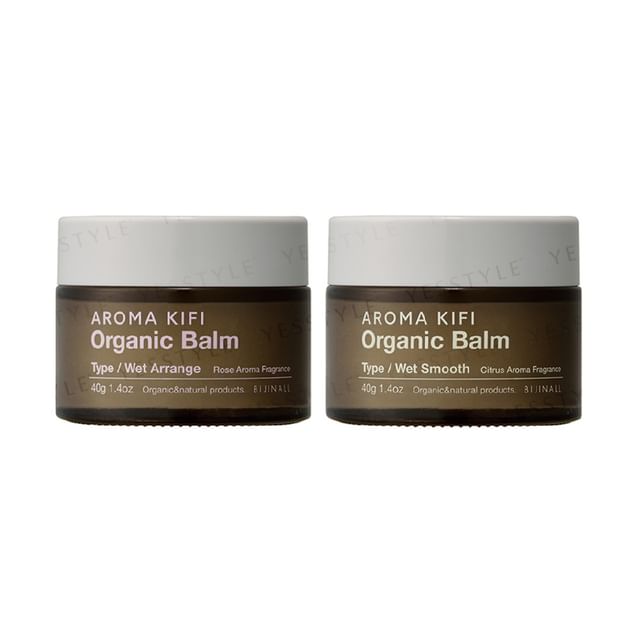
BIJINALL - AROMA KIFI Organic Balm Wet Arrange 40g
An organic hair balm formulated with over 95% natural ingredients, designed to add moderate hold and a wet look to medium to long hair. It also provides moisture and shine, and can be used on both hair and skin.
Natural
Silicone-free
Paraben-free
Frizz
Dryness
Curly
Optimized for Your Environment & Lifestyle
Nykaa
In stock
Recommended

BIJINALL - AROMA KIFI Organic Balm Wet Arrange 40g
BIJINALL
bijinall-aroma-kifi-organic-balm-wet-arrange-40g
Hair Styling Balm
10407577780517
Morning or Evening?
How often will you use this product?
Notes


Secure payment protection
Your Biodata Compatibility Analysis
Based on your 6 hair health indices and environmental factors
Poor Match
Significant incompatibilities
Growth Cycle Health Index
Hair Match
Hair Health Index Alignment
Optimal for OSI, SSI, DI, HSI
Ingredient Efficacy
Matching Ingredient Score
Environment Compatibility
Current UV, Air Quality & Humidity
Why This Works for Your Specific Profile
Damage Index:
Damage levels outside specified range may not benefit optimally from product formulation
Water Quality:
Hair:
Closed cuticles resist product penetration causing surface buildup without internal benefits
Active Lifestyle:
Low activity produces insufficient stress or buildup making product intensity unnecessarily harsh
Your Hair Profile Integration
Your Hair Archetype

Density Level

Washing Frequency

Shedding Level

Oil Level
Your Hair Health Indices
Oil Secretion (OSI)
Very low oil production
Scalp Sensitivity (SSI)
Very low sensitivity
Growth Rate (CMR)
Poor metabolism rate
Damage Index (DI)
Minimal damage
Hair Strength (HSI)
Very weak strength
Softness Index (SI)
Significant improvement needed
Water & Environmental Integration

Water:


Expected Results & Timeline
Key Highlights

What is it?
Hair styling balm with over 95% natural ingredients

Who Is It For
Adults

Budget
$20.50 - $41.00

Timeline
Immediate
Why You’ll Love It

What Does It Help With?
Frizz control, Moisture, Shine

Best for
Frizz

Features
Provides moderate hold and wet look, suitable for medium to long hair, can be used on hair and skin

Checks
Organic, Silicone-free, Paraben-free
Ingredients Overview
Ingredients List
lauric-acid-methylheptyl, beeswax, squalane, shea-butter, jojoba-seed-oil, dimer-dilinoleyl-dimer-dilinoleate-bis-behenyl-isostearyl-phytosteryl, argania-spinosa-kernel-oil, fragrance, avocado-oil, sesame-oil, camellia-seed-oil, apricot-kernel-oil, strawberry-seed-oil, tri-hydrogenated-rosin-glyceride, tocopherol
Key Ingredients
shea-butter, jojoba-seed-oil, argania-spinosa-kernel-oil
Ingredients Details
Beeswax
Common Name(s): Cera alba (white),cera flava (yellow),apis mellifera wax
CAS Number: 8012-89-3
DESCRIPTION
What It Does: Provides natural wax structure and emolliency for cosmetic texture and lip balm applications.
Why It's Used: The original cosmetic wax – provides natural, hard-texture structure for lip balms, sticks, and creams with emollient skin conditioning.
How It Works: Complex mixture of esters (wax esters), hydrocarbons (hentriacontane), and fatty acids provides semi-crystalline structure. melting point 62-65°c enables stable solid products. emulsifying capacity from free cerotic acid content.
Typically Found In: Lip balms,cosmetic sticks,creams,natural cosmetics
TECHNICAL DETAILS
Primary Category: Functional ingredient – natural wax
Secondary Functions: Natural wax structure,occlusive conditioning
Application Areas:

Facial Skincare

Body Care
Hair Care
Beard Care
Color Cosmetics (Makeup)
Dietary/Oral Supplements
Typical Concentration Range: 2%–30%
SOURCING & ETHICS
Vegan Status: No – honeybee-derived
Halal Status: Conditional – animal-derived; verify halal certification
Source Notes: Plant-derived, synthetic or animal-derived. verify source.
SKIN COMPATIBILITY
Irritancy Rating: 1/5 – very low
Comedogenicity Rating: 1/5 – low; formulation-dependent
Sensitivity Concerns: Non-irritating.
Safe for Sensitive Skin: Yes
SAFETY & COMPATIBILITY
Safety Profile: Excellent safety profile. ewg score: 1.
Works Well With: Humectants,ceramides,actives as carrier
Avoid Combining With: No significant incompatibilities
SCIENTIFIC NOTE
Beeswax's multi-component wax ester composition (myricyl palmitate as primary component) provides a unique crystalline structure that gives lip balms and cosmetic sticks their characteristic 'dragée' glide – different from synthetic wax esters that lack this crystalline lattice diversity.
Last Verified: Cosing database,cir safety assessment
Primary Sources: 2026-03-12
Fragrance
Common Name(s): Fragrance ingredient,eu allergen or aromatic component,olfactory/flavour
CAS Number: N/a
DESCRIPTION
What It Does: Provides the complete fragrance profile contributing to product sensory experience and consumer appeal.
Why It's Used: Fragrance is a major consumer purchase driver — up to 70% of consumers make purchasing decisions partially based on product scent.
How It Works: Fragrance blends interact with olfactory receptors providing the sensory profile — complex mixtures activate multiple receptor types for rich, multidimensional scent experiences.
Typically Found In: All fragrance products
TECHNICAL DETAILS
Primary Category: Active ingredient – cosmetic active
Secondary Functions: Skin conditioning
Application Areas:
Facial Skincare
Body Care
Hair Care
Beard Care
Color Cosmetics (Makeup)
Dietary/Oral Supplements
Typical Concentration Range: Standard use levels
SOURCING & ETHICS
Vegan Status: Conditional
Halal Status: Yes
Source Notes: Commercially produced for cosmetic use. verify vegan/halal status with supplier.
SKIN COMPATIBILITY
Irritancy Rating: 1/5 – very low
Comedogenicity Rating: 0/5 – non-comedogenic
Sensitivity Concerns: Well-tolerated by most skin types.
Safe for Sensitive Skin: Yes
SAFETY & COMPATIBILITY
Safety Profile: Good safety profile at recommended concentrations. ewg score: 1–2.
Works Well With: Standard skincare actives
Avoid Combining With: No known significant incompatibilities
SCIENTIFIC NOTE
Ifra guidelines set usage limits for fragrance ingredients based on skin sensitisation and phototoxicity assessment for each application category.
Last Verified: Eu regulation 1223/2009 annex iii,ifra standards,fragrance allergen declaration requirements
Primary Sources: 2026-03-12
Squalane
Common Name(s): Perhydrosqualene,2,6,10,15,19,23-hexamethyltetracosane
CAS Number: 0111-01-03
DESCRIPTION
What It Does: Provides endogenous-skin-identical emolliency with exceptional stability and skin compatibility.
Why It's Used: The most skin-compatible emollient – chemically identical to human sebum squalene component with outstanding tolerability across all skin types.
How It Works: Fully saturated hydrocarbon with zero oxidation sites provides exceptional stability unlike squalene's 6 double bonds. integrates into stratum corneum lipid bilayers with near-perfect biocompatibility. provides antioxidant protection to formulation via radical quenching.
Typically Found In: Facial oils,serums,non-comedogenic moisturizers,luxury body care
TECHNICAL DETAILS
Primary Category: Functional ingredient – emollient
Secondary Functions: Maximum biocompatibility,antioxidant stabilizer,non-comedogenic
Application Areas:
Facial Skincare
Body Care
Hair Care
Beard Care
Color Cosmetics (Makeup)
Dietary/Oral Supplements
Typical Concentration Range: 1%–100%
SOURCING & ETHICS
Vegan Status: Conditional – plant-derived (sugarcane, olive) preferred; shark liver-derived being phased out
Halal Status: Yes – plant-derived
Source Notes: Sustainable plant-derived squalane from sugarcane fermentation (amyris) or olive oil fractionation is preferred over shark liver-derived. chemically identical regardless of source.
SKIN COMPATIBILITY
Irritancy Rating: 1/5 – very low
Comedogenicity Rating: 0/5 – non-comedogenic
Sensitivity Concerns: Non-irritating.
Safe for Sensitive Skin: Yes
SAFETY & COMPATIBILITY
Safety Profile: Excellent safety profile. ewg score: 1.
Works Well With: Humectants,ceramides,actives as carrier
Avoid Combining With: No significant incompatibilities
SCIENTIFIC NOTE
Squalene constitutes approximately 12-15% of human sebum – the highest proportion of any skin lipid. topical squalane (stable, hydrogenated form) replenishes this abundant endogenous skin lipid. the complete absence of oxidizable double bonds (unlike squalene's 6 double bonds) eliminates the pro-oxidant concerns of natural squalene oxidation.
Last Verified: Cosing database,huang et al. squalane review,cir safety assessment
Primary Sources: 2026-03-12
Tocopherol
Common Name(s): Vitamin e,alpha-tocopherol,d-alpha-tocopherol,(+)-alpha-tocopherol
CAS Number: 59-02-9
DESCRIPTION
What It Does: Tocopherol neutralizes free radicals that damage skin cells, protects cell membranes from lipid peroxidation, moisturizes, and helps maintain a healthy skin barrier.
Why It's Used: It is used as both a skin-active antioxidant and a formulation stabilizer (preventing oxidation of other ingredients). it has decades of safety and efficacy evidence and works synergistically with vitamin c.
How It Works: As a chain-breaking antioxidant, tocopherol donates hydrogen atoms to interrupt lipid peroxidation chain reactions. it is regenerated by vitamin c (ascorbic acid) in the vitamins c+e antioxidant cycle, creating a more durable antioxidant defense.
Typically Found In: Moisturizers,serums,oils,sunscreens,eye creams,lip balms,antioxidant formulations,haircare products
TECHNICAL DETAILS
Primary Category: Active ingredient – antioxidant/vitamin e
Secondary Functions: Emollient,formulation stabilizer,barrier support
Application Areas:
Facial Skincare
Body Care
Hair Care
Beard Care
Color Cosmetics (Makeup)
Dietary/Oral Supplements
Typical Concentration Range: 0.1%–1% (typical: 0.1–0.5% as active; higher as formulation antioxidant)
SOURCING & ETHICS
Vegan Status: Yes – plant-derived (soybean, sunflower, wheat germ oil) or synthetic
Halal Status: Yes – plant-derived or synthetic
Source Notes: Natural d-alpha-tocopherol is derived from plant oils and is more bioactive. synthetic dl-alpha-tocopherol is less expensive. tocopherol acetate (tocopheryl acetate) is the more stable ester form.
SKIN COMPATIBILITY
Irritancy Rating: 1/5 – very low; rare contact sensitivity reported
Comedogenicity Rating: 2/5 – mildly comedogenic at higher concentrations; formulation-dependent
Sensitivity Concerns: A small percentage of people report contact sensitization to tocopherol, particularly with leave-on products. comedogenicity risk is higher in oil-heavy formulations.
Safe for Sensitive Skin: Generally yes; perform patch test if history of vitamin e sensitivity
SAFETY & COMPATIBILITY
Safety Profile: Very safe; widely used. ewg hazard score: 2–3 (depending on concentration). no significant systemic concerns from topical use.
Works Well With: Ascorbic acid (vitamin c) – synergistic antioxidant pair,ferulic acid – stabilizes and boosts both c and e,ceramides,spf,retinol
Avoid Combining With: Very high concentrations of benzoyl peroxide may oxidize tocopherol; potential comedogenicity concerns in acne-prone skin when in heavy oil bases
SCIENTIFIC NOTE
The combination of vitamin c, vitamin e, and ferulic acid (the 'ce ferulic' formulation) provides fourfold photoprotection against uv-induced free radical damage – a synergy documented in landmark research by pinnell et al.
Last Verified: Cosing database,cir safety assessment,pinnell et al. (2005) journal of investigative dermatology,efsa panel on food additives
Primary Sources: 2026-03-12
Personalized Usage Instructions
How to Use
Step 1
Take an appropriate amount (about the size of a small pea) and spread well with the palm of your hand before applying to hair and skin
Step 2
If the amount is too small, do not take too much at once, but gradually add more and apply to hair
Step 3
After applying to hair, it can be used directly on the skin
Medical Chemicals

Protein/Moisture
- Moisture
pH Level
- Acidic

Porosity Taget
- High Porosity
Customized for Your Profile
Scalp Condtions
Sensitive Scalp
Climate Suitability
Humid, Dry
Clinical Claims
Frequency
Take an appropriate amount (about the size of a small pea) and spread well with the palm of your hand before applying to hair and skin. If the amount is too small, do not take too much at once, but gradually add more and apply to hair. After applying to hair, it can be used directly on the skin.
Product Information

Organic
Silicone-free
Paraben-free
