
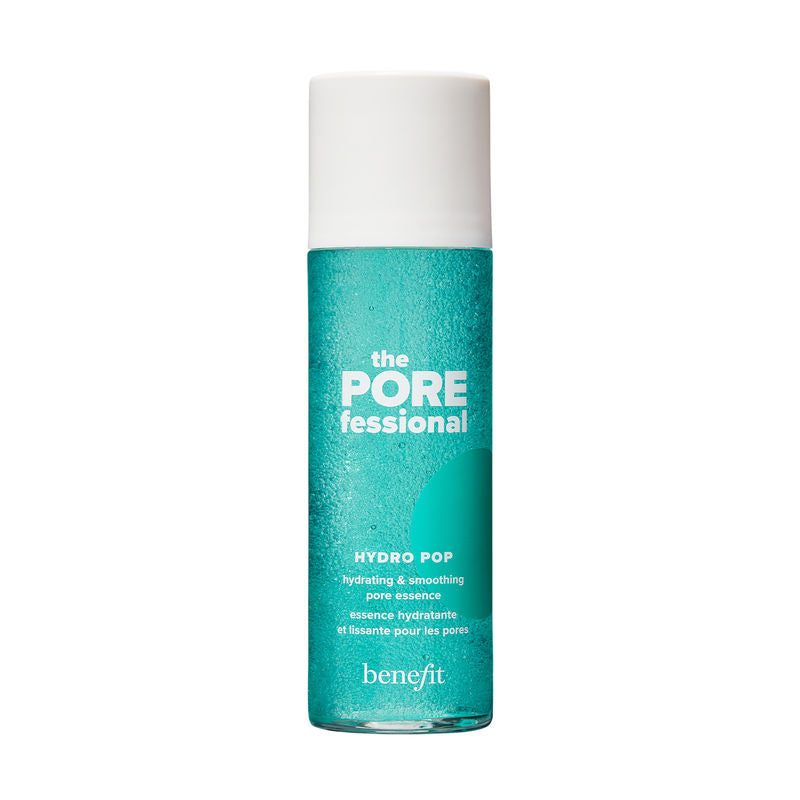

Benefit Cosmetics
Benefit Cosmetics The Porefessional Hydro Pop

Benefit Cosmetics The Porefessional Hydro Pop
Benefit Cosmetics
benefit-cosmetics-the-porefessional-hydro-pop
Serum
10084871700773
Morning or Evening?
How often will you use this product?
Notes


Highlights
WHAT IS IT?
Essence, 30+ ingredients
FEATURES
Hydrating, smoothing, boosts hydration, reduces pore appearance, lightweight gel-like formula, oil-based nutrients in microbubbles, dermatologist-tested
BEST FOR
combination
CHECKS
No parabens, No sulfate, No alcohol
Who Is It For?
All Genders Adult Age RangeWhat Does It Help With?
Hydration Pore Refinement Skin SmoothnessBudget
Premium ($76-$150)How To Use
Which routine should it be used in?
Instructions:
Key Information


What Benefit Cosmetics Says
Product Description:
Hydrating & smoothing pore essence. This skin-balancing, nourishing essence boosts hydration and reduces the look of pores, prepping them for the rest of your skincare and makeup routines. The water-based, gel-like formula glides on smoothly and feels lightweight, while oil-based nutrients in microbubbles help skin feel instantly refreshed and look healthier over time. Key benefits include hydrating, smoothing, non-comedogenic, dermatologist-tested; suitable for oily and dry skin.
About the Brand:
Ingredients Overview
Ingredients List
Aqua-Water,Hamamelis-Virginiana-Witch-Hazel-Leaf-Water,Niacinamide,Pentylene-Glycol,Propanediol,Butylene-Glycol,Isononyl-Isononanoate,Coco-Caprylate-Caprate,Limnanthes-Alba-Meadowfoam-Seed-Oil,Carbomer,Oryza-Sativa-Rice-Extract,Castor-Oil-Ipdi-Copolymer,Chlorphenesin,Bisabolol,Sodium-Hyaluronate,Sodium-Hydroxide,Tocopheryl-Acetate,Camellia-Japonica-Seed-Oil,Saccharomyces-Ferment-Lysate-Filtrate,Caprylic-Capric-Triglyceride,Citric-Acid,Trisodium-Ethylenediamine-Disuccinate,Parfum-Fragrance,Sodium-Benzoate,Polyacrylate-Crosspolymer-6,Rosa-Canina-Fruit-Extract,Potassium-Sorbate,Caramel,Amodimethicone,Candida-Bombicola-Glucose-Methyl-Rapeseedate-Ferment,Citrus-Junos-Fruit-Extract,Tocopherol,Ci-42090-Blue-1,Pentaerythrityl-Tetra-Di-T-Butyl-Hydroxyhydrocinnamate
Key Ingredients
Niacinamide,Hamamelis Virginiana Witch Hazel Leaf Water,Sodium Hyaluronate
Ingredients Details
Amodimethicone
Common Name(s): Aminosilicone,amino-modified polydimethylsiloxane
CAS Number: 71750-79-3
DESCRIPTION
What It Does: Provides amino group-mediated preferential adsorption to damaged hair for targeted conditioning.
Why It's Used: Premium hair conditioning silicone – amino groups provide substantive adsorption to hair far exceeding pdms, with automatic targeting to the most damaged areas requiring conditioning.
How It Works: Amino (nh2) groups on silicone chain provide cationic character at normal ph, electrostatic adsorption to anionic hair surface. higher charge density at damaged sites increases adsorption where conditioning is most needed. si-o-si backbone provides permanent conditioning film with heat protection.
Typically Found In: Intensive conditioners,anti-frizz products,damage repair conditioners
TECHNICAL DETAILS
Primary Category: Functional ingredient – amino-functional silicone
Secondary Functions: Skin conditioning
Application Areas:

Facial Skincare
Body Care

Hair Care
Beard Care
Color Cosmetics (Makeup)
Dietary/Oral Supplements
Typical Concentration Range: 0.1%–5%
SOURCING & ETHICS
Vegan Status: Conditional - supplier confirmation required
Halal Status: Unverified - supplier confirmation required
Source Notes: Commercially produced for cosmetic use. verify vegan/halal status with supplier. [audit 2026-07-29 rev2: the record's own source_notes does not assert a non-animal origin, or instructs the reader to verify with the supplier; "yes" asserts knowledge the record does not hold. determination requires shariah-panel sign-off.]
SKIN COMPATIBILITY
Irritancy Rating: 1/5 – very low
Comedogenicity Rating: 0/5 – non-comedogenic
Sensitivity Concerns: Well-tolerated by most skin types.
Safe for Sensitive Skin: Yes
SAFETY & COMPATIBILITY
Safety Profile: Good safety profile at recommended concentrations. ewg score: 1–2.
Works Well With: Standard skincare actives
Avoid Combining With: No known significant incompatibilities
SCIENTIFIC NOTE
Amodimethicone's amino group-driven substantivity to damaged hair is dramatically greater than non-functionalized pdms. studies show amodimethicone deposits 50-200× more mass on bleach-damaged hair vs virgin hair, providing an automatic 'damage detection' conditioning system that directs the most conditioning to the hair areas that need it most.
Last Verified: 2026-03-12
Primary Sources: Cosing database,robbins hair science,cir safety assessment
Bisabolol
Common Name(s): Alpha-bisabolol,levomenol,(-)-alpha-bisabolol
CAS Number: 515-69-5
DESCRIPTION
What It Does: Reduces skin inflammation, soothes irritation, promotes wound healing, and enhances penetration of co-formulated actives.
Why It's Used: Premium natural soothing active with combined anti-inflammatory, wound healing, and penetration-enhancing activity – clinically validated across sensitive, reactive, and irritated skin types.
How It Works: Inhibits nf-kb pathway reducing pro-inflammatory cytokines il-1β, il-6, tnf-α. enhances stratum corneum lipid fluidity increasing penetration of co-delivered actives. antimicrobial against s. aureus and c. albicans. promotes keratinocyte migration for wound healing.
Typically Found In: Sensitive skin products,post-procedure formulations,anti-irritant formulas,wound healing
TECHNICAL DETAILS
Primary Category: Active ingredient – soothing / anti-inflammatory
Secondary Functions: Anti-inflammatory,penetration enhancement,antimicrobial
Application Areas:
Facial Skincare
Body Care
Hair Care
Beard Care
Color Cosmetics (Makeup)
Dietary/Oral Supplements
Typical Concentration Range: 0.1%–1%
SOURCING & ETHICS
Vegan Status: Conditional - supplier confirmation required
Halal Status: Unverified - supplier confirmation required
Source Notes: Natural (-)-alpha-bisabolol from brazilian candeia tree is more sustainable and potent than chamomile-derived bisabolol. synthetic (±)-bisabolol is racemic with slightly lower anti-inflammatory potency. [audit 2026-07-29 rev2: status downgraded on audit. determination requires shariah-panel sign-off.]
SKIN COMPATIBILITY
Irritancy Rating: 1/5 – very low
Comedogenicity Rating: 0/5 – non-comedogenic
Sensitivity Concerns: Non-irritating; ideal for reactive and sensitive skin.
Safe for Sensitive Skin: Yes – particularly recommended for sensitive skin
SAFETY & COMPATIBILITY
Safety Profile: Excellent safety profile. ewg score: 1.
Works Well With: Ceramides,panthenol,allantoin,hyaluronic acid,centella asiatica
Avoid Combining With: No significant incompatibilities
SCIENTIFIC NOTE
Bisabolol's dual function as both an anti-inflammatory and a penetration enhancer is synergistic – by reducing the inflammatory response that increases barrier tightness while simultaneously fluidizing stratum corneum lipids, it provides enhanced delivery of co-formulated actives in the very conditions where delivery is most needed.
Last Verified: 2026-03-12
Primary Sources: Cosing database,piazza et al. bisabolol anti-inflammatory study,cir safety assessment
Caramel
Common Name(s): Caramel colour,natural brown,e150
CAS Number: 8028-89-5
DESCRIPTION
What It Does: Provides natural warm-brown colour from heat-treated sugar for natural cosmetics.
Why It's Used: Natural brown colorant with food-grade safety credentials for clean beauty formulations requiring warm brown or amber shades.
How It Works: Complex mixture of pyranose-ring condensation products from heat-treated sugars. 5-hmf and melanoidin polymers provide brown colour. ph-stable in acidic formulations. soluble in water and lower alcohols.
Typically Found In: Natural cosmetics,bronzers,hair products
TECHNICAL DETAILS
Primary Category: Colorant – natural brown dye
Secondary Functions: Skin conditioning
Application Areas:
Facial Skincare
Body Care
Hair Care
Beard Care
Color Cosmetics (Makeup)
Dietary/Oral Supplements
Typical Concentration Range: 0.01%–5%
SOURCING & ETHICS
Vegan Status: Conditional - supplier confirmation required
Halal Status: Unverified - supplier confirmation required
Source Notes: Commercially produced for cosmetic use. verify vegan/halal status with supplier. [audit 2026-07-29 rev2: the record's own source_notes does not assert a non-animal origin, or instructs the reader to verify with the supplier; "yes" asserts knowledge the record does not hold. determination requires shariah-panel sign-off.]
SKIN COMPATIBILITY
Irritancy Rating: 1/5 – very low
Comedogenicity Rating: 0/5 – non-comedogenic
Sensitivity Concerns: Well-tolerated by most skin types.
Safe for Sensitive Skin: Yes
SAFETY & COMPATIBILITY
Safety Profile: Good safety profile at recommended concentrations. ewg score: 1–2.
Works Well With: Standard skincare actives
Avoid Combining With: No known significant incompatibilities
SCIENTIFIC NOTE
Caramel's colour develops through the maillard reaction between reducing sugars and amino acids at elevated temperatures, creating a complex mixture of coloured polymer (melanoidin) and small molecule chromophores. unlike single-compound dyes with defined absorption spectra, caramel's broad-spectrum absorption from multiple chromophores provides a naturally warm, complex brown impossible to replicate with a single synthetic dye.
Last Verified: 2026-03-12
Primary Sources: Cosing database,fda 21 cfr color additives
Carbomer
Common Name(s): Carbopol,polyacrylic acid,carboxyvinyl polymer
DESCRIPTION
What It Does: Provides transparent gel textures and thickening at very low concentrations via ph-responsive swelling.
Why It's Used: The most widely used gel thickener – provides crystal-clear, stable gels at concentrations as low as 0.1-0.5% with ph-controlled viscosity.
How It Works: Highly crosslinked polyacrylic acid remains tightly coiled at acidic ph. neutralization with naoh or triethanolamine ionizes carboxylic groups causing electrostatic repulsion that unfolds and swells the polymer coils, dramatically increasing viscosity. concentration-dependent thickening.
Typically Found In: Gels,serums,emulsions,sunscreens
TECHNICAL DETAILS
Primary Category: Functional ingredient – polyacrylic acid thickener
Secondary Functions: Skin conditioning
Application Areas:
Facial Skincare
Body Care
Hair Care
Beard Care
Color Cosmetics (Makeup)
Dietary/Oral Supplements
Typical Concentration Range: 0.1%–2%
SOURCING & ETHICS
Vegan Status: Conditional - supplier confirmation required
Halal Status: Unverified - supplier confirmation required
Source Notes: Commercially produced for cosmetic use. verify vegan/halal status with supplier. [audit 2026-07-29 rev2: the record's own source_notes does not assert a non-animal origin, or instructs the reader to verify with the supplier; "yes" asserts knowledge the record does not hold. determination requires shariah-panel sign-off.]
SKIN COMPATIBILITY
Irritancy Rating: 1/5 – very low
Comedogenicity Rating: 0/5 – non-comedogenic
Sensitivity Concerns: Well-tolerated by most skin types.
Safe for Sensitive Skin: Yes
SAFETY & COMPATIBILITY
Safety Profile: Good safety profile at recommended concentrations. ewg score: 1–2.
Works Well With: Standard skincare actives
Avoid Combining With: No known significant incompatibilities
SCIENTIFIC NOTE
Carbomer's ph-responsive swelling mechanism provides an elegant formulation control tool: a neutralized gel can be liquefied by ph reduction (adding acid) and re-thickened by reneutralization. this reversible rheology control allows two-phase products that mix on application without the need for mechanical emulsification.
Last Verified: 2026-03-12
Primary Sources: Cosing database,cir safety assessment