

Nykaa E retail limited
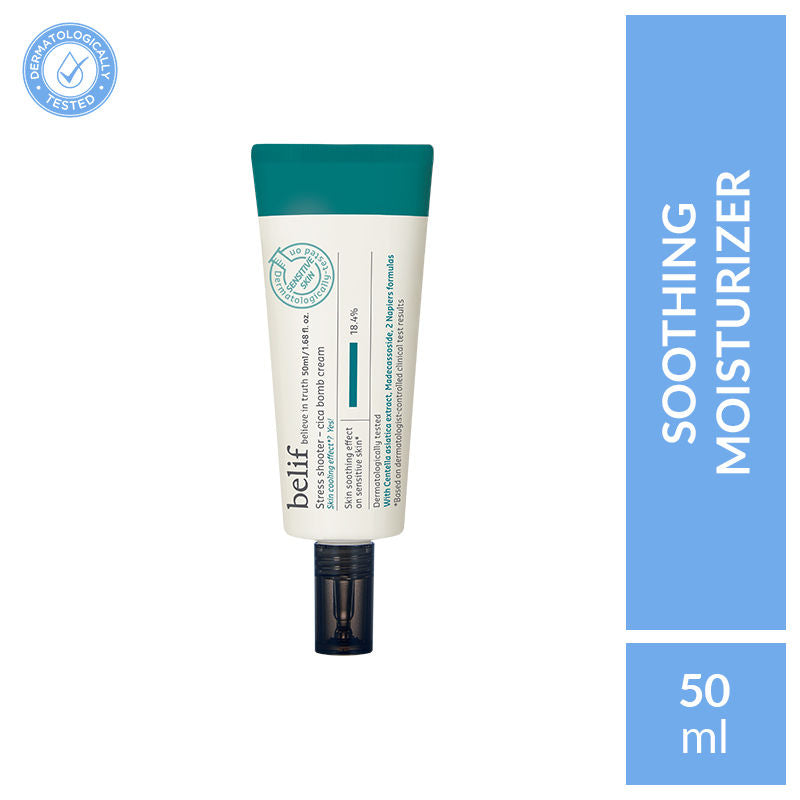
BELIF STRESS SHOOTER CICA BOMB CREAM VEGAN KOREAN FACE MOISTURIZER WITH CENTELLA ASIATICA(50ML)

BELIF STRESS SHOOTER CICA BOMB CREAM VEGAN KOREAN FACE MOISTURIZER WITH CENTELLA ASIATICA(50ML)
Nykaa E retail limited
belif-stress-shooter-cica-bomb-cream-vegan-korean-face-moisturizer-with-centella-asiatica-50ml
Moisturize
10084770873637
Morning or Evening?
How often will you use this product?
Notes


Highlights
WHAT IS IT?
Cica Bomb Cream Moisturizer
FEATURES
BEST FOR
sensitive
CHECKS
Who Is It For?
What Does It Help With?
Stress Relief For SkinBudget
Premium ($76-$150)How To Use
Which routine should it be used in?
Instructions:
Key Information


About the Brand:
Ingredients Overview
Ingredients List
Aqua/Water/Eau, Glycerin, Cyclohexasiloxane, Propanediol, Polyglyceryl-4 Caprate, 1,2 Hexanediol, Hydrogenated Olive Oil Stearyl Esters, Hydrogenated Polydecene, Cetyl Palmitate, Panthenol, Madecassoside, Centella Asiatica Leaf Extract, Beta-Glucan, Rubus Idaeus (Raspberry) Leaf Extract+, Nepeta Cataria Extract+, Calendula Officinalis Flower Extract+, Avena Sativa (Oat) Kernel Extract+, Baptisia Tinctoria Root Extract+, Stellaria Media (Chickweed) Extract+, Urtica Dioica (Nettle) Leaf Extract, Equisetum Arvense Leaf Extract, Alchemilla Vulgaris Leaf Extract, Sodium Hyaluronate, Hydrolized Hyaluronic Acid, Sorbitan Stearate, Sorbitan Isostearate, Caprylic/Capric Triglyceride, Acrylates/C10-30 Alkyl Acrylate Crosspolymer, Squalane, Butylene Glycol, Tridecyl Stearate, Tridecyl Trimellitate, Isohexadecane, Hydrogenated Vegetable Oil, Jojoba Esters, Hydroxyethyl Acrylate/ Sodium Acryloyldimethyl Taurate Copolymer, Tromethamine, Polyglyceryl-10 Stearate, Dipentaerythrithl Hexacaprylate/Hexacaprate, Hydrogenated Olive Oil Unsaponifiables, Trisodium Edta, Polysorbate 60, Tocopherol, Citrus Aurantiolia (Lime) Oil++, Rosmarinus Officinalis (Rosemary) Leaf Oil++, Citrus Aurantium Dulcis (Orange) Peel Oil++, Pelargonium Gaveolens Flower Oil++, Citral, Citronellol, Geraniol, Limonene, Linalool
Key Ingredients
centella-asiatica
Ingredients Details
Acrylates/c10-30 Alkyl Acrylate Crosspolymer
Common Name(s): Acrylates/c10-30 alkyl acrylate crosspolymer
DESCRIPTION
What It Does: Delivers targeted skin-conditioning or bioactive benefits through a specific mechanism of action suited to the formulation's intended purpose.
Why It's Used: Specialty actives address specific skin concerns through targeted molecular mechanisms, providing efficacy beyond what base formulation ingredients alone can achieve.
How It Works: The bioactive compound interacts with specific molecular targets in skin cells or the extracellular matrix — enzymes, receptors, structural proteins, or signaling molecules — triggering beneficial biological responses.
Typically Found In: Serums,treatments,moisturizers,specialty products
TECHNICAL DETAILS
Primary Category: Specialty actives
Secondary Functions: Skin-conditioning,anti-aging
Application Areas:

Facial Skincare

Body Care
Hair Care
Beard Care
Color Cosmetics (Makeup)
Dietary/Oral Supplements
Typical Concentration Range: 0.01–5%
SOURCING & ETHICS
Vegan Status: Yes
Halal Status: Yes
Source Notes: Specialty active ingredient; check individual sourcing for vegan status.
SKIN COMPATIBILITY
Irritancy Rating: 1
Comedogenicity Rating: 0
Sensitivity Concerns: Low sensitization potential at recommended use concentrations.
Safe for Sensitive Skin: Yes
SAFETY & COMPATIBILITY
Safety Profile: Well-characterized cosmetic ingredient with established safety profile. generally non-irritating at typical use concentrations. suitable for leave-on and rinse-off cosmetics.
Works Well With: Niacinamide,hyaluronic acid,vitamin c,peptides
Avoid Combining With: Incompatible with oxidizing agents; check ph stability
SCIENTIFIC NOTE
Specialty actives typically work through enzyme inhibition (e.g., tyrosinase inhibition for brightening, mmp inhibition for anti-aging), receptor activation (e.g., retinoid receptors, ppar-γ for barrier genes), or transcription factor modulation (e.g., nrf2 for antioxidant gene upregulation). structure-activity relationships determine potency and selectivity.
Last Verified: Cosing eu database; pcpc cosmetic ingredient safety reviews; ingredient-specific safety and efficacy literature
Primary Sources: 2025-01-15
Alchemilla Vulgaris Leaf Extract
Common Name(s): Alchemilla vulgaris leaf extract
DESCRIPTION
What It Does: Provides antioxidant protection, soothing anti-inflammatory effects, and skin-conditioning benefits through plant-derived polyphenols and phytochemicals.
Why It's Used: Plant extracts concentrate bioactive phytochemicals evolved for environmental protection — uv, microbial, and oxidative stressors — that translate to skin benefits.
How It Works: Polyphenols (flavonoids, phenolic acids) inhibit nf-κb-mediated inflammatory signaling, scavenge reactive oxygen species through electron donation, and chelate pro-oxidant metal ions to reduce oxidative skin damage.
Typically Found In: Serums,toners,moisturizers,masks,essences
TECHNICAL DETAILS
Primary Category: Botanical extracts
Secondary Functions: Antioxidant,anti-inflammatory
Application Areas:
Facial Skincare
Body Care
Hair Care
Beard Care
Color Cosmetics (Makeup)
Dietary/Oral Supplements
Typical Concentration Range: 0.1–10%
SOURCING & ETHICS
Vegan Status: Yes
Halal Status: Yes
Source Notes: Plant-derived extract; no animal components.
SKIN COMPATIBILITY
Irritancy Rating: 1
Comedogenicity Rating: 0
Sensitivity Concerns: Low sensitization potential at recommended use concentrations.
Safe for Sensitive Skin: Yes
SAFETY & COMPATIBILITY
Safety Profile: Well-characterized cosmetic ingredient with established safety profile. generally non-irritating at typical use concentrations. suitable for leave-on and rinse-off cosmetics.
Works Well With: Niacinamide,hyaluronic acid,vitamin c,ceramides
Avoid Combining With: Strong oxidizing agents
SCIENTIFIC NOTE
Plant secondary metabolites (flavonoids, terpenes, phenolic acids) are biosynthesized as defense compounds against uv, herbivores, and pathogens. their anti-inflammatory activity typically derives from competitive inhibition of cox-2 and 5-lox enzymes (ic50 1–50 µm), while antioxidant activity involves single electron transfer (set) and hydrogen atom transfer (hat) mechanisms with structure-dependent rate constants.
Last Verified: Cosing eu database; pcpc cosmetic ingredient safety reviews; phytochemical and ethnobotanical literature
Primary Sources: 2025-01-15
Aqua/water/eau
Common Name(s): Aqua/water/eau extract
DESCRIPTION
What It Does: Provides antioxidant protection, soothing anti-inflammatory effects, and skin-conditioning benefits through plant-derived polyphenols and phytochemicals.
Why It's Used: Plant extracts concentrate bioactive phytochemicals evolved for environmental protection — uv, microbial, and oxidative stressors — that translate to skin benefits.
How It Works: Polyphenols (flavonoids, phenolic acids) inhibit nf-κb-mediated inflammatory signaling, scavenge reactive oxygen species through electron donation, and chelate pro-oxidant metal ions to reduce oxidative skin damage.
Typically Found In: Serums,toners,moisturizers,masks,essences
TECHNICAL DETAILS
Primary Category: Botanical extracts
Secondary Functions: Antioxidant,anti-inflammatory
Application Areas:
Facial Skincare
Body Care
Hair Care
Beard Care
Color Cosmetics (Makeup)
Dietary/Oral Supplements
Typical Concentration Range: 0.1–10%
SOURCING & ETHICS
Vegan Status: Yes
Halal Status: Yes
Source Notes: Plant-derived extract; no animal components.
SKIN COMPATIBILITY
Irritancy Rating: 1
Comedogenicity Rating: 0
Sensitivity Concerns: Low sensitization potential at recommended use concentrations.
Safe for Sensitive Skin: Yes
SAFETY & COMPATIBILITY
Safety Profile: Well-characterized cosmetic ingredient with established safety profile. generally non-irritating at typical use concentrations. suitable for leave-on and rinse-off cosmetics.
Works Well With: Niacinamide,hyaluronic acid,vitamin c,ceramides
Avoid Combining With: Strong oxidizing agents
SCIENTIFIC NOTE
Plant secondary metabolites (flavonoids, terpenes, phenolic acids) are biosynthesized as defense compounds against uv, herbivores, and pathogens. their anti-inflammatory activity typically derives from competitive inhibition of cox-2 and 5-lox enzymes (ic50 1–50 µm), while antioxidant activity involves single electron transfer (set) and hydrogen atom transfer (hat) mechanisms with structure-dependent rate constants.
Last Verified: Cosing eu database; pcpc cosmetic ingredient safety reviews; phytochemical and ethnobotanical literature
Primary Sources: 2025-01-15
Beta-glucan
Common Name(s): Beta-1,3/1,6-glucan,yeast beta-glucan,oat beta-glucan
CAS Number: 9041-22-9
DESCRIPTION
What It Does: Reduces inflammation, deeply hydrates, stimulates collagen synthesis, accelerates wound healing.
Why It's Used: Used in anti-aging, sensitive skin, post-procedure, and eczema care for multi-action anti-inflammatory, moisturizing, and regenerative benefits.
How It Works: Binds to dectin-1 and cr3 receptors on macrophages and keratinocytes activating tgf-beta and collagen synthesis pathways. also activates macrophage phagocytosis for wound healing. humectant from polysaccharide hydroxyl groups.
Typically Found In: Anti-aging serums,sensitive skin products,post-procedure care,eczema treatments
TECHNICAL DETAILS
Primary Category: Active ingredient – polysaccharide / immunomodulator
Secondary Functions: Immunomodulator,wound healing,collagen stimulation
Application Areas:
Facial Skincare
Body Care
Hair Care
Beard Care
Color Cosmetics (Makeup)
Dietary/Oral Supplements
Typical Concentration Range: 0.1%–5%
SOURCING & ETHICS
Vegan Status: Yes – yeast or oat-derived
Halal Status: Yes
Source Notes: Derived from saccharomyces cerevisiae yeast (1,3/1,6-linked) or avena sativa oats (1,3/1,4-linked). molecular weight affects penetration – lower mw for skin penetration vs high mw for surface hydration.
SKIN COMPATIBILITY
Irritancy Rating: 1/5 – very low
Comedogenicity Rating: 0/5 – non-comedogenic
Sensitivity Concerns: Non-irritating; ideal for reactive and sensitive skin.
Safe for Sensitive Skin: Yes – particularly recommended for sensitive skin
SAFETY & COMPATIBILITY
Safety Profile: Excellent safety profile. ewg score: 1.
Works Well With: Ceramides,panthenol,allantoin,hyaluronic acid,centella asiatica
Avoid Combining With: No significant incompatibilities
SCIENTIFIC NOTE
Yeast beta-1,3/1,6-glucan receptor binding to dectin-1 on keratinocytes activates tgf-beta1, the key pro-collagen cytokine, stimulating fibroblast collagen production. this makes beta-glucan one of the few non-retinoid, non-peptide ingredients with direct receptor-mediated collagen stimulation.
Last Verified: Cosing database,wasser (2002) beta-glucan review,cir safety assessment
Primary Sources: 2026-03-12
