

Better Body Bombay
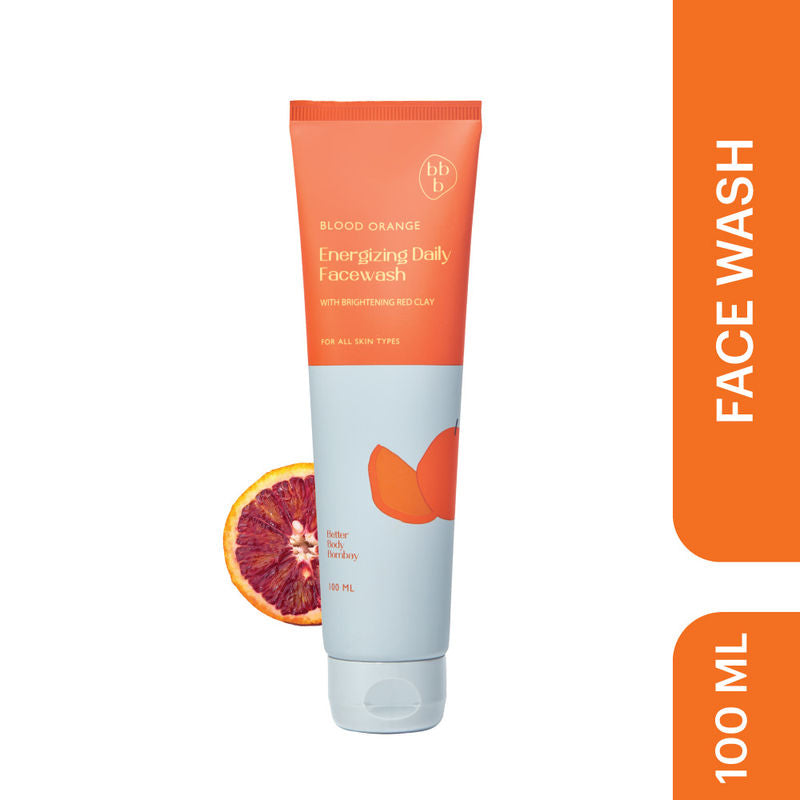
bbb Better Body Bombay Blood Orange Energizing Daily Face Wash With Brightening Red Clay

bbb Better Body Bombay Blood Orange Energizing Daily Face Wash With Brightening Red Clay
Better Body Bombay
bbb-better-body-bombay-blood-orange-energizing-daily-face-wash-with-brightening-red-clay
Cleanse
10084777951525
Morning or Evening?
How often will you use this product?
Notes


Highlights
WHAT IS IT?
Face wash product with 4 key ingredients
FEATURES
Energizing, Brightening, Contains Blood Orange, Amino Acid, Cinnamon Bark, Betaine
BEST FOR
normal
CHECKS
No information on preservatives, sulfates, parabens, silicones, fragrance, PEG, alcohol, aluminum, microplastic, gluten, oil
Who Is It For?
All Genders No Specific Age Range MentionedWhat Does It Help With?
Brightens Skin Cleanses Acne Prone Skin Without Drying Suitable For All Skin TypesBudget
Affordable (under $30)How To Use
Which routine should it be used in?
Instructions:
Key Information


What Better Body Bombay Says
Product Description:
Explore the entire range of Face Wash available on Nykaa. Shop more Better Body Bombay products here. You can browse through the complete world of Better Body Bombay Face Wash.
About the Brand:
Ingredients Overview
Ingredients List
Aqua, Decyl Glucoside, Acrylates Copolymer, Coco Glucoside, Glycerine, Maltooligosyl Glucoside, Hydrogenated Starch Hydrolysate, Kaolin, Triethanolamine, Sodium Lauryl Sulfoacetate, Phenoxyethanol, Ethylhexylglycerin, Fragrance, Glycerin, Dictyopteris membranacea extract, Sodium PCA, Sodium Lactate, PCA, Serine, Alanine, Glycine, Glutamic Acid, Lysine HCl, Threonine, Arginine, Proline, Capryloyl Glycine, Sarcosine, Sodium Gluconate, Saccharide Isomerate, Citric Acid, Sodium Citrate
Key Ingredients
Blood Orange, Amino Acid, Cinnamon Bark, Betaine
Ingredients Details
Acrylates Copolymer
Common Name(s): Acrylic copolymer,carbopol ez,flexible film former
CAS Number: 25133-97-5
DESCRIPTION
What It Does: Provides versatile acrylic film formation and thickening across broad ph range.
Why It's Used: Versatile workhorse polymer for film formation and thickening across diverse cosmetic product types from acidic aha serums to alkaline cleansers.
How It Works: Copolymer of acrylic acid and methacrylic acid esters. thickens via polymer chain entanglement and electrostatic repulsion. film formation from chain entanglement on water evaporation. broad ph stability from balanced acid/neutral monomer composition.
Typically Found In: Serums,lotions,sunscreens — versatile across formulation types
TECHNICAL DETAILS
Primary Category: Functional ingredient – acrylic film former
Secondary Functions: Skin conditioning
Application Areas:

Facial Skincare

Body Care
Hair Care
Beard Care
Color Cosmetics (Makeup)
Dietary/Oral Supplements
Typical Concentration Range: 0.1%–3%
SOURCING & ETHICS
Vegan Status: Conditional - supplier confirmation required
Halal Status: Unverified - supplier confirmation required
Source Notes: Commercially produced for cosmetic use. verify vegan/halal status with supplier. [audit 2026-07-29 rev2: the record's own source_notes does not assert a non-animal origin, or instructs the reader to verify with the supplier; "yes" asserts knowledge the record does not hold. determination requires shariah-panel sign-off.]
SKIN COMPATIBILITY
Irritancy Rating: 1/5 – very low
Comedogenicity Rating: 0/5 – non-comedogenic
Sensitivity Concerns: Well-tolerated by most skin types.
Safe for Sensitive Skin: Yes
SAFETY & COMPATIBILITY
Safety Profile: Good safety profile at recommended concentrations. ewg score: 1–2.
Works Well With: Standard skincare actives
Avoid Combining With: No known significant incompatibilities
SCIENTIFIC NOTE
Acrylates copolymers' broad ph thickening stability (vs carbomer's ph-sensitive thickening, requiring neutralisation for viscosity) enables thickening of acidic aha serums (ph 3-4) without neutralisation — maintaining the low ph required for aha efficacy while providing viscosity control. this acid-stable thickening is impossible with conventional carbomers.
Last Verified:
Alanine
Common Name(s): L-alanine,2-aminopropanoic acid
CAS Number: 56-41-7
DESCRIPTION
What It Does: Provides nmf-type humectant moisture retention and skin conditioning.
Why It's Used: Simple, well-tolerated nmf amino acid humectant for skin conditioning formulations.
How It Works: Small methyl side chain contributes to protein hydrophobic core but as free amino acid provides direct humectant activity via amino and carboxyl groups. converted to pyruvate for cellular atp production via gluconeogenesis.
Typically Found In: Nmf moisturizers,skin conditioning products
TECHNICAL DETAILS
Primary Category: Active ingredient – amino acid
Secondary Functions: Nmf component,cellular energy
Application Areas:
Facial Skincare
Body Care
Hair Care
Beard Care
Color Cosmetics (Makeup)
Dietary/Oral Supplements
Typical Concentration Range: 0.5%–5%
SOURCING & ETHICS
Vegan Status: Conditional - feedstock declaration required
Halal Status: Unverified - feedstock declaration required (plant, animal and petrochemical routes all exist)
Source Notes: Fermentation-derived or synthetic. natural skin component. [audit 2026-07-29 rev2: origin-dependent: the same inci exists in plant, animal and petrochemical versions and the name does not discriminate. determination requires shariah-panel sign-off.]
SKIN COMPATIBILITY
Irritancy Rating: 1/5 – very low
Comedogenicity Rating: 0/5 – non-comedogenic
Sensitivity Concerns: Non-irritating; endogenous skin molecule.
Safe for Sensitive Skin: Yes
SAFETY & COMPATIBILITY
Safety Profile: Excellent safety profile. natural skin nmf component. ewg score: 1.
Works Well With: Hyaluronic acid,ceramides,peptides,other amino acids
Avoid Combining With: No significant incompatibilities
SCIENTIFIC NOTE
Free alanine is among the most abundant amino acids in the stratum corneum nmf, where it contributes to the aqueous phase hydration that keeps the stratum corneum flexible and functional.
Last Verified: 2026-03-12
Primary Sources: Cosing database,cir safety assessment
Arginine
Common Name(s): L-arginine,2-amino-5-guanidinopentanoic acid
CAS Number: 74-79-3
DESCRIPTION
What It Does: Conditions skin, attracts moisture, supports wound healing, and improves microcirculation via no synthesis.
Why It's Used: Multi-functional amino acid for skin hydration, conditioning, and wound healing in peptide and nmf formulations.
How It Works: Guanidinium group binds water (humectant). substrate for nitric oxide synthase (enos) producing nitric oxide that vasodilates capillaries improving skin nutrition. stimulates fibroblast proliferation for wound healing.
Typically Found In: Anti-aging serums,wound healing products,nmf moisturizers,scalp treatments
TECHNICAL DETAILS
Primary Category: Active ingredient – amino acid
Secondary Functions: Wound healing,microcirculation,nmf component
Application Areas:
Facial Skincare
Body Care
Hair Care
Beard Care
Color Cosmetics (Makeup)
Dietary/Oral Supplements
Typical Concentration Range: 0.5%–5%
SOURCING & ETHICS
Vegan Status: Conditional - feedstock declaration required
Halal Status: Unverified - feedstock declaration required (plant, animal and petrochemical routes all exist)
Source Notes: Fermentation-derived or synthetic. natural skin component. [audit 2026-07-29 rev2: origin-dependent: the same inci exists in plant, animal and petrochemical versions and the name does not discriminate. determination requires shariah-panel sign-off.]
SKIN COMPATIBILITY
Irritancy Rating: 1/5 – very low
Comedogenicity Rating: 0/5 – non-comedogenic
Sensitivity Concerns: Non-irritating; endogenous skin molecule.
Safe for Sensitive Skin: Yes
SAFETY & COMPATIBILITY
Safety Profile: Excellent safety profile. natural skin nmf component. ewg score: 1.
Works Well With: Hyaluronic acid,ceramides,peptides,other amino acids
Avoid Combining With: No significant incompatibilities
SCIENTIFIC NOTE
Arginine is a conditionally essential amino acid in wound healing where local demand exceeds synthesis capacity. topical arginine provides the nos substrate locally for no-mediated vasodilation and immune cell function in healing tissue.
Last Verified: 2026-03-12
Primary Sources: Cosing database,cir safety assessment,witte & barbul arginine wound healing review
Capryloyl Glycine
Common Name(s): N-capryloyl glycine,dermosoft gmcy
CAS Number: 14246-53-8
DESCRIPTION
What It Does: Provides antimicrobial and sebum-regulating activity from naturally-derived caprylic acid-glycine conjugate.
Why It's Used: Natural multifunctional antimicrobial — capryloyl glycine's anti-seborrheic and antimicrobial dual action provides comprehensive oily skin and anti-dandruff benefits from a single naturally-sourced ingredient.
How It Works: Acyl glycine conjugate provides antimicrobial via fatty acid membrane disruption mechanism. inhibits lipase enzyme reducing sebum fatty acid liberation (sebum regulation). mild surfactant from carboxylate head group. anti-dandruff via malassezia inhibition.
Typically Found In: Anti-seborrheic products,natural antimicrobials,anti-dandruff
TECHNICAL DETAILS
Primary Category: Functional ingredient – acyl amino acid surfactant/preservative
Secondary Functions: Skin conditioning
Application Areas:
Facial Skincare
Body Care
Hair Care
Beard Care
Color Cosmetics (Makeup)
Dietary/Oral Supplements
Typical Concentration Range: 0.5%–2%
SOURCING & ETHICS
Vegan Status: Conditional - feedstock declaration required
Halal Status: Unverified - feedstock declaration required (plant, animal and petrochemical routes all exist)
Source Notes: Commercially produced for cosmetic use. verify vegan/halal status with supplier. [audit 2026-07-29 rev2: origin-dependent: the same inci exists in plant, animal and petrochemical versions and the name does not discriminate. determination requires shariah-panel sign-off.]
SKIN COMPATIBILITY
Irritancy Rating: 1/5 – very low
Comedogenicity Rating: 0/5 – non-comedogenic
Sensitivity Concerns: Well-tolerated by most skin types.
Safe for Sensitive Skin: Yes
SAFETY & COMPATIBILITY
Safety Profile: Good safety profile at recommended concentrations. ewg score: 1–2.
Works Well With: Standard skincare actives
Avoid Combining With: No known significant incompatibilities
SCIENTIFIC NOTE
Capryloyl glycine's sebum regulation via lipase inhibition mirrors the same mechanism as triethyl citrate and ethylhexylglycerin — convergent mechanism discovery across structurally diverse ingredient classes. the parallel lipase inhibition by ester-based (triethyl citrate), ether-based (ethylhexylglycerin), and amide-based (capryloyl glycine) compounds validates lipase inhibition as a universally accessible target for sebum control through multiple chemical approaches.
Last Verified: 2026-03-12
Primary Sources: Cosing database,schülke dermosoft gmcy technical data