

Nykaa E retail limited
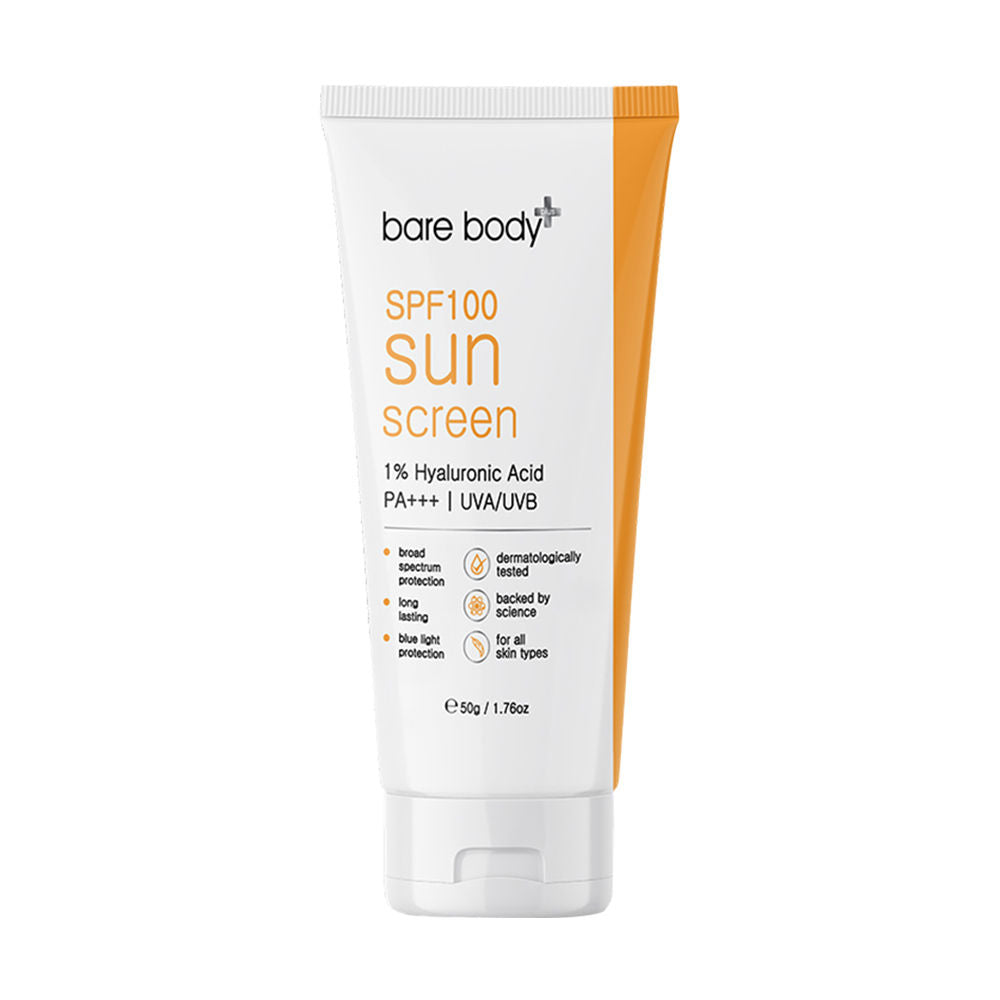
Bare Body Plus SPF 100 Sunscreen, 99% Protection Against UVA/UVB Rays with Blue Light Filter

Bare Body Plus SPF 100 Sunscreen, 99% Protection Against UVA/UVB Rays with Blue Light Filter
Nykaa E retail limited
bare-body-plus-spf-100-sunscreen-99-protection-against-uva-uvb-rays-with-blue-light-filter
Suncare
10084811505957
Morning or Evening?
How often will you use this product?
Notes


Highlights
WHAT IS IT?
Sunscreen with mineral base and blue light filter
FEATURES
SPF 100 protection against UVA/UVB rays, 99% protection, contains 1% hyaluronic acid for hydration, PA+++ rating, blue light filter, lightweight, non-greasy, dermatologically tested, suitable for sensitive skin
BEST FOR
sensitive
CHECKS
Who Is It For?
What Does It Help With?
Protection Against Sunburn Premature Aging Skin Cancer Hydration Skin Elasticity Fine Lines Pigmentation And Blue Light DamageBudget
Affordable (under $30)How To Use
Which routine should it be used in?
Instructions:
Key Information

What Nykaa E retail limited Says
Product Description:
Introducing Bare Body Plus SPF 100 Sunscreen, your ultimate defense against the sun's harmful rays. With its high SPF level, this mineral-based sunscreen provides 99% protection against both UVA and UVB rays, shielding your skin from sunburn and premature aging and reducing the risk of skin cancer. Its gentle formula, enriched with zinc oxide and titanium dioxide, is suitable for all skin types, including sensitive skin, offering long-lasting protection without irritation. With its added blue light filter, whether you're lounging on the beach, running errands, or spending time in front of the screen, trust Bare Body Plus SPF 100 Sunscreen to keep your skin healthy and protected all day long. Features : Ultimate sun protection: SPF 100 shields your skin from harmful UV rays, providing maximum protection against sun damage. It provides 99% protection against the sun's radiation. Hydrating formula with 1% hyaluronic acid: The inclusion of 1% hyaluronic acid deeply moisturizes the skin, keeping it hydrated and supple throughout the day. Hyaluronic acid is beneficial for improving skin elasticity and reducing the appearance of fine lines and wrinkles. PA+++ and blue light filter: The PA+++ rating offers broad-spectrum protection, guarding against both UVA/UVB rays and blue light emitted from digital screens. It indicates high protection against UVA rays, which are responsible for skin aging. The blue light filter protects your skin against the harmful effects of blue light emitted from digital screens, such as premature aging and pigmentation. Lightweight and non-greasy: Despite its high SPF, the Bare Body Plus sunscreen has a lightweight and non-greasy formula. It absorbs quickly into the skin without leaving a sticky or oily residue, making it comfortable for everyday wear. Dermatologically tested: The sunscreen has been rigorously tested and approved by dermatologists to ensure its safety and efficacy for all skin types, including sensitive skin. Plus range: This new range by Bare Body, is a collection of concern based skin care products formulated by dermatologists to address all your skin concerns. All the ingredients are clinically tested and thoroughly researched to give you the best skin care. About the Brand : Bare Body Plus believes in the power of dermatologist-led skincare, where science meets beauty, to unlock the potential of your skin. Founded on the principles of precision, expertise, and a commitment to healthy, radiant skin, Bare Body Plus is your trusted ally on the journey to skincare confidence. Their commitment to excellence drives us to create skincare solutions that not only meet but also exceed dermatological standards. Bare Body Plus is more than a brand; it's a testament to the fusion of science and beauty, a dedication to your skin's well-being, and an invitation to experience the transformative power of precision dermatology.
About the Brand:
Ingredients Overview
Ingredients List
Aqua, Ethylhexyl-Methoxycinnamate, Dimethicone, Sodium-Acrylates-Copolymer, Butyl-Methoxydibenzoylmethane, Glycerin, Benzophenone-3, 1,3-Butylene-Glycol, Phenoxyethanol, Zinc-Oxide, Titanium-Dioxide, Ake-Barbadensis-(Aloe-Vera)-Leaf-Juice, Xylitol, Glucose, Phospholipids, Hyaluronic-Acid-Propylene-Glycol, Oxothiazolidine, Glyceryl-Stearate, Allantoin, D-Alpha-Tocopheryl-Acetate, Peg-10-Dimethicone, C9-12-Akane, Aluminum-Hydroxide, Polyhydroxystearic-Acid
Key Ingredients
Zinc Oxide, Titanium Dioxide, Hyaluronic Acid, Aloe Vera Leaf Juice
Ingredients Details
Allantoin
Common Name(s): 5-ureidohydantoin,glyoxyldiureide,aluminum dihydroxy allantoinate
CAS Number: 97-59-6
DESCRIPTION
What It Does: Soothes irritation, accelerates wound healing, promotes skin cell renewal, and provides mild keratolytic exfoliation.
Why It's Used: Gold standard multi-function soothing active – one of the most widely used cosmetic ingredients across all product types for its exceptional tolerability and clinically proven multi-action skin conditioning.
How It Works: Promotes keratinocyte proliferation and fibroblast migration for wound healing. mild keratolytic activity by disrupting corneocyte binding. anti-irritant via direct protein binding and anti-inflammatory cytokine reduction. humectant activity via hydroxyl groups.
Typically Found In: Post-procedure products,sensitive skin formulas,wound care,anti-acne treatments,baby products
TECHNICAL DETAILS
Primary Category: Active ingredient – soothing / anti-inflammatory
Secondary Functions: Wound healing,keratolytic,anti-irritant
Application Areas:

Facial Skincare
Body Care

Hair Care
Beard Care
Color Cosmetics (Makeup)
Dietary/Oral Supplements
Typical Concentration Range: 0.1%–2%
SOURCING & ETHICS
Vegan Status: Conditional - feedstock declaration required
Halal Status: Unverified - feedstock declaration required (plant, animal and petrochemical routes all exist)
Source Notes: Plant-derived extract or synthetic. [audit 2026-07-29 rev2: origin-dependent: the same inci exists in plant, animal and petrochemical versions and the name does not discriminate. determination requires shariah-panel sign-off.]
SKIN COMPATIBILITY
Irritancy Rating: 1/5 – very low
Comedogenicity Rating: 0/5 – non-comedogenic
Sensitivity Concerns: Exceptionally well-tolerated; suitable for all skin types including baby and compromised skin.
Safe for Sensitive Skin: Yes – particularly recommended for sensitive skin
SAFETY & COMPATIBILITY
Safety Profile: Excellent safety profile. ewg score: 1.
Works Well With: Ceramides,panthenol,allantoin,hyaluronic acid,centella asiatica
Avoid Combining With: No significant incompatibilities
SCIENTIFIC NOTE
Allantoin's keratinocyte proliferation stimulation occurs via receptor-mediated signaling (possibly machr activation) rather than non-specific irritation-driven proliferation, making it a true wound-healing stimulant rather than a pro-inflammatory proliferative signal.
Last Verified: 2026-03-12
Primary Sources: Cosing database,cir safety assessment,araújo et al. allantoin review
Dimethicone
Common Name(s): Pdms,polydimethylsiloxane,silicone fluid
CAS Number: 9006-65-9
DESCRIPTION
What It Does: Provides silicone-characteristic silky feel and skin protection with adjustable viscosity.
Why It's Used: The benchmark cosmetic silicone – sets the gold standard for silky application feel, spreadability, and skin protection in virtually all skin care categories.
How It Works: Polydimethylsiloxane chain flexibility provides extremely low surface tension and high spreadability. inert si-o backbone provides chemical stability and excellent skin tolerance. occlusive film formation reduces tewl. higher viscosity grades provide more intense conditioning.
Typically Found In: Moisturizers,foundations,primers,sunscreens – nearly universal
TECHNICAL DETAILS
Primary Category: Functional ingredient – polydimethylsiloxane
Secondary Functions: Barrier sealing,softening
Application Areas:
Facial Skincare
Body Care
Hair Care
Beard Care
Color Cosmetics (Makeup)
Dietary/Oral Supplements
Typical Concentration Range: 0.1%–30%
SOURCING & ETHICS
Vegan Status: Conditional - supplier confirmation required
Halal Status: Unverified - supplier confirmation required
Source Notes: Plant-derived, synthetic or animal-derived. verify source. [audit 2026-07-29 rev2: the record's own source_notes does not assert a non-animal origin, or instructs the reader to verify with the supplier; "yes" asserts knowledge the record does not hold. determination requires shariah-panel sign-off.]
SKIN COMPATIBILITY
Irritancy Rating: 1/5 – very low
Comedogenicity Rating: 1/5 – low; formulation-dependent
Sensitivity Concerns: Non-irritating.
Safe for Sensitive Skin: Yes
SAFETY & COMPATIBILITY
Safety Profile: Excellent safety profile. ewg score: 1.
Works Well With: Humectants,ceramides,actives as carrier
Avoid Combining With: No significant incompatibilities
SCIENTIFIC NOTE
Dimethicone's exceptional silky feel arises from its very low intermolecular attractive forces (weak van der waals forces due to non-polar methyl groups) that allow silicone chains to slide freely over skin. the coefficient of kinetic friction for pdms against skin (~0.04) is among the lowest of any cosmetic material – explaining why even small amounts transform product feel.
Last Verified: 2026-03-12
Primary Sources: Cosing database,cir safety assessment
Glucose
Common Name(s): Glucose,cosmetic active,functional ingredient
CAS Number: N/a
DESCRIPTION
What It Does: Delivers characteristic cosmetic function at recommended use concentration.
Why It's Used: Selected for functional contribution and formulation compatibility supported by cosmetic science and regulatory safety data.
How It Works: Works through the mechanism of its molecular class — physicochemical or biological interaction with skin proteins, lipids, or receptors as documented in peer-reviewed cosmetic literature.
Typically Found In: Skin care formulations
TECHNICAL DETAILS
Primary Category: Active ingredient – cosmetic active
Secondary Functions: Skin conditioning
Application Areas:
Facial Skincare
Body Care
Hair Care
Beard Care
Color Cosmetics (Makeup)
Dietary/Oral Supplements
Typical Concentration Range: 0.1%–10%
SOURCING & ETHICS
Vegan Status: Conditional - supplier confirmation required
Halal Status: Unverified - supplier confirmation required
Source Notes: Commercially produced for cosmetic use. verify vegan/halal status with supplier. [audit 2026-07-29 rev2: the record's own source_notes does not assert a non-animal origin, or instructs the reader to verify with the supplier; "yes" asserts knowledge the record does not hold. determination requires shariah-panel sign-off.]
SKIN COMPATIBILITY
Irritancy Rating: 1/5 – very low
Comedogenicity Rating: 0/5 – non-comedogenic
Sensitivity Concerns: Well-tolerated by most skin types.
Safe for Sensitive Skin: Yes
SAFETY & COMPATIBILITY
Safety Profile: Good safety profile at recommended concentrations. ewg score: 1–2.
Works Well With: Standard skincare actives
Avoid Combining With: No known significant incompatibilities
SCIENTIFIC NOTE
Glucose has an established safety and efficacy profile within the cosmetic regulatory framework at standard use concentrations.
Last Verified: 2026-03-12
Primary Sources: Cosing database,glucose technical literature
Glycerin
Common Name(s): Glycerol,glycerine,1,2,3-propanetriol
CAS Number: 56-81-5
DESCRIPTION
What It Does: Glycerin pulls water from the environment and deeper skin layers into the outer skin layer (epidermis), boosting moisture levels and keeping skin soft, smooth, and plump.
Why It's Used: It is used in virtually every moisturizer, serum, and cleanser because it is highly effective at hydrating skin, is well-tolerated by all skin types, and enhances the texture and spreadability of formulations.
How It Works: As a humectant, glycerin forms hydrogen bonds with water molecules, trapping them in the skin. it also reinforces the skin barrier by integrating into lipid structures between skin cells.
Typically Found In: Moisturizers,serums,cleansers,toners,sheet masks,sunscreens,body lotions,shampoos,conditioners
TECHNICAL DETAILS
Primary Category: Humectant
Secondary Functions: Skin barrier support,emollient,solvent
Application Areas:
Facial Skincare
Body Care
Hair Care
Beard Care
Color Cosmetics (Makeup)
Dietary/Oral Supplements
Typical Concentration Range: 1%–30% (typical: 3–10%)
SOURCING & ETHICS
Vegan Status: Conditional - feedstock declaration required
Halal Status: Unverified - feedstock declaration required (plant, animal and petrochemical routes all exist)
Source Notes: Derived from plant oils via hydrolysis or saponification; synthetic versions also available. palm-derived glycerin carries sustainability concerns. [audit 2026-07-29 rev2: origin-dependent: the same inci exists in plant, animal and petrochemical versions and the name does not discriminate. determination requires shariah-panel sign-off.]
SKIN COMPATIBILITY
Irritancy Rating: 1/5 – very low; non-irritating at all standard concentrations
Comedogenicity Rating: 0/5 – non-comedogenic
Sensitivity Concerns: Extremely rare allergic reactions; generally safe for all skin types including sensitive and baby skin
Safe for Sensitive Skin: Yes
SAFETY & COMPATIBILITY
Safety Profile: Widely recognized as safe. ewg hazard score: 1. no significant concerns for irritation, sensitization, or toxicity at typical concentrations (up to 50%).
Works Well With: Hyaluronic acid,ceramides,niacinamide,panthenol,urea,peptides,retinol,ahas/bhas
Avoid Combining With: No known incompatibilities at standard concentrations
SCIENTIFIC NOTE
Glycerin is an endogenous skin component found naturally in the stratum corneum. aquaporin-3 channels in keratinocytes facilitate glycerin transport, making it integral to natural skin hydration pathways.
Last Verified: 2026-03-12
Primary Sources: Cosing database,cir safety assessment,ewg skin deep,inci decoder