

Aroma Treasures
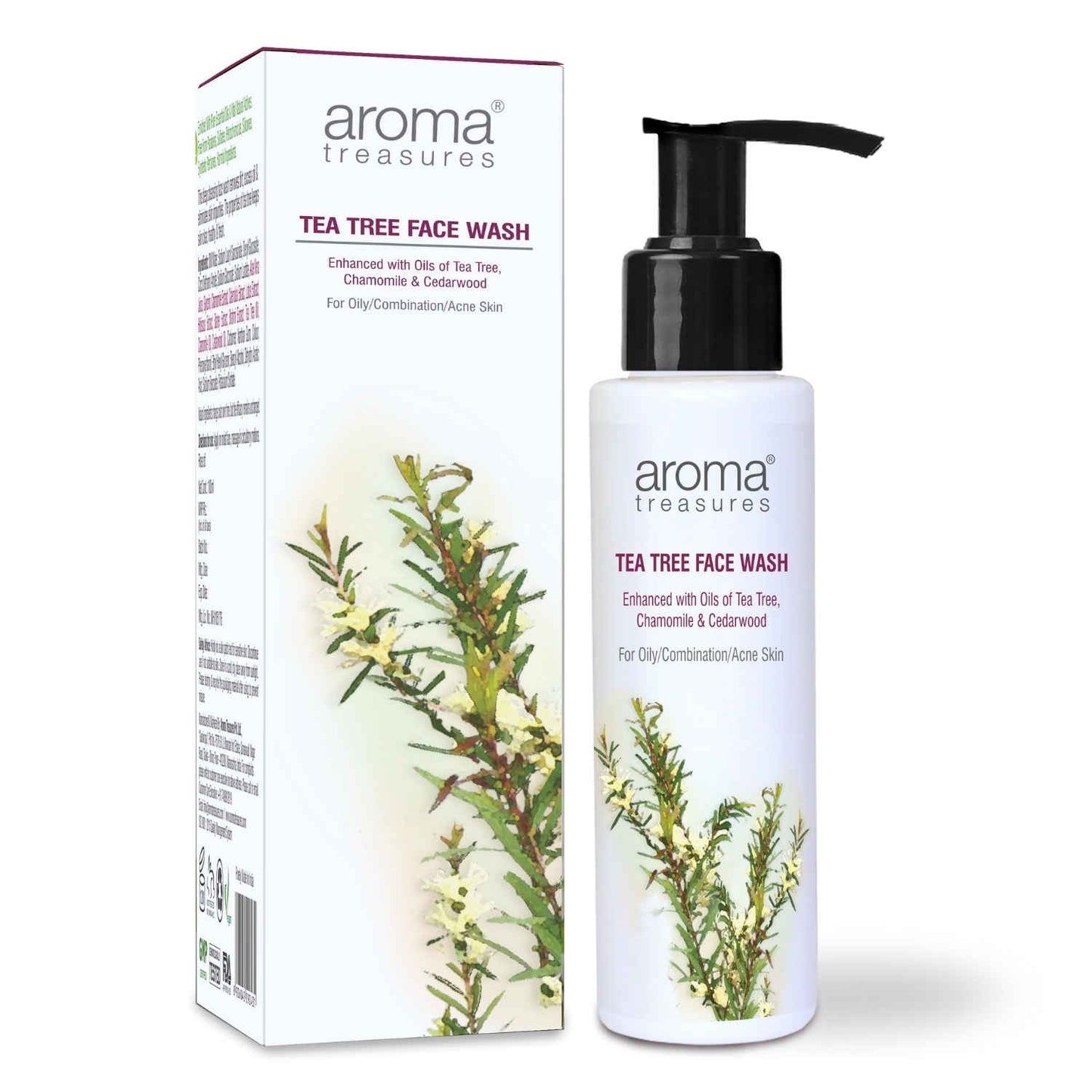
Aroma Treasures Tea Tree Face Wash (100 ml)

Aroma Treasures Tea Tree Face Wash (100 ml)
Aroma Treasures
aroma-treasures-tea-tree-face-wash-100-ml
Cleanse
10084959519013
Morning or Evening?
How often will you use this product?
Notes


Highlights
WHAT IS IT?
Face wash, 3 ingredients mentioned (Tea tree, Chamomile, Cedarwood Oil)
FEATURES
Deep cleansing, removes dirt and excess oils, antibacterial and antiseptic properties, keeps skin clear, healthier & fresher
BEST FOR
oily
CHECKS
Who Is It For?
Suitable For Oily Combination Acne Skin Types Gender Unisex No Explicit Age Range GivenWhat Does It Help With?
Acne And Pimples Oil Control Skin ImpuritiesBudget
Affordable (under ₹300)How To Use
Which routine should it be used in?
Instructions:
Key Information


What Aroma Treasures Says
Product Description:
Aroma Treasures Tea Tree Face Wash with Chamomile Cedarwood Oil. A deep cleansing facial wash designed to remove dirt excess oils & helps to eliminate skin impurities. Formulated with tea tree which is renowned for its antibacterial & antiseptic properties. Helps to keep skin clear healthier & fresher. Skin type For OilyCombinationAcne Skin
About the Brand:
Ingredients Overview
Ingredients List
Aloe Vera Juice, Chamomile Extract, Lotus Extract, Calendula Extract, Hibiscus Extract, Barley Extract, Brahmi Extract, Tea Tree Oil, Chamomile Oil, Cedarwood Oil
Key Ingredients
tea tree, chamomile, cedarwood oil
Ingredients Details
Barley Extract
Common Name(s): Barley extract,botanical extract,phytochemical active
CAS Number: N/a
DESCRIPTION
What It Does: Provides antioxidant protection, anti-inflammatory activity, and skin conditioning from polyphenols, terpenoids, and phytochemicals in the extract.
Why It's Used: Natural plant extracts provide multi-functional phytochemical profiles supporting concurrent skin care claims from one ingredient with authentic botanical heritage.
How It Works: Polyphenols scavenge ros via h• donation; terpenoids inhibit nf-kb or cox inflammatory pathways; vitamins and minerals provide cofactor skin nutrition.
Typically Found In: Botanical skin care,natural products
TECHNICAL DETAILS
Primary Category: Active ingredient – antioxidant
Secondary Functions: Free radical scavenging,anti-aging
Application Areas:

Facial Skincare
Body Care

Hair Care
Beard Care
Color Cosmetics (Makeup)
Dietary/Oral Supplements
Typical Concentration Range: 0.1%–30%
SOURCING & ETHICS
Vegan Status: Conditional - supplier confirmation required
Halal Status: Conditional - basis not stated in source record; supplier origin confirmation required to determine what evidence applies
Source Notes: Plant-derived extract or synthetic. [audit 2026-07-29 rev2: status downgraded on audit. determination requires shariah-panel sign-off.]
SKIN COMPATIBILITY
Irritancy Rating: 1/5 – very low
Comedogenicity Rating: 0/5 – non-comedogenic
Sensitivity Concerns: Non-irritating; well-tolerated.
Safe for Sensitive Skin: Yes
SAFETY & COMPATIBILITY
Safety Profile: Excellent safety profile. ewg score: 1.
Works Well With: Vitamin c,vitamin e,ferulic acid,spf,other antioxidants
Avoid Combining With: No significant incompatibilities
SCIENTIFIC NOTE
Plant secondary metabolites evolved for uv photoprotection and pathogen defence — mechanisms directly applicable to cosmetic antioxidant and anti-inflammatory activity in human skin.
Last Verified: 2026-03-12
Primary Sources: Cosing database,barley extract botanical review
Calendula Extract
Common Name(s): Pot marigold extract,calendula extract
CAS Number: 84776-23-8
DESCRIPTION
What It Does: Heals wounds, reduces inflammation, and soothes irritated skin through faradiol triterpenoid and flavonoid activity.
Why It's Used: Clinically proven traditional wound healing botanical with anti-inflammatory activity comparable to prescription diclofenac in some studies for skin wounds.
How It Works: Faradiol esters inhibit cox-1/cox-2 providing anti-inflammatory activity. polysaccharides promote fibroblast and keratinocyte proliferation. isorhamnetin and narcissin flavonoids provide antioxidant protection. oleanolic acid provides antimicrobial activity.
Typically Found In: Wound healing products,baby products,sensitive skin,post-procedure care
TECHNICAL DETAILS
Primary Category: Active ingredient – soothing / anti-inflammatory
Secondary Functions: Faradiol triterpenoid anti-inflammatory,wound healing
Application Areas:
Facial Skincare
Body Care
Hair Care
Beard Care
Color Cosmetics (Makeup)
Dietary/Oral Supplements
Typical Concentration Range: 0.1%–5%
SOURCING & ETHICS
Vegan Status: Yes – calendula officinalis flower-derived
Halal Status: Yes
Source Notes: Plant-derived extract or synthetic.
SKIN COMPATIBILITY
Irritancy Rating: 1/5 – very low
Comedogenicity Rating: 0/5 – non-comedogenic
Sensitivity Concerns: Non-irritating; ideal for reactive and sensitive skin.
Safe for Sensitive Skin: Yes – particularly recommended for sensitive skin
SAFETY & COMPATIBILITY
Safety Profile: Excellent safety profile. ewg score: 1.
Works Well With: Ceramides,panthenol,allantoin,hyaluronic acid,centella asiatica
Avoid Combining With: No significant incompatibilities
SCIENTIFIC NOTE
Faradiol monoester and diester triterpenoids are among the most potent naturally occurring cox inhibitors – ic50 values comparable to indomethacin (a prescription nsaid) for cox-2 inhibition. this explains calendula's clinically observed anti-inflammatory potency exceeding expectations for a cosmetic ingredient.
Last Verified: 2026-03-12
Primary Sources: Cosing database,preethi & kuttan calendula anti-inflammatory study,cir safety assessment
Lotus Extract
Common Name(s): Sacred lotus extract,lotus flower extract,blue lotus substitute
CAS Number: 89997-74-0
DESCRIPTION
What It Does: Provides nuciferine anti-melanogenic brightening and anti-inflammatory activity from sacred lotus.
Why It's Used: Sacred asian brightening botanical — lotus flower's nuciferine and flavonoids provide tyrosinase-inhibiting brightening and anti-inflammatory anti-aging from the most spiritually revered plant in asian traditions.
How It Works: Nuciferine (aporphine alkaloid) inhibits tyrosinase for brightening. neferine provides anti-inflammatory nf-kb inhibition. kaempferol glycosides provide antioxidant and anti-inflammatory activity. lotus polysaccharides provide humectant conditioning.
Typically Found In: Brightening serums,asian beauty products,luxury botanical skincare
TECHNICAL DETAILS
Primary Category: Active ingredient – brightening / tyrosinase inhibitor
Secondary Functions: Melanin inhibition,hyperpigmentation reduction
Application Areas:
Facial Skincare
Body Care
Hair Care
Beard Care
Color Cosmetics (Makeup)
Dietary/Oral Supplements
Typical Concentration Range: 0.1%–5%
SOURCING & ETHICS
Vegan Status: Yes – from nelumbo nucifera flowers
Halal Status: Yes
Source Notes: Synthetic or plant-derived.
SKIN COMPATIBILITY
Irritancy Rating: 1/5 – very low
Comedogenicity Rating: 0/5 – non-comedogenic
Sensitivity Concerns: Non-irritating; well-tolerated.
Safe for Sensitive Skin: Yes
SAFETY & COMPATIBILITY
Safety Profile: Excellent safety profile. use with spf for maximum efficacy. ewg score: 1.
Works Well With: Niacinamide,vitamin c,alpha-arbutin,tranexamic acid,spf
Avoid Combining With: No significant incompatibilities
SCIENTIFIC NOTE
The sacred lotus's remarkable hydrophobicity ('lotus effect') arises from nano-scale wax crystal structures on its leaves that cause water to bead and roll off, carrying dirt particles. this same nano-scale surface architecture inspired the development of 'lotus effect' self-cleaning materials and surfaces. lotus leaf extract (distinct from flower extract) is increasingly used in cosmetics for mattifying and anti-pollution adsorption properties derived from this nano-scale surface chemistry.
Last Verified: 2026-03-12
Primary Sources: Cosing database,mukherjee et al. lotus review
Tea Tree Oil
Common Name(s): Tea tree oil,tto,melaleuca oil
CAS Number: 68647-73-4
DESCRIPTION
What It Does: Provides the most potent single-plant broad-spectrum antimicrobial essential oil for skin antiseptic applications.
Why It's Used: The antimicrobial essential oil – tea tree oil's terpinen-4-ol provides clinically proven broad-spectrum antimicrobial activity in rct-level clinical studies for acne and mrsa decolonisation.
How It Works: Terpinen-4-ol (30-48%) provides membrane-disrupting antimicrobial activity vs gram+/- bacteria, fungi, and enveloped viruses. iso 4730 requires minimum 30% terpinen-4-ol and maximum 5% 1,8-cineole (sensitiser). anti-biofilm activity vs staphylococcus.
Typically Found In: Anti-acne products,antiseptic formulas,natural antimicrobials,scalp treatments
TECHNICAL DETAILS
Primary Category: Active ingredient – soothing / anti-inflammatory
Secondary Functions: Redness reduction,anti-inflammatory,calming
Application Areas:
Facial Skincare
Body Care
Hair Care
Beard Care
Color Cosmetics (Makeup)
Dietary/Oral Supplements
Typical Concentration Range: 0.001%–5%
SOURCING & ETHICS
Vegan Status: Yes – from melaleuca alternifolia leaves (australia)
Halal Status: Yes
Source Notes: Plant-derived extract or synthetic.
SKIN COMPATIBILITY
Irritancy Rating: 1/5 – very low
Comedogenicity Rating: 0/5 – non-comedogenic
Sensitivity Concerns: Non-irritating; ideal for reactive and sensitive skin.
Safe for Sensitive Skin: Yes – particularly recommended for sensitive skin
SAFETY & COMPATIBILITY
Safety Profile: Iso 4730:2017 quality standard defines authentic tea tree oil. can cause contact sensitisation at high concentrations. toxic if ingested.
Works Well With: Ceramides,panthenol,allantoin,hyaluronic acid,centella asiatica
Avoid Combining With: No significant incompatibilities
SCIENTIFIC NOTE
Randomised controlled trial comparison of 5% tea tree oil gel vs 5% benzoyl peroxide lotion for acne demonstrated equivalent efficacy for acne lesion reduction at 3 months. tea tree's slower onset (8 weeks vs 4 weeks for bpo) was offset by significantly fewer side effects (dryness, irritation, peeling) in the tto group – providing evidence-based support for clinical tto use as a well-tolerated bpo alternative.
Last Verified: 2026-03-12
Primary Sources: Cosing database,bassett et al. tea tree oil acne rct,iso 4730