
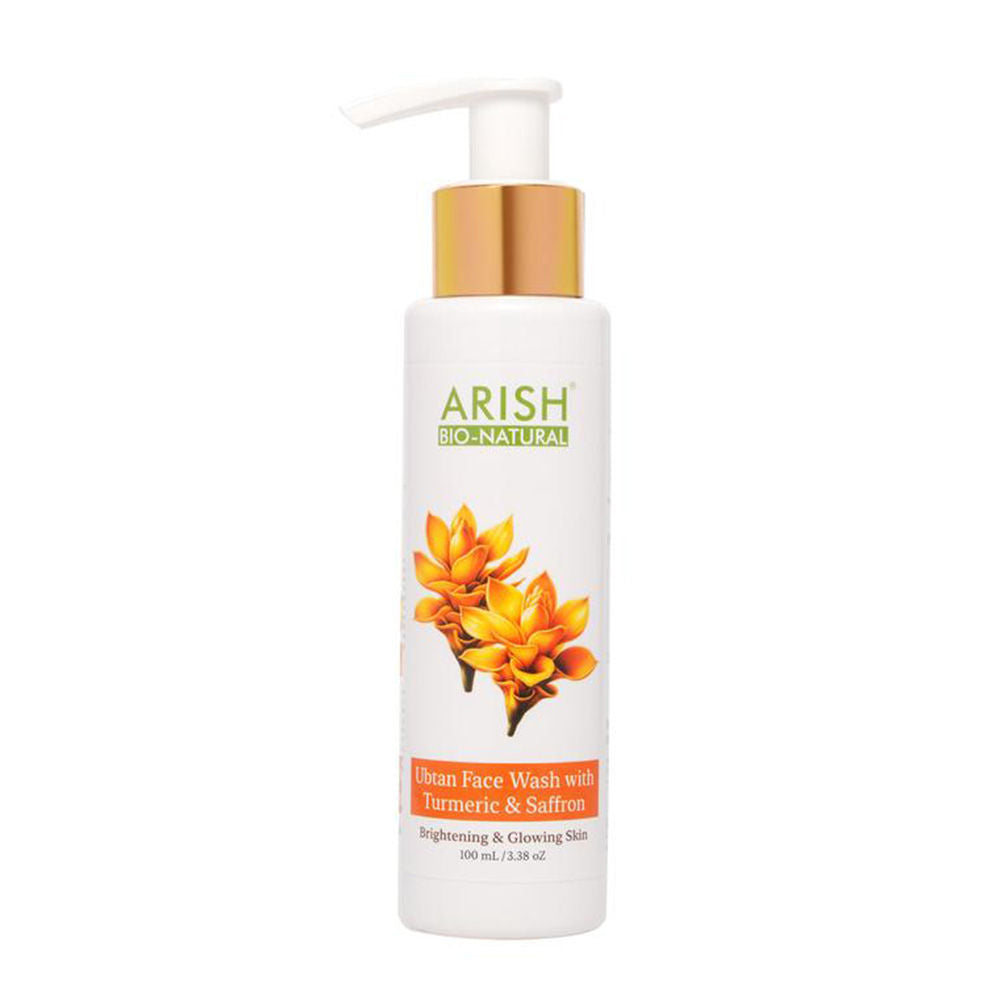

ARISH BIO-NATURAL
ARISH BIO-NATURAL Ubtan Face Wash With Turmeric and Saffron

ARISH BIO-NATURAL Ubtan Face Wash With Turmeric and Saffron
ARISH BIO-NATURAL
arish-bio-natural-ubtan-face-wash-with-turmeric-and-saffron
Cleanse
10085113299237
Morning or Evening?
How often will you use this product?
Notes


Highlights
WHAT IS IT?
Ubtan Face Wash
FEATURES
BEST FOR
CHECKS
Who Is It For?
What Does It Help With?
Budget
Affordable (under $30)How To Use
Which routine should it be used in?
Instructions:
Key Information

About the Brand:
Ingredients Overview
Ingredients List
Haridra Extract, Saffron Extract, Sandalwood Oil, Chandan, Walnut shell Powder, Vit E Acetate, Coco Amino Propyl Betaine, Stearic Acid, Xanthan Gum, Ethylene Glycol Distearate, Coco Diethanolamide, Sodium Benzoate, Sunset Yellow FCF, Purified Water
Key Ingredients
turmeric, saffron
Ingredients Details
Purified Water
Common Name(s): Purified water,botanical extract,phytochemical active
CAS Number: N/a
DESCRIPTION
What It Does: Provides antioxidant protection, anti-inflammatory activity, and skin conditioning from polyphenols, terpenoids, and phytochemicals.
Why It's Used: Multi-functional phytochemical profiles support concurrent skin care claims with authentic botanical heritage from one ingredient.
How It Works: Polyphenols scavenge ros, inhibit nf-kb/cox pathways, and interact with skin surface proteins for conditioning.
Typically Found In: Botanical skin care,natural products
TECHNICAL DETAILS
Primary Category: Active ingredient – antioxidant
Secondary Functions: Free radical scavenging,anti-aging
Application Areas:

Facial Skincare
Body Care

Hair Care
Beard Care
Color Cosmetics (Makeup)
Dietary/Oral Supplements
Typical Concentration Range: 0.1%–30%
SOURCING & ETHICS
Vegan Status: Conditional
Halal Status: Conditional
Source Notes: Plant-derived extract or synthetic.
SKIN COMPATIBILITY
Irritancy Rating: 1/5 – very low
Comedogenicity Rating: 0/5 – non-comedogenic
Sensitivity Concerns: Non-irritating; well-tolerated.
Safe for Sensitive Skin: Yes
SAFETY & COMPATIBILITY
Safety Profile: Excellent safety profile. ewg score: 1.
Works Well With: Vitamin c,vitamin e,ferulic acid,spf,other antioxidants
Avoid Combining With: No significant incompatibilities
SCIENTIFIC NOTE
Plant secondary metabolites evolved for uv photoprotection and pathogen defence — mechanisms directly translatable to cosmetic antioxidant and anti-inflammatory activity in human skin.
Last Verified: Cosing database,purified water botanical review
Primary Sources: 2026-03-12
Sodium Benzoate
Common Name(s): Benzoic acid sodium salt,e211 food preservative
CAS Number: 532-32-1
DESCRIPTION
What It Does: Preserves acidic formulations against yeast and mold contamination.
Why It's Used: Natural-derived (from benzoic acid found in cranberries, cinnamon) preservative for acidic ph formulations where it provides excellent antimicrobial activity.
How It Works: Undissociated benzoic acid (active form, pka 4.2) penetrates microbial cell membranes and disrupts electron transport chain and ph homeostasis. at ph>5, mostly ionized (sodium salt) and inactive – requires acidic formulation ph for efficacy.
Typically Found In: Acidic serums,toners,low-ph formulations
TECHNICAL DETAILS
Primary Category: Functional ingredient – benzoate preservative
Secondary Functions: Skin conditioning
Application Areas:
Facial Skincare
Body Care
Hair Care
Beard Care
Color Cosmetics (Makeup)
Dietary/Oral Supplements
Typical Concentration Range: 0.1%–0.5%
SOURCING & ETHICS
Vegan Status: Yes – from plant sources (cranberry, cinnamon) or synthetic
Halal Status: Yes
Source Notes: Commercially produced for cosmetic use. verify vegan/halal status with supplier.
SKIN COMPATIBILITY
Irritancy Rating: 1/5 – very low
Comedogenicity Rating: 0/5 – non-comedogenic
Sensitivity Concerns: Well-tolerated by most skin types.
Safe for Sensitive Skin: Yes
SAFETY & COMPATIBILITY
Safety Profile: Eu max 0.5%. gras food additive. ewg score: 3 (benzene formation concern with vitamin c at >80°c – normal use temperatures do not form benzene).
Works Well With: Standard skincare actives
Avoid Combining With: No known significant incompatibilities
SCIENTIFIC NOTE
Sodium benzoate's strict ph dependency (90% inactive at ph>5.5) makes its preservative activity dramatically sensitive to formulation ph. a serum formulated at ph 4.0 is fully preserved by benzoate; the same formula adjusted to ph 5.5 has <10% of the preservative activity. this ph dependency must be considered in any benzoate-preserved formulation.
Last Verified: Cosing database,siegert & frieling benzoate review,cir safety assessment
Primary Sources: 2026-03-12
Stearic Acid
Common Name(s): Octadecanoic acid,n-octadecanoic acid,stearinsaure
CAS Number: 57-11-4
DESCRIPTION
What It Does: Provides fatty acid thickening and emolliency with soap-forming emulsification when neutralized.
Why It's Used: Classic cosmetic fatty acid used in virtually all cream and lotion formulations for thickening, emolliency, and opacification.
How It Works: Forms metal soaps (sodium stearate, potassium stearate) on reaction with alkalis for self-emulsification. crystallizes in lamellar networks for thickening. waxy solid provides opacification. low-viscosity melt above 69°c for easy processing.
Typically Found In: Creams,soaps,cleansers,emulsions – foundational ingredient
TECHNICAL DETAILS
Primary Category: Functional ingredient – c18 saturated fatty acid
Secondary Functions: Barrier sealing,softening
Application Areas:
Facial Skincare
Body Care
Hair Care
Beard Care
Color Cosmetics (Makeup)
Dietary/Oral Supplements
Typical Concentration Range: 1%–15%
SOURCING & ETHICS
Vegan Status: Yes – from vegetable (palm, shea, soy stearin)
Halal Status: Yes
Source Notes: Plant-derived, synthetic or animal-derived. verify source.
SKIN COMPATIBILITY
Irritancy Rating: 1/5 – very low
Comedogenicity Rating: 2/5 – low
Sensitivity Concerns: Non-irritating.
Safe for Sensitive Skin: Yes
SAFETY & COMPATIBILITY
Safety Profile: Excellent safety profile. ewg score: 1.
Works Well With: Humectants,ceramides,actives as carrier
Avoid Combining With: No significant incompatibilities
SCIENTIFIC NOTE
Stearic acid's dual role as both an emulsifier precursor (when saponified to sodium stearate soap) and an emollient (as unmodified fatty acid) is unique among cosmetic fatty acids. in soap-based cleansers, stearic acid is intentionally partially saponified to create a balanced system: excess stearic acid provides skin-conditioning emolliency while the sodium stearate provides surfactancy – the chemical basis for 'superfatted' soaps.
Last Verified: Cosing database,cir safety assessment
Primary Sources: 2026-03-12
Walnut Shell Powder
Common Name(s): Walnut shell powder,botanical extract,phytochemical active
CAS Number: N/a
DESCRIPTION
What It Does: Provides antioxidant protection, anti-inflammatory activity, and skin conditioning from polyphenols, terpenoids, and phytochemicals.
Why It's Used: Multi-functional phytochemical profiles support concurrent skin care claims with authentic botanical heritage.
How It Works: Polyphenols scavenge ros, inhibit nf-kb/cox pathways, and condition skin through phytochemical interactions.
Typically Found In: Botanical skin care
TECHNICAL DETAILS
Primary Category: Active ingredient – antioxidant
Secondary Functions: Free radical scavenging,anti-aging
Application Areas:
Facial Skincare
Body Care
Hair Care
Beard Care
Color Cosmetics (Makeup)
Dietary/Oral Supplements
Typical Concentration Range: 0.1%–30%
SOURCING & ETHICS
Vegan Status: Conditional
Halal Status: Conditional
Source Notes: Plant-derived extract or synthetic.
SKIN COMPATIBILITY
Irritancy Rating: 1/5 – very low
Comedogenicity Rating: 0/5 – non-comedogenic
Sensitivity Concerns: Non-irritating; well-tolerated.
Safe for Sensitive Skin: Yes
SAFETY & COMPATIBILITY
Safety Profile: Excellent safety profile. ewg score: 1.
Works Well With: Vitamin c,vitamin e,ferulic acid,spf,other antioxidants
Avoid Combining With: No significant incompatibilities
SCIENTIFIC NOTE
Plant secondary metabolites evolved for uv photoprotection and pathogen defence — mechanisms directly translatable to cosmetic antioxidant and anti-inflammatory activity in human skin.
Last Verified: Cosing database,walnut shell powder botanical review
Primary Sources: 2026-03-12
