

Eminence Organic Skin Care
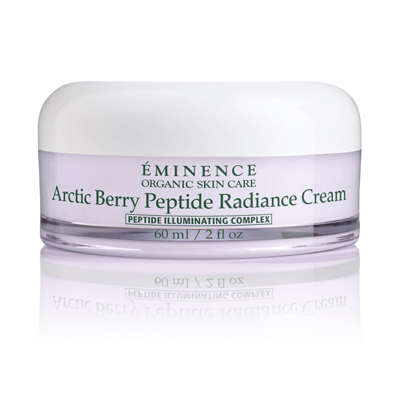
Arctic Berry Peptide Radiance Cream

Arctic Berry Peptide Radiance Cream
Eminence Organic Skin Care
arctic-berry-peptide-radiance-cream
Moisturize
9628193227045
Morning or Evening?
How often will you use this product?
Notes


Highlights
WHAT IS IT?
Daily moisturizer
FEATURES
Contains Peptide Illuminating Complex, suitable for all skin types
BEST FOR
All skin types
CHECKS
Does not contain SLS
Who Is It For?
Adults Women And MenWhat Does It Help With?
Smoothing Evening Skin Tone And Enhancing LuminosityBudget
PremiumHow To Use
Which routine should it be used in?
Instructions:
Key Information


What Eminence Organic Skin Care Says
Product Description:
Transform the appearance of your skin with this all-powerful daily moisturizer that features our exclusive Peptide Illuminating Complex. Reveal your radiance naturally and discover smooth, even and luminous skin.
About the Brand:
Ingredients Overview
Ingredients List
Acai Berry Juice, Seabuckthorn Berry Juice, Raspberry Juice, Blueberry Juice, Goji Berry Juice, Aloe Juice, Lemon Peel Extract, Blackberry Leaf Extract, Gotu Kola Extract, Sunflower Seed Oil and Soy Lecithin], Corn Germ Oil, Cetearyl Alcohol, Cetearyl Glucoside, Shea Butter, Vegetable Glycerin, Grape Seed Oil, Caprylic/Capric Triglyceride, Stearic Acid, Acai Fruit Extract, Marine Algae Extract, Tara Tree Gum, Beeswax, Sesame Seed Oil, Seabuckthorn Fruit Extract, Seabuckthorn Oil, Marshmallow Plant Extract, Ginger Root Extract, Benzyl Alcohol, Dehydroacetic Acid, Xanthan Gum, Corn-derived Methyl Glucose Sesquistearate, Salicylic Acid, Vegetable Squalane, Vitamin E, Sodium Benzoate, Potassium Sorbate, Raspberry Extract, Lemon Oil, Vitamin C Ester, Soy Lecithin, Biocomplex2TM [Acai, Lemon, Barbados Cherry, Indian Gooseberry, Baobab, Camu Camu, Carrot, Coconut Water, Goji Berry, Tapioca Starch (from Cassava Root), Alpha Lipoic Acid and Coenzyme Q10
Key Ingredients
Arctic Plants & Berries, Lingonberry Seed Oil, Peptide Illuminating Complex, Hibiscus Seed Extract Peptides, Yellow Plum, Gardenia Stem Cells, Gotu-Kola Stem Cells, Biophytex™
Ingredients Details
Biophytex™
Common Name(s): Biophytex™
DESCRIPTION
What It Does: Delivers targeted skin-conditioning or bioactive benefits through a specific mechanism of action suited to the formulation's intended purpose.
Why It's Used: Specialty actives address specific skin concerns through targeted molecular mechanisms, providing efficacy beyond what base formulation ingredients alone can achieve.
How It Works: The bioactive compound interacts with specific molecular targets in skin cells or the extracellular matrix — enzymes, receptors, structural proteins, or signaling molecules — triggering beneficial biological responses.
Typically Found In: Serums,treatments,moisturizers,specialty products
TECHNICAL DETAILS
Primary Category: Specialty actives
Secondary Functions: Skin-conditioning,anti-aging
Application Areas:

Facial Skincare

Body Care
Hair Care
Beard Care
Color Cosmetics (Makeup)
Dietary/Oral Supplements
Typical Concentration Range: 0.01–5%
SOURCING & ETHICS
Vegan Status: Conditional - supplier confirmation required
Halal Status: Unverified - supplier confirmation required
Source Notes: Specialty active ingredient; check individual sourcing for vegan status. [audit 2026-07-29 rev2: the record's own source_notes does not assert a non-animal origin, or instructs the reader to verify with the supplier; "yes" asserts knowledge the record does not hold. determination requires shariah-panel sign-off.]
SKIN COMPATIBILITY
Irritancy Rating: 1899-12-31 00:00:00 -0800
Sensitivity Concerns: Low sensitization potential at recommended use concentrations.
Safe for Sensitive Skin: Yes
SAFETY & COMPATIBILITY
Safety Profile: Well-characterized cosmetic ingredient with established safety profile. generally non-irritating at typical use concentrations. suitable for leave-on and rinse-off cosmetics.
Works Well With: Niacinamide,hyaluronic acid,vitamin c,peptides
Avoid Combining With: Incompatible with oxidizing agents; check ph stability
SCIENTIFIC NOTE
Specialty actives typically work through enzyme inhibition (e.g., tyrosinase inhibition for brightening, mmp inhibition for anti-aging), receptor activation (e.g., retinoid receptors, ppar-γ for barrier genes), or transcription factor modulation (e.g., nrf2 for antioxidant gene upregulation). structure-activity relationships determine potency and selectivity.
Last Verified: 2025-01-15
Primary Sources: Cosing eu database; pcpc cosmetic ingredient safety reviews; ingredient-specific safety and efficacy literature
Gardenia Stem Cells
Common Name(s): Gardenia stem cells
DESCRIPTION
What It Does: Delivers targeted skin-conditioning or bioactive benefits through a specific mechanism of action suited to the formulation's intended purpose.
Why It's Used: Specialty actives address specific skin concerns through targeted molecular mechanisms, providing efficacy beyond what base formulation ingredients alone can achieve.
How It Works: The bioactive compound interacts with specific molecular targets in skin cells or the extracellular matrix — enzymes, receptors, structural proteins, or signaling molecules — triggering beneficial biological responses.
Typically Found In: Serums,treatments,moisturizers,specialty products
TECHNICAL DETAILS
Primary Category: Specialty actives
Secondary Functions: Skin-conditioning,anti-aging
Application Areas:
Facial Skincare
Body Care
Hair Care
Beard Care
Color Cosmetics (Makeup)
Dietary/Oral Supplements
Typical Concentration Range: 0.01–5%
SOURCING & ETHICS
Vegan Status: Conditional - supplier confirmation required
Halal Status: Unverified - supplier confirmation required
Source Notes: Specialty active ingredient; check individual sourcing for vegan status. [audit 2026-07-29 rev2: the record's own source_notes does not assert a non-animal origin, or instructs the reader to verify with the supplier; "yes" asserts knowledge the record does not hold. determination requires shariah-panel sign-off.]
SKIN COMPATIBILITY
Irritancy Rating: 1899-12-31 00:00:00 -0800
Sensitivity Concerns: Low sensitization potential at recommended use concentrations.
Safe for Sensitive Skin: Yes
SAFETY & COMPATIBILITY
Safety Profile: Well-characterized cosmetic ingredient with established safety profile. generally non-irritating at typical use concentrations. suitable for leave-on and rinse-off cosmetics.
Works Well With: Niacinamide,hyaluronic acid,vitamin c,peptides
Avoid Combining With: Incompatible with oxidizing agents; check ph stability
SCIENTIFIC NOTE
Specialty actives typically work through enzyme inhibition (e.g., tyrosinase inhibition for brightening, mmp inhibition for anti-aging), receptor activation (e.g., retinoid receptors, ppar-γ for barrier genes), or transcription factor modulation (e.g., nrf2 for antioxidant gene upregulation). structure-activity relationships determine potency and selectivity.
Last Verified: 2025-01-15
Primary Sources: Cosing eu database; pcpc cosmetic ingredient safety reviews; ingredient-specific safety and efficacy literature
Gotu Kola Stem Cells
Common Name(s): Gotu kola stem cells
DESCRIPTION
What It Does: Delivers targeted skin-conditioning or bioactive benefits through a specific mechanism of action suited to the formulation's intended purpose.
Why It's Used: Specialty actives address specific skin concerns through targeted molecular mechanisms, providing efficacy beyond what base formulation ingredients alone can achieve.
How It Works: The bioactive compound interacts with specific molecular targets in skin cells or the extracellular matrix — enzymes, receptors, structural proteins, or signaling molecules — triggering beneficial biological responses.
Typically Found In: Serums,treatments,moisturizers,specialty products
TECHNICAL DETAILS
Primary Category: Specialty actives
Secondary Functions: Skin-conditioning,anti-aging
Application Areas:
Facial Skincare
Body Care
Hair Care
Beard Care
Color Cosmetics (Makeup)
Dietary/Oral Supplements
Typical Concentration Range: 0.01–5%
SOURCING & ETHICS
Vegan Status: Conditional - supplier confirmation required
Halal Status: Unverified - supplier confirmation required
Source Notes: Specialty active ingredient; check individual sourcing for vegan status. [audit 2026-07-29 rev2: the record's own source_notes does not assert a non-animal origin, or instructs the reader to verify with the supplier; "yes" asserts knowledge the record does not hold. determination requires shariah-panel sign-off.]
SKIN COMPATIBILITY
Irritancy Rating: 1899-12-31 00:00:00 -0800
Sensitivity Concerns: Low sensitization potential at recommended use concentrations.
Safe for Sensitive Skin: Yes
SAFETY & COMPATIBILITY
Safety Profile: Well-characterized cosmetic ingredient with established safety profile. generally non-irritating at typical use concentrations. suitable for leave-on and rinse-off cosmetics.
Works Well With: Niacinamide,hyaluronic acid,vitamin c,peptides
Avoid Combining With: Incompatible with oxidizing agents; check ph stability
SCIENTIFIC NOTE
Specialty actives typically work through enzyme inhibition (e.g., tyrosinase inhibition for brightening, mmp inhibition for anti-aging), receptor activation (e.g., retinoid receptors, ppar-γ for barrier genes), or transcription factor modulation (e.g., nrf2 for antioxidant gene upregulation). structure-activity relationships determine potency and selectivity.
Last Verified: 2025-01-15
Primary Sources: Cosing eu database; pcpc cosmetic ingredient safety reviews; ingredient-specific safety and efficacy literature
Hibiscus Seed Extract Peptides
Common Name(s): Hibiscus seed extract peptides
DESCRIPTION
What It Does: Supports anti-aging skin structure by stimulating collagen and elastin synthesis and modulating skin matrix metalloproteinase activity.
Why It's Used: Peptide sequences mimic endogenous skin communication molecules, triggering cellular responses that decline with age — restoring youthful skin structure.
How It Works: Specific amino acid sequences bind to cell surface receptors or penetrate to fibroblasts where they activate growth factor pathways, tgf-β signaling, or mmp-inhibiting mechanisms, stimulating ecm remodeling.
Typically Found In: Anti-aging serums,ampoules,eye creams,firming moisturizers
TECHNICAL DETAILS
Primary Category: Bioactive peptides
Secondary Functions: Anti-aging,skin-conditioning
Application Areas:
Facial Skincare
Body Care
Hair Care
Beard Care
Color Cosmetics (Makeup)
Dietary/Oral Supplements
Typical Concentration Range: 0.001–2%
SOURCING & ETHICS
Vegan Status: Yes
Halal Status: Yes
Source Notes: Synthetic or recombinant peptide; no animal-derived material.
SKIN COMPATIBILITY
Irritancy Rating: 1899-12-31 00:00:00 -0800
Sensitivity Concerns: Low sensitization potential at recommended use concentrations.
Safe for Sensitive Skin: Yes
SAFETY & COMPATIBILITY
Safety Profile: Well-characterized cosmetic ingredient with established safety profile. generally non-irritating at typical use concentrations. suitable for leave-on and rinse-off cosmetics.
Works Well With: Retinol,vitamin c,hyaluronic acid,niacinamide
Avoid Combining With: Proteolytic enzymes (papain, bromelain); extreme ph
SCIENTIFIC NOTE
Cosmetic peptides are typically 2–10 amino acids, short enough for transdermal penetration but specific enough for receptor binding. their bioactivity depends on sequence (primary structure), lipophilization (e.g., palmitoyl modification increases skin penetration 10-fold), and resistance to skin proteases — often achieved through d-amino acid substitution or terminal modifications.
Last Verified: 2025-01-15
Primary Sources: Cosing eu database; pcpc cosmetic ingredient safety reviews; j pept sci peptide cosmetic reviews; j cosmet dermatol clinical studies