

Nykaa E retail limited
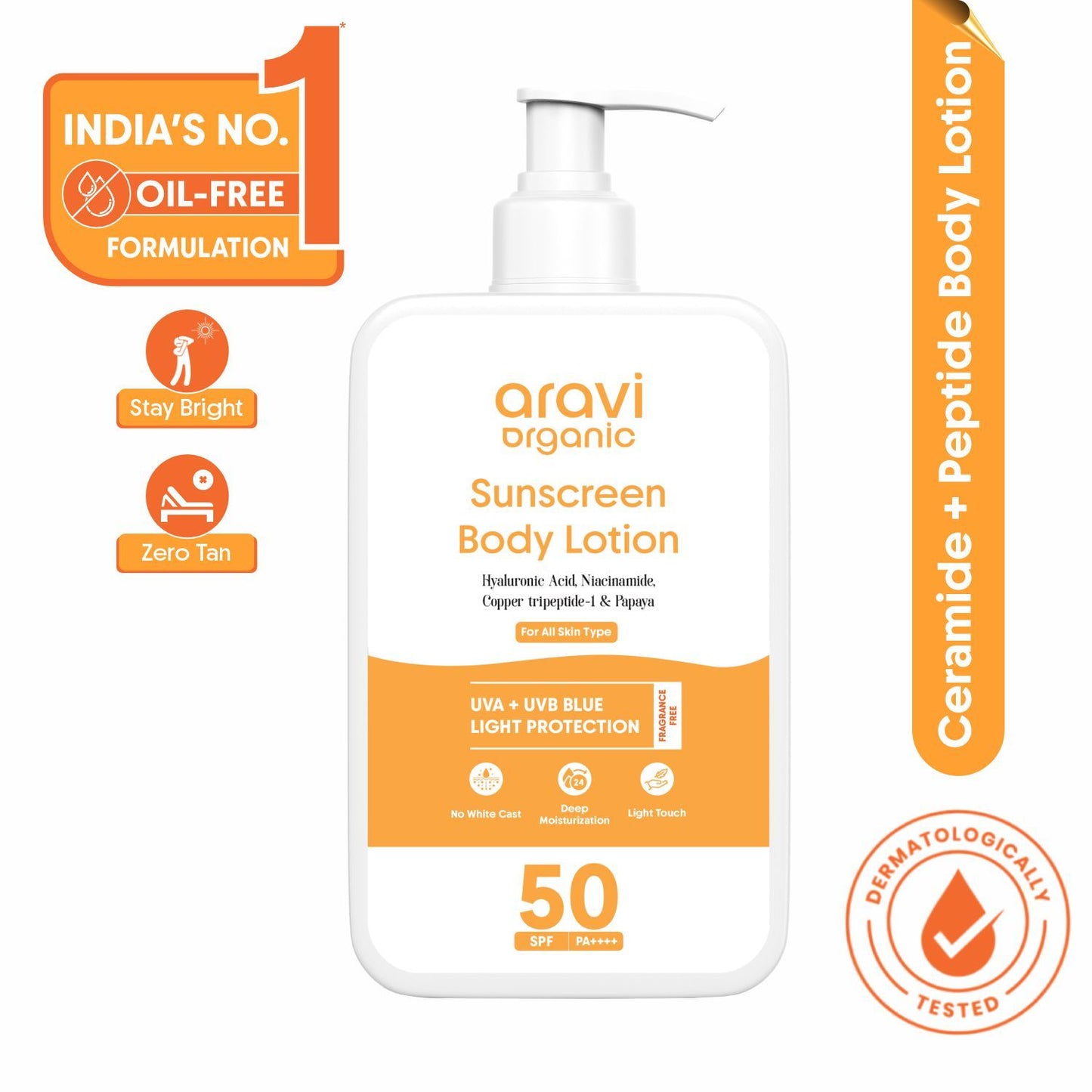
ARAVI ORGANIC OIL-FREE SPF50+ SUNSCREEN BODY LOTION WITH PA++++, HYALURONIC ACID & NIACINAMIDE(200ML)

ARAVI ORGANIC OIL-FREE SPF50+ SUNSCREEN BODY LOTION WITH PA++++, HYALURONIC ACID & NIACINAMIDE(200ML)
Nykaa E retail limited
aravi-organic-oil-free-spf50-sunscreen-body-lotion-with-pa-hyaluronic-acid-niacinamide-200ml
Body care
10084810391845
Morning or Evening?
How often will you use this product?
Notes


Highlights
WHAT IS IT?
Oil-Free SPF50+ Sunscreen Body Lotion
FEATURES
BEST FOR
CHECKS
Oil-free
Who Is It For?
What Does It Help With?
Budget
Affordable (under $30)How To Use
Which routine should it be used in?
Instructions:
Key Information


About the Brand:
Ingredients Overview
Ingredients List
Aqua, Ethylhexyl Methoxycinnamate (and) Butyl Methoxydibenzoylmethane (and) Phospholipids (and) 1,3-Butylene Glycol (and) Phenoxyethanol Polyacrylamide (and) C13-14 Isoalkane (Formerly C13-14 Isoparaffin) (and) Laureth-7, Zinc oxide, Micronized Titanium Dioxide, Potassium Cetyl Phosphate, Sodium Acrylates Copolymer (and) Lecithin, Phenoxyethanol with Ethylhexylglycerin, Glycerine, Sodium PCA, Isopropyl Myristate, Sodium Hyaluronate, Niacinamide, Ceramide-NP, Copper tripeptide-1, Papaya Extract, Licorice Root Extract, Rosemary Extract, Turmeric Extract, Allantoin, Squalene, Xylitylglucoside (and) Anhydroxylitol (and) Xylitol
Key Ingredients
hyaluronic acid,niacinamide
Ingredients Details
Allantoin
Common Name(s): 5-ureidohydantoin,glyoxyldiureide,aluminum dihydroxy allantoinate
CAS Number: 97-59-6
DESCRIPTION
What It Does: Soothes irritation, accelerates wound healing, promotes skin cell renewal, and provides mild keratolytic exfoliation.
Why It's Used: Gold standard multi-function soothing active – one of the most widely used cosmetic ingredients across all product types for its exceptional tolerability and clinically proven multi-action skin conditioning.
How It Works: Promotes keratinocyte proliferation and fibroblast migration for wound healing. mild keratolytic activity by disrupting corneocyte binding. anti-irritant via direct protein binding and anti-inflammatory cytokine reduction. humectant activity via hydroxyl groups.
Typically Found In: Post-procedure products,sensitive skin formulas,wound care,anti-acne treatments,baby products
TECHNICAL DETAILS
Primary Category: Active ingredient – soothing / anti-inflammatory
Secondary Functions: Wound healing,keratolytic,anti-irritant
Application Areas:

Facial Skincare
Body Care

Hair Care
Beard Care
Color Cosmetics (Makeup)
Dietary/Oral Supplements
Typical Concentration Range: 0.1%–2%
SOURCING & ETHICS
Vegan Status: Yes – synthetic or comfrey-derived
Halal Status: Yes
Source Notes: Plant-derived extract or synthetic.
SKIN COMPATIBILITY
Irritancy Rating: 1/5 – very low
Comedogenicity Rating: 0/5 – non-comedogenic
Sensitivity Concerns: Exceptionally well-tolerated; suitable for all skin types including baby and compromised skin.
Safe for Sensitive Skin: Yes – particularly recommended for sensitive skin
SAFETY & COMPATIBILITY
Safety Profile: Excellent safety profile. ewg score: 1.
Works Well With: Ceramides,panthenol,allantoin,hyaluronic acid,centella asiatica
Avoid Combining With: No significant incompatibilities
SCIENTIFIC NOTE
Allantoin's keratinocyte proliferation stimulation occurs via receptor-mediated signaling (possibly machr activation) rather than non-specific irritation-driven proliferation, making it a true wound-healing stimulant rather than a pro-inflammatory proliferative signal.
Last Verified: Cosing database,cir safety assessment,araújo et al. allantoin review
Primary Sources: 2026-03-12
Copper Tripeptide-1
Common Name(s): Ghk-cu,copper peptide,gly-his-lys:copper complex
CAS Number: 49557-75-7
DESCRIPTION
What It Does: Stimulates collagen and elastin, accelerates wound healing, activates antioxidant enzymes, and reduces inflammation with an exceptional evidence base.
Why It's Used: Most extensively studied carrier peptide with proven wound healing, anti-aging, and even hair growth efficacy from 50+ years of peer-reviewed research.
How It Works: Copper delivery to enzyme cofactor sites activates sod (antioxidant), lysyl oxidase (collagen crosslinking), and cytochrome c oxidase (cellular energy). ghk moiety signals tgf-beta1 for fibroblast proliferation and collagen synthesis.
Typically Found In: Anti-aging serums,wound healing products,hair growth treatments
TECHNICAL DETAILS
Primary Category: Active ingredient – ghk-cu copper carrier peptide
Secondary Functions: Copper delivery,antioxidant enzyme activation,wound healing
Application Areas:
Facial Skincare
Body Care
Hair Care
Beard Care
Color Cosmetics (Makeup)
Dietary/Oral Supplements
Typical Concentration Range: 0.1%–2%
SOURCING & ETHICS
Vegan Status: Yes – synthetic
Halal Status: Yes
Source Notes: Synthetically produced; copper-peptide complex requires careful formulation.
SKIN COMPATIBILITY
Irritancy Rating: 1/5 – very low
Comedogenicity Rating: 0/5 – non-comedogenic
Sensitivity Concerns: Non-irritating; suitable for sensitive skin.
Safe for Sensitive Skin: Yes
SAFETY & COMPATIBILITY
Safety Profile: Excellent safety profile. ewg score: 1.
Works Well With: Hyaluronic acid,ceramides,antioxidants
Avoid Combining With: Avoid mixing with high-concentration ahas (copper chelation concern); high-dose vitamin c (ascorbate competes for copper binding)
SCIENTIFIC NOTE
Ghk-cu has been shown to activate over 4,000 human genes involved in tissue remodeling and wound healing. pickart's seminal work documented the peptide's ability to restore aging skin by activating the same gene expression programs active in wound healing.
Last Verified: Cosing database,pickart et al. ghk-cu 50-year review,hostynek et al. clinical study
Primary Sources: 2026-03-12
Glycerine
Common Name(s): Glycerin,universal humectant,water-binding skin conditioning
CAS Number: N/a
DESCRIPTION
What It Does: Attracts and retains moisture in the sc, improves skin barrier function at low concentrations, provides gentle keratolytic softening, and acts as a co-solvent for water-soluble actives.
Why It's Used: The reference humectant — lowest cost, best safety profile, universal formulation compatibility, and present naturally in the sc via lipase-mediated glycerolipid hydrolysis makes glycerin the industry standard against which all humectants are benchmarked.
How It Works: Three hydroxyl groups form 6 h-bonds with water molecules per glycerol unit — the highest oh-group density per carbon of any commercial humectant. glycerin also down-regulates epidermal serine proteases that overactivate in dry sc, improving desquamation and barrier integrity.
Typically Found In: All cosmetics,universal
TECHNICAL DETAILS
Primary Category: Functional ingredient – humectant
Secondary Functions: Tewl reduction,skin plumping
Application Areas:
Facial Skincare
Body Care
Hair Care
Beard Care
Color Cosmetics (Makeup)
Dietary/Oral Supplements
Typical Concentration Range: 1%–40%
SOURCING & ETHICS
Vegan Status: Yes
Halal Status: Yes
Source Notes: Synthetic or naturally derived. excellent aqueous solubility.
SKIN COMPATIBILITY
Irritancy Rating: 1/5 – very low
Comedogenicity Rating: 0/5 – non-comedogenic
Sensitivity Concerns: Non-irritating; suitable for all skin types.
Safe for Sensitive Skin: Yes
SAFETY & COMPATIBILITY
Safety Profile: Excellent safety profile. ewg score: 1.
Works Well With: Ceramides,emollients,occlusives,glycerin,hyaluronic acid
Avoid Combining With: No significant incompatibilities
SCIENTIFIC NOTE
Epidermal lipases hydrolyse sc glycerophospholipids during cornification, releasing glycerol that contributes to the natural nmf — topical glycerin directly supplements this endogenous sc humectant pool.
Last Verified: Cosing database,glycerin universal humectant review
Primary Sources: 2026-03-12
Isopropyl Myristate
Common Name(s): Ipm,isopropyl tetradecanoate
CAS Number: 110-27-0
DESCRIPTION
What It Does: Provides dry, non-greasy emolliency with spreading and penetration enhancement from an ester vehicle.
Why It's Used: Standard ester emollient for dry-touch formulations requiring spreading enhancement and non-greasy after-feel.
How It Works: Isopropyl ester of myristic acid provides low viscosity (4-5 cp) and low surface tension for excellent spreading. penetration enhancement via temporary stratum corneum lipid disruption. dry skin feel from rapid absorption without occlusive film.
Typically Found In: Dry-touch lotions,penetration-enhanced products,light skin care
TECHNICAL DETAILS
Primary Category: Functional ingredient – ester emollient
Secondary Functions: Barrier sealing,softening
Application Areas:
Facial Skincare
Body Care
Hair Care
Beard Care
Color Cosmetics (Makeup)
Dietary/Oral Supplements
Typical Concentration Range: 1%–10%
SOURCING & ETHICS
Vegan Status: Yes – from isopropyl alcohol and myristic acid (vegetable)
Halal Status: Yes
Source Notes: Plant-derived, synthetic or animal-derived. verify source.
SKIN COMPATIBILITY
Irritancy Rating: 1/5 – very low
Comedogenicity Rating: 3/5 – moderate comedogenic potential
Sensitivity Concerns: Non-irritating.
Safe for Sensitive Skin: Yes
SAFETY & COMPATIBILITY
Safety Profile: Excellent safety profile. ewg score: 1.
Works Well With: Humectants,ceramides,actives as carrier
Avoid Combining With: No significant incompatibilities
SCIENTIFIC NOTE
Ipm's dry-touch emolliency arises from rapid penetration into the stratum corneum leaving no surface film – unlike occlusive oils that remain on the surface, ipm is quickly absorbed, providing conditioning from within the barrier without leaving greasy residue. this 'self-disappearing' emolliency made ipm revolutionary when introduced in cosmetics in the 1950s.
Last Verified: Cosing database,cir safety assessment
Primary Sources: 2026-03-12
