
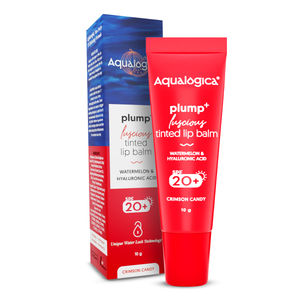

Aqualogica
Aqualogica Crimson Candy Plump+ Luscious Tinted SPF 20+ Lip Balm with Watermelon & Hyaluronic Acid - 10 gm

Aqualogica Crimson Candy Plump+ Luscious Tinted SPF 20+ Lip Balm with Watermelon & Hyaluronic Acid - 10 gm
Aqualogica
aqualogica-crimson-candy-plump-luscious-tinted-spf-20-lip-balm-with-watermelon-hyaluronic-acid-10-gm
Lip care
10085007556901
Morning or Evening?
How often will you use this product?
Notes


Highlights
WHAT IS IT?
Lip Balm with 2 main ingredients (Watermelon, Hyaluronic Acid)
FEATURES
Hydrates lips, sun protected with SPF 20+, lightweight formula, moisturizes, makes lips plump, supple and smooth, adds a burst of color
BEST FOR
sensitive
CHECKS
Does not contain sticky formula
Who Is It For?
All Genders Age Not SpecifiedWhat Does It Help With?
Dryness Lip Hydration Sun Protection Plumping Lips Adding ColorBudget
Affordable (under $30)How To Use
Which routine should it be used in?
Instructions:
Key Information


What Aqualogica Says
Product Description:
Say hello to a pout that's hydrated sun protected sassy and ready to steal the spotlight with our Crimson Candy Plump Luscious Tinted Lip Balm that has SPF 20 And oh Don't worry about that sticky feeling on your lips we promise the formula is extremely lightweight. Now let's dive into the juicy details shall we It's all about that delicious Watermelon that keeps lips super moisturized making them appear plump supple and smooth. Also let's not forget our lip hydration superhero Hyaluronic Acid It says no thank you to dryness and gives you irresistibly soft lips that are kissworthy. Did we mention the best part This isn't your ordinary lip balm it gives you oh-so-pouty lips and a burst of luscious color too. Get ready to slay your lips with the perfect blend of fruits and actives and we bet hydration has never been this juicy and fun
About the Brand:
Ingredients Overview
Ingredients List
Polybutene, Rosa Rubiginosa Seed Oil, Octyldodecanol, Ethyl Hexyl Palmitate, Castor Seed Oil, Ethylhexyl Methoxycinnamate, Silica, Cera Microcristallina, Phenyl Trimethicone, Caprylic/Capric Triglyceride (and) Stearalkonium Hectorite (and) Propylene Carbonate, Hyaluronic Acid, Watermelon Extract, Pentaerythrityl Tetra-di-t-butyl Hydroxyhydrocinnamate, Flavor, Glyceryl Glucoside, May Contain: CI77891, CI15850, CI19140, CI42090, CI45410, CI77491, CI77492, CI77499
Key Ingredients
Watermelon,Hyaluronic Acid
Ingredients Details
Cera Microcristallina
Common Name(s): Cera microcristallina,microcrystalline wax,structuring wax occlusive emollient
CAS Number: N/a
DESCRIPTION
What It Does: Structures lip balms and anhydrous formulations through the wax crystal network, provides occlusive barrier protection reducing tewl, and conditions skin with the emollient fatty acids and esters in the wax composition.
Why It's Used: Plant-derived wax providing cosmos-acceptable structuring for vegan formulations replacing beeswax.
How It Works: Microcrystalline wax forms a crystalline wax network above its melting point (beeswax ~62°c; carnauba ~83°c; candelilla ~68°c). on cooling, wax crystals nucleate and grow forming a three-dimensional network that immobilises liquid oils — providing semi-solid stick structure. wax melting point determines temperature stability range for product use conditions.
Typically Found In: Lip care,anhydrous balms,emulsions
TECHNICAL DETAILS
Primary Category: Functional ingredient – emollient
Secondary Functions: Barrier sealing,softening
Application Areas:

Facial Skincare
Body Care
Hair Care

Beard Care
Color Cosmetics (Makeup)
Dietary/Oral Supplements
Typical Concentration Range: 1%–30%
SOURCING & ETHICS
Vegan Status: Conditional - supplier confirmation required
Halal Status: Unverified - supplier confirmation required
Source Notes: Plant-derived, synthetic or animal-derived. verify source. [audit 2026-07-29 rev2: the record's own source_notes does not assert a non-animal origin, or instructs the reader to verify with the supplier; "yes" asserts knowledge the record does not hold. determination requires shariah-panel sign-off.]
SKIN COMPATIBILITY
Irritancy Rating: 1/5 – very low
Comedogenicity Rating: 1/5 – low; formulation-dependent
Sensitivity Concerns: Non-irritating.
Safe for Sensitive Skin: Yes
SAFETY & COMPATIBILITY
Safety Profile: Excellent safety profile. ewg score: 1.
Works Well With: Humectants,ceramides,actives as carrier
Avoid Combining With: No significant incompatibilities
SCIENTIFIC NOTE
Carnauba (highest melting wax at ~83°c) provides the hardest, most heat-stable wax structure; beeswax (~62°c) provides more pliable, skin-compatible structure; candelilla (~68°c) provides the vegan beeswax alternative used in certified natural and vegan formulations.
Last Verified: 2026-03-12
Primary Sources: Cosing database,natural wax structuring emollient review
Ethylhexyl Methoxycinnamate
Common Name(s): Ethylhexyl methoxycinnamate,organic uv filter,photostabilising sunscreen active
CAS Number: N/a
DESCRIPTION
What It Does: Absorbs uv radiation at specific wavelengths (uva 320–400 nm, uvb 290–320 nm) and dissipates photon energy as heat rather than skin-damaging photochemical reactions.
Why It's Used: Organic uv filters are chosen for their high molar extinction coefficient, specific spectral coverage, and formulation compatibility — individual filters are combined to provide broad-spectrum coverage across uva+uvb.
How It Works: Uv photon absorption by the aromatic chromophore π-system excites the molecule from s₀ ground state to s₁ excited state. rapid internal conversion or photoisomerisation dissipates energy as vibrational heat before it can initiate skin photodamage.
Typically Found In: Sunscreens,photoprotective products
TECHNICAL DETAILS
Primary Category: Active ingredient – cosmetic active
Secondary Functions: Skin conditioning
Application Areas:
Facial Skincare
Body Care
Hair Care
Beard Care
Color Cosmetics (Makeup)
Dietary/Oral Supplements
Typical Concentration Range: Check local sunscreen regulations
SOURCING & ETHICS
Vegan Status: Conditional - supplier confirmation required
Halal Status: Unverified - supplier confirmation required
Source Notes: Commercially produced for cosmetic use. verify vegan/halal status with supplier. [audit 2026-07-29 rev2: the record's own source_notes does not assert a non-animal origin, or instructs the reader to verify with the supplier; "yes" asserts knowledge the record does not hold. determination requires shariah-panel sign-off.]
SKIN COMPATIBILITY
Irritancy Rating: 1/5 – very low
Comedogenicity Rating: 0/5 – non-comedogenic
Sensitivity Concerns: Well-tolerated by most skin types.
Safe for Sensitive Skin: Yes
SAFETY & COMPATIBILITY
Safety Profile: Good safety profile at recommended concentrations. ewg score: 1–2.
Works Well With: Standard skincare actives
Avoid Combining With: No known significant incompatibilities
SCIENTIFIC NOTE
Organic uv filters require photostabilisation (by avobenzone-octocrylene pairing, or triazine stabilisers) as some absorbers degrade on uv exposure — formulator must verify photostability of the chosen filter combination.
Last Verified: 2026-03-12
Primary Sources: Cosing database,ethylhexyl methoxycinnamate organic uv filter review
Flavor
Common Name(s): Fragrance ingredient,eu allergen or aromatic component,olfactory/flavour
CAS Number: N/a
DESCRIPTION
What It Does: Provides the complete fragrance profile contributing to product sensory experience and consumer appeal.
Why It's Used: Fragrance is a major consumer purchase driver — up to 70% of consumers make purchasing decisions partially based on product scent.
How It Works: Fragrance blends interact with olfactory receptors providing the sensory profile — complex mixtures activate multiple receptor types for rich, multidimensional scent experiences.
Typically Found In: All fragrance products
TECHNICAL DETAILS
Primary Category: Active ingredient – cosmetic active
Secondary Functions: Skin conditioning
Application Areas:
Facial Skincare
Body Care
Hair Care
Beard Care
Color Cosmetics (Makeup)
Dietary/Oral Supplements
Typical Concentration Range: Standard use levels
SOURCING & ETHICS
Vegan Status: Conditional - supplier confirmation required
Halal Status: Unverified - supplier confirmation required
Source Notes: Commercially produced for cosmetic use. verify vegan/halal status with supplier. [audit 2026-07-29 rev2: the record's own source_notes does not assert a non-animal origin, or instructs the reader to verify with the supplier; "yes" asserts knowledge the record does not hold. determination requires shariah-panel sign-off.]
SKIN COMPATIBILITY
Irritancy Rating: 1/5 – very low
Comedogenicity Rating: 0/5 – non-comedogenic
Sensitivity Concerns: Well-tolerated by most skin types.
Safe for Sensitive Skin: Yes
SAFETY & COMPATIBILITY
Safety Profile: Good safety profile at recommended concentrations. ewg score: 1–2.
Works Well With: Standard skincare actives
Avoid Combining With: No known significant incompatibilities
SCIENTIFIC NOTE
Ifra guidelines set usage limits for fragrance ingredients based on skin sensitisation and phototoxicity assessment for each application category.
Last Verified: 2026-03-12
Primary Sources: Eu regulation 1223/2009 annex iii,ifra standards,fragrance allergen declaration requirements
Glyceryl Glucoside
Common Name(s): Glyceryl glucoside,cosmetic active,established function
CAS Number: N/a
DESCRIPTION
What It Does: Delivers characteristic cosmetic function — skin conditioning, antioxidant protection, active biological benefit, or formulation function — at recommended use concentration.
Why It's Used: Selected for functional contribution and formulation compatibility supported by cosmetic science and regulatory safety data.
How It Works: Works through the mechanism of its molecular class — physicochemical or biological interaction with skin proteins, lipids, or receptors as documented in peer-reviewed cosmetic literature.
Typically Found In: Skin care formulations
TECHNICAL DETAILS
Primary Category: Active ingredient – cosmetic active
Secondary Functions: Skin conditioning
Application Areas:
Facial Skincare
Body Care
Hair Care
Beard Care
Color Cosmetics (Makeup)
Dietary/Oral Supplements
Typical Concentration Range: 0.1%–10%
SOURCING & ETHICS
Vegan Status: Conditional - feedstock declaration required
Halal Status: Unverified - feedstock declaration required (plant, animal and petrochemical routes all exist)
Source Notes: Commercially produced for cosmetic use. verify vegan/halal status with supplier. [audit 2026-07-29 rev2: origin-dependent: the same inci exists in plant, animal and petrochemical versions and the name does not discriminate. determination requires shariah-panel sign-off.]
SKIN COMPATIBILITY
Irritancy Rating: 1/5 – very low
Comedogenicity Rating: 0/5 – non-comedogenic
Sensitivity Concerns: Well-tolerated by most skin types.
Safe for Sensitive Skin: Yes
SAFETY & COMPATIBILITY
Safety Profile: Good safety profile at recommended concentrations. ewg score: 1–2.
Works Well With: Standard skincare actives
Avoid Combining With: No known significant incompatibilities
SCIENTIFIC NOTE
Glyceryl glucoside has an established safety and efficacy profile within the cosmetic regulatory framework at standard use concentrations.
Last Verified: 2026-03-12
Primary Sources: Cosing database,glyceryl glucoside technical literature