
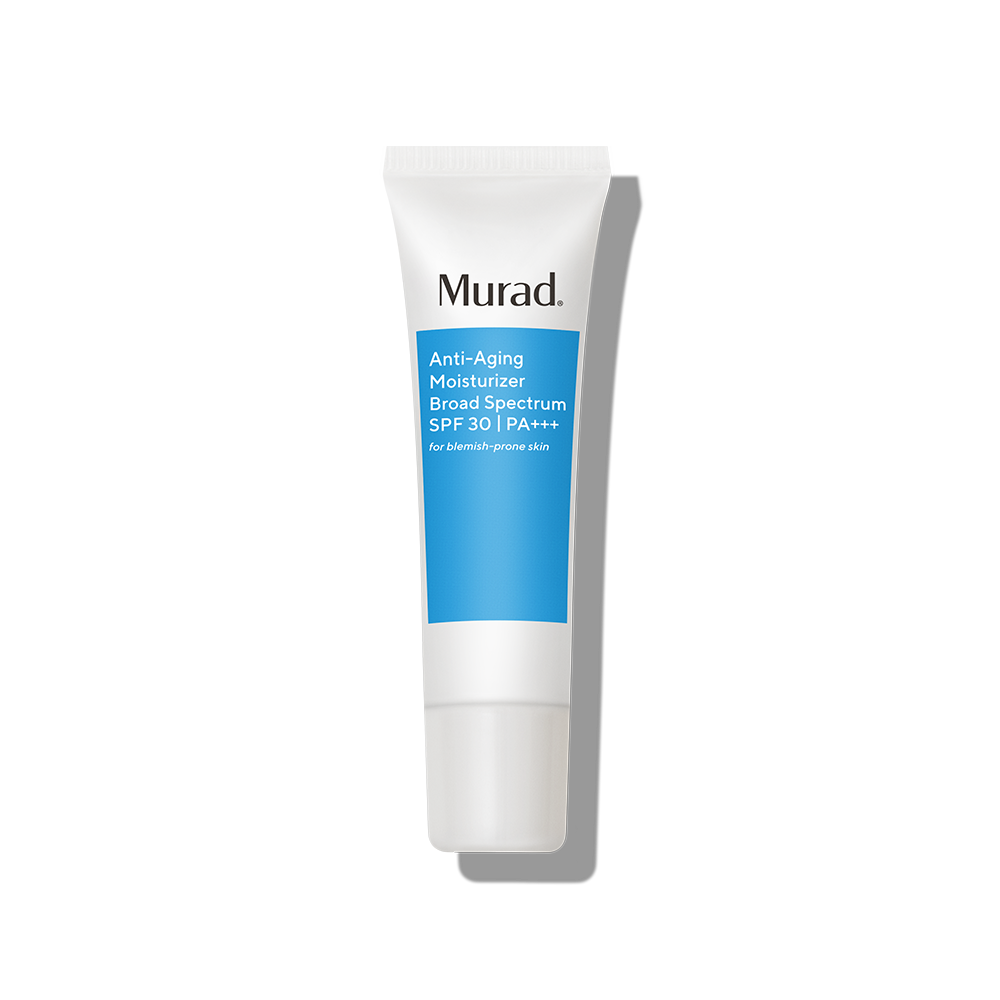

Murad
Anti-Aging Moisturizer Broad Spectrum SPF 30 | PA+++

Anti-Aging Moisturizer Broad Spectrum SPF 30 | PA+++
Murad
anti-aging-moisturizer-broad-spectrum-spf-30-pa
Moisturize
9784844091685
Morning or Evening?
How often will you use this product?
Notes


Highlights
WHAT IS IT?
Anti-aging moisturizer with SPF 30
FEATURES
Lightweight SPF moisturizer, Essential hydrators, Anti-aging ingredients, UVA/UVB protection
BEST FOR
combination
CHECKS
Parabens-free, phthalates-free, sulfates-free
Who Is It For?
Adults With Aging And Acne-prone SkinWhat Does It Help With?
Wrinkles Breakouts Signs Of Aging Sun ProtectionBudget
Mid-range ($30-$75)How To Use
Which routine should it be used in?
Instructions:
Key Information


What Murad Says
Product Description:
Have wrinkles and breakouts? This lightweight SPF moisturizer minimizes signs of aging on acne-prone skin.
About the Brand:
Ingredients Overview
Ingredients List
Water (Aqua), Cetyl Alcohol, Glycerin, Polyester-8, Urea, Yeast Amino Acids, Trehalose, Inositol, Taurine, Betaine, Phospholipids, Tocopheryl Acetate, Ascorbyl Palmitate, Ethylhexyl Palmitate, Silica Dimethyl Silylate, Butylene Glycol, Sodium Hyaluronate, Caprylic/Capric Triglyceride, Laminaria Ochroleuca Extract, Saccharomyces/Xylinum/Black Tea Ferment, Hydroxyethylcellulose, Cetearyl Olivate, Sorbitan Olivate, Dimethicone, Zinc Gluconate, Macrocystis Pyrifera Extract, Hydrolyzed Vegetable Protein, PVP, Hydrolyzed Ceratonia Siliqua Seed Extract, Argania Spinosa Kernel Oil, Serenoa Serrulata Fruit Extract, Sesamum Indicum (Sesame) Seed Oil, Beta-Sitosterol, Cimicifuga Racemosa Root Extract, Melaleuca Alternifolia (Tea Tree) Leaf Oil, Laminaria Saccharina Extract, Diethylhexyl Syringylidenemalonate, Ascorbic Acid, Chitosan, Propyl Gallate, PEG-100 Stearate, Glyceryl Stearate, Xanthan Gum, Hydroxyethyl Acrylate/Sodium Acryloyldimethyl Taurate Copolymer, Disodium EDTA, Aminomethyl Propanol, Silica, Phenoxyethanol, Caprylyl Glycol, Chlorphenesin, Citronellol, Geraniol, Limonene, Linalool, Fragrance (Parfum) Formulated Without: Parabens, Sulfates, Phthalates, Gluten, Mineral Oil, Formaldehyde, Oxybenzone, Petrolatum/Petroleum
Key Ingredients
Salicylic Acid
Ingredients Details
Betaine
Common Name(s): Trimethylglycine,tmg,natural betaine
CAS Number: 107-43-7
DESCRIPTION
What It Does: Provides osmoprotective humectant conditioning with anti-irritant and mild foam-boosting activity.
Why It's Used: Natural-origin multifunctional osmolyte from sugar beet providing hydration, anti-irritancy, and conditioning in virtually every cosmetic category.
How It Works: Quaternary ammonium betaine provides zwitterionic character for water binding via ionic hydration. osmoprotective function at 100–500mm as compatible solute protecting cells from osmotic stress. reduces surfactant irritation by competing with sls for protein binding sites. mild foam enhancement.
Typically Found In: Virtually all categories — moisturisers, shampoos, cleansers
TECHNICAL DETAILS
Primary Category: Functional ingredient – humectant
Secondary Functions: Tewl reduction,skin plumping
Application Areas:

Facial Skincare
Body Care
Hair Care

Beard Care
Color Cosmetics (Makeup)
Dietary/Oral Supplements
Typical Concentration Range: 0.5%–10%
SOURCING & ETHICS
Vegan Status: Conditional - feedstock declaration required
Halal Status: Unverified - feedstock declaration required (plant, animal and petrochemical routes all exist)
Source Notes: Synthetic or naturally derived. excellent aqueous solubility. [audit 2026-07-29 rev2: origin-dependent: the same inci exists in plant, animal and petrochemical versions and the name does not discriminate. determination requires shariah-panel sign-off.]
SKIN COMPATIBILITY
Irritancy Rating: 1/5 – very low
Comedogenicity Rating: 0/5 – non-comedogenic
Sensitivity Concerns: Non-irritating; suitable for all skin types.
Safe for Sensitive Skin: Yes
SAFETY & COMPATIBILITY
Safety Profile: Excellent safety profile. ewg score: 1.
Works Well With: Ceramides,emollients,occlusives,glycerin,hyaluronic acid
Avoid Combining With: No significant incompatibilities
SCIENTIFIC NOTE
Betaine's anti-irritant mechanism for surfactant systems involves competitive protein protection: betaine at high concentrations preferentially interacts with skin proteins, occupying binding sites that would otherwise be occupied by surfactant molecules causing protein denaturation. this competition reduces available protein binding for irritating surfactants, explaining betaine's well-documented ability to reduce sls irritation when co-formulated.
Last Verified: 2026-03-12
Primary Sources: Cosing database,craig betaine osmoprotective review,cir safety assessment
Cetyl Alcohol
Common Name(s): 1-hexadecanol,palmityl alcohol,n-cetyl alcohol
CAS Number: 36653-82-4
DESCRIPTION
What It Does: Provides c16 fatty alcohol emolliency and thickening for well-textured cosmetic emulsions.
Why It's Used: Lighter-textured fatty alcohol alternative to stearyl alcohol for creams and conditioners requiring less heavy emolliency.
How It Works: C16 chain length provides slightly lower melting point (49°c) than stearyl (60°c) giving softer, lighter emulsion texture. forms lamellar networks for thickening and stability. direct skin and hair conditioning via fatty alcohol film.
Typically Found In: Creams,hair conditioners,lotions
TECHNICAL DETAILS
Primary Category: Functional ingredient – fatty alcohol
Secondary Functions: Barrier sealing,softening
Application Areas:
Facial Skincare
Body Care
Hair Care
Beard Care
Color Cosmetics (Makeup)
Dietary/Oral Supplements
Typical Concentration Range: 1%–15%
SOURCING & ETHICS
Vegan Status: Yes - standard ethanol routes are non-animal; confirm denaturant origin
Halal Status: Conditional - ethanol production route and residual concentration; jurisdiction-dependent, refer to certifier stance
Source Notes: Plant-derived, synthetic or animal-derived. verify source. [audit 2026-07-29 rev2: ethanol pathway; determination depends on route, on whether the plant also produces beverage alcohol, and on residual concentration. determination requires shariah-panel sign-off.]
SKIN COMPATIBILITY
Irritancy Rating: 1/5 – very low
Comedogenicity Rating: 1/5 – low; formulation-dependent
Sensitivity Concerns: Non-irritating.
Safe for Sensitive Skin: Yes
SAFETY & COMPATIBILITY
Safety Profile: Excellent safety profile. ewg score: 1.
Works Well With: Humectants,ceramides,actives as carrier
Avoid Combining With: No significant incompatibilities
SCIENTIFIC NOTE
Cetyl alcohol's c16 chain length is at the approximate thermal transition point for fatty alcohol lamellar crystallization at skin temperature (33°c). this transition (from ordered crystalline to disordered liquid phase near skin temperature) provides the characteristic 'melts on application' sensory profile that makes cetyl alcohol-containing products feel cooling and light on initial application.
Last Verified: 2026-03-12
Primary Sources: Cosing database,cir safety assessment
Glycerin
Common Name(s): Glycerol,glycerine,1,2,3-propanetriol
CAS Number: 56-81-5
DESCRIPTION
What It Does: Glycerin pulls water from the environment and deeper skin layers into the outer skin layer (epidermis), boosting moisture levels and keeping skin soft, smooth, and plump.
Why It's Used: It is used in virtually every moisturizer, serum, and cleanser because it is highly effective at hydrating skin, is well-tolerated by all skin types, and enhances the texture and spreadability of formulations.
How It Works: As a humectant, glycerin forms hydrogen bonds with water molecules, trapping them in the skin. it also reinforces the skin barrier by integrating into lipid structures between skin cells.
Typically Found In: Moisturizers,serums,cleansers,toners,sheet masks,sunscreens,body lotions,shampoos,conditioners
TECHNICAL DETAILS
Primary Category: Humectant
Secondary Functions: Skin barrier support,emollient,solvent
Application Areas:
Facial Skincare
Body Care
Hair Care
Beard Care
Color Cosmetics (Makeup)
Dietary/Oral Supplements
Typical Concentration Range: 1%–30% (typical: 3–10%)
SOURCING & ETHICS
Vegan Status: Conditional - feedstock declaration required
Halal Status: Unverified - feedstock declaration required (plant, animal and petrochemical routes all exist)
Source Notes: Derived from plant oils via hydrolysis or saponification; synthetic versions also available. palm-derived glycerin carries sustainability concerns. [audit 2026-07-29 rev2: origin-dependent: the same inci exists in plant, animal and petrochemical versions and the name does not discriminate. determination requires shariah-panel sign-off.]
SKIN COMPATIBILITY
Irritancy Rating: 1/5 – very low; non-irritating at all standard concentrations
Comedogenicity Rating: 0/5 – non-comedogenic
Sensitivity Concerns: Extremely rare allergic reactions; generally safe for all skin types including sensitive and baby skin
Safe for Sensitive Skin: Yes
SAFETY & COMPATIBILITY
Safety Profile: Widely recognized as safe. ewg hazard score: 1. no significant concerns for irritation, sensitization, or toxicity at typical concentrations (up to 50%).
Works Well With: Hyaluronic acid,ceramides,niacinamide,panthenol,urea,peptides,retinol,ahas/bhas
Avoid Combining With: No known incompatibilities at standard concentrations
SCIENTIFIC NOTE
Glycerin is an endogenous skin component found naturally in the stratum corneum. aquaporin-3 channels in keratinocytes facilitate glycerin transport, making it integral to natural skin hydration pathways.
Last Verified: 2026-03-12
Primary Sources: Cosing database,cir safety assessment,ewg skin deep,inci decoder
Inositol
Common Name(s): Myo-inositol,mouse antialopecia factor
CAS Number: 87-89-8
DESCRIPTION
What It Does: Supports hair follicle health and growth, conditions skin, participates in pi3k signaling.
Why It's Used: Used in haircare for hair growth support via pi3k signaling in dermal papilla cells.
How It Works: As phosphatidylinositol component of cell membranes, essential for pi3k signaling driving hair growth cycle in dermal papilla cells.
Typically Found In: Hair growth serums,shampoos,scalp treatments,moisturizers
TECHNICAL DETAILS
Primary Category: Active ingredient – vitamin b-like / cell signaling
Secondary Functions: Hair growth support,cell signaling
Application Areas:
Facial Skincare
Body Care
Hair Care
Beard Care
Color Cosmetics (Makeup)
Dietary/Oral Supplements
Typical Concentration Range: 0.1%–5%
SOURCING & ETHICS
Vegan Status: Conditional - supplier confirmation required
Halal Status: Unverified - supplier confirmation required
Source Notes: Derived from phytic acid hydrolysis or synthetic. [audit 2026-07-29 rev2: status downgraded on audit. determination requires shariah-panel sign-off.]
SKIN COMPATIBILITY
Irritancy Rating: 1/5 – very low
Comedogenicity Rating: 0/5 – non-comedogenic
Sensitivity Concerns: Non-irritating; excellent tolerability.
Safe for Sensitive Skin: Yes
SAFETY & COMPATIBILITY
Safety Profile: Excellent safety profile. ewg score: 1.
Works Well With: Other b vitamins,niacinamide,antioxidant complexes
Avoid Combining With: No significant incompatibilities
SCIENTIFIC NOTE
Inositol deficiency causes alopecia in laboratory animals. its role in pi3k signaling is essential for growth factor receptor signaling in dermal papilla cells.
Last Verified: 2026-03-12
Primary Sources: Cosing database,cir safety assessment,rushton hair nutrition review