

Nykaa E retail limited
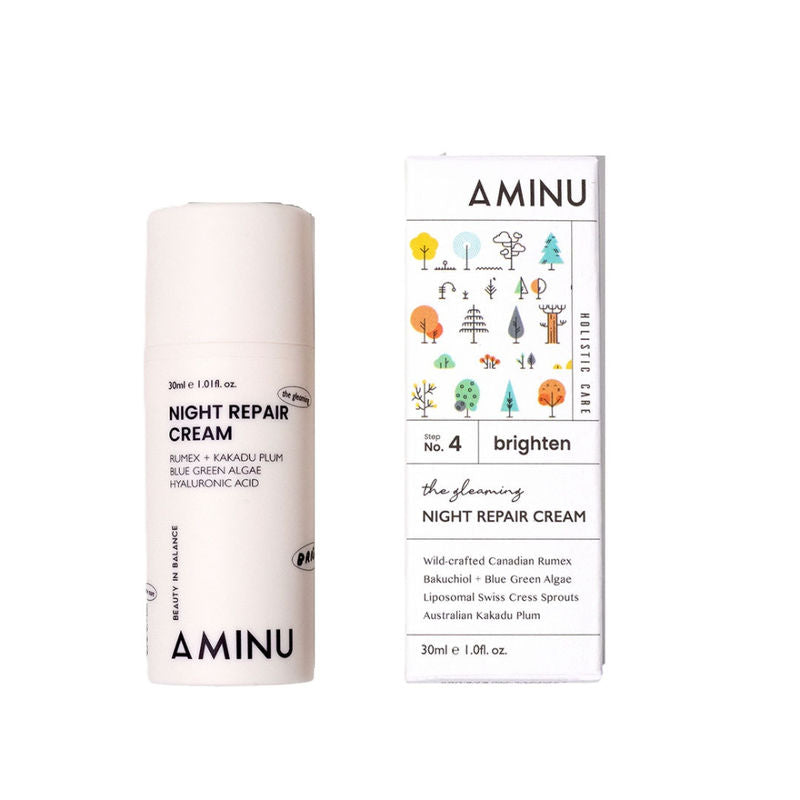
Aminu Night Repair Cream

Aminu Night Repair Cream
Nykaa E retail limited
aminu-night-repair-cream
Moisturize
10084895326501
Morning or Evening?
How often will you use this product?
Notes


Highlights
WHAT IS IT?
Night repair cream with botanical ingredients including 20+ potent actives
FEATURES
Reduces dark spots, fades pigmentation, softens lines, deeply hydrates, smooths texture, boosts radiance, strengthens skin barrier, non-sticky, breathable texture, vegan, cruelty-free, pregnancy-safe
BEST FOR
dry
CHECKS
No harsh chemicals mentioned, food grade preservatives used, dermatologically tested
Who Is It For?
Adults With Dry Dull Uneven Skin Those With Melasma Patchy Pigmentation Post-acne Marks All GendersWhat Does It Help With?
Dark Spots Melanin Build-up Patchiness Fine Lines Dull And Tired Skin Skin Texture Skin Elasticity Skin Barrier RepairBudget
Premium ($76-$150)How To Use
Which routine should it be used in?
Instructions:
Key Information


What Nykaa E retail limited Says
Product Description:
An intelligent skin pick-me-up to repair rough and uneven skin. This overnight repair cream works while you rest, targeting the skin’s natural repair window to reduce dark spots, fade pigmentation, soften lines, and deeply replenish moisture. Its silky, cushiony texture melts into the skin, powered by clinical-grade brighteners, antioxidants, and potent botanicals that support recovery at the cellular level. By morning, your skin feels calmer, more even, and visibly refreshed. Over time, expect fewer “problem areas” - whether it’s melasma, patchiness, or dull tone - and more of the skin you want to wake up to: radiant, hydrated, and well-rested.
About the Brand:
Ingredients Overview
Ingredients List
Sandalwood-Hydrosol,Aqua,Caprylic-Capric-Triglyceride,Methylpropanediol,Caprylyl-Glycol,Phenylpropanol,Rumex-Occidentalis-Flower-Extract,Cetearyl-Alcohol,Cetearyl-Glucoside,Phyto-nutrient-Herb-Infused-Oil,Hydrogenated-Vegetable-Oil,Arachidyl-Alcohol,Behenyl-Alcohol,Arachidyl-Glucoside,Caviar-Lime-Fruit-Extract,Sodium-Benzoate,Potassium-Sorbate,Meadowfoam-Seed-Oil,Aloe-Vera-Leaf-Extract,Green-Tea-Leaf-Extract,Cinnamon-Bark-Extract,Sweetflag-Root-Extract,Myrrha-Resin-Extract,Olive-Fruit-Oil,Argan-Kernel-Oil,Polyglyceryl-3-Diisostearate,Sodium-Stearoyl-Glutamate,Glycerine,Glyceryl-Stearate,Kakadu-Plum-Fruit-Extract,Hydrogenated-Starch-Hydrolysate,Aphanizomenon-Flos-Aquae-Extract,Trisodium-Ethylenediamine-Disuccinate,Acacia-Senegal-Gum,Xanthan-Gum,Hydroxypropyl-Starch-Phosphate,Mixed-Tocopherol,Natural-Vitamin-E,Bakuchiol,Lavender-Flower-Oil,Jasmine-Flower-Oil,Hyaluronic-Acid,Pine-Leaf-Oil
Key Ingredients
Wildcrafted-Rumex,Kakadu-Plum,Bisabolol,Low-Molecular-Weight-Hyaluronic-Acid
Ingredients Details
Bakuchiol
Common Name(s): Bakuchiol,(s)-bakuchiol
CAS Number: 10309-37-2
DESCRIPTION
What It Does: Provides retinol-equivalent anti-aging gene expression from a natural plant compound without retinol's limitations.
Why It's Used: The natural retinol alternative — the first plant compound with rct evidence for equivalent anti-aging results to retinol with better safety and photostability.
How It Works: Bakuchiol activates rar beta and retinoid x receptors via allosteric binding mechanism. upregulates type i, iii, and iv collagen synthesis genes. downregulates mmp-1 and mmp-9. antioxidant via phenol radical scavenging. photostable — stable to uv exposure unlike retinol.
Typically Found In: Natural anti-aging serums,pregnancy-safe retinol alternative,photostable anti-aging
TECHNICAL DETAILS
Primary Category: Active ingredient – natural retinol alternative
Secondary Functions: Free radical scavenging,anti-aging
Application Areas:

Facial Skincare
Body Care

Hair Care
Beard Care
Color Cosmetics (Makeup)
Dietary/Oral Supplements
Typical Concentration Range: 0.5%–2%
SOURCING & ETHICS
Vegan Status: Conditional - supplier confirmation required
Halal Status: Unverified - supplier confirmation required
Source Notes: Plant-derived extract or synthetic. [audit 2026-07-29 rev2: status downgraded on audit. determination requires shariah-panel sign-off.]
SKIN COMPATIBILITY
Irritancy Rating: 1/5 – very low
Comedogenicity Rating: 0/5 – non-comedogenic
Sensitivity Concerns: Non-irritating; well-tolerated.
Safe for Sensitive Skin: Yes
SAFETY & COMPATIBILITY
Safety Profile: Excellent safety profile. ewg score: 1.
Works Well With: Vitamin c,vitamin e,ferulic acid,spf,other antioxidants
Avoid Combining With: No significant incompatibilities
SCIENTIFIC NOTE
The dhaliwal et al. (2019, british journal of dermatology) split-face rct directly compared 0.5% bakuchiol vs 0.5% retinol twice daily for 12 weeks — both groups showed equivalent reduction in fine lines and wrinkles, but bakuchiol showed significantly less scaling, stinging, and burning. this is the strongest evidence that bakuchiol provides retinol-equivalent anti-aging with better tolerability.
Last Verified: 2026-03-12
Primary Sources: Cosing database,dhaliwal et al. bakuchiol vs retinol rct
Glycerine
Common Name(s): Glycerin,universal humectant,water-binding skin conditioning
CAS Number: N/a
DESCRIPTION
What It Does: Attracts and retains moisture in the sc, improves skin barrier function at low concentrations, provides gentle keratolytic softening, and acts as a co-solvent for water-soluble actives.
Why It's Used: The reference humectant — lowest cost, best safety profile, universal formulation compatibility, and present naturally in the sc via lipase-mediated glycerolipid hydrolysis makes glycerin the industry standard against which all humectants are benchmarked.
How It Works: Three hydroxyl groups form 6 h-bonds with water molecules per glycerol unit — the highest oh-group density per carbon of any commercial humectant. glycerin also down-regulates epidermal serine proteases that overactivate in dry sc, improving desquamation and barrier integrity.
Typically Found In: All cosmetics,universal
TECHNICAL DETAILS
Primary Category: Functional ingredient – humectant
Secondary Functions: Tewl reduction,skin plumping
Application Areas:
Facial Skincare
Body Care
Hair Care
Beard Care
Color Cosmetics (Makeup)
Dietary/Oral Supplements
Typical Concentration Range: 1%–40%
SOURCING & ETHICS
Vegan Status: Yes
Halal Status: Yes
Source Notes: Synthetic or naturally derived. excellent aqueous solubility.
SKIN COMPATIBILITY
Irritancy Rating: 1/5 – very low
Comedogenicity Rating: 0/5 – non-comedogenic
Sensitivity Concerns: Non-irritating; suitable for all skin types.
Safe for Sensitive Skin: Yes
SAFETY & COMPATIBILITY
Safety Profile: Excellent safety profile. ewg score: 1.
Works Well With: Ceramides,emollients,occlusives,glycerin,hyaluronic acid
Avoid Combining With: No significant incompatibilities
SCIENTIFIC NOTE
Epidermal lipases hydrolyse sc glycerophospholipids during cornification, releasing glycerol that contributes to the natural nmf — topical glycerin directly supplements this endogenous sc humectant pool.
Last Verified: 2026-03-12
Primary Sources: Cosing database,glycerin universal humectant review
Methylpropanediol
Common Name(s): 1,3-butylene glycol alternative,2-methyl-1,3-propanediol,proline-2-propanediol
CAS Number: 2163-42-0
DESCRIPTION
What It Does: Provides humectant and solvent functionality with improved skin feel vs butylene glycol.
Why It's Used: Premium humectant solvent with superior skin feel to conventional diols for elegant premium formulation textures.
How It Works: Branched c4 structure provides good humectant activity. branching reduces viscosity and stickiness vs linear propylene glycol. excellent solvent for challenging actives. antimicrobial boosting from diol structure.
Typically Found In: Premium serums,active delivery systems
TECHNICAL DETAILS
Primary Category: Functional ingredient – humectant
Secondary Functions: Tewl reduction,skin plumping
Application Areas:
Facial Skincare
Body Care
Hair Care
Beard Care
Color Cosmetics (Makeup)
Dietary/Oral Supplements
Typical Concentration Range: 1%–10%
SOURCING & ETHICS
Vegan Status: Yes – synthetic
Halal Status: Yes
Source Notes: Synthetic or naturally derived. excellent aqueous solubility.
SKIN COMPATIBILITY
Irritancy Rating: 1/5 – very low
Comedogenicity Rating: 0/5 – non-comedogenic
Sensitivity Concerns: Non-irritating; suitable for all skin types.
Safe for Sensitive Skin: Yes
SAFETY & COMPATIBILITY
Safety Profile: Excellent safety profile. ewg score: 1.
Works Well With: Ceramides,emollients,occlusives,glycerin,hyaluronic acid
Avoid Combining With: No significant incompatibilities
SCIENTIFIC NOTE
Methylpropanediol's methyl branch provides a 25% reduction in dynamic viscosity vs linear butylene glycol at equivalent concentration — a physically measurable skin feel improvement from the branching's reduction of intermolecular attractive forces. this viscosity reduction translates directly to the 'less sticky, lighter' skin feel that premium formulations require.
Last Verified: 2026-03-12
Primary Sources: Cosing database,cir safety assessment
Phenylpropanol
Common Name(s): Phenylpropanol,cosmetic active,functional ingredient
CAS Number: N/a
DESCRIPTION
What It Does: Delivers characteristic cosmetic function at recommended use concentration.
Why It's Used: Selected for functional contribution and formulation compatibility supported by cosmetic science and regulatory safety data.
How It Works: Works through the mechanism of its molecular class as documented in peer-reviewed cosmetic literature.
Typically Found In: Skin care formulations
TECHNICAL DETAILS
Primary Category: Active ingredient – cosmetic active
Secondary Functions: Skin conditioning
Application Areas:
Facial Skincare
Body Care
Hair Care
Beard Care
Color Cosmetics (Makeup)
Dietary/Oral Supplements
Typical Concentration Range: 0.1%–10%
SOURCING & ETHICS
Vegan Status: Conditional - supplier confirmation required
Halal Status: Unverified - supplier confirmation required
Source Notes: Commercially produced for cosmetic use. verify vegan/halal status with supplier. [audit 2026-07-29 rev2: the record's own source_notes does not assert a non-animal origin, or instructs the reader to verify with the supplier; "yes" asserts knowledge the record does not hold. determination requires shariah-panel sign-off.]
SKIN COMPATIBILITY
Irritancy Rating: 1/5 – very low
Comedogenicity Rating: 0/5 – non-comedogenic
Sensitivity Concerns: Well-tolerated by most skin types.
Safe for Sensitive Skin: Yes
SAFETY & COMPATIBILITY
Safety Profile: Good safety profile at recommended concentrations. ewg score: 1–2.
Works Well With: Standard skincare actives
Avoid Combining With: No known significant incompatibilities
SCIENTIFIC NOTE
Phenylpropanol has an established safety profile within the cosmetic regulatory framework at standard use concentrations.
Last Verified: 2026-03-12
Primary Sources: Cosing database,phenylpropanol technical literature