

AlumierMD
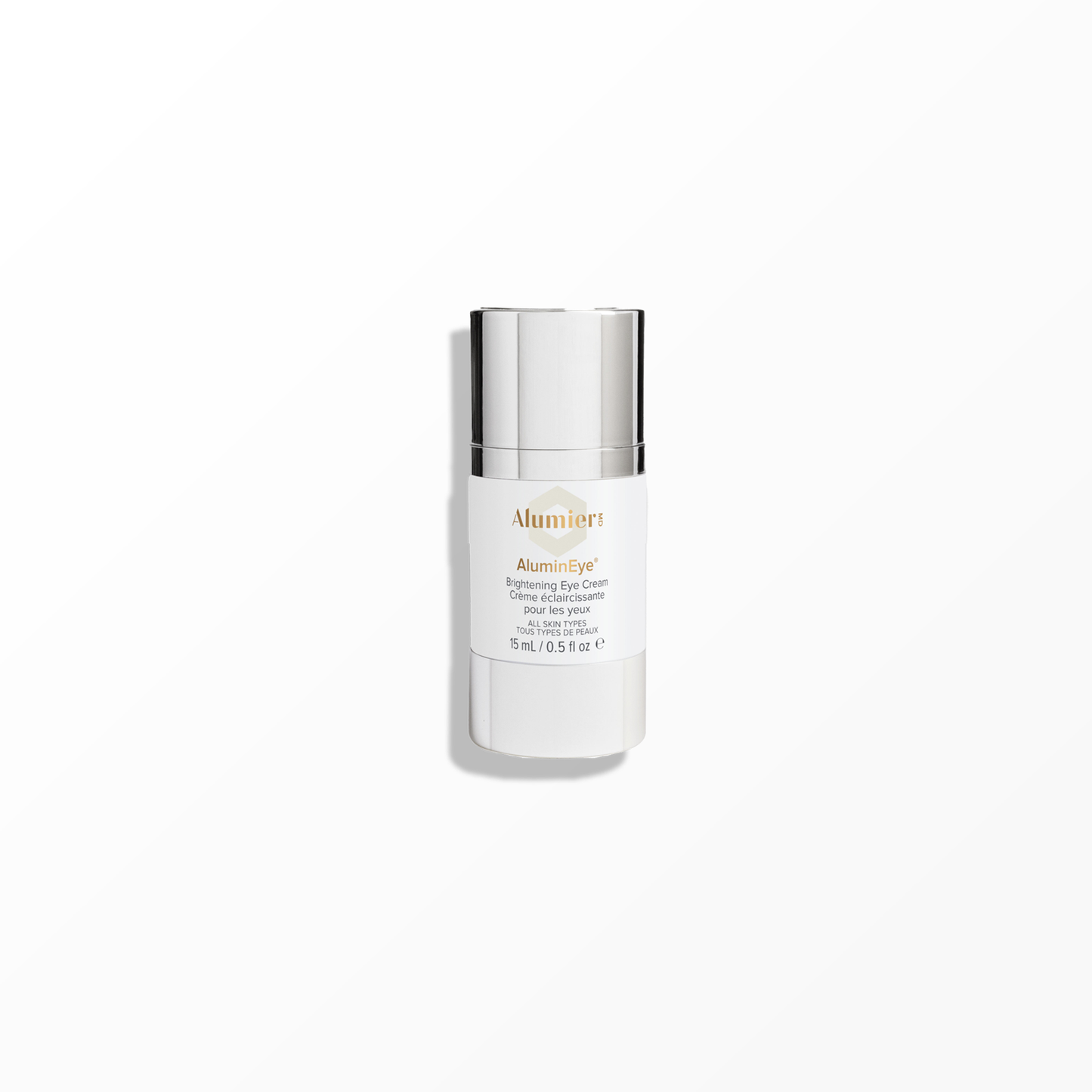
AluminEye®

AluminEye®
AlumierMD
alumineye-r
Eyecare
9643595858213
Morning or Evening?
How often will you use this product?
Notes


Highlights
WHAT IS IT?
Eye cream with multiple active ingredients
FEATURES
Diminishes signs of aging, reduces puffiness and dark circles, brightens and revitalizes eye area
BEST FOR
Dry Skin, Combination Skin, Oily Skin
CHECKS
Does not contain dyes
Who Is It For?
Adults Both Women And MenWhat Does It Help With?
Fine Lines Wrinkles Dark Circles PuffinessBudget
PremiumHow To Use
Which routine should it be used in?
Instructions:
Key Information


What AlumierMD Says
Product Description:
An award-winning eye cream that visibly diminishes signs of aging, puffiness, and dark circles for a smoother, more youthful appearance. Elevate your eye care routine with AluminEye®. Our brightening, nourishing eye cream diminishes the signs of aging by targeting dark circles, fine lines, and puffiness. Enriched with specialized peptides, Tremella Mushroom, Niacinamide, and soft-focus light reflectors, it instantly illuminates and revitalizes the delicate eye area while also providing long-term results on the stubborn signs of aging.
About the Brand:
Ingredients Overview
Ingredients List
WATER/AQUA/EAU, CYCLOPENTASILOXANE, PEG-8 BEESWAX, GLYCERIN, CAPRYLIC/CAPRIC TRIGLYCERIDE, GLYCINE SOJA (SOYBEAN) OIL, BEESWAX, RICINUS COMMUNIS (CASTOR) SEED OIL, CETEARYL ALCOHOL, TOCOPHERYL ACETATE, ALOE BARBADENSIS LEAF JUICE, ASTROCARYUM MURUMURU SEED BUTTER, METHYL METHACRYLATE CROSSPOLYMER,NIACINAMIDE,SIMMONDSIA CHINENSIS (JOJOBA) SEED OIL,CAMELLIA SINENSIS (TEA) EXTRACT,BOSWELLIA SERRATA EXTRACT,TREMELLA FUCIFORMIS POLYSACCHARIDE, PALMITOYL TRIPEPTIDE-38, HYDROGENATED COTTON SEED OIL, ASPALATHUS LINEARIS (ROOIBOS) EXTRACT, ROSMARINUS OFFICINALIS (ROSEMARY) LEAF EXTRACT, HONEY EXTRACT (EXTRAIT DE MIEL), GLUTATHIONE, CHRYSIN, DIPEPTIDE-2, PALMITOYL TRIPEPTIDE-1, TETRAPEPTIDE-14, PALMITOYL TETRAPEPTIDE-7, CITRIC ACID, SUCROSE PALMITATE, GLYCERYL LINOLEATE, HESPERIDIN METHYL CHALCONE, SODIUM HYALURONATE, HYDROGENATED CASTOR OIL,CALCIUM STEARATE, TITANIUM DIOXIDE,IRON OXIDES, N-HYDROXYSUCCINIMIDE, LAURIC ACID, HYDROXYPROPYL CYCLODEXTRIN, BUTYLENE GLYCOL, CETEARETH-20, POLYACRYLAMIDE, C13-14 ISOPARAFFIN, STEARETH-20, LAURETH-7, XANTHAN GUM,SYNTHETIC FLUORPHLOGOPITE, POTASSIUM SORBATE, DISODIUM EDTA, CAPRYLYL GLYCOL, SODIUM BENZOATE, PENTYLENE GLYCOL, PEG-40 STEARATE, 1,2-HEXANEDIOL, PHENOXYETHANOL.
Key Ingredients
Eyeliss™, Haloxyl™, MATRIXYL® Synthe'6®, Tremella Mushroom Extract, Niacinamide, Murumuru Butter, Glutathione
Ingredients Details
Beeswax
Common Name(s): Cera alba (white),cera flava (yellow),apis mellifera wax
CAS Number: 8012-89-3
DESCRIPTION
What It Does: Provides natural wax structure and emolliency for cosmetic texture and lip balm applications.
Why It's Used: The original cosmetic wax – provides natural, hard-texture structure for lip balms, sticks, and creams with emollient skin conditioning.
How It Works: Complex mixture of esters (wax esters), hydrocarbons (hentriacontane), and fatty acids provides semi-crystalline structure. melting point 62-65°c enables stable solid products. emulsifying capacity from free cerotic acid content.
Typically Found In: Lip balms,cosmetic sticks,creams,natural cosmetics
TECHNICAL DETAILS
Primary Category: Functional ingredient – natural wax
Secondary Functions: Natural wax structure,occlusive conditioning
Application Areas:

Facial Skincare

Body Care
Hair Care
Beard Care
Color Cosmetics (Makeup)
Dietary/Oral Supplements
Typical Concentration Range: 2%–30%
SOURCING & ETHICS
Vegan Status: No - animal-derived
Halal Status: Conditional - bee-derived; widely held permissible, confirm certifier stance
Source Notes: Plant-derived, synthetic or animal-derived. verify source. [audit 2026-07-29 rev2: bee-derived; permissibility widely accepted but fatwa varies by jurisdiction. determination requires shariah-panel sign-off.]
SKIN COMPATIBILITY
Irritancy Rating: 1/5 – very low
Comedogenicity Rating: 1/5 – low; formulation-dependent
Sensitivity Concerns: Non-irritating.
Safe for Sensitive Skin: Yes
SAFETY & COMPATIBILITY
Safety Profile: Excellent safety profile. ewg score: 1.
Works Well With: Humectants,ceramides,actives as carrier
Avoid Combining With: No significant incompatibilities
SCIENTIFIC NOTE
Beeswax's multi-component wax ester composition (myricyl palmitate as primary component) provides a unique crystalline structure that gives lip balms and cosmetic sticks their characteristic 'dragée' glide – different from synthetic wax esters that lack this crystalline lattice diversity.
Last Verified: 2026-03-12
Primary Sources: Cosing database,cir safety assessment
Caprylic/capric Triglyceride
Common Name(s): Mct oil,fractionated coconut oil,c8/c10 triglyceride
CAS Number: 73398-61-5
DESCRIPTION
What It Does: Lightweight, stable emollient that solubilizes oil-soluble actives for excellent delivery without greasy feel.
Why It's Used: Universal lightweight emollient base and solubilizer for oil-soluble actives in serums and low-viscosity formulations where mineral oil or petrolatum would be too heavy.
How It Works: Medium-chain length provides ideal balance of spreading coefficient, penetration rate, and barrier-sealing properties. excellent solubilizer for vitamin e, retinoids, and other lipophilic actives.
Typically Found In: Serums,facial oils,sunscreens,anti-aging products,hair products
TECHNICAL DETAILS
Primary Category: Active ingredient – medium-chain triglyceride emollient
Secondary Functions: Active solubilizer,spreading agent
Application Areas:
Facial Skincare
Body Care
Hair Care
Beard Care
Color Cosmetics (Makeup)
Dietary/Oral Supplements
Typical Concentration Range: 1%–50%
SOURCING & ETHICS
Vegan Status: Conditional - feedstock declaration required
Halal Status: Unverified - feedstock declaration required (plant, animal and petrochemical routes all exist)
Source Notes: Fractionated by hydrolysis and re-esterification of coconut oil. only c8 and c10 fatty acids retained. [audit 2026-07-29 rev2: origin-dependent: the same inci exists in plant, animal and petrochemical versions and the name does not discriminate. determination requires shariah-panel sign-off.]
SKIN COMPATIBILITY
Irritancy Rating: 1/5 – very low
Comedogenicity Rating: 1/5 – very low; medium-chain length generally non-comedogenic
Sensitivity Concerns: Non-irritating.
Safe for Sensitive Skin: Yes
SAFETY & COMPATIBILITY
Safety Profile: Excellent safety profile. ewg score: 1.
Works Well With: Humectants,ceramides,actives as carrier
Avoid Combining With: No significant incompatibilities
SCIENTIFIC NOTE
Mct oil's medium-chain length (c8/c10) provides superior oxidative stability vs longer polyunsaturated chains and better skin aesthetics (lighter, less greasy) vs longer chain emollients (c16/c18). excellent solubilizer for retinoic acid, tocopheryl esters, and other lipophilic actives.
Last Verified: 2026-03-12
Primary Sources: Cosing database,cir safety assessment,ewg skin deep
Cetearyl Alcohol
Common Name(s): Cetostearyl alcohol,c16-18 fatty alcohol
CAS Number: 8005-44-5
DESCRIPTION
What It Does: Provides fatty alcohol emulsification and thickening for stable, well-textured emulsions.
Why It's Used: The most widely used fatty alcohol in cosmetics – provides emulsification, thickening, and emolliency simultaneously from a single ingredient with excellent safety profile.
How It Works: Forms bilayer lamellar structures in water with emulsifiers creating a viscous structured network that thickens and stabilizes emulsions. fatty alcohol emolliency provides direct skin conditioning. bilayer formation reduces inter-droplet coalescence in emulsions.
Typically Found In: Creams,lotions,conditioners – virtually all emulsion products
TECHNICAL DETAILS
Primary Category: Functional ingredient – fatty alcohol emulsifier/thickener
Secondary Functions: Barrier sealing,softening
Application Areas:
Facial Skincare
Body Care
Hair Care
Beard Care
Color Cosmetics (Makeup)
Dietary/Oral Supplements
Typical Concentration Range: 1%–25%
SOURCING & ETHICS
Vegan Status: Yes - standard ethanol routes are non-animal; confirm denaturant origin
Halal Status: Conditional - ethanol production route and residual concentration; jurisdiction-dependent, refer to certifier stance
Source Notes: Plant-derived, synthetic or animal-derived. verify source. [audit 2026-07-29 rev2: ethanol pathway; determination depends on route, on whether the plant also produces beverage alcohol, and on residual concentration. determination requires shariah-panel sign-off.]
SKIN COMPATIBILITY
Irritancy Rating: 1/5 – very low
Comedogenicity Rating: 1/5 – low; formulation-dependent
Sensitivity Concerns: Non-irritating.
Safe for Sensitive Skin: Yes
SAFETY & COMPATIBILITY
Safety Profile: Excellent safety profile. ewg score: 1.
Works Well With: Humectants,ceramides,actives as carrier
Avoid Combining With: No significant incompatibilities
SCIENTIFIC NOTE
Cetearyl alcohol's ability to form lamellar liquid crystal structures ('krafft phases') with water and co-emulsifiers provides not only emulsion stability but also enhanced skin penetration via the lamellar skin barrier pathway. these crystalline structures can act as a reservoir for active ingredients, slowly releasing them as the lamellar structure melts on skin contact.
Last Verified: 2026-03-12
Primary Sources: Cosing database,cir safety assessment
Cyclopentasiloxane
Common Name(s): Cyclopentasiloxane,cyclic volatile silicone,dry-touch carrier solvent
CAS Number: N/a
DESCRIPTION
What It Does: Provides a dry, weightless application vehicle that evaporates cleanly leaving actives and non-volatile silicones deposited on skin — eliminating the residual heaviness of conventional liquid carrier solvents.
Why It's Used: Cyclosiloxanes are the unique volatile silicone solvents that dissolve non-volatile silicones (dimethicone, cyclomethicone), organic uv filters, and lipophilic actives, providing the sensory-superior dry-touch application experience in premium formulations.
How It Works: Cyclosiloxane vapour pressure (d5 cyclopentasiloxane ~0.3 mmhg at 25°c) provides clean evaporation at body temperature. the cyclic ring structure provides lower boiling point than equivalent linear dimethicone, enabling faster evaporation while the ring conformation maintains the silicone's low surface energy for smooth application.
Typically Found In: Primers,antiperspirants,sunscreens
TECHNICAL DETAILS
Primary Category: Functional ingredient – emollient
Secondary Functions: Barrier sealing,softening
Application Areas:
Facial Skincare
Body Care
Hair Care
Beard Care
Color Cosmetics (Makeup)
Dietary/Oral Supplements
Typical Concentration Range: 1%–50%
SOURCING & ETHICS
Vegan Status: Conditional - supplier confirmation required
Halal Status: Unverified - supplier confirmation required
Source Notes: Plant-derived, synthetic or animal-derived. verify source. [audit 2026-07-29 rev2: the record's own source_notes does not assert a non-animal origin, or instructs the reader to verify with the supplier; "yes" asserts knowledge the record does not hold. determination requires shariah-panel sign-off.]
SKIN COMPATIBILITY
Irritancy Rating: 1/5 – very low
Comedogenicity Rating: 1/5 – low; formulation-dependent
Sensitivity Concerns: Non-irritating.
Safe for Sensitive Skin: Yes
SAFETY & COMPATIBILITY
Safety Profile: Excellent safety profile. ewg score: 1.
Works Well With: Humectants,ceramides,actives as carrier
Avoid Combining With: No significant incompatibilities
SCIENTIFIC NOTE
Cyclopentasiloxane (d5) and cyclohexasiloxane (d6) are under eu regulatory review for potential environmental persistence (pbt assessment) — formulators should monitor eu regulation 2018/35 implementation for restrictions in wash-off products.
Last Verified: 2026-03-12
Primary Sources: Cosing database,eu cyclosiloxane regulatory review