

Alterna
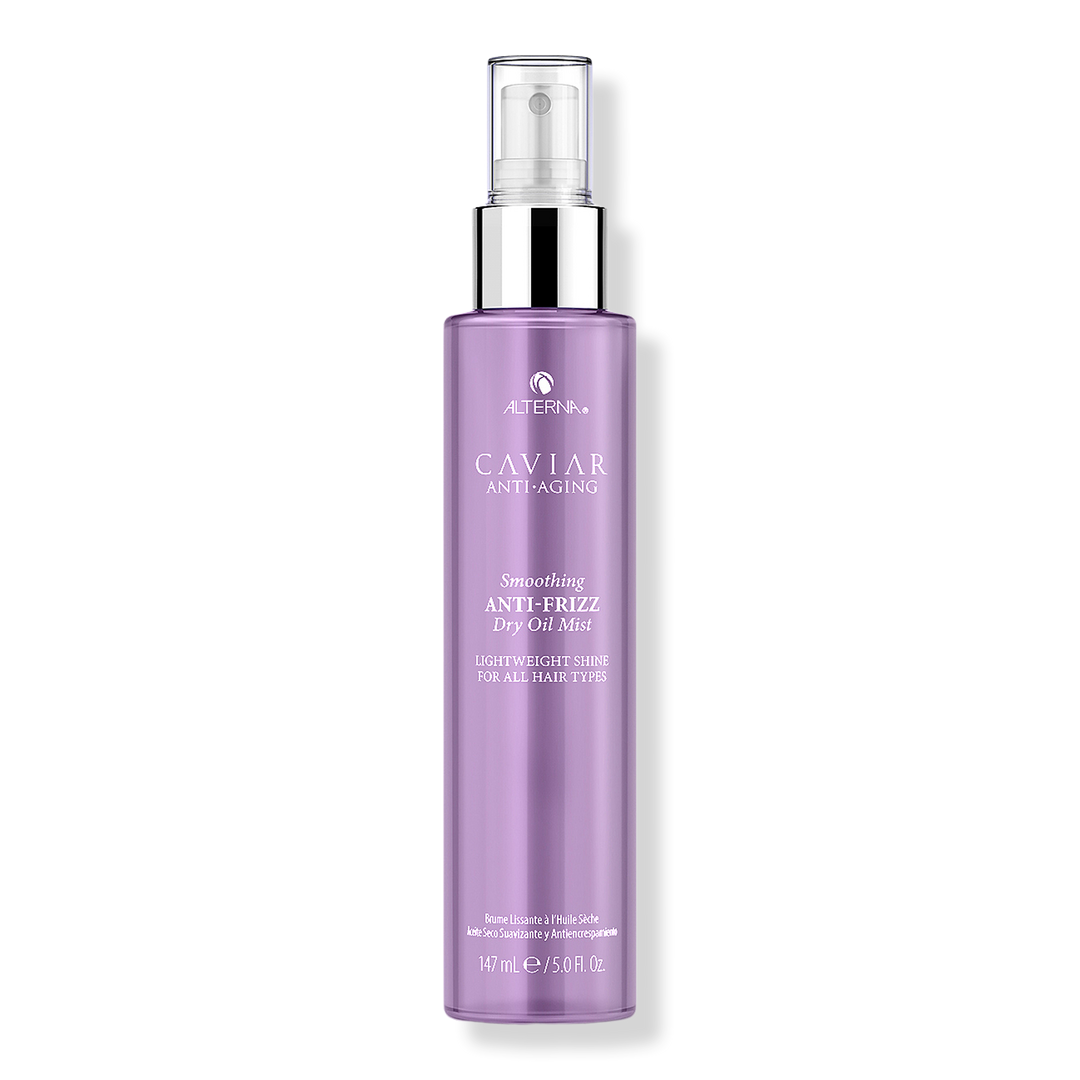
Alterna Caviar Anti-Aging Smoothing Anti-Frizz Dry Oil Mist
A lightweight mist that instantly adds shine while taming frizz and flyaways. Provides heat protection up to 450°F/232°C and is formulated without parabens, sulfates, synthetic color, and other harsh chemicals.
Sulfate-free
Paraben-free
Color-safe
Silicone-free
Heat Protection
Anti-Frizz
Optimized for Your Environment & Lifestyle
Nykaa
In stock
Recommended

Alterna Caviar Anti-Aging Smoothing Anti-Frizz Dry Oil Mist
Alterna
alterna-caviar-anti-aging-smoothing-anti-frizz-dry-oil-mist
Dry Oil Mist
10355413713189
Morning or Evening?
How often will you use this product?
Notes


Secure payment protection
Your Biodata Compatibility Analysis
Based on your 6 hair health indices and environmental factors
Poor Match
Significant incompatibilities
Growth Cycle Health Index
Hair Match
Hair Health Index Alignment
Optimal for OSI, SSI, DI, HSI
Ingredient Efficacy
Matching Ingredient Score
Environment Compatibility
Current UV, Air Quality & Humidity
Why This Works for Your Specific Profile
Damage Index:
Damage levels outside specified range may not benefit optimally from product formulation
Water Quality:
Straight to wavy hair lacks curl structure becoming weighed down without curl definition benefits
Hair:
Closed cuticles resist product penetration causing surface buildup without internal benefits
Active Lifestyle:
Activity levels outside optimal range affect product performance and maintenance requirements
Your Hair Profile Integration
Your Hair Archetype

Density Level

Washing Frequency

Shedding Level

Oil Level
Your Hair Health Indices
Oil Secretion (OSI)
Very low oil production
Scalp Sensitivity (SSI)
Very low sensitivity
Growth Rate (CMR)
Poor metabolism rate
Damage Index (DI)
Minimal damage
Hair Strength (HSI)
Very weak strength
Softness Index (SI)
Significant improvement needed
Water & Environmental Integration

Water:


Expected Results & Timeline
Key Highlights

What is it?
Dry Oil Mist, 147 ml

Who Is It For
Adults, All genders

Budget
$34.00 - $68.00

Timeline
Instant results
Why You’ll Love It

What Does It Help With?
Frizz, Dryness, Breakage

Best for
Frizz control and smoothness

Features
Controls frizz for up to 8 hours, Provides lightweight hydration, Adds instant shine, Heat protection up to 450°F/232°C, Free from parabens, sulfates, synthetic color, and other harsh chemicals

Checks
Paraben-free, Sulfate-free, Color-safe, Silicone-free
Ingredients Overview
Ingredients List
Isododecane, Cyclopentasiloxane, Dimethicone, Phenyl Trimethicone, Tocopherol, Persea Gratissima (Avocado) Oil, Crambe Abyssinica Seed Oil, Ascorbic Acid, Glycerin, Polysilicone-15, Superoxide Dismutase, Caviar Extract, Alaria Esculenta Extract, Sodium Hyaluronate, Saccharomyces/Magnesium Ferment, Saccharomyces/Copper Ferment, Saccharomyces/Silicon Ferment, Saccharomyces/Zinc Ferment, Saccharomyces/Iron Ferment, Water/Aqua/Eau, Phospholipids, Helianthus Annuus (Sunflower) Seed Oil, Butylene Glycol, Potassium Sorbate, Phenoxyethanol, Fragrance (Parfum)
Key Ingredients
Caviar Extract, Avocado Oil, Abyssinian Seed Oil, Tocopherol, Ascorbic Acid
Ingredients Details
Alaria Esculenta Extract
Common Name(s): Alaria esculenta extract,botanical extract,phytochemical active
CAS Number: N/a
DESCRIPTION
What It Does: Provides antioxidant protection from reactive oxygen species, reduces inflammatory cytokine production in skin, and conditions skin surface through the plant's secondary metabolite complex.
Why It's Used: Chosen for its natural origin narrative, traditional use heritage, and multi-functional phytochemical profile that supports several concurrent skin care claims from one ingredient.
How It Works: Polyphenols, terpenoids, and alkaloids in the extract scavenge ros via hydrogen atom transfer, inhibit nf-kb or cox-2 inflammatory pathways, and interact with skin surface proteins for conditioning.
Typically Found In: Botanical skin care,natural products
TECHNICAL DETAILS
Primary Category: Active ingredient – antioxidant
Secondary Functions: Free radical scavenging,anti-aging
Application Areas:

Facial Skincare
Body Care

Hair Care
Beard Care
Color Cosmetics (Makeup)
Dietary/Oral Supplements
Typical Concentration Range: 0.1%–10%
SOURCING & ETHICS
Vegan Status: Yes
Halal Status: Yes
Source Notes: Plant-derived extract or synthetic.
SKIN COMPATIBILITY
Irritancy Rating: 1/5 – very low
Comedogenicity Rating: 0/5 – non-comedogenic
Sensitivity Concerns: Non-irritating; well-tolerated.
Safe for Sensitive Skin: Yes
SAFETY & COMPATIBILITY
Safety Profile: Excellent safety profile. ewg score: 1.
Works Well With: Vitamin c,vitamin e,ferulic acid,spf,other antioxidants
Avoid Combining With: No significant incompatibilities
SCIENTIFIC NOTE
Plant secondary metabolites evolved as uv photoprotectants and antimicrobial agents — mechanisms that directly translate to cosmetic antioxidant and anti-inflammatory activity in human skin.
Last Verified: 2026-03-12
Primary Sources: Cosing database,alaria esculenta extract botanical review
Ascorbic Acid
Common Name(s): Vitamin c,l-ascorbic acid,l-ascorbate
CAS Number: 50-81-7
DESCRIPTION
What It Does: Ascorbic acid neutralizes free radicals, stimulates collagen production, inhibits melanin synthesis for a brighter complexion, and supports skin repair.
Why It's Used: It is used because it offers comprehensive antioxidant and brightening benefits supported by extensive clinical evidence. it is the most bioavailable form of vitamin c for topical application.
How It Works: As an antioxidant, it donates electrons to neutralize reactive oxygen species. it is an essential cofactor for the hydroxylation of proline and lysine in collagen synthesis. it inhibits tyrosinase, the enzyme responsible for melanin production, reducing hyperpigmentation.
Typically Found In: Vitamin c serums,brightening moisturizers,antioxidant formulations,spf products,eye creams
TECHNICAL DETAILS
Primary Category: Active ingredient – vitamin c
Secondary Functions: Collagen booster,tyrosinase inhibitor,ph adjuster
Application Areas:
Facial Skincare
Body Care
Hair Care
Beard Care
Color Cosmetics (Makeup)
Dietary/Oral Supplements
Typical Concentration Range: 5%–20% (effective range: 10–20%; ph must be below 3.5 for activity)
SOURCING & ETHICS
Vegan Status: Yes – synthetically produced or corn/plant-derived
Halal Status: Yes
Source Notes: Commercially produced by reichstein synthesis or guangxi fermentation process from glucose. some plant-derived versions exist.
SKIN COMPATIBILITY
Irritancy Rating: 2/5 – low to moderate; low ph formulations can cause initial tingling or stinging, especially at concentrations above 15%
Comedogenicity Rating: 0/5 – non-comedogenic
Sensitivity Concerns: Acidic ph can irritate sensitive or compromised skin barriers. highly unstable – oxidizes rapidly when exposed to air, light, and heat (turns orange/brown). use in the morning under spf.
Safe for Sensitive Skin: Use with caution – start at lower concentrations (5–10%). stabilized derivative forms (vitamin c derivatives) may be better tolerated.
SAFETY & COMPATIBILITY
Safety Profile: Very safe; well-studied. key concern is formulation stability, not safety. ewg hazard score: 1.
Works Well With: Vitamin e (tocopherol) – synergistic antioxidant effect,ferulic acid – stabilizing and boosting,spf,hyaluronic acid,niacinamide (use at different times if concentrations are high)
Avoid Combining With: Retinol (use at separate times – ph incompatibility),benzoyl peroxide (oxidizes vitamin c),ahas/bhas (cumulative irritation risk)
SCIENTIFIC NOTE
L-ascorbic acid is the only form of vitamin c that is proven bioactive in skin at the molecular level. its instability (rapid oxidation) has driven development of numerous stable derivatives including ascorbyl glucoside, magnesium ascorbyl phosphate, and ascorbyl tetraisopalmitate.
Last Verified: ##########
Primary Sources: Cosing database,cir safety assessment,pinnell et al. studies,journal of the american academy of dermatology
Ascorbic Acid
Common Name(s): Vitamin c,l-ascorbic acid,l-ascorbate
CAS Number: 50-81-7
DESCRIPTION
What It Does: Ascorbic acid neutralizes free radicals, stimulates collagen production, inhibits melanin synthesis for a brighter complexion, and supports skin repair.
Why It's Used: It is used because it offers comprehensive antioxidant and brightening benefits supported by extensive clinical evidence. it is the most bioavailable form of vitamin c for topical application.
How It Works: As an antioxidant, it donates electrons to neutralize reactive oxygen species. it is an essential cofactor for the hydroxylation of proline and lysine in collagen synthesis. it inhibits tyrosinase, the enzyme responsible for melanin production, reducing hyperpigmentation.
Typically Found In: Vitamin c serums,brightening moisturizers,antioxidant formulations,spf products,eye creams
TECHNICAL DETAILS
Primary Category: Active ingredient – vitamin c
Secondary Functions: Collagen booster,tyrosinase inhibitor,ph adjuster
Application Areas:
Facial Skincare
Body Care
Hair Care
Beard Care
Color Cosmetics (Makeup)
Dietary/Oral Supplements
Typical Concentration Range: 5%–20% (effective range: 10–20%; ph must be below 3.5 for activity)
SOURCING & ETHICS
Vegan Status: Yes – synthetically produced or corn/plant-derived
Halal Status: Yes
Source Notes: Commercially produced by reichstein synthesis or guangxi fermentation process from glucose. some plant-derived versions exist.
SKIN COMPATIBILITY
Irritancy Rating: 2/5 – low to moderate; low ph formulations can cause initial tingling or stinging, especially at concentrations above 15%
Comedogenicity Rating: 0/5 – non-comedogenic
Sensitivity Concerns: Acidic ph can irritate sensitive or compromised skin barriers. highly unstable – oxidizes rapidly when exposed to air, light, and heat (turns orange/brown). use in the morning under spf.
Safe for Sensitive Skin: Use with caution – start at lower concentrations (5–10%). stabilized derivative forms (vitamin c derivatives) may be better tolerated.
SAFETY & COMPATIBILITY
Safety Profile: Very safe; well-studied. key concern is formulation stability, not safety. ewg hazard score: 1.
Works Well With: Vitamin e (tocopherol) – synergistic antioxidant effect,ferulic acid – stabilizing and boosting,spf,hyaluronic acid,niacinamide (use at different times if concentrations are high)
Avoid Combining With: Retinol (use at separate times – ph incompatibility),benzoyl peroxide (oxidizes vitamin c),ahas/bhas (cumulative irritation risk)
SCIENTIFIC NOTE
L-ascorbic acid is the only form of vitamin c that is proven bioactive in skin at the molecular level. its instability (rapid oxidation) has driven development of numerous stable derivatives including ascorbyl glucoside, magnesium ascorbyl phosphate, and ascorbyl tetraisopalmitate.
Last Verified: ##########
Primary Sources: Cosing database,cir safety assessment,pinnell et al. studies,journal of the american academy of dermatology
Avocado Oil
Common Name(s): Avocado oil,avocado butter (solid fraction)
CAS Number: 8024-32-6
DESCRIPTION
What It Does: Provides deep moisturization with rich oleic acid, phytosterols, and lutein antioxidants for mature, dry skin.
Why It's Used: Rich, deeply penetrating oil for dry and mature skin requiring intensive emolliency beyond lightweight oils.
How It Works: Very high oleic acid (55-74%) penetrates deeply into stratum corneum for conditioning. beta-sitosterol and other phytosterols provide barrier repair and mild anti-inflammatory activity. lutein provides antioxidant protection. high unsaponifiable fraction (2-11%) provides unique skin bioactives.
Typically Found In: Rich moisturizers,dry skin oils,anti-aging formulas,body butters
TECHNICAL DETAILS
Primary Category: Functional ingredient – emollient
Secondary Functions: Deep penetrating emollient,phytosterol activity,anti-aging
Application Areas:
Facial Skincare
Body Care
Hair Care
Beard Care
Color Cosmetics (Makeup)
Dietary/Oral Supplements
Typical Concentration Range: 1%–50%
SOURCING & ETHICS
Vegan Status: Yes – from persea gratissima fruits
Halal Status: Yes
Source Notes: Cold-pressed from avocado fruit flesh. high unsaponifiable fraction (unsaponified lipids) makes avocado oil uniquely bioactive vs other oils with low unsaponifiable content.
SKIN COMPATIBILITY
Irritancy Rating: 1/5 – very low
Comedogenicity Rating: 3/5 – moderate; high oleic acid; test for skin type
Sensitivity Concerns: Non-irritating.
Safe for Sensitive Skin: Yes
SAFETY & COMPATIBILITY
Safety Profile: Excellent safety profile. ewg score: 1.
Works Well With: Humectants,ceramides,actives as carrier
Avoid Combining With: No significant incompatibilities
SCIENTIFIC NOTE
Avocado oil's unusually high unsaponifiable fraction (2-11% vs <2% for most plant oils) contains phytosterols, terpenes, vitamin e, and chlorophyll that remain after saponification and provide skin-active benefits not present in most other plant oils. this unsaponifiable fraction is what makes avocado oil pharmacologically distinct from simple fatty acid triglyceride oils.
Last Verified: 2026-03-12
Primary Sources: Cosing database,dreher & davenport avocado review,cir safety assessment
Personalized Usage Instructions
How to Use
Step 1
Spray throughout damp or dry hair to eliminate frizz and boost shine
Step 2
For external use only
Step 3
Avoid eye contact
Medical Chemicals

Protein/Moisture
- Moisture
pH Level
- Acidic

Porosity Taget
- Normal Porosity
Customized for Your Profile
Scalp Condtions
Anti-Dandruff, Sensitive Scalp, pH Balanced
Climate Suitability
Humid, Dry, UV Protection
Clinical Claims
Controls frizz for up to 8 hours, Reduces breakage by 93% with heat protection up to 450°F/232°C
Frequency
Spray throughout damp or dry hair to eliminate frizz and boost shine. For external use only. Avoid eye contact.
Product Information

Paraben-free
Sulfate-free
Color-safe
Silicone-free