

Nubian Heritage
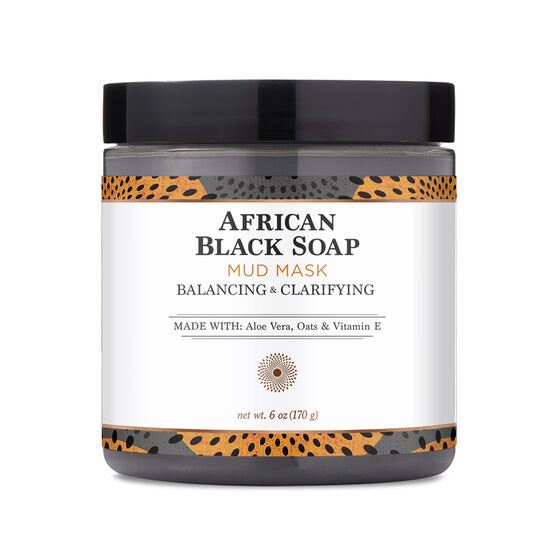
African Black Soap Mud Mask

African Black Soap Mud Mask
Nubian Heritage
african-black-soap-mud-mask
Face Mask
9706851631397
Morning or Evening?
How often will you use this product?
Notes


Highlights
WHAT IS IT?
A mud mask for deep cleansing and balancing oily skin
FEATURES
Clarifies pores, balances moisture, draws out toxins
BEST FOR
Oily, acne-prone skin
CHECKS
Free of sulfates, parabens, phthalates, silicone, petroleum products
Who Is It For?
Suitable For Those With Oily Or Acne-prone SkinWhat Does It Help With?
Blemishes Oily Skin ImpuritiesBudget
Mid-rangeHow To Use
Which routine should it be used in?
Instructions:
Key Information


What Nubian Heritage Says
Product Description:
African Black Soap Mud Mask from Nubian Heritage helps clarify your priorities. Get a deep clean that balances oily skin while drawing out your inner beauty with this luxurious African black soap facemask.
About the Brand:
Ingredients Overview
Ingredients List
Water, Kaolin, Bentonite, Glycerin (Vegetable), Glyceryl Caprylate, Butyrospermum Parkii (Shea) Butterª´, Sodium Palm Kernelate, Sodium Cocoate, Sodium Shea Butterate, Theobroma Cacao (Cocoa) Pod Ash, Allantoin, Salicylic Acid, Salix Nigra (Willow) Bark Extract, Avena Sativa (Oat) Bran Extract, Tocopherol, Panthenol, Aloe Barbadensis Leaf Juice, Butyrospermum Parkii (Shea) Oil, Tamarindus lndica Fruit Extract, Calendula Officinalis Flower Extract, Musa Paradisiaca Extract, Melaleuca Alternifolia (Tea Tree) Leaf Oil, Glyceryl Undecylenate, Benzyl Alcohol, Sodium Benzoate, Fragrance (Essential Oil Blend) Certified Organic Ingredient. ª´Fair Trade Ingredient
Key Ingredients
African Black Soap, Kaolin mud, Willow bark extract, Salicylic acid, Shea butter
Ingredients Details
Bentonite
Common Name(s): Montmorillonite,volcanic ash clay,swelling clay
CAS Number: 1302-78-9
DESCRIPTION
What It Does: Provides thixotropic clay gellation and deep oil absorption from swelling smectite clay.
Why It's Used: Strongest adsorbing clay for deep cleansing masks – bentonite's high cation exchange capacity and swelling capacity provide the deepest oil and toxin adsorption of common cosmetic clays.
How It Works: Montmorillonite 2:1 layered silicate swells up to 15× in water via interlayer water absorption. very high cation exchange capacity (cec: 80-150 meq/100g) provides exceptional adsorption of cations, oils, and toxins. thixotropic gel provides 'mask that hardens' sensory experience.
Typically Found In: Clay masks,deep cleansing products,detoxifying formulas
TECHNICAL DETAILS
Primary Category: Functional ingredient – swelling clay mineral
Secondary Functions: Skin conditioning
Application Areas:

Facial Skincare

Body Care
Hair Care
Beard Care
Color Cosmetics (Makeup)
Dietary/Oral Supplements
Typical Concentration Range: 1%–25%
SOURCING & ETHICS
Vegan Status: Yes – natural mineral
Halal Status: Yes
Source Notes: Commercially produced for cosmetic use. verify vegan/halal status with supplier.
SKIN COMPATIBILITY
Irritancy Rating: 1/5 – very low
Comedogenicity Rating: 0/5 – non-comedogenic
Sensitivity Concerns: Well-tolerated by most skin types.
Safe for Sensitive Skin: Yes
SAFETY & COMPATIBILITY
Safety Profile: Good safety profile at recommended concentrations. ewg score: 1–2.
Works Well With: Standard skincare actives
Avoid Combining With: No known significant incompatibilities
SCIENTIFIC NOTE
Bentonite's extraordinary swelling (up to 15× dry volume) arises from its 2:1 layer structure: sodium bentonite's inter-layer sodium cations attract very thick water shells, forcing the silicate layers apart by electrostatic repulsion. calcium bentonite swells only 2-3× by comparison, explaining why sodium-exchanged bentonite is the industrial standard for swelling applications.
Last Verified: Cosing database,cir safety assessment
Primary Sources: 2026-03-12
Glyceryl Caprylate
Common Name(s): Glycerol monocaprylate,mono caprylate of glycerol,schercemol gmc
CAS Number: 26402-26-6
DESCRIPTION
What It Does: Provides natural origin antimicrobial preservation alongside skin conditioning in clean beauty formulations.
Why It's Used: Natural-origin preservative for truly natural formulations seeking effective preservation without synthetic preservatives.
How It Works: Monoglyceride structure inserts into microbial cell membranes via the caprylic acid chain, disrupting membrane integrity. glycerol moiety contributes skin conditioning. effective against gram-positive bacteria and some yeasts at formulation concentrations.
Typically Found In: Natural and organic cosmetics,clean beauty,cosmos-certified products
TECHNICAL DETAILS
Primary Category: Functional ingredient – natural monoglyceride preservative
Secondary Functions: Skin conditioning
Application Areas:
Facial Skincare
Body Care
Hair Care
Beard Care
Color Cosmetics (Makeup)
Dietary/Oral Supplements
Typical Concentration Range: 0.3%–1.5%
SOURCING & ETHICS
Vegan Status: Yes – from glycerol and caprylic acid (plant sources)
Halal Status: Yes
Source Notes: From vegetable glycerol and plant-derived caprylic acid (coconut/palm kernel). cosmos-approved for certified natural cosmetics.
SKIN COMPATIBILITY
Irritancy Rating: 1/5 – very low
Comedogenicity Rating: 0/5 – non-comedogenic
Sensitivity Concerns: Well-tolerated by most skin types.
Safe for Sensitive Skin: Yes
SAFETY & COMPATIBILITY
Safety Profile: Good safety profile at recommended concentrations. ewg score: 1–2.
Works Well With: Standard skincare actives
Avoid Combining With: No known significant incompatibilities
SCIENTIFIC NOTE
Glyceryl caprylate's preservation mechanism (membrane disruption via monoglyceride structure) is distinct from synthetic preservatives (protein enzyme inhibition). this mechanistic difference is why it is approved in cosmos natural certification where synthetic enzyme inhibitors are not permitted.
Last Verified: Cosing database,cosmos standard,basf technical data
Primary Sources: 2026-03-12
Kaolin
Common Name(s): China clay,kaolinite,white cosmetic clay
CAS Number: 1332-58-7
DESCRIPTION
What It Does: Provides oil absorption and matting from the fine platelet clay structure.
Why It's Used: Most versatile cosmetic clay – gentle enough for sensitive skin while providing effective oil absorption, matting, and mineral conditioning.
How It Works: 1:1 layered silicate clay platelets absorb oils via capillary action in inter-platelet spaces. very mild ph (6-7). white colour from al-o-si lattice. fine particle size (0.5-4μm) provides gentle exfoliation and smooth texture. negative surface charge provides light skin conditioning.
Typically Found In: Masks,foundations,dry shampoo,mattifying products
TECHNICAL DETAILS
Primary Category: Functional ingredient – white clay mineral
Secondary Functions: Skin conditioning
Application Areas:
Facial Skincare
Body Care
Hair Care
Beard Care
Color Cosmetics (Makeup)
Dietary/Oral Supplements
Typical Concentration Range: 0.1%–50%
SOURCING & ETHICS
Vegan Status: Yes – natural mineral
Halal Status: Yes
Source Notes: Commercially produced for cosmetic use. verify vegan/halal status with supplier.
SKIN COMPATIBILITY
Irritancy Rating: 1/5 – very low
Comedogenicity Rating: 0/5 – non-comedogenic
Sensitivity Concerns: Well-tolerated by most skin types.
Safe for Sensitive Skin: Yes
SAFETY & COMPATIBILITY
Safety Profile: Good safety profile at recommended concentrations. ewg score: 1–2.
Works Well With: Standard skincare actives
Avoid Combining With: No known significant incompatibilities
SCIENTIFIC NOTE
Kaolin's oil absorption mechanism involves genuine capillary condensation of oils into the inter-platelet micropores between its layered silicate sheets. the surface area of cosmetic-grade kaolin (10-30 m²/g) provides thousands of square meters of oil-adsorbing surface per gram – explaining its exceptional mattifying efficacy despite its inert mineral composition.
Last Verified: Cosing database,cir safety assessment
Primary Sources: 2026-03-12
Sodium Cocoate
Common Name(s): Sodium cocoate
DESCRIPTION
What It Does: Reduces surface tension at oil-water interfaces, enabling effective cleansing, emulsification, and formulation stability.
Why It's Used: Surface-active agents are essential for emulsification, cleansing, and stabilization of cosmetic formulations containing both aqueous and lipid phases.
How It Works: The amphiphilic molecular structure positions the hydrophilic head in water and the lipophilic tail in oils, creating micelles that solubilize sebum, dirt, and oil-soluble impurities for rinsing in cleansers or stable emulsions in leave-on products.
Typically Found In: Cleansers,shampoos,body washes,foaming treatments
TECHNICAL DETAILS
Primary Category: Surfactants
Secondary Functions: Emulsifying,cleansing
Application Areas:
Facial Skincare
Body Care
Hair Care
Beard Care
Color Cosmetics (Makeup)
Dietary/Oral Supplements
Typical Concentration Range: 0.5–30%
SOURCING & ETHICS
Vegan Status: Yes
Halal Status: Yes
Source Notes: Synthetic or semi-synthetic surfactant; no animal components.
SKIN COMPATIBILITY
Irritancy Rating: 1900-01-01 00:00:00 -0800
Sensitivity Concerns: May cause irritation or stinging in sensitive or barrier-compromised skin at high concentrations; patch test recommended.
Safe for Sensitive Skin: Conditional
SAFETY & COMPATIBILITY
Safety Profile: Well-characterized cosmetic ingredient with established safety profile. mildly irritating to some individuals at typical use concentrations. suitable for leave-on and rinse-off cosmetics.
Works Well With: Other surfactants,thickeners,conditioning agents
Avoid Combining With: High concentrations in sensitive skin formulations
SCIENTIFIC NOTE
Surfactant critical micelle concentration (cmc) determines the threshold for emulsification: above the cmc, amphiphilic molecules self-assemble into micelles with hydrophobic cores that solubilize oils. hlb (hydrophile-lipophile balance) value predicts surfactant function: hlb 3–6 for w/o emulsifiers, 8–18 for o/w emulsifiers, >15 for solubilizers.
Last Verified: Cosing eu database; pcpc cosmetic ingredient safety reviews; ingredient-specific safety and efficacy literature
Primary Sources: 2025-01-15
