

Bioderma
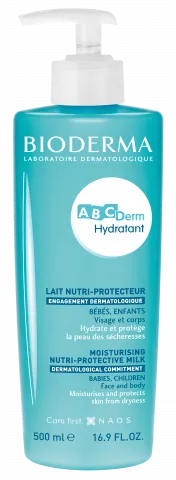
ABCDerm Moisturizing Milk

ABCDerm Moisturizing Milk
Bioderma
abcderm-moisturizing-milk
Moisturize
9706829480229
Morning or Evening?
How often will you use this product?
Notes


Highlights
WHAT IS IT?
A moisturizing milk product for babies and children
FEATURES
Moisturizes, protects and softens the delicate skin of babies and children.
BEST FOR
Normal delicate skin
CHECKS
Free of harsh chemicals, fragrances , alcohol
Who Is It For?
Babies ChildrenWhat Does It Help With?
Dryness And DiscomfortBudget
AffordableHow To Use
Which routine should it be used in?
Instructions:
Key Information

What Bioderma Says
Product Description:
Light moisturizing care that softens and protects delicate skin from feelings of dryness and discomfort.
About the Brand:
Ingredients Overview
Ingredients List
AQUA/WATER/EAU, PARAFFINUM LIQUIDUM/MINERAL OIL/HUILE MINERALE, GLYCERIN, CETEARYL ISONONANOATE, GLYCERYL STEARATE, PEG-100 STEARATE, MYRETH-3 MYRISTATE, CAPRYLOYL GLYCINE, STEARETH-21, CETYL ALCOHOL, ACRYLATES/C10-30 ALKYL ACRYLATE CROSSPOLYMER, PENTYLENE GLYCOL, TOCOPHERYL ACETATE, FRAGRANCE (PARFUM), 1,2-HEXANEDIOL, CAPRYLYL GLYCOL, SODIUM HYDROXIDE, SODIUM CITRATE, XANTHAN GUM.
Key Ingredients
Paraffinum liquidum, glycerin
Ingredients Details
Capryloyl Glycine
Common Name(s): N-capryloyl glycine,dermosoft gmcy
CAS Number: 14246-53-8
DESCRIPTION
What It Does: Provides antimicrobial and sebum-regulating activity from naturally-derived caprylic acid-glycine conjugate.
Why It's Used: Natural multifunctional antimicrobial — capryloyl glycine's anti-seborrheic and antimicrobial dual action provides comprehensive oily skin and anti-dandruff benefits from a single naturally-sourced ingredient.
How It Works: Acyl glycine conjugate provides antimicrobial via fatty acid membrane disruption mechanism. inhibits lipase enzyme reducing sebum fatty acid liberation (sebum regulation). mild surfactant from carboxylate head group. anti-dandruff via malassezia inhibition.
Typically Found In: Anti-seborrheic products,natural antimicrobials,anti-dandruff
TECHNICAL DETAILS
Primary Category: Functional ingredient – acyl amino acid surfactant/preservative
Secondary Functions: Skin conditioning
Application Areas:

Facial Skincare

Body Care
Hair Care
Beard Care
Color Cosmetics (Makeup)
Dietary/Oral Supplements
Typical Concentration Range: 0.5%–2%
SOURCING & ETHICS
Vegan Status: Conditional - feedstock declaration required
Halal Status: Unverified - feedstock declaration required (plant, animal and petrochemical routes all exist)
Source Notes: Commercially produced for cosmetic use. verify vegan/halal status with supplier. [audit 2026-07-29 rev2: origin-dependent: the same inci exists in plant, animal and petrochemical versions and the name does not discriminate. determination requires shariah-panel sign-off.]
SKIN COMPATIBILITY
Irritancy Rating: 1/5 – very low
Comedogenicity Rating: 0/5 – non-comedogenic
Sensitivity Concerns: Well-tolerated by most skin types.
Safe for Sensitive Skin: Yes
SAFETY & COMPATIBILITY
Safety Profile: Good safety profile at recommended concentrations. ewg score: 1–2.
Works Well With: Standard skincare actives
Avoid Combining With: No known significant incompatibilities
SCIENTIFIC NOTE
Capryloyl glycine's sebum regulation via lipase inhibition mirrors the same mechanism as triethyl citrate and ethylhexylglycerin — convergent mechanism discovery across structurally diverse ingredient classes. the parallel lipase inhibition by ester-based (triethyl citrate), ether-based (ethylhexylglycerin), and amide-based (capryloyl glycine) compounds validates lipase inhibition as a universally accessible target for sebum control through multiple chemical approaches.
Last Verified: 2026-03-12
Primary Sources: Cosing database,schülke dermosoft gmcy technical data
Cetearyl Isononanoate
Common Name(s): Crodamol sts,light conditioning ester,cetearyl branched ester
CAS Number: 91219-76-2
DESCRIPTION
What It Does: Provides light silky emolliency combining isononanoate lightness with cetearyl conditioning.
Why It's Used: Light conditioning ester — uniquely combines the lightness of branched-acid esters with the skin conditioning of fatty alcohol esters in one ingredient, providing both feel attributes simultaneously.
How It Works: Cetearyl alcohol (c16+c18) + isononanoic acid (3,5,5-trimethylhexanoic) ester. light feel: branched acid. conditioning: cetearyl component. non-greasy. cosmos accepted. crodamol sts: commercial reference.
Typically Found In: Light emollient serums,skin care,body lotion
TECHNICAL DETAILS
Primary Category: Functional ingredient – emollient
Secondary Functions: Barrier sealing,softening
Application Areas:
Facial Skincare
Body Care
Hair Care
Beard Care
Color Cosmetics (Makeup)
Dietary/Oral Supplements
Typical Concentration Range: 1%–20%
SOURCING & ETHICS
Vegan Status: Conditional - supplier confirmation required
Halal Status: Unverified - supplier confirmation required
Source Notes: Plant-derived, synthetic or animal-derived. verify source. [audit 2026-07-29 rev2: the record's own source_notes does not assert a non-animal origin, or instructs the reader to verify with the supplier; "yes" asserts knowledge the record does not hold. determination requires shariah-panel sign-off.]
SKIN COMPATIBILITY
Irritancy Rating: 1/5 – very low
Comedogenicity Rating: 1/5 – low; formulation-dependent
Sensitivity Concerns: Non-irritating.
Safe for Sensitive Skin: Yes
SAFETY & COMPATIBILITY
Safety Profile: Excellent safety profile. ewg score: 1.
Works Well With: Humectants,ceramides,actives as carrier
Avoid Combining With: No significant incompatibilities
SCIENTIFIC NOTE
Cetearyl isononanoate's dual feel profile from two molecular components: isononanoate acid branching provides lightness (prevents ordered surface film); cetearyl alcohol provides conditioning (long-chain skin interaction). same ester linkage delivering both properties — emollient design combining complementary components.
Last Verified: 2026-03-12
Primary Sources: Cosing database,crodamol sts technical literature
Cetyl Alcohol
Common Name(s): 1-hexadecanol,palmityl alcohol,n-cetyl alcohol
CAS Number: 36653-82-4
DESCRIPTION
What It Does: Provides c16 fatty alcohol emolliency and thickening for well-textured cosmetic emulsions.
Why It's Used: Lighter-textured fatty alcohol alternative to stearyl alcohol for creams and conditioners requiring less heavy emolliency.
How It Works: C16 chain length provides slightly lower melting point (49°c) than stearyl (60°c) giving softer, lighter emulsion texture. forms lamellar networks for thickening and stability. direct skin and hair conditioning via fatty alcohol film.
Typically Found In: Creams,hair conditioners,lotions
TECHNICAL DETAILS
Primary Category: Functional ingredient – fatty alcohol
Secondary Functions: Barrier sealing,softening
Application Areas:
Facial Skincare
Body Care
Hair Care
Beard Care
Color Cosmetics (Makeup)
Dietary/Oral Supplements
Typical Concentration Range: 1%–15%
SOURCING & ETHICS
Vegan Status: Yes - standard ethanol routes are non-animal; confirm denaturant origin
Halal Status: Conditional - ethanol production route and residual concentration; jurisdiction-dependent, refer to certifier stance
Source Notes: Plant-derived, synthetic or animal-derived. verify source. [audit 2026-07-29 rev2: ethanol pathway; determination depends on route, on whether the plant also produces beverage alcohol, and on residual concentration. determination requires shariah-panel sign-off.]
SKIN COMPATIBILITY
Irritancy Rating: 1/5 – very low
Comedogenicity Rating: 1/5 – low; formulation-dependent
Sensitivity Concerns: Non-irritating.
Safe for Sensitive Skin: Yes
SAFETY & COMPATIBILITY
Safety Profile: Excellent safety profile. ewg score: 1.
Works Well With: Humectants,ceramides,actives as carrier
Avoid Combining With: No significant incompatibilities
SCIENTIFIC NOTE
Cetyl alcohol's c16 chain length is at the approximate thermal transition point for fatty alcohol lamellar crystallization at skin temperature (33°c). this transition (from ordered crystalline to disordered liquid phase near skin temperature) provides the characteristic 'melts on application' sensory profile that makes cetyl alcohol-containing products feel cooling and light on initial application.
Last Verified: 2026-03-12
Primary Sources: Cosing database,cir safety assessment
Glycerin
Common Name(s): Glycerol,glycerine,1,2,3-propanetriol
CAS Number: 56-81-5
DESCRIPTION
What It Does: Glycerin pulls water from the environment and deeper skin layers into the outer skin layer (epidermis), boosting moisture levels and keeping skin soft, smooth, and plump.
Why It's Used: It is used in virtually every moisturizer, serum, and cleanser because it is highly effective at hydrating skin, is well-tolerated by all skin types, and enhances the texture and spreadability of formulations.
How It Works: As a humectant, glycerin forms hydrogen bonds with water molecules, trapping them in the skin. it also reinforces the skin barrier by integrating into lipid structures between skin cells.
Typically Found In: Moisturizers,serums,cleansers,toners,sheet masks,sunscreens,body lotions,shampoos,conditioners
TECHNICAL DETAILS
Primary Category: Humectant
Secondary Functions: Skin barrier support,emollient,solvent
Application Areas:
Facial Skincare
Body Care
Hair Care
Beard Care
Color Cosmetics (Makeup)
Dietary/Oral Supplements
Typical Concentration Range: 1%–30% (typical: 3–10%)
SOURCING & ETHICS
Vegan Status: Conditional - feedstock declaration required
Halal Status: Unverified - feedstock declaration required (plant, animal and petrochemical routes all exist)
Source Notes: Derived from plant oils via hydrolysis or saponification; synthetic versions also available. palm-derived glycerin carries sustainability concerns. [audit 2026-07-29 rev2: origin-dependent: the same inci exists in plant, animal and petrochemical versions and the name does not discriminate. determination requires shariah-panel sign-off.]
SKIN COMPATIBILITY
Irritancy Rating: 1/5 – very low; non-irritating at all standard concentrations
Comedogenicity Rating: 0/5 – non-comedogenic
Sensitivity Concerns: Extremely rare allergic reactions; generally safe for all skin types including sensitive and baby skin
Safe for Sensitive Skin: Yes
SAFETY & COMPATIBILITY
Safety Profile: Widely recognized as safe. ewg hazard score: 1. no significant concerns for irritation, sensitization, or toxicity at typical concentrations (up to 50%).
Works Well With: Hyaluronic acid,ceramides,niacinamide,panthenol,urea,peptides,retinol,ahas/bhas
Avoid Combining With: No known incompatibilities at standard concentrations
SCIENTIFIC NOTE
Glycerin is an endogenous skin component found naturally in the stratum corneum. aquaporin-3 channels in keratinocytes facilitate glycerin transport, making it integral to natural skin hydration pathways.
Last Verified: 2026-03-12
Primary Sources: Cosing database,cir safety assessment,ewg skin deep,inci decoder